REVIEW · OSAKA
3.5h Osaka Night guided Local Bar Hopping, Sake & Karaoke
Book on GetYourGuide →Operated by BITE ME OSAKA · Bookable on GetYourGuide
Osaka at night in one guided walk. You’ll start in Namba, follow a local guide through classic Dotonbori streets, learn temple-prayer basics at Hozenji Temple, then finish at karaoke where you’re singing with people who actually live there.
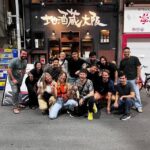
I like this tour for the way it turns Osaka eating and drinking into something you can do confidently. The guide (often Ryoko, sometimes Yoko, depending on the date) explains izakaya etiquette like the no double-dipping rule, and you get photos at landmarks such as the Glico sign and Kuidaore Taro. One thing to plan for: the night’s food and drinks are paid as a shared tab on-site (often around JPY 7,000–10,000 per person), and some places allow smoking.
In This Review
- Key things that make this night work
- Namba meeting point and how you start fast
- Dotonbori streets: Glico sign, Kuidaore Taro, and street-level context
- Izakaya stop: manners, shared dishes, and the no double-dipping lesson
- Sake tasting at a local shop: learning what different styles taste like
- Hozenji Temple: a short lesson in traditional praying
- Karaoke snack bar: singing with locals and the all-you-can-drink finish
- Price and what you’re really paying for (plus the shared tab)
- Who should book this Osaka night out
- Should you book the Osaka Night guided Bar Hopping with Sake & Karaoke?
- FAQ
- Where do I meet the guide?
- How long is the tour?
- What’s included in the tour price?
- About how much should I budget for food and drinks?
- What group size and language options are there?
- Is this tour suitable for everyone?
Key things that make this night work
- Meet at FamilyMart outside Namba Station Exit 14 at 7:00 PM, and look for a BITEMEOSAKA sign
- Small group (max 10 people) keeps the pace social but not chaotic
- Dotonbori photo stops include Glico sign and Kuidaore Taro, with local street context
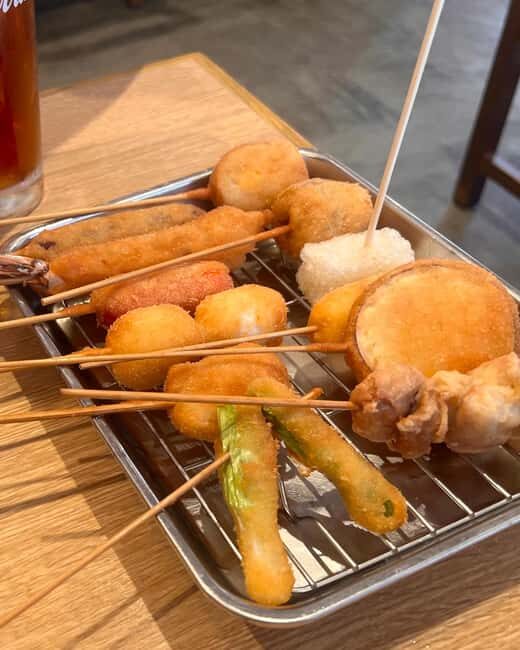
- Izakaya manners included (including the no double-dipping rule for snacks like kushikatsu)
- Sake tasting with guidance so you know what you’re tasting and why it differs
- Final stop karaoke bar with all-you-can-drink, where you sing alongside locals
Namba meeting point and how you start fast
This tour is built for people who want an Osaka night without spending it guessing. You meet at 7:00 PM in front of a FamilyMart right outside Namba Station Exit 14. Your guide holds a BITEMEOSAKA sign, so you’re not wandering in circles trying to match a face to a description.
The timing matters. A 7:00 PM start lines up with when local places are getting properly lively and when you can still walk between stops without feeling rushed. You’ll be out for 210 minutes, which is long enough to get real snacks and a real bar atmosphere, but short enough that you can keep your energy for the rest of your Osaka plans after.
Group size is also a practical win here. With a maximum of 10 participants, you get room to ask questions while still moving as a group through narrow streets and busy crossings. That matters because much of what you’ll learn is not just what to eat, but how to behave in a Japanese night setting.
If you’re the type who likes structure when you travel solo, this is a good fit. You’ll also be fine if you’re traveling as a couple, because the experience stays social without being overly performative.
You can also read our reviews of more food & drink experiences in Osaka
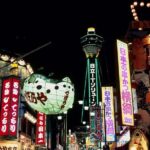
Dotonbori streets: Glico sign, Kuidaore Taro, and street-level context
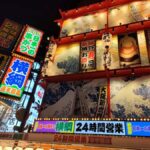
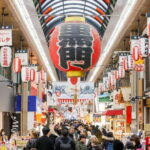
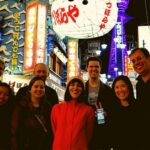
Before you sit down, you walk. Your guide takes you through Namba and Dotonbori streets so you get your bearings quickly. You’ll also make photo stops at the Glico sign and Kuidaore Taro, two of the area’s most recognizable sights.
The value here isn’t just taking pictures. It’s getting the quick cultural context that helps those landmarks make sense. Osaka has a reputation for humor, bold signage, and a nightlife that feels more casual than ceremonial. When your guide points out what you’re looking at and why locals treat it the way they do, the street stops feel like more than postcard scenery.
Also, street walking is part of why this tour beats doing everything alone. You’ll cover enough ground to feel like you made progress, but you won’t spend the night lost. Your guide keeps you from hitting the wrong side streets and helps you move between places smoothly.
A small practical note: nighttime walking in crowded areas means you’ll want comfortable shoes. Nothing fancy—just good grip.
Izakaya stop: manners, shared dishes, and the no double-dipping lesson
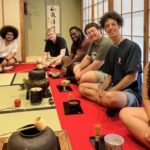
Your first real hang begins at a local izakaya. You start with a welcome drink, then share a sequence of Japanese dishes that are meant to go with that drink. This is where the tour earns its keep: your guide doesn’t just feed you. They explain how izakaya culture works so you don’t feel like you’re doing everything wrong.
One of the most praised parts is learning simple etiquette rules. A highlight from past guests is the no double-dipping rule, taught in the context of shared snacks such as kushikatsu-style items. It’s the kind of thing that seems minor until you’re sitting at a table and realize everyone else is following a quiet routine you didn’t know existed. After this, you’ll feel less like an observer and more like a participant.
Shared food is also a smart way to experience more than you would order yourself. With the guide guiding the selection, you’re likely to try multiple dish types across different bites—exactly the variety you want on a short night.
You’ll also get explanations around local customs and manners, which helps you understand what you’re seeing in each restaurant: the pacing, the way groups order, and what people do while they drink. It’s a small cultural crash course, delivered in a practical way.
The main drawback is not the food itself—it’s the style of seating and the fact that sharing means you’ll eat what’s on the table, not exactly what you would have picked. If you have strict food preferences or allergy needs, this setup could be uncomfortable, since the tour data doesn’t specify customization.
Sake tasting at a local shop: learning what different styles taste like
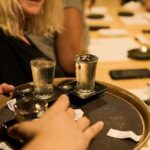
After the izakaya, you shift to a cozy spot specializing in Japanese sake. This is one of the most consistently loved parts of the experience. The guide helps you try multiple recommended varieties of sake, paired with snacks that work with the flavors.
If you usually treat sake like a single category—just something to drink—this stop is where the light switches on. You’re tasting different styles and learning what changes from one pour to the next. That’s a lot more useful than a quick sample flight where you don’t get the why behind it.
The snack pairings are part of the point. Sake changes in how it feels on your palate depending on what you’ve just eaten. So rather than tasting in isolation, you taste in context, which makes the differences easier to notice and remember.
You’ll also appreciate that the guide sets the pace. Without guidance, sake tasting can turn into guessing. With guidance, you’ll know what you’re looking for and you’ll feel confident ordering later on your own.
One more practical thing: plan for the night to get slightly alcohol-forward. You’re not just tasting a little. You’re building a drinking-and-snacking evening, with multiple venues. Hydrate in between stops if you’re prone to getting tipsy quickly.
Hozenji Temple: a short lesson in traditional praying
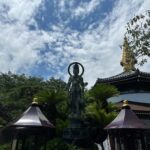
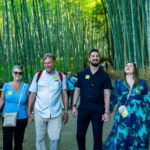
Midway through the night, you take a break from food and drink to visit Hozenji Temple. Your guide gives a short guided explanation of the traditional way of praying at a Japanese temple, which adds a grounded layer to an otherwise nightlife-heavy evening.
This stop works well because it doesn’t feel like a long, boring lecture. It’s brief—just enough to change how you look at the next streets you walk. And because it’s guided, you’re less likely to miss small ritual details.
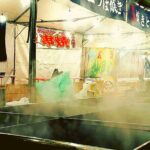
On the way, you might also see street stalls. The tour description notes that you could enjoy snacks like sweets or takoyaki along the route. Even if you don’t buy anything every time, seeing that street-food flow helps you understand Osaka at street level.
The temple stop also gives your group a natural reset. If you’ve been eating continuously, the walking and explanation help you slow down for a few minutes before returning to the fun chaos of the next bar scene.
Do remember it’s still nighttime. Wear something comfortable enough for short walking and keep your phone handy for quick photos, but don’t forget to give the moment respect.
You can also read our reviews of more guided tours in Osaka

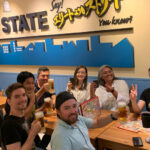
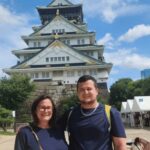
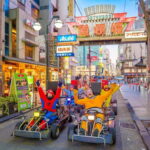
Karaoke snack bar: singing with locals and the all-you-can-drink finish
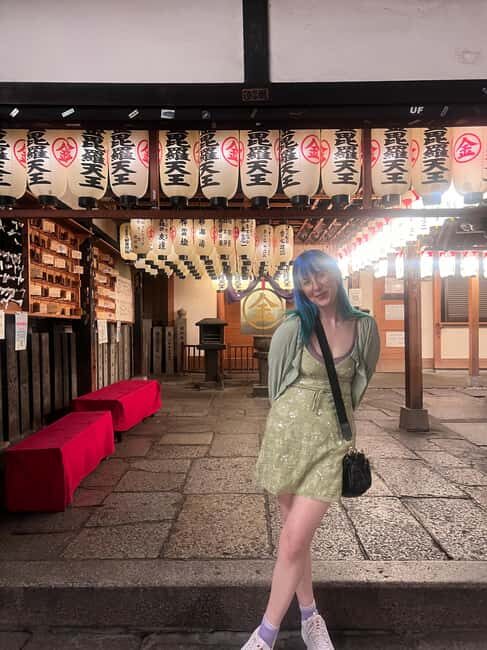
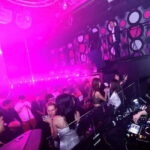
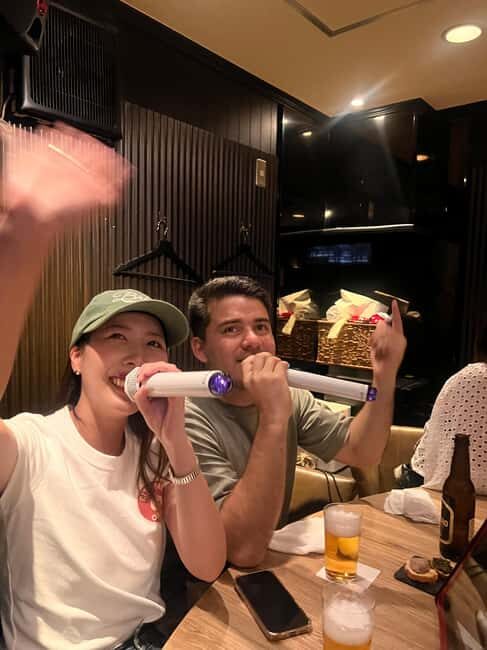
The night ends where Osaka feels most like Osaka: a super-local karaoke snack bar. This is the part many people call the highlight, and it’s easy to see why.
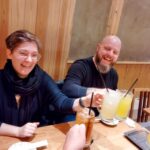
You’ll sing along with Japanese customers, and the vibe is social rather than touristy. Past guests noted locals welcoming them like friends, and even sharing English songs, which is a big confidence booster if your Japanese is limited. You’re not expected to be a superstar. You just need to be game.
It’s also an all-you-can-drink situation, so you’re not constantly checking your watch for the next payment. That helps the karaoke feel like a real night out, not a timed performance.
Because this is the final stop, you can let loose a little more. By this point, you’ve already built comfort with your guide and the group, and you’ve learned the cultural basics that make you blend in more easily.
One consideration: karaoke bars can involve sound levels that are loud. If you’re sensitive to noise, bring ear protection or expect to take quick breaks between songs.
Price and what you’re really paying for (plus the shared tab)
The tour price is $40 per person, and the duration is about 210 minutes. That base price covers the guide fee and explanations, plus a traditional souvenir. It also includes the guide’s photo-taking, which several guests specifically praised.
But the real cost equation is the shared food and drinks tab at the venues. The information you’re given is clear: you’ll split the cost of food and drinks at each place, and the total is typically around JPY 7,000–10,000 per person. The guide’s drinks are also covered by participants, so that shared tab is not just for your personal orders.
So what’s the value? You’re paying for:
- guided navigation through Namba/Dotonbori and into Hozenji Temple
- cultural explanations you can’t reliably pick up on your own mid-night
- a sake tasting that includes multiple varieties rather than one-off samples
- an actual karaoke experience with a local crowd
If you were to do this alone, you’d spend time figuring out where to go, then still pay separately for each stop. A guided plan compresses the effort and reduces the trial-and-error. For many people, that’s worth more than the difference between buying “just food” or buying “food plus guidance plus atmosphere.”
If you’re watching your budget tightly, plan for the on-site spending and treat the $40 as the guide and structure. If that fits your travel style, this tour can be a great way to have one high-impact night without wasting other evenings trying to assemble a plan.
Who should book this Osaka night out
I think this works best if you want three things in one evening: food, drinks with cultural context, and a final activity that’s genuinely fun. It’s also a strong pick for first-time Osaka visitors who want a night that feels local without turning into a confusing scavenger hunt.
This is also a good solo option. The group is small, and the tour format keeps conversation moving, especially during shared meal time and at the final karaoke stop.
It’s not a fit for everyone. The tour isn’t suitable for people under 20. If you’re highly sensitive to smoke, keep in mind that some venues allow smoking. And if you have strong dietary restrictions, the “shared among participants” style could be awkward since the tour data doesn’t mention alternatives.
Finally, I’d book this if you enjoy a guided “rules and rhythm” lesson. Learning etiquette like no double-dipping isn’t just polite. It helps you relax and enjoy the table without second-guessing.
Should you book the Osaka Night guided Bar Hopping with Sake & Karaoke?
Yes—if you want one well-paced Osaka night that mixes nightlife with real local context. The best part is the combination: izakaya manners that actually help you feel comfortable, a sake tasting that teaches you enough to order better later, and a karaoke finish that puts you in the same room as locals.
If you hate shared spending, or if smoke sensitivity is a dealbreaker, you should think twice. The tour fee is only part of the budget, and the venues are not described as smoke-free.
If you’re okay with a shared tab and want an experience that feels like hanging out with people who know the area, this is the kind of night you’ll remember longer than another list of famous sights.
FAQ
Where do I meet the guide?
You meet at 7:00 PM in front of the FamilyMart right outside Namba Station Exit 14. Look for your guide holding a BITEMEOSAKA sign.
How long is the tour?
The experience runs for about 210 minutes (3.5 hours).
What’s included in the tour price?
The price includes the guide fee (with explanations and photo taking) and a traditional Japanese souvenir. Food and drinks are shared among participants and not included in the tour fee.
About how much should I budget for food and drinks?
Expect a shared tab at the venues totaling roughly JPY 7,000–10,000 per person. The guide’s drinks are also covered by participants.
What group size and language options are there?
The group is limited to 10 participants. The guide speaks English and Japanese.
Is this tour suitable for everyone?
It’s not suitable for people under 20 years. Also, some restaurants may allow smoking, so plan accordingly if that matters to you.