REVIEW · KYOTO
Authentic Kyoto Gion Geisha/Maiko Cultural Experience
Book on Viator →Operated by JTB Global Marketing & Travel Inc. · Bookable on Viator
Geisha culture feels real in Gion. This small-group walk and teahouse program pairs a knowledgeable English guide with live dance/music so you’re not just staring at performances. You also get photo time during the experience, which makes this easier to remember later.
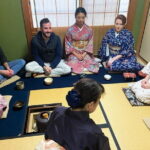
I like that the heart of the tour is the tea ceremony in a traditional tatami room, not a rushed stop. At the teahouse, you’ll have intimate time for conversation and matcha, with a setting that feels like Kyoto’s old rules still matter.
One thing to plan around: you can’t choose whether you meet a maiko or a geiko, since it depends on the day.
In This Review
- Key highlights you should care about
- Gion, but with breathing room: the tour’s real advantage
- From Gion-Shijo to Hanamikoji: a short walk with meaning
- Inside the teahouse: meet a maiko or geiko, then watch dance and music
- Etiquette that actually matters: socks, tatami, and keeping the mood right
- Photo time: how to capture the memory without turning it into a show
- Price and value: why $155.22 can be worth it (or not)
- Timing, meeting points, and how not to stress on the day
- Who this Kyoto experience fits best
- Should you book this maiko/geiko teahouse experience?
- FAQ
- How long is the Authentic Kyoto Gion Geisha/Maiko Cultural Experience?
- What is the group size for this tour?
- Will I meet a maiko or a geiko, and can I choose?
- Is the guide available in English?
- What happens during the teahouse portion?
- What should I wear or bring?
- Can children join this tour?
- When will I get confirmation, and can I cancel?
Key highlights you should care about
- Max 10 travelers so the experience stays personal, not chaotic
- Hanamikoji Street at the start to get context as you walk into Gion
- Maiko or geiko plus dance and music in an authentic teahouse setting
- Matcha tea ceremony with time to ask questions and understand the customs
- Photo opportunities during the program, with etiquette guidance
Gion, but with breathing room: the tour’s real advantage
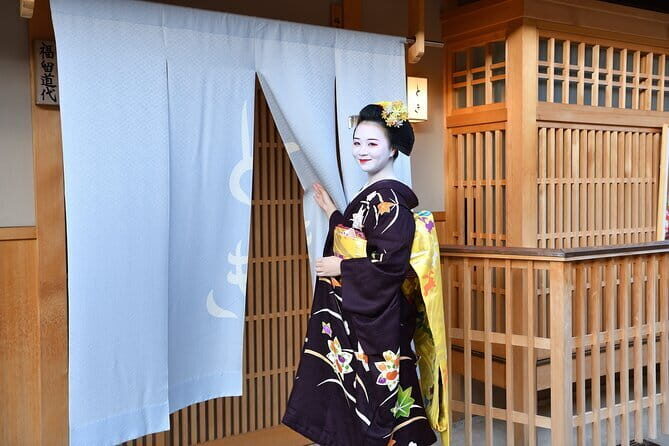
Kyoto’s Gion can be a lot. Even when you’re doing everything right, crowds and noise can turn cultural moments into background scenes. This experience fixes that with a small group size (up to 10), which changes how the whole evening feels.
You’re not left on your own, either. An English-speaking guide walks with you, explains what you’re seeing, and helps you understand how geisha culture actually works day to day. That context matters, because geisha arts aren’t just entertainment. They’re skill, ritual, and careful social performance.
And since the program includes time for photos, you don’t have to choose between respectful silence and capturing the memory. The trick is doing it at the right moments, and the guide will keep you on track.
You can also read our reviews of more tours and experiences in Kyoto.


From Gion-Shijo to Hanamikoji: a short walk with meaning
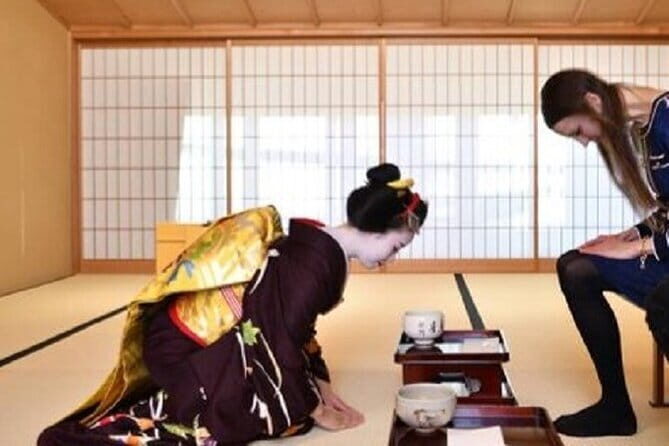
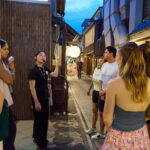
The tour begins at Gion-Shijo Station (1 Chome Miyagawasuji). Then you head toward the teahouse with your guide, using the time to orient you in Gion instead of wasting it.
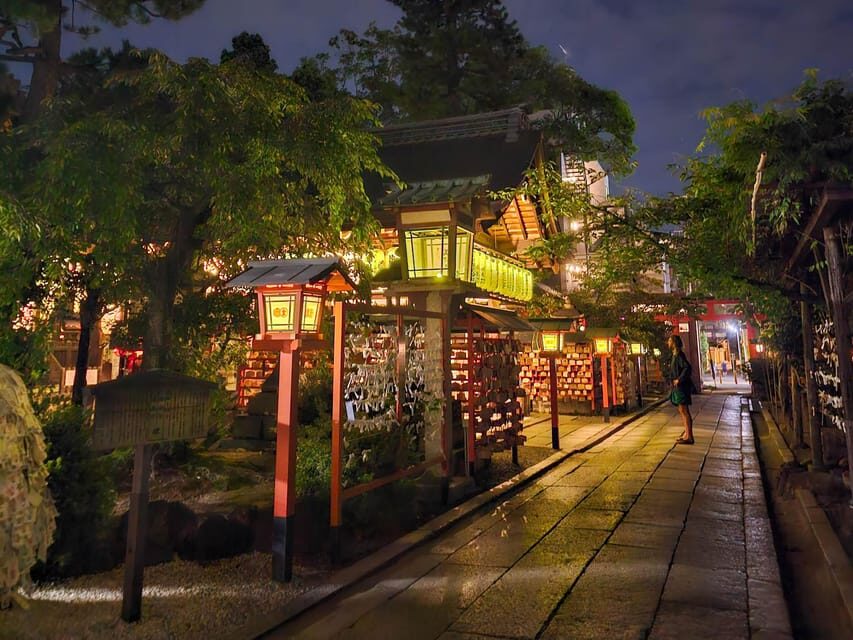
The first stop is Hanamikoji Street, one of the most iconic lanes in the district. You’ll spend about 15 minutes there with the guide, and the goal isn’t to “see a street.” It’s to understand why Gion looks the way it does and how that setting connects to the people you’ll meet later.
Practical value: this early context helps you connect the dots when you’re sitting in that tatami room later. Without it, you can still enjoy the show. With it, the performances make more sense.
Inside the teahouse: meet a maiko or geiko, then watch dance and music
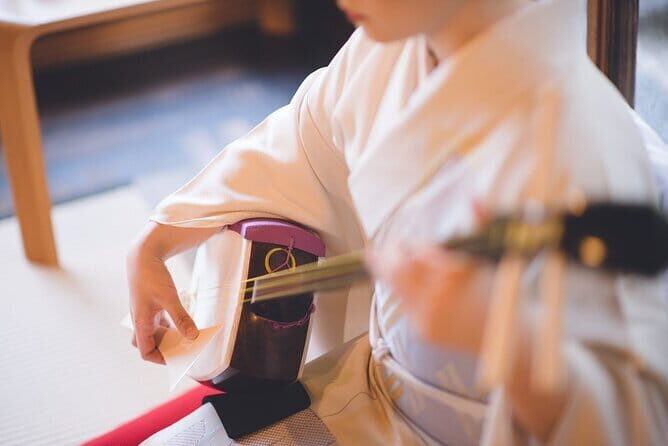
The main event happens at the teahouse in Gion and lasts about 1 hour. Expect a small, controlled group setting designed for conversation and respectful viewing.
Here’s what you should plan on during the teahouse portion:
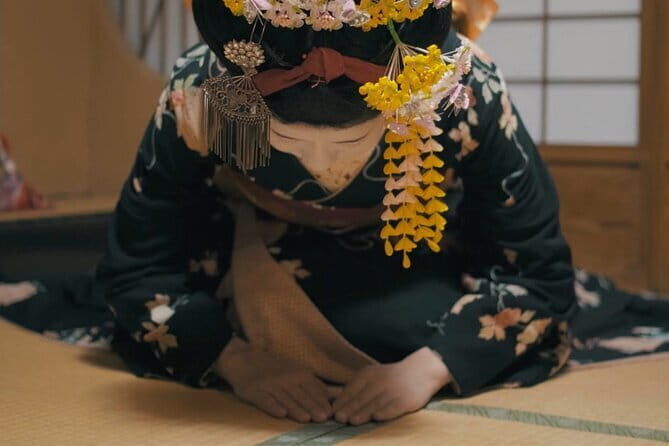
- A maiko or geiko (apprentice or full performer) and a tea master on the day’s schedule
- Traditional dance viewing (and accompanying music)
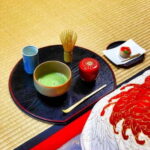
- A matcha tea ceremony experience
- Intimate conversation time with the performer and the teahouse owner
- Photo opportunities during the program
- Guidance on etiquette so you know what’s expected on tatami
The “maiko or geiko” part is the biggest variable. The important point is that you’re not guaranteed which person you’ll meet, because it cannot be selected. Your schedule decides, not your preferences.
From the way the experience is described and the way people talk about it, the conversation piece is a major reason this feels special. You’ll have a chance to ask questions directly and learn how daily life and training connect to the arts you’re watching.
Also, be aware that the teahouse program can include extra cultural touches beyond the dance-and-tea basics. Some groups report instrument playing from the owner (a former geiko) as part of the experience. If that happens on your day, it’s a nice bonus that turns the room into more than a stage.
Etiquette that actually matters: socks, tatami, and keeping the mood right
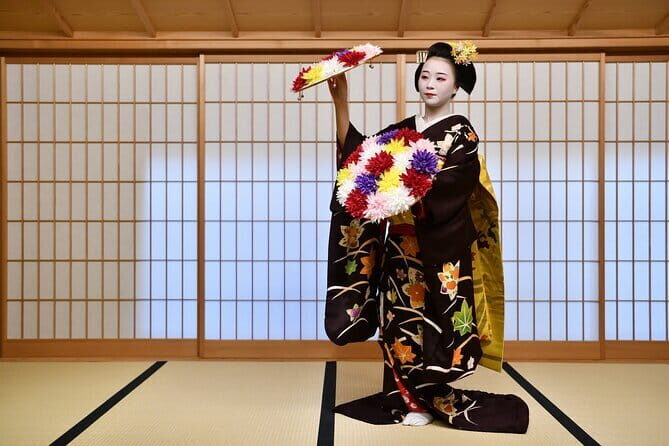
Japanese indoor spaces have rules, and tatami is one of the places where those rules are not optional.
You’ll want to:
- Wear socks
- If anything is wet (feet, clothes, or bag), wipe it off with a towel before entering
- Help keep the tatami spaces clean
This isn’t just “politeness.” It affects how smoothly you’ll move through the room and how comfortable the tea ceremony flow is. If you show up prepared, you’ll spend less time worrying and more time paying attention.
If rain is in the forecast, I’d treat this like a comfort-and-sanity situation: bring a small towel and plan to keep your outer layer dry until you’re inside.
Photo time: how to capture the memory without turning it into a show
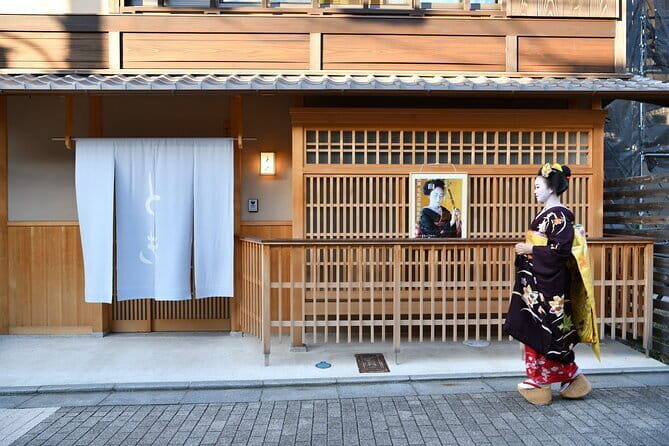
It’s rare to get clear permission to take photos during culture-focused programs, especially in traditional spaces. This one includes picture taking as part of the experience, and the guide helps you do it appropriately.
The best approach is simple:
- Listen first, then shoot when the guide indicates it’s okay
- Keep your camera/phone ready so you don’t fumble mid-performance
- Don’t block anyone’s view or stand where you’d disrupt the tea ceremony moments
If you follow the guide’s cueing, your photos will look better, and you’ll stay respectful. This is one of those cases where “rules” make the experience feel better, not worse.




Price and value: why $155.22 can be worth it (or not)
At $155.22 per person for about 1 hour 30 minutes, this isn’t a budget activity. The real question is whether you’re paying for something you can’t easily recreate on your own.
Here’s what you’re actually buying:
- A guided walk through Gion (including Hanamikoji Street)
- A teahouse experience centered on meeting a maiko or geiko
- Live viewing of traditional dance and music
- A matcha tea ceremony with context
- Small-group interaction and translation
- Photo opportunities
- English guide support throughout
Could you wander Gion and watch performers from the street? Sure. But the street gives you distance, and it doesn’t include tea ceremony structure, etiquette guidance, or conversation time.
If you value direct interaction and guided interpretation more than “just being nearby,” then the price starts to make sense. If you’re primarily after a quick photo and don’t care about the ritual and explanations, you may feel it’s too costly for the time.
Timing, meeting points, and how not to stress on the day
The total duration is about 1 hour 30 minutes, with the walk and context up front and the teahouse experience after.
You’ll meet at Gion-Shijo Station and the program ends at the teahouse area (listed as Gionmachi Minamigawa). Plan for an easy pace—this isn’t a long trek—and bring comfortable footwear for the street portion (then switch to socks-in when you’re inside).
A quick planning note: confirmation is received within 48 hours, subject to availability. Also, if a minimum group size isn’t met, the date may be canceled up to 10 days before the start. If your Kyoto schedule is tight, it’s worth having a Plan B for that evening.
Who this Kyoto experience fits best
This tour is a strong match if you want:
- A small-group cultural experience rather than a crowded show
- English interpretation so you can understand what you’re seeing
- A respectful introduction to geisha arts through dance + tea
- A chance to ask questions and learn the meaning behind the performance
It’s also a good choice for first-timers to Kyoto’s geisha world, because the guide’s job is to translate more than words. It’s translating customs—how people behave in the teahouse, what matters in the ceremony, and why the performances are structured the way they are.
If you hate waiting, dislike etiquette rules, or want total freedom to roam, you might find the scheduled flow limiting. This experience works best when you’re ready to follow cues and enjoy the room as it’s meant to be experienced.
Should you book this maiko/geiko teahouse experience?

Book it if you want Gion culture with structure: a small group, guided context, real teahouse etiquette, live dance/music, and matcha tea in a traditional setting. The small group size is the big win for most people, because it makes questions and conversation feel natural rather than forced.
Skip it if you mainly want low-cost sightseeing, or if you’re only chasing street photos. You’ll pay more than a walk-and-wander plan, and the highlight is the guided teahouse experience, not the neighborhood itself.
If you do book: wear socks, bring something to handle rain, and go with the mindset that part of the experience is following the rhythm of the room.
FAQ
How long is the Authentic Kyoto Gion Geisha/Maiko Cultural Experience?
It runs about 1 hour 30 minutes total, with a short guided walk and then an approximately 1 hour teahouse experience.
What is the group size for this tour?
The maximum group size is 10 travelers.
Will I meet a maiko or a geiko, and can I choose?
You’ll be accompanied by either a maiko or a geiko depending on the day. You cannot select which one you meet.
Is the guide available in English?
Yes. The tour includes an English-speaking guide who translates and provides context.
What happens during the teahouse portion?
You’ll enjoy a maiko/geiko traditional dance viewing and music, participate in a matcha tea ceremony experience, have a chance to interact with the performer and the teahouse owner, and take photos. You’ll also receive guidance on proper behavior.
What should I wear or bring?
Wear socks. If your feet, clothes, or bag are wet (for example, from rain), wipe water off before entering the teahouse, and help keep the tatami spaces clean. A towel is useful.
Can children join this tour?
Children ages 0 to 5 cannot join. For participants under 18, parental permission in writing is necessary. If a participant is under 15 or not yet enrolled in middle school, they must be joined by a parent or guardian.
When will I get confirmation, and can I cancel?
You should receive confirmation within 48 hours of booking, subject to availability. You can cancel for a full refund up to 24 hours before the experience start time.