REVIEW · TOKYO
Complete Sumo Experience in Tokyo
Book on Viator →Operated by Arumachi · Bookable on Viator
Sumo feels bigger than life. Then it gets close. This Tokyo experience takes you inside a working sumo stable at 北の湖部屋, with a crash course, real training, actual matches, and hands-on moments where you can challenge wrestlers and ask questions.
I especially love two things: first, seeing what the sumo stable looks like and how it runs day to day, instead of only watching from a faraway arena seat; second, the interaction packed into the 2 hours—Q&A, photos, and audience participation that makes sumo feel human and funny, not just ceremonial.
One consideration: since there’s audience participation and a Q&A session, the show portion can feel a bit drawn out if you’re hoping for a quick in-and-out. And if you choose the chanko-nabe option, you’ll want to be ready for a warm meal during the experience.
In This Review
- Key highlights you’ll actually feel during this Tokyo sumo experience
- A Tokyo Sumo Stable Tour at 北の湖部屋: What’s different here
- Your 2-hour experience flow: from crash course to photo time
- Training and matches: how you’ll understand what you’re seeing
- Challenging wrestlers and asking questions: where the fun is
- Chanko-nabe meal: choosing the right time slot for your priorities
- With chanko-nabe (11AM or 7PM start)
- Without chanko-nabe (3PM start)
- Price and value: is $138.52 reasonable for a 2-hour tour?
- Where to go, how to plan: meeting point and getting there
- Who should book this complete sumo experience
- Should you book this complete sumo experience?
- FAQ
- How long is the complete sumo experience in Tokyo?
- Where does the tour start and end?
- Is hotel pickup and drop-off included?
- What start times are available, and what’s included with each?
- What’s included besides watching training and matches?
- Do I get a chance to ask questions?
- Is this tour a small group?
- Do I need a printed ticket?
- Can I cancel for free?
Key highlights you’ll actually feel during this Tokyo sumo experience
- A working stable setting at 北の湖部屋, not a distant viewing setup
- Training plus matches with explanations so you understand what you’re seeing
- Challenge-and-ask participation, including Q&A and photo sessions
- Chanko-nabe option (11AM or 7PM) so you can experience the wrestler meal rhythm
- Small-group feel with a max of 30 travelers and mobile tickets for easy entry
A Tokyo Sumo Stable Tour at 北の湖部屋: What’s different here
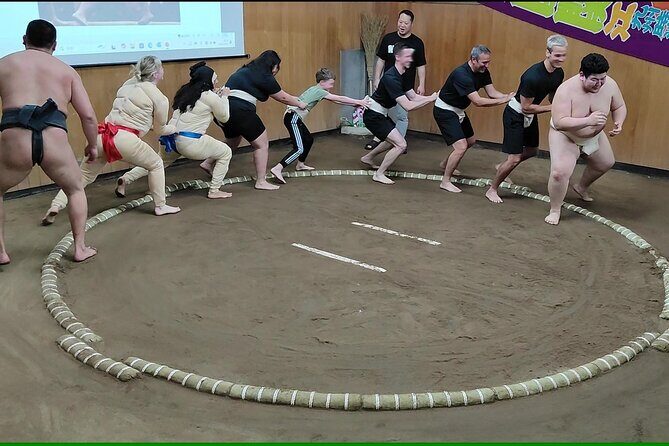
Most sumo experiences fall into two buckets: big tournament arena viewing, or early-morning practice at a stable. This one blends the best parts of both, but in a more personal way. You’re not stuck behind rows of seats. You get to see a traditional stable space, hear a crash course from an expert, and then watch wrestlers train and compete in a closer, more direct format.
The setting matters because sumo isn’t just about the final shove and win. It’s also about routine: how wrestlers move around the ring area, how they use time between bouts, and how the stable environment shapes the day. When you’re inside the stable, the culture feels real—quiet in some moments, focused in others, and then playful when the group participation kicks in.
I also like that the experience is built around understanding, not just staring. You’re guided through origins, history, and culture, then you immediately see training and matches. That helps you connect the stories to the action. If you’ve ever watched sumo on TV and felt like you were missing the “why,” this format is built for you.
Finally, it’s not only passive. You challenge wrestlers and ask questions. That’s the big difference. Even if your sumo knowledge is close to zero, the tour gives you enough context to make the participation moments actually meaningful.
You can also read our reviews of more tours and experiences in Tokyo.



Your 2-hour experience flow: from crash course to photo time
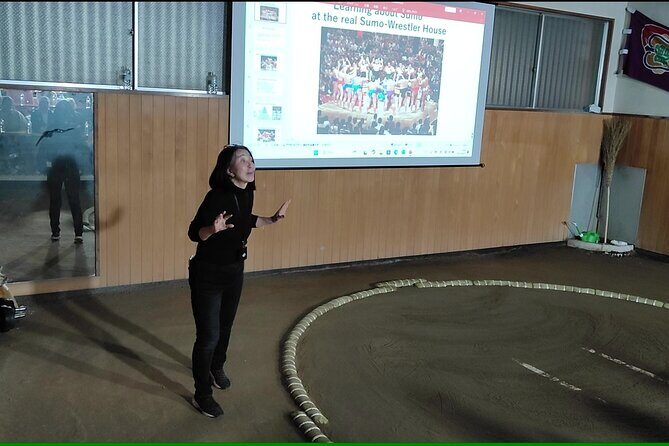
The total experience runs about 2 hours and ends back at the meeting point. There’s a simple rhythm to it, and the pacing is part of the value. You start with instruction, then you watch, then you interact, and then you finish with photos and a bit more conversation energy.
Here’s the typical flow you can expect:
1) Meet at 北の湖部屋 (Kiyosumi, Koto City)
You’ll start at Japan, 135-0024 Tokyo, Koto City, Kiyosumi, 2-chōme 10-11 北の湖部屋. There’s no hotel pickup, so you’ll want to plan to arrive on your own. The tour notes that the location is near public transportation, which is great because you can keep your day flexible.
2) A crash course on sumo basics and culture
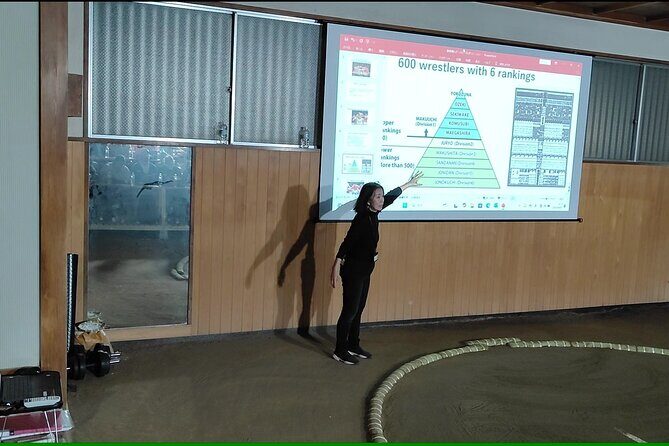
An expert guide gives you a focused introduction to sumo—its origin, history, and cultural role. This isn’t “read a textbook” material. It’s meant to help you understand what you’re seeing during training and matches.
3) Watch wrestlers training up close
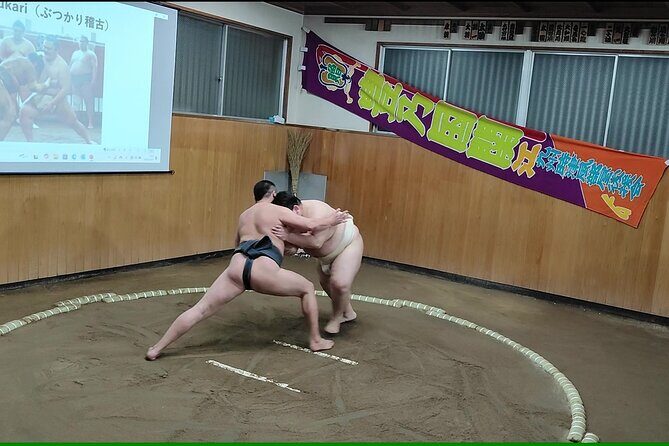
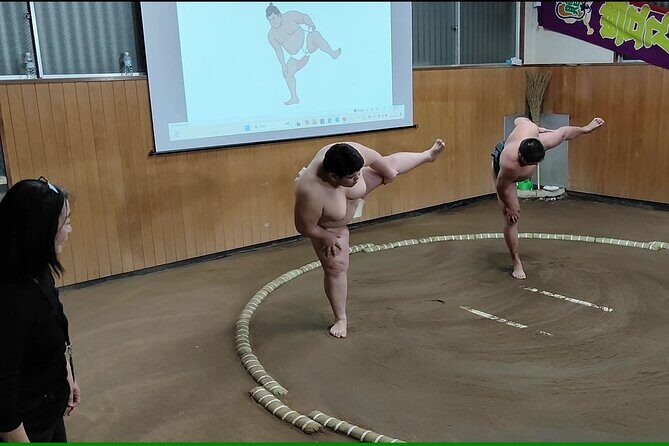
Training observations are a key part of the experience. This is where you start noticing how much technique and timing are involved, even before the match moments. You’ll also get to see the stable environment in action—how practice works in a real setting, not a staged performance.
4) Actual matches, with explanations
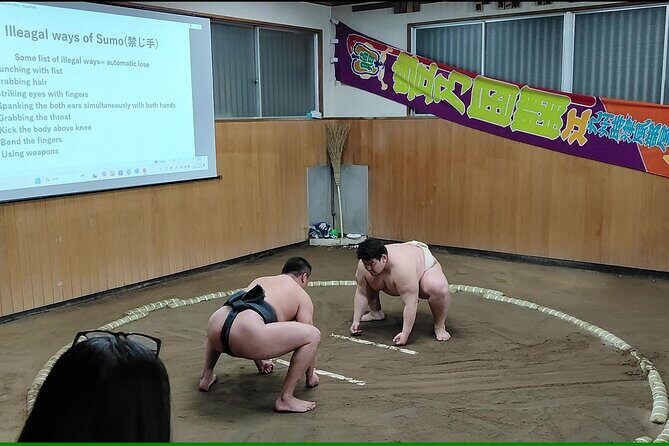
You’ll watch matches as part of the show. Importantly, there are explanations of the technique of combat. That matters because sumo is fast and symbolic at the same time. Having the “what to look for” guidance makes the action easier to follow.
5) Q&A with sumo wrestlers
You’ll get a Q&A session after the viewing segments. This is where you can ask the questions you’d normally save for later when you’re back in your hotel. It’s also where you’ll learn the practical side of stable life and sumo culture, not just the rules.
6) Challenge wrestlers + photo sessions
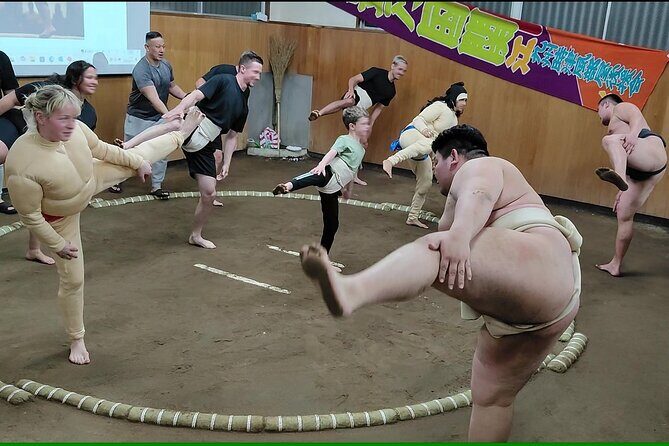
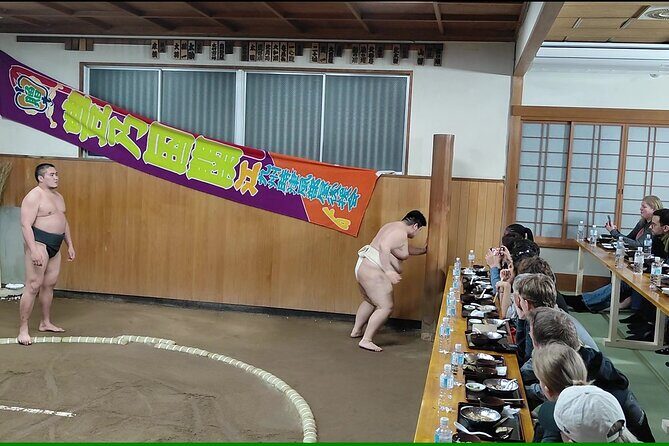
The tour includes photo sessions and a chance to challenge wrestlers. This is the moment most people remember, because you’re not only watching strength—you’re trying the sport side-by-side, with wrestlers guiding the experience. It’s also where the humor tends to show up, since the wrestlers participate and keep the atmosphere relaxed.
A final tip: arrive early if you can. One review mentioned that getting there early helps with the best seat. In a small-group stable setting, seat position can affect how clearly you can see both training and matches.
Training and matches: how you’ll understand what you’re seeing
This experience isn’t just “watch sumo.” It’s watch sumo with context. That changes the whole experience.
During training, you’ll get a chance to observe how wrestlers prepare—how they warm up, work technique, and move around the ring area. Even if you’ve only seen sumo as a TV highlight, training moments show you the thinking part: footwork, grip focus, balance, and the patient build-up before action.
When matches start, you’re not thrown in cold. The tour’s crash course and the explanations during combat moments help you recognize what’s happening. You’ll understand how technique connects to outcomes, rather than just seeing a quick win or loss.
One reason I think this works so well is that it reduces the intimidation factor. Sumo can look “untouchable” from the outside. But once you’ve got even a small framework—what the wrestlers are aiming for, why positioning matters—the action becomes easy to track.
Also, the stable format gives you an advantage over arena viewing. You’re closer to the wrestlers’ movements and body mechanics, and you can pick up details that you’d normally miss behind distance. It’s the difference between watching a concert on a screen and standing close enough to feel the rhythm.
Challenging wrestlers and asking questions: where the fun is
This is the part that makes the experience feel complete. Most sumo options stop at watching. Here, you get direct interaction: challenge, Q&A, and photo sessions.
What makes the participation valuable is that it forces you to slow down and pay attention. If you challenge a wrestler, you can’t just observe—you experience the stance, the grip tension, and how quickly balance shifts. Even if you don’t win (you won’t, in the way your brain wants to measure it), you learn something real.
The Q&A also helps you fill in gaps that watching alone never covers. You can ask about sumo culture and the wrestlers’ world, and then connect those answers back to what you saw in training and matches.
There’s also a social rhythm to it. One review highlighted humor and a strong atmosphere. In practice, that usually means the wrestlers keep things light during the participation moments, so you’re not left feeling awkward. You’re part of the show, not just a spectator.
My advice: come with 2 or 3 questions ready. Keep them simple. Examples you can prepare based on your interests (without trying to invent anything fancy) include questions about training routines, what sumo culture feels like day to day, or what people often misunderstand about the sport.
Chanko-nabe meal: choosing the right time slot for your priorities
This tour comes in two options. One includes a chanko-nabe meal, and one does not.





With chanko-nabe (11AM or 7PM start)
If you pick the 11AM or 7PM option, the show runs over a chanko nabe meal. That’s a big deal because chanko-nabe is the wrestler stew they eat to build their strength. So you’re not just watching sumo culture. You’re eating part of it.
This option is especially good if you like experiences that feel like lifestyle, not only performance. You’re timing your visit to match the stable meal rhythm, which gives the whole thing more meaning.
It’s also a practical choice for visitors who want a “complete package” in one stop: instruction, matches, participation, and then a meal.
Without chanko-nabe (3PM start)
If you choose the 3PM option, you skip the meal and get the experience without it. That can be the better fit if you already plan to eat elsewhere, or you just want the pure stable-and-sumo portion without adding a food segment.
Both options still include training and matches, Q&A, and photos. The difference is whether you want to add the chanko-nabe cultural element.
Price and value: is $138.52 reasonable for a 2-hour tour?
At $138.52 per person, this isn’t the cheapest way to see sumo. But it’s also not just a ticket to watch.
Here’s what you’re paying for, in plain terms:
- A crash course on sumo history/culture from an expert
- Training and matches by sumo wrestlers
- A Q&A session
- Photo sessions
- Time to challenge wrestlers (the interaction component is the real differentiator)
- Plus, if you choose the chanko-nabe option, you get the meal built into the experience
You’re also in a small-group setup (max 30 travelers), and that matters. In a stable environment, small groups usually mean you get better access to viewing angles and smoother participation logistics.
So the value question comes down to your style. If you only want to watch from a seat, you may find cheaper options. If you want close-up action, explanations, and hands-on interaction with the wrestlers, the price starts to look fair.
In my book, this is one of those “pay a bit more, get a lot more story” experiences.
Where to go, how to plan: meeting point and getting there
You meet at 北の湖部屋 in Kiyosumi, Koto City. There’s no hotel pickup, and the tour ends back at the same spot. That’s helpful because it keeps the day simple: you don’t have to coordinate a longer travel loop.
The good news: it’s listed as near public transportation. That means you can build it into a normal Tokyo day without dedicating your whole schedule to reaching the venue.
A practical planning tip: plan to arrive earlier than you think you need. One review specifically noted that being early helps you get the best seat. In a stable setting with close viewing, early arrival can noticeably affect what you see.
Also remember it uses a mobile ticket. So have your phone ready and your ticket accessible.
Who should book this complete sumo experience
This tour is a great fit if you want sumo with context and interaction.
You’ll likely enjoy it if:
- You want a working stable experience, not just tournament viewing
- You like guided explanations that help you understand technique
- You want to do more than watch, including challenge and Q&A
- You’re a food culture fan and might choose the chanko-nabe option
It may not be the best fit if:
- You want a short, no-drama viewing-only segment
- You don’t want any meal component (if you’re considering the 11AM or 7PM options, pick based on whether you actually want chanko-nabe)
Most travelers can participate, so you don’t need prior sumo experience. The tour is built to bring you in quickly.
Should you book this complete sumo experience?
If your goal is to see sumo up close and leave with real memories (not just photos of a ring), I’d lean yes. The combination of stable access, expert explanations, actual matches, Q&A, photo time, and the chance to challenge wrestlers is why this feels like more than a show.
Book it especially if you’re the type who learns best by watching, asking, and trying. If that’s you, this tour turns sumo from a distant sport into something you can talk about with confidence back home.
FAQ
How long is the complete sumo experience in Tokyo?
It lasts about 2 hours.
Where does the tour start and end?
It starts at Japan, 135-0024 Tokyo, Koto City, Kiyosumi, 2-chōme 10-11 北の湖部屋, and ends back at the meeting point.
Is hotel pickup and drop-off included?
No. Hotel pickup and drop-off are not included.
What start times are available, and what’s included with each?
With a chanko-nabe meal, the experience runs at 11AM and 7PM. Without a chanko-nabe meal, it runs at 3PM.
What’s included besides watching training and matches?
You’ll get a crash course, training and matches by sumo wrestlers, a Q&A session, and photo sessions with sumo wrestlers. The experience also includes challenging wrestlers.
Do I get a chance to ask questions?
Yes. There is a Q&A session with the sumo wrestlers.
Is this tour a small group?
Yes. The group size has a maximum of 30 travelers.
Do I need a printed ticket?
No. The tour uses a mobile ticket.
Can I cancel for free?
Yes. You can cancel up to 24 hours before the experience start time for a full refund.