REVIEW · OSAKA
From Osaka or Kyoto: Full Day Sightseeing Tour of Kyoto
Book on Viator →Operated by F Trip · Bookable on Viator
Nine hours, four Kyoto icons, one plan. This full-day tour strings together UNESCO-level landmarks and the most photographed shrine path in Japan, then finishes in Arashiyama’s bamboo and river views. I like the air-conditioned vehicle and the fact that you get a mobile ticket, which makes the start feel simple.
I also like that the stops are famous for a reason: Kinkaku-ji for the Golden Pavilion and Arashiyama Bamboo Forest for that instantly recognizable Kyoto calm. Guides named in past tours, like Theo(theodore/Theo), Amy, Anson, Lucy, and Lee, are repeatedly described as engaging and good at keeping people moving on time.
One consideration: this is a fast, long day with a lot of walking, and a couple of past departures noted they wanted more time for lunch or less rush at certain stops. If you hate group timing, plan for a packed schedule.
In This Review
- Key highlights at a glance
- Why this full-day Kyoto plan works (even if you are short on time)
- Kinkaku-ji (Golden Pavilion) in a tight 40 minutes
- Fushimi Inari Taisha and its torii tunnel (and how to enjoy the climb)
- Nijo Castle: feudal palace architecture, UNESCO status, and a ticket you should plan for
- Arashiyama’s best route: Bamboo Forest, Nonomiya Shrine, Togetsukyo, and Kimono Forest
- The Bamboo Forest slot (40 minutes)
- Nonomiya Shrine and the black torii moment
- Togetsukyo Bridge for the classic Kyoto view
- Kimono Forest: the 600-cylinder installation
- The pace, the walking, and what to bring for a 9-hour day
- Guide quality makes the difference: Theo, Amy, Anson, Lucy, Lee, and Theodore Chan
- Value check: what you really pay for
- Who this tour is best for (and who should consider a different pace)
- Should you book this Kyoto highlights day tour?
- FAQ
- How long is the Kyoto sightseeing tour?
- Where does the tour start?
- What is the price per person?
- What is included in the tour price?
- Which tickets are not included?
- Are any stops free?
- How big is the group?
- Should you book this tour?
Key highlights at a glance
- Kyoto hits in one day: Golden Pavilion, Fushimi Inari torii path, Nijo Castle, and Arashiyama
- Arashiyama variety: Bamboo Forest, Nonomiya Shrine, Togetsukyo Bridge, plus the Kimono Forest installation
- Smart use of free sights: Fushimi Inari and several Arashiyama stops don’t require admission
- You pay for only the big paid entries: Kinkaku-ji and Nijo Castle ticket fees are listed as separate add-ons
- Group size stays controlled: maximum 45 travelers, with an on-board air-conditioned ride
- Guides bring the stories: multiple guide names (Theo, Amy, Anson, Lucy, Lee, Theodore Chan) are praised for keeping things engaging
Why this full-day Kyoto plan works (even if you are short on time)
Kyoto can swallow an entire trip if you let it. The best way to deal with limited time is to pick your top icons and build a route that minimizes decision-making. This tour does that. It runs about 9 hours, covering the classic “greatest hits” in a logical order: first the Golden Pavilion, then Fushimi Inari’s torii tunnel, then Nijo Castle, and finally Arashiyama’s bamboo and bridge area.
The value is not only the list of sites. It is the logistics piece. You get an air-conditioned vehicle and a guide, which means you are not spending your day figuring out transit times between neighborhoods. You are also using a mobile ticket, which reduces the hassle of handling paper passes on a busy travel day.
What you should expect is pacing. Several stops are time-limited, and the itinerary is designed for a high number of major photo-worthy moments. That is great for first-timers or anyone who wants a structured day. It is less great if you want long, slow hangs at one temple or shrine.
Price-wise, the tour is $65.90 per person, and it is selling well lately (it has been booked 10+ times in the last week). The catch is that some key entrances are not included. If you are budgeting your total day cost, you will need to add:
- Kinkaku-ji admission: 500 yen
- Nijo Castle & Ninomaru Goten Palace admission: 1,300 yen
Lunch is also not included.
That said, the math often still works for people who would otherwise pay for individual guided services or waste time on multiple day-tickets for transit.
A few more Osaka tours and experiences worth a look
Kinkaku-ji (Golden Pavilion) in a tight 40 minutes
Your first major stop is Kinkaku-ji Temple, the Zen Buddhist site known as the Golden Pavilion and a UNESCO World Heritage site. The scheduled time here is about 40 minutes, and the admission ticket is not included (500 yen).
Why that matters: 40 minutes is short enough that you need to be ready the moment you arrive. You likely will not have time for a slow wander if you linger at every viewing point. But it is a good length for getting the core experience—seeing the golden exterior and taking in the surrounding temple atmosphere—without turning your morning into a half-day commitment.
Practical tip: if you care about photos, this is one of those “move early, think ahead” moments. The tour time suggests the group is expected to keep flow moving. If you want your best shot, decide where you want to stand before you step off the bus or arrive at the viewpoint.
Also note the tour does not include Kinkaku-ji ticketing. That means you will want to have cash or payment ready for the 500 yen admission when your guide directs you.
Fushimi Inari Taisha and its torii tunnel (and how to enjoy the climb)
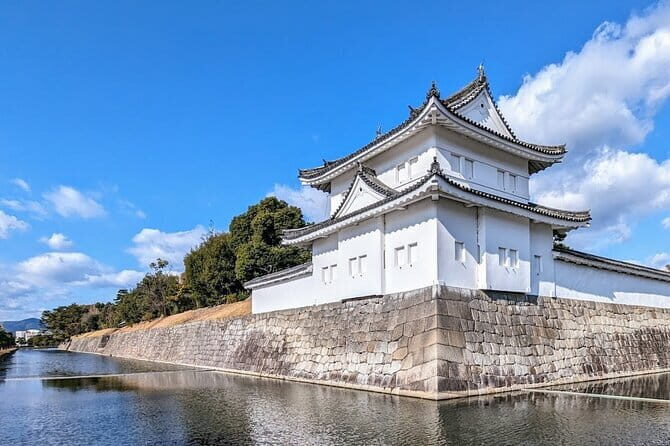
Next up is Fushimi Inari Taisha, with a scheduled visit of about 1 hour 10 minutes. Admission is listed as free.
This is the shrine with the Senbon Torii—thousands of vermilion torii gates—at the head shrine for Inari, the Shinto god of rice. Even if you have seen photos, it hits differently in person because you walk through the repeated shapes and the path keeps unfolding.
The main drawback with Fushimi Inari is also the main feature: it can turn into a climb of stop-and-go decisions. In a group tour setting, you get less freedom to roam at your own speed. Still, the extra time (over an hour) is helpful. You will have room to walk a meaningful stretch rather than just “arrive, photo, leave.”
How to make your time work:
- Decide in advance how far you want to go before you get distracted by side paths.
- Wear shoes that handle stone and crowds. (This is not a day for delicate footwear.)
And because it is free, this stop is where you get a lot of wow per yen spent.
Nijo Castle: feudal palace architecture, UNESCO status, and a ticket you should plan for
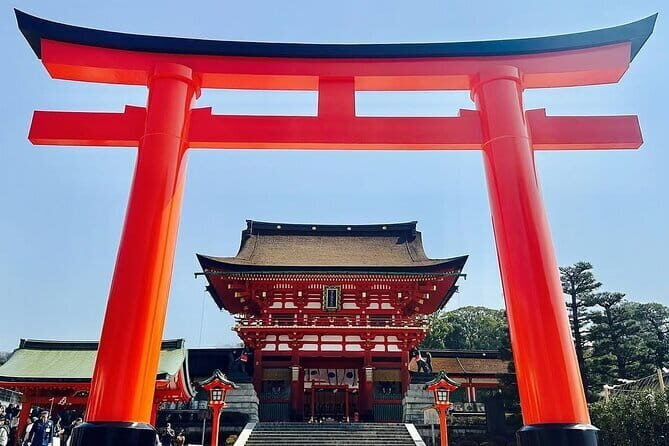
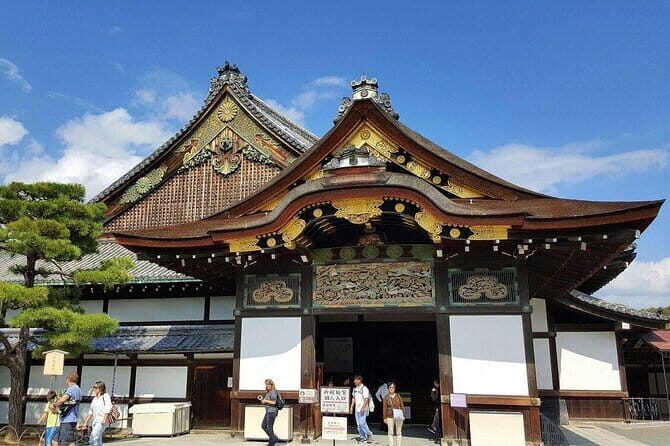
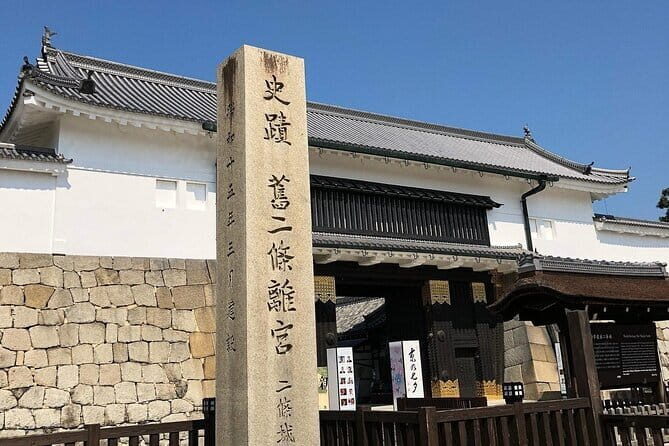
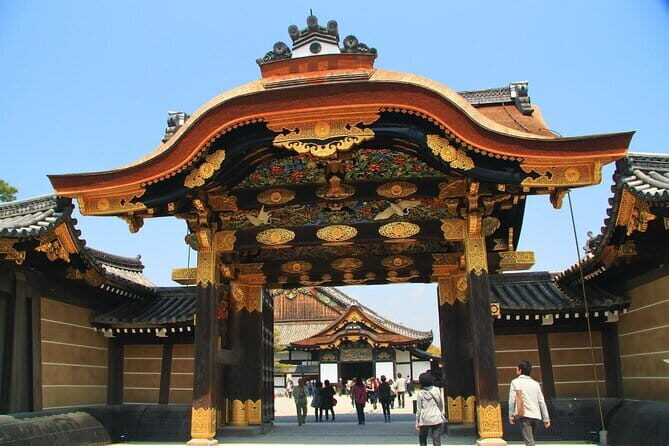
Then comes Nijo Castle (Nijo-jo). The visit time is about 1 hour, and the ticket is not included. The listed add-on is 1,300 yen for Nijo Castle & Ninomaru Goten Palace.
This stop is special for a different reason than the shrines and temples. Nijo Castle was built in 1603 as the Kyoto residence of Tokugawa Ieyasu, the first shogun of the Edo period. It is also a UNESCO World Heritage site (designated in 1994). In other words, this is not just a pretty backdrop. It is a major piece of Japan’s feudal-era political and architectural story.
The one-hour schedule is enough to understand the layout and see the palace buildings without feeling like you are trapped in one room. But it is also not enough for people who want to read every section at length. If you enjoy learning quickly and moving on, this works well.
Budget tip: because the tour does not include the 1,300 yen admission, you will want to keep that cost in mind when judging overall value. Still, paying once for the castle entry often ends up easier than trying to line up tickets on your own while juggling transit.
Arashiyama’s best route: Bamboo Forest, Nonomiya Shrine, Togetsukyo, and Kimono Forest
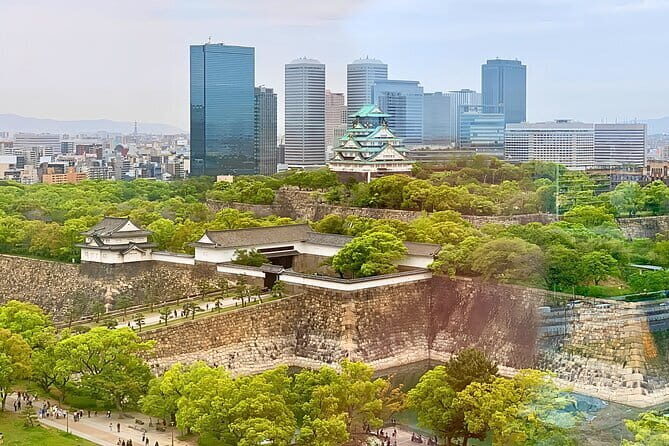
Arashiyama is where the tour slows down into scenery. You get multiple short stops rather than one long “single highlight.” That works because Arashiyama’s appeal is variety: nature, shrine form, a classic bridge view, and a modern textile-style installation.
The scheduled stops are:
- Arashiyama: about 20 minutes (free)
- Arashiyama Bamboo Forest: about 40 minutes (free)
- Nonomiya Shrine: about 20 minutes (free)
- Togetsukyo Bridge: about 20 minutes (free)
- Arashiyama Kimono Forest: about 20 minutes (free)



The Bamboo Forest slot (40 minutes)
The Arashiyama Bamboo Forest is the symbol many people come for. It is free on this tour and scheduled for 40 minutes, which is long enough for the main walk and a few photo attempts without feeling like you got there at the last second.
In a group schedule, bamboo time is about pacing yourself. Go in expecting a crowd, then focus on how the light and spacing feel between the stalks. Even when photos look identical online, your actual position in the grove changes what you see.
Nonomiya Shrine and the black torii moment
Nonomiya Shrine is scheduled for 20 minutes. It is free. What makes it worth including is that it is described as having a distinctive black torii gate, which is different from the more common vermilion you will see elsewhere.
This short stop is a good reset. It lets you step away from the densest crowds and notice a different shrine style without losing the momentum of the day.
Togetsukyo Bridge for the classic Kyoto view
Then you hit Togetsukyo Bridge, another free stop with about 20 minutes. The tour notes it spans the Katsura River area and that it is the most iconic landmark in Arashiyama. It traces back to the Heian period and was reconstructed in the 1930s.
This is a great “take it all in” stop. It is not just a bridge you walk across. It is one of those Kyoto visual anchors that makes the Arashiyama part of the day feel complete.
Kimono Forest: the 600-cylinder installation
Finally, there is Arashiyama Kimono Forest, about 20 minutes and free. This one is not an old building—it is an installation made of 600 clear acrylic cylinders, each about 2 meters tall, wrapped in vibrant kimono fabric designs.
If you like modern art that uses traditional pattern styles, this is fun. If you do not care about installations, treat it as a quick, colorful break between the bamboo and the bridge.
The pace, the walking, and what to bring for a 9-hour day
This tour is built for getting a lot done. That is the main reason it is popular for short trips. But it comes with the trade-off: the day is long and movement-heavy.
Past experiences included comments about feeling rushed at some sites and wanting more time for lunch. Another note: finding the group in the morning could be stressful before the tour gets going. So if you want an easy start, give yourself buffer time and arrive early enough that you can calmly find your meeting point.
Group size is capped at 45 travelers, which usually keeps it from becoming chaotic. Still, it is a group tour. You move together, and your schedule is guided.
What helps you enjoy it:
- Comfy walking shoes you can rely on for temple steps and shrine paths
- A light layer, because you might be outside for long stretches
- A small bag that stays easy to carry in crowds
One more practical detail: some guide experiences are described as using WhatsApp or a group chat to keep people aligned. That means your phone is not just for photos—bring it charged.
Guide quality makes the difference: Theo, Amy, Anson, Lucy, Lee, and Theodore Chan
In the reviews, the names that show up again and again are Theo, Amy, Anson, Lucy, Lee, and Theodore Chan. The common thread is not just friendliness—it is time management and explanation.
In practice, what you want from a guide on a tour like this is:
- quick context so you understand what you are looking at right away
- clear meeting points and “move now” efficiency
- enough flexibility for questions without derailing the schedule
The standout theme in praise is that guides were engaging and attentive, and in at least one case, a guide was said to keep the day pleasant with snacks. That is not guaranteed on every departure, but it hints that some guides go beyond reciting facts.
On the flip side, a smaller number of experiences criticized the tour as the least favorite on the trip, saying some stops felt rushed and the information felt limited. That tells you something important: this is a high-demand itinerary. Your experience depends on how smoothly your specific guide handles timing and storytelling.
Value check: what you really pay for
Here is the real cost picture.
- Tour price: $65.90 per person
- Included: air-conditioned vehicle and a guide
- Not included: lunch
- Not included: entrance tickets
- Kinkaku-ji: 500 yen
- Nijo Castle & Ninomaru Goten Palace: 1,300 yen
So you should plan for additional spending mainly on those two paid sites and whatever you decide for lunch.
Where the value lands for most people:
- If this is your first or only full day in Kyoto, you are buying convenience and compression.
- If you prefer guided flow and dislike transit planning, the vehicle and guide justify the structure.
- If you are comfortable navigating on your own and want slower time at fewer sights, you might prefer building your own day—but you will trade off convenience.
Also worth noting: the itinerary is built with several free stops (Fushimi Inari plus multiple Arashiyama locations). That helps keep your day cost from ballooning.
Who this tour is best for (and who should consider a different pace)
This fits best if you:
- want a high-impact first Kyoto day
- are starting from Osaka or Kyoto and want the day managed end-to-end
- like big icons and photo moments, with enough context from a guide
- can handle a long day and walking
It is less ideal if you:
- hate group pacing and want to linger
- are visiting only for deep, detailed temple study
- expect lunch to be a big focus (it is not included, and some people wanted more time)
If you are traveling with kids, note the tour requests you indicate stroller or large luggage when booking. That suggests the operator is mindful of logistics, but you still have to accept a walking-heavy day.
Should you book this Kyoto highlights day tour?
I would book it if your priority is to hit the headliners without getting stuck in transportation planning. The combination of Kinkaku-ji, Fushimi Inari, Nijo Castle, and Arashiyama’s bamboo-and-bridge circuit is a strong way to cover Kyoto in one go, and the tour includes the big comfort factor of an air-conditioned ride plus a guide.
I would hesitate if you want a slow, peaceful Kyoto day with lots of time for lunch and reading. The schedule is designed to move, and a couple of past experiences flagged that as a downside.
My practical decision rule: if you have limited time and you want a structured greatest-hits day, this is a solid choice. If you have multiple days in Kyoto and you want depth over speed, you might be happier building a lighter plan.
FAQ
How long is the Kyoto sightseeing tour?
It runs about 9 hours (approx.).
Where does the tour start?
It is described as departing from Osaka or Kyoto.
What is the price per person?
The price is $65.90 per person.
What is included in the tour price?
The tour includes an air-conditioned vehicle and a guide.
Which tickets are not included?
Lunch is not included. Entrance tickets for Kinkaku-ji (500 yen) and Nijo Castle & Ninomaru Goten Palace (1,300 yen) are also not included.
Are any stops free?
Yes. Fushimi Inari Taisha is listed as free, and several Arashiyama stops (including Bamboo Forest, Nonomiya Shrine, Togetsukyo Bridge, and Kimono Forest) are listed as free.
How big is the group?
The tour has a maximum of 45 travelers.
Should you book this tour?
If you want a guided, time-efficient sampler of Kyoto’s biggest sights, this one is a good fit—especially if you value the comfort of an air-conditioned ride and a guide to keep everything moving. Just go in knowing it is a long day with walking and that you will pay for the two main temple/castle admissions separately.