REVIEW · OSAKA
Kyoto Full-Day Private Tour (Osaka departure) with Government-Licensed Guide
Book on Viator →Operated by Japan Guide Agency · Bookable on Viator
Kyoto in one day needs a good captain. This private full-day tour from Osaka pairs government-licensed guidance with a flexible plan so you can hit Kyoto’s big names without getting lost in the logistics. I also like that you’re not locked into a single route—you can choose from many possible stops, then your guide tightens it into something realistic for your day.
Two things I’d point you toward right away: the chance to see iconic places with a licensed local who handles the story and the flow, and the value of doing a lot on foot with smart pacing. A fair consideration: this is a walking tour, and the schedule is built for sightseeing, not lingering—so bring snacks and plan for sore legs.
In This Review
- Why This Osaka-to-Kyoto Private Day Feels Worth It
- Price and What You’re Really Buying
- Walking Between Classics: How the Day Actually Works
- Your Best Strategy: Choosing Only 3–4 Stops
- Stop-by-Stop Breakdown: What You’ll See and Why It Matters
- Fushimi Inari-taisha Shrine: The Torii Tunnel Moment
- Kiyomizu-dera Temple: Learning the Temple Grounds
- Nijo Castle: UNESCO + Political Power in Stone
- Gion: Getting Oriented in Geisha District Streets
- Nishiki Market: Kyoto’s Kitchen in Walkable Blocks
- Kyoto Imperial Palace: From Kyoto’s Imperial Center to Today
- Pontocho: Atmosphere Along the River
- Higashiyama Ward: Preserved Old Kyoto Feel
- Ginkakuji and Nanzenji: Zen Views Without the Confusion
- Tofuku-ji and Toji: Bigger Zen Energy
- Kinkakuji: Golden Pavilion in Real Detail
- Ninna-ji and Shugakuin: Imperial-Adjacent Temple Moments
- Arashiyama Day: Bamboo, Bridge, and Zen Gardens
- Togetsukyo Bridge and Bamboo Groves
- Tenryu-ji, Daikaku-ji, and Okochi Sanso Garden
- The Northern Mountains Option: Kurama and Kibune
- Rock Garden Reality Check: Ryoan-ji
- Kennin-ji and the Uji Phoenix Hall Bonus
- What Having a Licensed English Guide Changes
- Who Should Book This Kyoto Private Tour
- Should You Book It
- FAQ
- Is this tour mainly walking?
- What’s included in the price?
- Are train or entrance fees included?
- Can we customize the Kyoto stops?
- Is it private or shared with other groups?
- How long is the full-day tour?
Why This Osaka-to-Kyoto Private Day Feels Worth It
- Government-licensed English-speaking guide who can explain what you’re actually looking at
- Pick 3–4 Kyoto sites from a larger menu of temples, shrines, historic districts, and imperial areas
- Pickup is offered from designated Osaka areas, with the walking tour beginning on foot
- Designed for first-timers who worry about getting turned around in Kyoto
- A mix of free and ticketed sights, so your guide can shape the day around cost and timing
Price and What You’re Really Buying
The price is $201.46 per person for an ~8-hour private experience. For Kyoto, that’s the part that feels most “worth it” when you’re coming from Osaka: you’re paying to remove friction—finding the right trains, staying on schedule, and understanding what matters at each stop.
What’s not included matters too. Transportation and entrance fees are on you, and lunch is not included. The good news is that some stops are listed as admission free, so your total day cost can stay under control if you choose accordingly.
You can also read our reviews of more guided tours in Osaka

Walking Between Classics: How the Day Actually Works
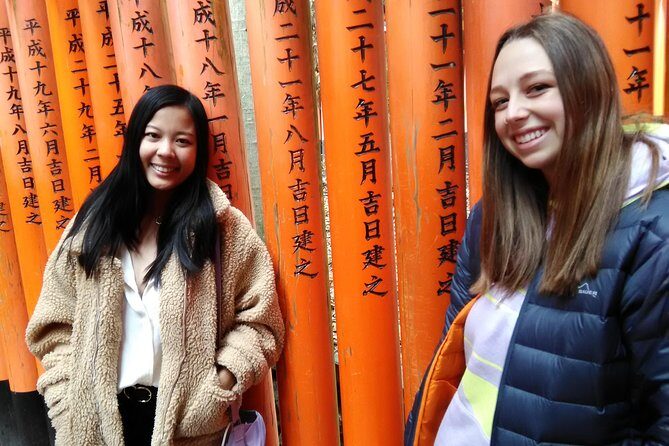
This tour is described as a walking tour, and the pickup is on foot. You meet within designated Osaka areas, then head toward Kyoto with your guide and a plan that fits your chosen stops.
That format shapes the whole experience. When you walk with a guide, you’re not just moving—you’re learning shortcuts, etiquette, and which streets to trust. The trade-off is physical: one review tip was blunt—bring a snack and expect a lot of walking—so do that, and you’ll enjoy the day more.
Your Best Strategy: Choosing Only 3–4 Stops
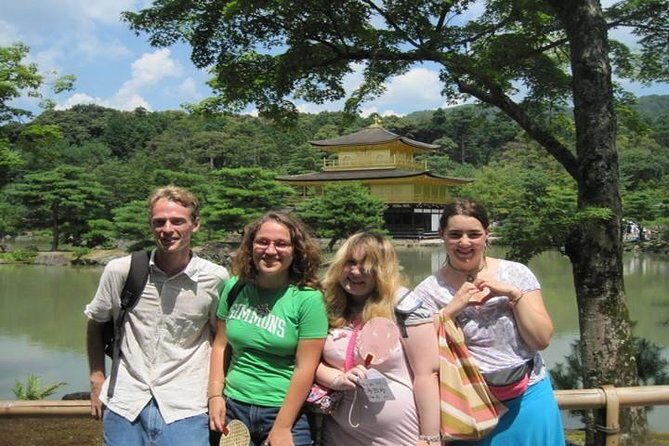
The tour says you can choose from over 35 points of interest to build a custom itinerary. But the included description also frames it as a customizable walking tour where you choose 3–4 Kyoto sites, which is exactly the sweet spot for an 8-hour day.
So I’d think in pairs, not wish lists:
- Pair one “anchor” sight (like a major shrine or a UNESCO temple) with one neighborhood (like Gion or Nishiki Market).
- If you want Arashiyama, plan fewer extra temples. Arashiyama already eats time with travel and walking.
If your group includes kids, people with limited stamina, or anyone who hates rushing, tell the guide up front. Several guide notes mention adapting for energy levels, which is where private tours win.
Stop-by-Stop Breakdown: What You’ll See and Why It Matters
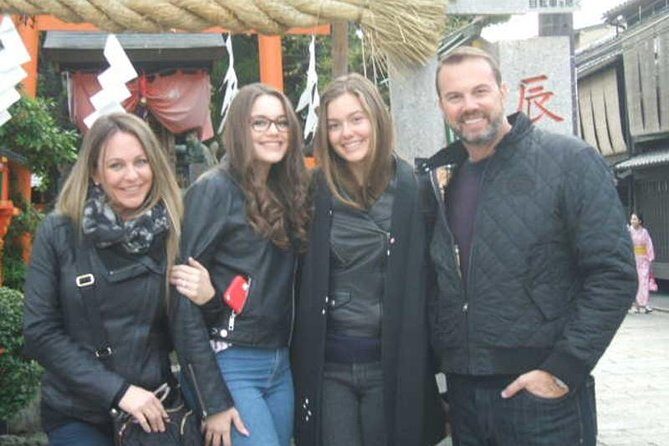
Fushimi Inari-taisha Shrine: The Torii Tunnel Moment
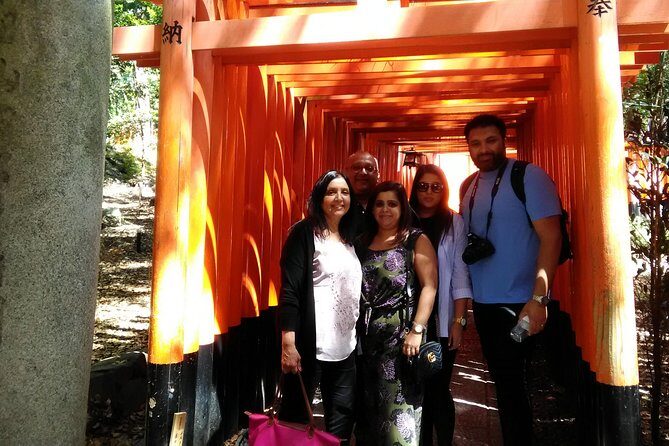
Fushimi Inari is the classic Kyoto entry point. You’ll spend a short block of time here—listed as about 10 minutes with admission free—and your guide can help you connect what you’re seeing to Kyoto’s religious and cultural background.
One detail in the stop description is interesting: it hints at seeing parts of the experience that are not meant for typical casual viewing. Even if your day doesn’t include anything “extra,” your guide can still steer you toward the most meaningful viewpoints instead of just marching through crowds.
Consideration: This is one of Kyoto’s busiest magnet sites. If you want photos with less crowd crush, ask your guide how they plan timing.
You can also read our reviews of more private tours in Osaka


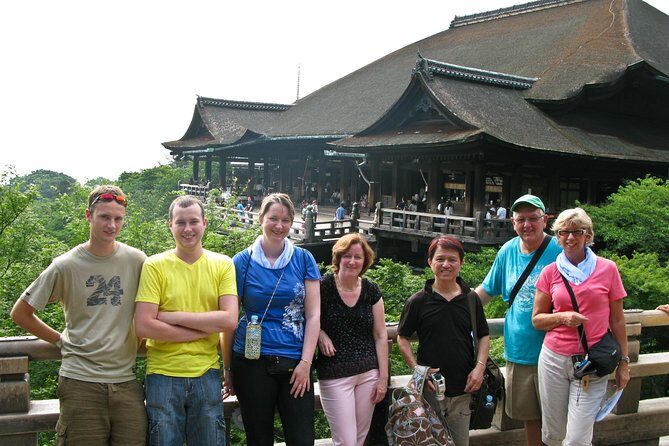
Kiyomizu-dera Temple: Learning the Temple Grounds
Kiyomizu-dera is listed as a guided stop (admission not included). The point here isn’t just the main hall view—it’s understanding why people treat Kiyomizu-dera as more than a landmark.
If you’re going as a first-timer, the guide helps you read the site instead of treating it like a checklist. That’s where private guidance turns the temple from scenery into context.
Nijo Castle: UNESCO + Political Power in Stone
Nijo Castle (UNESCO World Heritage site) is built in 1603 as the Kyoto residence of Tokugawa Ieyasu, the first shogun of the Edo period. That time period connection is your shortcut to understanding why the architecture and layout feel so purposeful.
Admission is not included, so plan for that cost. But this is the kind of stop where a guide’s explanations can make you feel the “why” behind the walls, corridors, and palace design.
Gion: Getting Oriented in Geisha District Streets
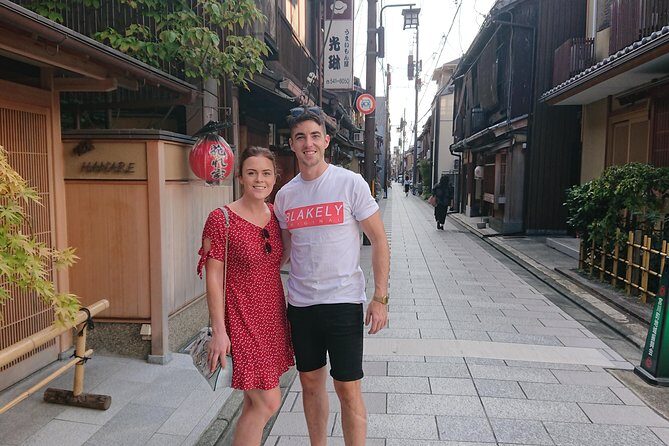
Gion can be confusing for a first-time visitor. The tour frames it as a guided walk through narrow alleyways—so you won’t waste energy finding your way.
This is also where a guide can add real-world street reading: which lanes to choose, how not to wander into spots that don’t welcome casual roaming, and how to spot the atmosphere of the district without turning it into a photo free-for-all.
One helpful review note tied to Gion: guides have helped groups catch a geisha in full makeup while walking main streets. That’s not guaranteed, but your odds are better when someone knows where and when the scene usually happens.
Nishiki Market: Kyoto’s Kitchen in Walkable Blocks
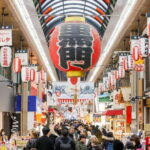
Nishiki Market is described as a narrow, five-block shopping street with more than 100 shops and restaurants. Your guide can help you move quickly and avoid getting stuck in lines or in stalls that don’t fit what you like to eat.
Admissions are listed as free for the stop. That matters: you can snack without turning it into an expensive food budget day—though you’ll still spend on what you buy.
Consideration: It’s popular, so expect crowds. Your advantage is having someone manage pacing so you can still taste and enjoy rather than just stand.
Kyoto Imperial Palace: From Kyoto’s Imperial Center to Today
Kyoto Imperial Palace used to be the residence of Japan’s Imperial Family until 1868, when the emperor and capital moved to Tokyo. This stop gives you a different angle on Kyoto—less temple tourism, more political history.
Admission is not included, but the value comes from the perspective. A guide helps you understand how Kyoto’s role changed, and why the palace grounds still matter.
Pontocho: Atmosphere Along the River
Pontocho is an alley packed with restaurants, running from Shijo-dori to Sanjo-dori, one block west of Kamogawa River. It’s listed as a free stop, and it’s a great “breather” between heavier sights.
Even if you’re not eating there, this is where Kyoto starts to feel like lived-in city tradition rather than museum objects.
Higashiyama Ward: Preserved Old Kyoto Feel
Higashiyama Ward is described as a best-preserved historic district along the lower slopes of Kyoto’s eastern mountains. If your itinerary includes it, your guide can help you understand why this area feels so “Kyoto” compared to newer districts.
Admission is listed as free. That makes Higashiyama one of the easiest places to add if you have a gap in the schedule and want more old-street atmosphere.
Ginkakuji and Nanzenji: Zen Views Without the Confusion
Ginkakuji (Silver Pavilion) is a Zen temple built around a shogun Ashikaga Yoshimasa retirement villa idea. Nanzenji Temple and its Suirokaku area are described as major Zen grounds at the base of Higashiyama’s mountains.
Both have admission listed as not included. Still, these are strong choices if you want “quiet Kyoto” time.
Consideration: Kyoto’s temple stops can blur together if you don’t get explanations. This is where your licensed guide matters most: they keep each site distinct.
Tofuku-ji and Toji: Bigger Zen Energy
Tofuku-ji is a large Zen temple, famous for autumn colors (admission not included). Toji is older—founded soon after the capital moved to Kyoto in the late 700s (admission is listed as free for this stop).
These are good for people who don’t want only the most photographed temples. A guide can also help you decide based on season. If you’re visiting outside autumn, your focus might shift to temple design and historical role.
Kinkakuji: Golden Pavilion in Real Detail
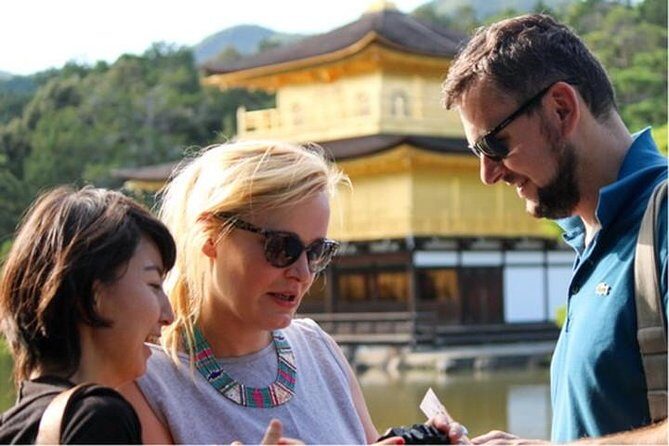
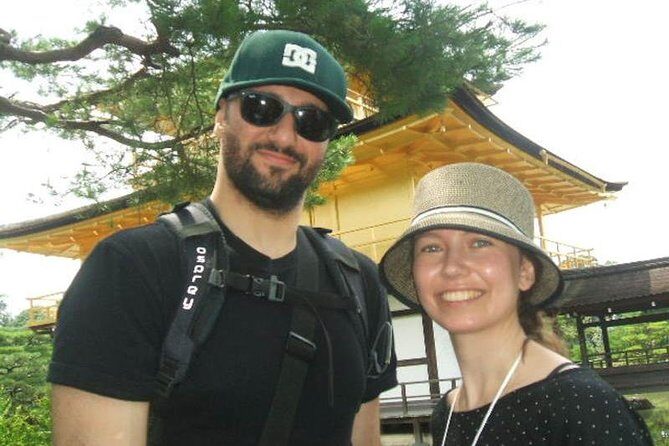
Kinkakuji (Golden Pavilion) is a Zen temple with the top two floors covered in gold leaf. It’s described as the retirement villa of shogun Ashikaga Yoshimasa.
Admission is listed as not included. With a guide, you’re more likely to notice the design choices that make Kinkakuji work as an artistic object—not just a shiny exterior.
Ninna-ji and Shugakuin: Imperial-Adjacent Temple Moments
Ninna-ji is listed as World Heritage and tied to the Omuro School of Shingon Buddhism, founded in 888 (admission not included). Shugakuin Imperial Villa is a 17th-century imperial villa managed by the Imperial Household Agency, with upper, middle, and lower villa areas (admission not included).
These are excellent if you want places that feel “less tourist stamp.” Just keep your day tight so you’re not rushing through what should be slower spaces.
Arashiyama Day: Bamboo, Bridge, and Zen Gardens
Arashiyama sits on Kyoto’s western outskirts. It’s been a destination since the Heian period, and it’s the place where nature and sightseeing overlap in the same walk.
Togetsukyo Bridge and Bamboo Groves
Togetsukyo Bridge is the iconic Arashiyama landmark. It was originally built during the Heian period and reconstructed in the 1930s, and it’s one of the quickest ways to anchor your Arashiyama experience.
The tour also includes bamboo grove walking paths. That’s one of the best “reset” moments in Kyoto if you’re tired from city noise.
Consideration: Bamboo groves can be crowded and weather-sensitive. If it’s rainy or very hot, ask your guide how they’ll adjust timing.
Tenryu-ji, Daikaku-ji, and Okochi Sanso Garden
Tenryu-ji is listed as the most important temple in Arashiyama, ranked first among Kyoto’s five great Zen temples, and registered as a world heritage site. Daikaku-ji is a large temple tied to Emperor Saga’s detached palace idea.
Okochi Sanso Garden is a former villa of actor Okochi Denjiro located behind Arashiyama’s bamboo groves.
Admission is listed as not included for these stops. Still, the value is high if you like gardens and temple design. A guide’s explanations help you connect the garden shapes to the Zen thinking behind them.
The Northern Mountains Option: Kurama and Kibune
The tour menu includes Kibune and Kurama, both in the northern mountains of Kyoto. Kibune is a small valley town developed around Kifune Shrine, with a legend involving a goddess traveling by boat from Osaka. Kurama-dera is in a rural town and is associated with a hot spring mentioned as one of the more easily accessible.
Admission is listed as not included for these stops. This is a good choice if you want something calmer than central Kyoto—just be realistic with time. Mountain areas add travel time and walking.
Rock Garden Reality Check: Ryoan-ji
Ryoan-ji is famous for Japan’s most well-known rock garden. Your stop is listed as a short one, and that’s a good reminder: this isn’t about racing through. It’s about understanding why the garden is famous and why visitors keep looking at it from different angles.
Admission is not included. If you care about the garden experience, make sure your guide gives you enough context to slow your brain down.
Kennin-ji and the Uji Phoenix Hall Bonus
Kennin-ji is close to Hanamikoji and Shijo streets, with expansive grounds and dry landscape gardens. It’s listed as a short stop.
Byodoin Temple (Phoenix Hall) is known for its Phoenix Hall, a national treasure and UNESCO World Heritage site. It’s in Uji city, and extra travel time is expected.
Admission is not included for Byodoin. This is a “choose it only if it fits” stop. In an 8-hour day, it can be the difference between enjoying your day and sprinting through your last sight.
What Having a Licensed English Guide Changes
One recurring theme from guide feedback is practical competence: guides have helped groups navigate train systems, stay on schedule, and adjust pacing. Names you’ll see in the guide notes include Rie, Andy Murao, Tatsuya Ito, Bell, Ichiro, Haru, Yuko, Kiriko, Emi, and Reo.
That matters because Kyoto is a maze of neighborhoods and temples. Even when the sites are famous, knowing how to move between them without wasting time is the real skill. If your guide is good, you’ll stop thinking about directions and start thinking about what you’re seeing.
Here’s my “use it on day one” tip: send your guide your must-sees and your walking tolerance. One guide note explicitly mentioned planning around a young daughter’s stamina, which is exactly how this should work.
Who Should Book This Kyoto Private Tour
This tour makes the most sense if you:
- want a first-timer-friendly Kyoto day from Osaka
- like history and explanations, not just photos
- prefer someone managing routes and timing
- can handle a lot of walking
It may not be ideal if your group wants a slow, unstructured day. The structure here is built for covering multiple icons, and your guide will likely keep you moving so you don’t miss key moments.
Should You Book It
Yes, if you want Kyoto’s highlights with less stress and more meaning. The big value is that you’re paying for a licensed guide to turn a tough-to-plan day into a workable route—especially from Osaka.
Book it with confidence if you’ll choose only 3–4 sites that match your interests, and you’ll bring snacks for the walking. If you’re hoping for a relaxed pace with lots of free time at every stop, this won’t be your best match.
FAQ
Is this tour mainly walking?
Yes. It’s described as a walking tour, with pickup on foot and a meet-up within designated Osaka areas.
What’s included in the price?
A licensed local English-speaking guide is included, along with a customizable walking tour where you can choose 3–4 Kyoto sites.
Are train or entrance fees included?
No. Transportation and entrance fees are not included, and lunch is also not included.
Can we customize the Kyoto stops?
Yes. You can choose from over 35 points of interest to create a custom itinerary, and the tour format allows you to pick 3–4 Kyoto sites.
Is it private or shared with other groups?
It’s private. Only your group will participate.
How long is the full-day tour?
It’s approximately 8 hours.