REVIEW · KYOTO
Kyoto: Japanese Calligraphy Workshop
Book on GetYourGuide →Operated by Gojo Paradiso · Bookable on GetYourGuide
A brush in your hand, in Kyoto, feels seriously real. This SHODO workshop at Gojo Paradiso turns Japanese calligraphy into a hands-on experience, not a photo stop. You’ll learn how to form strokes, create a character on real paper, and walk away with something you made yourself.
I love two things most: the step-by-step instruction that actually works for beginners, and the chance to produce a finished piece you’ll be proud to keep. You’ll practice basic brush moves, then write kanji (and even your name in kanji) with patient coaching.
One thing to consider: the lesson is 1–2 hours, so if you’re hoping for lots of extra practice or multiple finished artworks, this is more “focused session” than “long art class.”
In This Review
- Key things to know before you go
- Kyoto SHODO at Gojo Paradiso: why this feels like the real thing
- Getting to Gojo Paradiso on Kiyamachi Street by the Takase River
- The 1–2 hour flow: from stroke basics to a finished kanji
- First, the meaning and structure
- Next, basic brush strokes
- Then, writing kanji step by step
- Finish with your take-home piece
- What you actually learn: brush control that makes kanji look better
- Instructor style: patient coaching, clear English, and careful pacing
- Supplies and paper: what you get for $32
- The take-home masterpiece: photos, gallery time, and keepsake details
- Price and value: is this workshop worth $32?
- Who should book this workshop—and who should skip it
- Practical tips to get better results fast
- Should you book Kyoto’s Japanese Calligraphy Workshop at Gojo Paradiso?
- FAQ
- Where is the meeting point for the workshop?
- How long is the calligraphy workshop?
- How much does the workshop cost?
- Do I need prior experience to participate?
- What languages does the instructor speak?
- Are supplies included?
- Can I take photos or explore the gallery during the session?
- Will I be able to take my calligraphy piece home?
- Is the workshop wheelchair accessible, and is there an age limit?
- Do I need to reserve ahead of time, and how does cancellation work?
Key things to know before you go
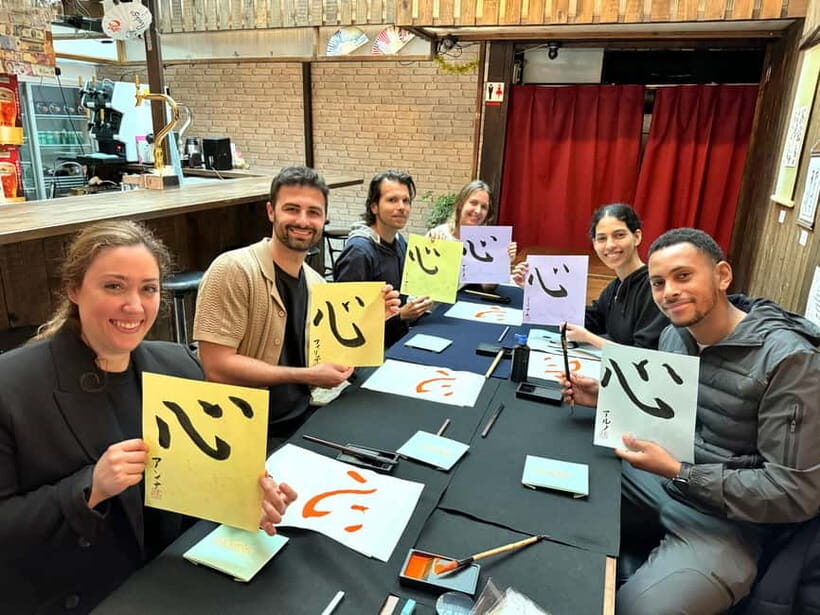
- Small group (up to 10): you get real attention while your strokes try to cooperate
- Beginner-friendly coaching: you start with foundational brush techniques
- Kanji plus names in kanji: you don’t just copy a character, you make it personal
- Quality materials and rice paper: your final piece isn’t a sad afterthought
- Take-home artwork: your work is created to keep, not just to admire for photos
Kyoto SHODO at Gojo Paradiso: why this feels like the real thing
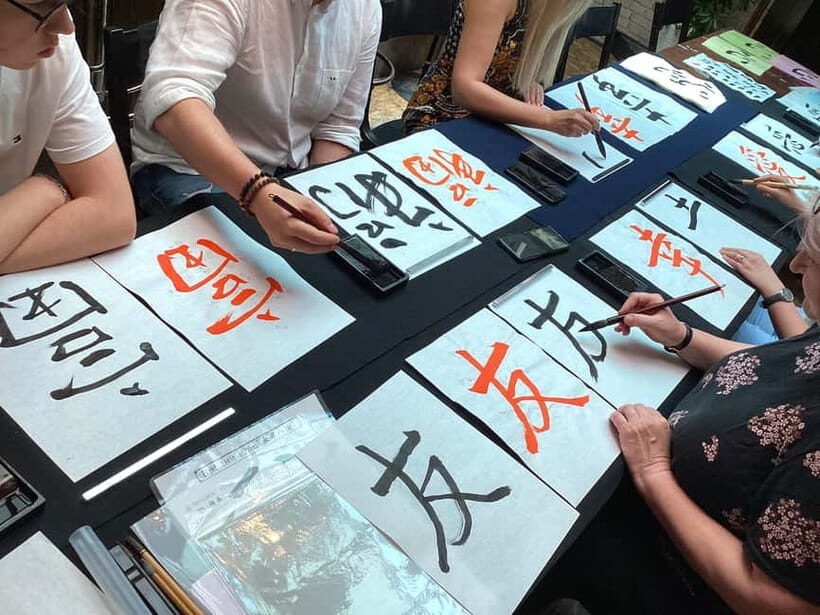
Kyoto has a way of making cultural experiences feel… staged. This workshop fights that by keeping the focus on your hands, your brush, and the slow logic of each stroke. You’re learning how calligraphy is actually made—one controlled move at a time—under a guide who cares about accuracy and calm form.
The small-group size is a big reason it works. When there are only a handful of people, the instructor can correct posture and hand position before your brush starts doing its own interpretive dance. And the result matters: you end up with a finished piece on paper you can frame or gift.
Also, this isn’t just writing exercises. You get a quick context on what calligraphy means in Japan, which helps you treat it like more than neat handwriting. Once you understand the thinking behind the strokes, your character looks better—and your brain stops panicking.
A few more Kyoto tours and experiences worth a look

Getting to Gojo Paradiso on Kiyamachi Street by the Takase River
The meeting point is Gojo Paradiso along the Takase River on Kiyamachi Street. You’ll find it without drama if you’re using the nearby stations as your anchor.
You’re looking at:
- about a 5-minute walk from Keihan Kiyomizu Gojo Station
- about a 10-minute walk from Keihan Shichijo Station
- and it’s listed as 386 meters from Kiyomizu Gojo Station
If you’re visiting Kyoto by foot (you probably are), this location is ideal. It sits in a part of central Kyoto where you can easily combine the workshop with a temple walk before or after. Just plan to arrive with enough time to settle in—brush work is easiest when you’re not speed-walking.
One more practical note: since it’s not a huge class format, being late can throw off the flow of instruction. Get there early enough to breathe, look at your materials, and let the brush feel right in your grip.
The 1–2 hour flow: from stroke basics to a finished kanji
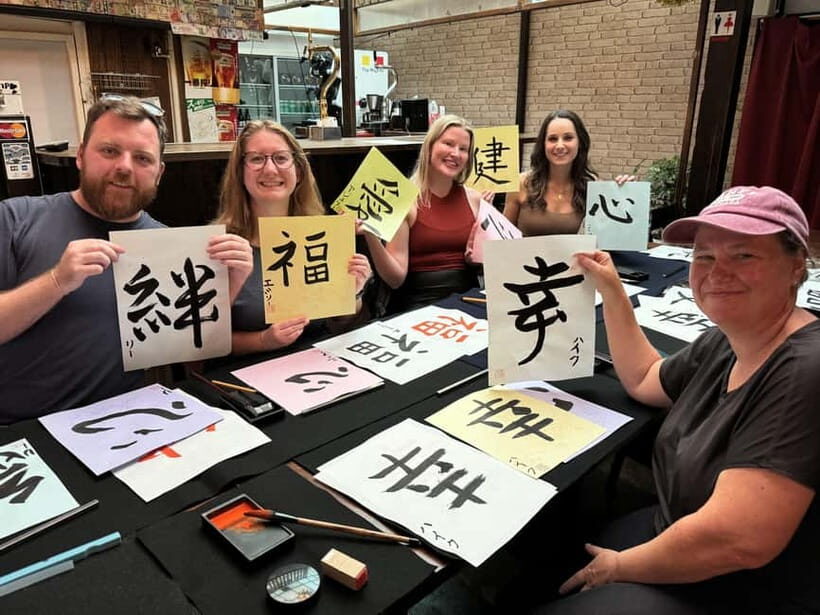
This isn’t a “watch and hope” experience. The session runs like a guided practice loop: learn the foundation, repeat with feedback, then apply it to your final character.
Here’s the typical progression you can expect:
First, the meaning and structure
You start with a short intro to the history and meaning of Japanese calligraphy. That context matters because SHODO isn’t about making the letters look like a font. It’s about movement: timing, pressure, and direction. Even if you’re brand new, this framing helps you focus on the right things.
Next, basic brush strokes
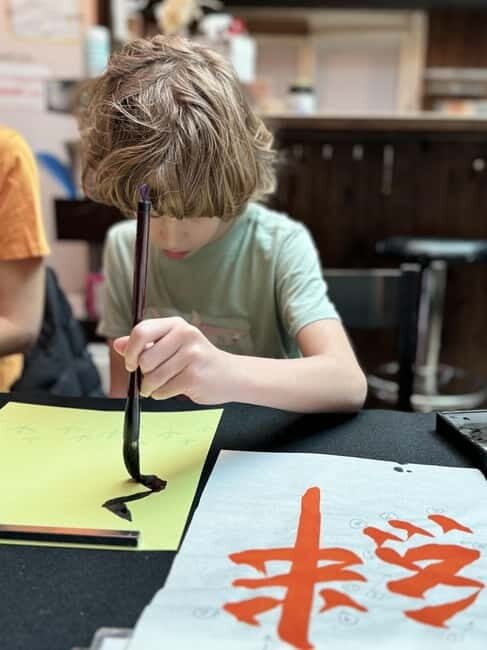
Then you practice core brush strokes—those simple moves that are the building blocks of kanji. You’ll likely do repeated attempts while the instructor checks your technique. Expect guidance on how the brush should travel, not just what the character should look like afterward.



Then, writing kanji step by step
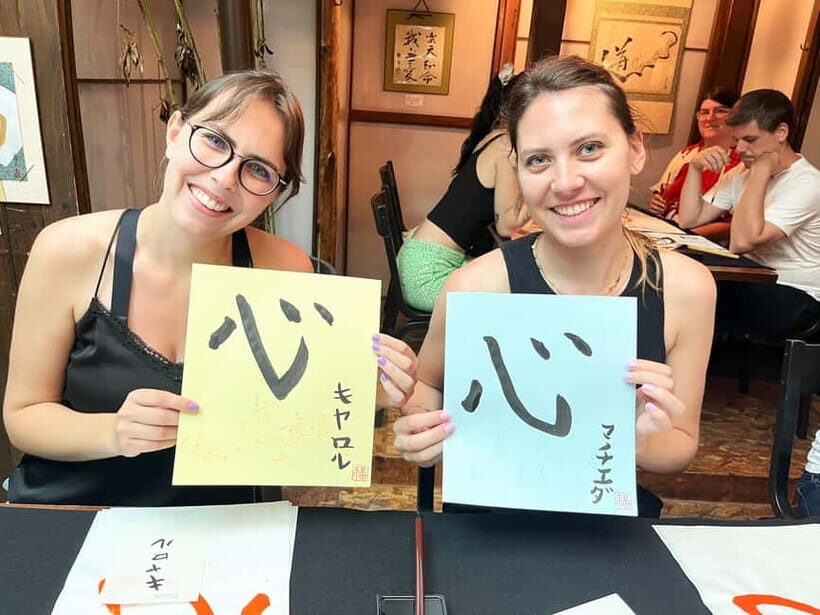
After the strokes, you start forming a kanji character. If you want a memorable twist, ask what options you have for personalization. Some sessions include writing names in kanji, which turns the exercise into something more personal than a generic sample.
Finish with your take-home piece
In the final part, you create your own piece that you’ll take home. The class also wraps up with time for photos, and you can explore the gallery. There may be an option to place special orders during this final stretch, depending on what’s offered that day.
What you actually learn: brush control that makes kanji look better
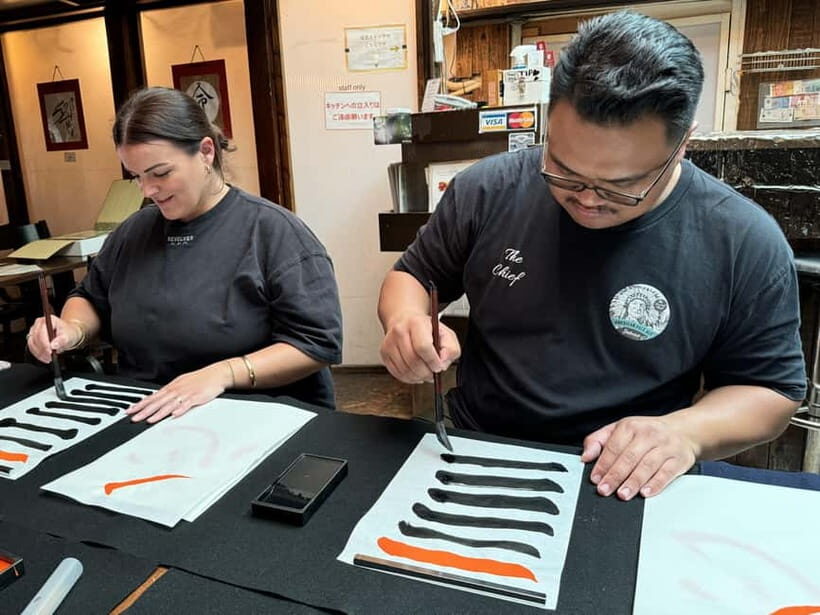
Calligraphy looks effortless in movies. In real life, your hand needs a couple rounds to stop trying to write like a pen. The best part of this workshop is how it teaches you to adjust your motion so the brush produces the stroke you intended.
You’ll learn how to:
- control pressure so thick and thin parts show up naturally
- guide direction without overcorrecting
- keep your stroke smooth instead of stop-and-starting
Even if your first attempt looks like modern abstract art, that’s normal. The instructor’s job is to guide you toward consistency, not to judge your current handwriting skills. Several people note that the teaching style is patient and encouraging, with individual help during exercises.
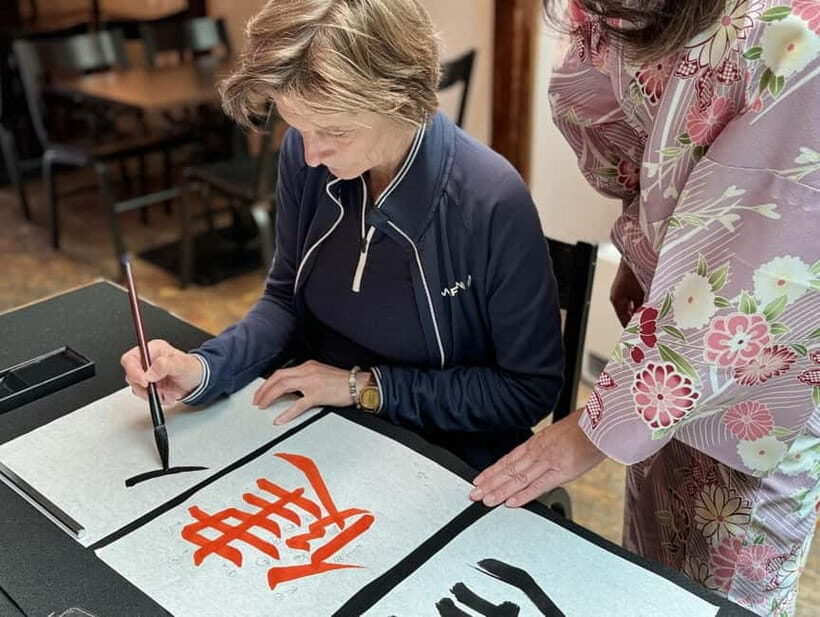
One detail that comes up again and again: the instructor spends time with each person as you practice. That matters because the fix for one student might not be the fix for another. If your angle is off, you need correction. If your pressure is inconsistent, you need feedback. A small group makes that possible.
And yes, the strokes you practice here are the same logic behind better-looking kanji, so the improvement feels real fast.
Instructor style: patient coaching, clear English, and careful pacing
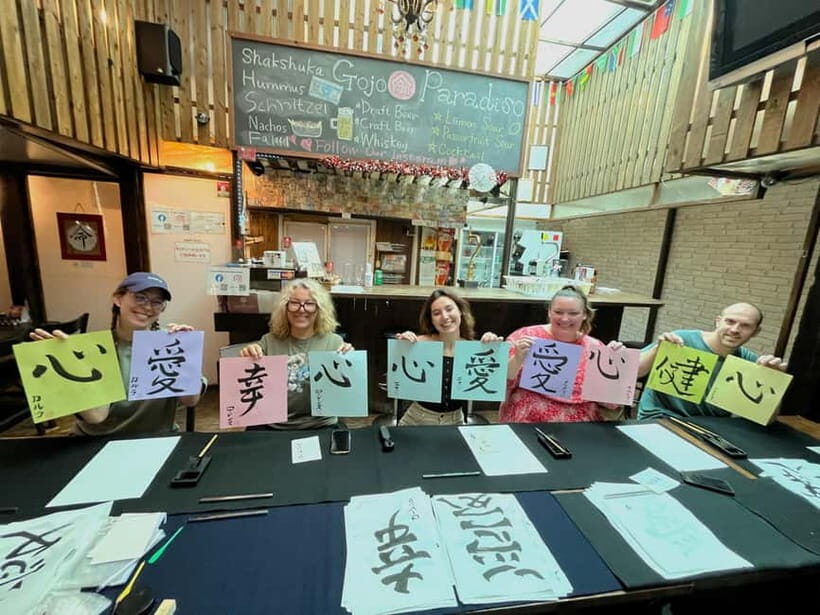
The instruction is described as clear and supportive, with an instructor who explains what to do and why. Some sessions are taught in English and Japanese, which is ideal if you want to understand the instructions fully but still pick up Japanese terms.
One instructor mentioned in the experience notes, Takako, is described as especially kind and encouraging, with a calligraphy background that includes formal study and awards. What that translates to in practice is calm, structured teaching: exercises start and end right on time, and there are often helpers to assist during the hands-on portion.
If you’re worried about making mistakes, this is the good kind of classroom. It’s not stiff. It’s structured enough that you know what step comes next, and it’s flexible enough to adjust when your brush doesn’t do what you expected.
Supplies and paper: what you get for $32
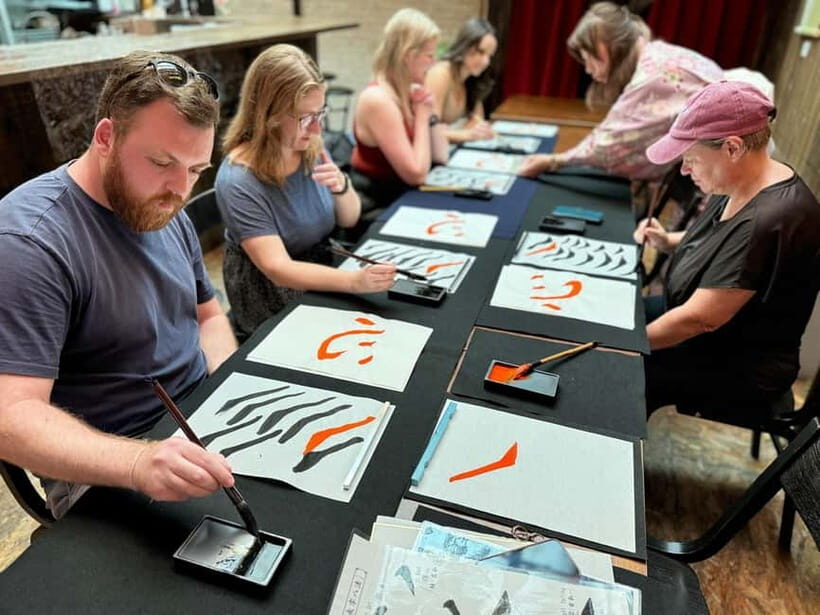
At $32 per person, you’re paying for more than instruction. You’re paying for the tools, the materials, and the guidance needed to turn your practice into a finished piece.
The workshop includes:
- an expert calligraphy instructor
- all necessary supplies
- a take-home calligraphy masterpiece
Your final work is created on rice paper, and the class also includes steps like signing your name in kanji and applying a stamp. Those last touches turn the final piece into something that feels official and gift-worthy.
Quality matters here. Participants mention that the materials are high-quality and there are plenty of them for practicing. You’re not stuck with a tiny scrap and a hope-and-pray brush.
You may also receive a small extra take-away gift from the instructor during the session, such as a handmade calligraphy item with decorative accents. It’s not something you should plan your day around, but it does show up in recent experiences.
The take-home masterpiece: photos, gallery time, and keepsake details
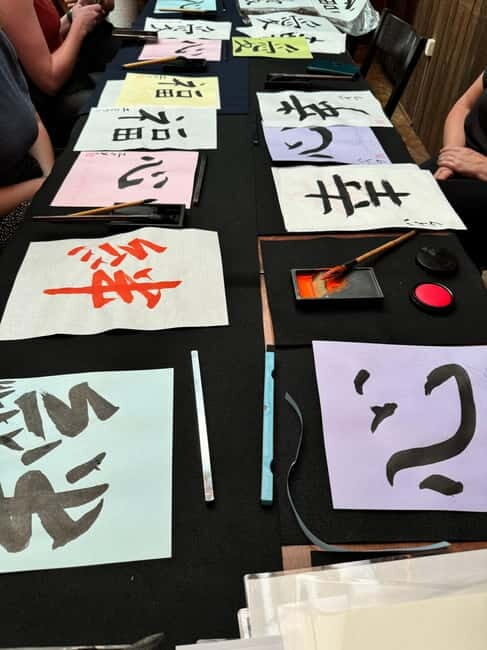
The best souvenirs are the ones you made while learning something real. Here, you get a finished piece at the end, which changes how you remember the day in Kyoto.
At the end, you’ll have time to:
- take photos of your work
- look around the gallery
- view (and sometimes discuss) finished examples
Your piece typically includes your written character plus your name in kanji, and it’s often stamped by your instructor. When you leave with something signed and finished, it feels more personal than a postcard-sized craft.
If you like keepsakes that don’t scream tourist trap, this is that category. You’ll likely want to keep it in a folder for the plane ride, then decide later whether to frame it. If you gift it, your recipient will know it’s not “just something you bought.”
Price and value: is this workshop worth $32?
For Kyoto, $32 is a fair price for a structured, small-group cultural lesson that includes supplies and a finished output you take home. You’re not paying extra for the paper or brushes. You’re also not doing the awkward thing where you watch someone else work while you wait your turn.
Here’s why it feels like good value:
- Small group means more instructor time
- Supplies included means no surprise add-ons
- You leave with a finished piece instead of practice sheets only
- A 1–2 hour format fits easily into a sightseeing day
The only downside for some people is the time limit. You get a focused session, not an endless practice marathon. But for most visitors, that’s exactly what you want: one good, guided session that produces a real result.
Who should book this workshop—and who should skip it
This workshop is a strong fit if you:
- want a hands-on cultural activity in central Kyoto
- are a beginner and want step-by-step help
- like experiences where the end product is yours to keep
- want a calm activity that breaks up temple crowds
It’s also ideal for couples or solo travelers since the group stays small and the instructor provides individualized attention.
Consider skipping if you:
- want a long, multi-session course
- expect a class designed for kids (it’s not suitable for children under 10)
- want only a quick demo with no real practice
The good news: if you can spare a couple hours in your day, you can still do this without feeling like you’ve lost your afternoon.
Practical tips to get better results fast
You’ll get the most out of the class if you treat it like practice, not perfection. Your strokes improve through repetition and feedback, so don’t try to force a perfect character on the first attempt.
A few things that help:
- Arrive slightly early so you can settle in and listen carefully
- Be ready to adjust your grip; brushes behave differently than pens
- Take your time with each stroke instead of rushing through the steps
- Ask questions if something feels unclear—especially about pressure and direction
If there’s a chance to write your name in kanji, think about which version you want. It’s a fun personal detail, and it makes the finished piece feel distinctly yours.
Also, bring an open mind. Calligraphy rewards patience. If you go in with that mindset, you’ll leave inspired rather than frustrated.
Should you book Kyoto’s Japanese Calligraphy Workshop at Gojo Paradiso?
Yes, you should book it if you want a real Kyoto cultural activity that’s hands-on, structured, and genuinely beginner-friendly. The small group, the step-by-step coaching, and the fact that you take home a finished rice paper piece make it feel like more than a lesson—it becomes a memory you can hold.
If you’re short on time, the 1–2 hour format is perfect. If you hate rigid classes, this still feels friendly and encouraging, with patient help as you practice. Just go in expecting one strong session and one keepsake, not a multi-hour art retreat.
FAQ
Where is the meeting point for the workshop?
The workshop meets at Gojo Paradiso along the Takase River on Kiyamachi Street.
How long is the calligraphy workshop?
The duration is 1 to 2 hours.
How much does the workshop cost?
The price is listed as $32 per person.
Do I need prior experience to participate?
No. The workshop is guided step by step and is suitable for beginners, including those who have never tried calligraphy before.
What languages does the instructor speak?
The instructor teaches in English and Japanese.
Are supplies included?
Yes. All necessary supplies are included in the workshop.
Can I take photos or explore the gallery during the session?
Yes. In the final part of the workshop, you can take photos and explore the gallery.
Will I be able to take my calligraphy piece home?
Yes. You take home your own calligraphy masterpiece.
Is the workshop wheelchair accessible, and is there an age limit?
The workshop is wheelchair accessible. It is not suitable for children under 10 years.
Do I need to reserve ahead of time, and how does cancellation work?
You need to reserve at least 1 day in advance. Cancellation is free if you cancel up to 24 hours in advance for a full refund.