REVIEW · OSAKA
Amanohashidate & Ine Funaya Sightseeing Full Day Trip from Kyoto
Book on Viator →Operated by F Trip · Bookable on Viator
Two coasts, one scenic day.
This trip strings together Ine Bay and Amanohashidate, two very different-looking parts of Japan’s coast. You get sea air, old wooden boat houses, a temple stop near the sandbar, and that famous pine stretch that looks like it’s reaching for the sky.
I love the ample free time at each stop, because you can pace yourself, take photos, and still make it back to the bus without stress. I also like how the guide keeps the day moving with clear timing cues and practical suggestions, including where to eat around Ine Cafe.
One thing to plan for: it’s a long day with a long bus ride both ways. If you’re going on a weekend, Amanohashidate can feel packed and lines can eat into the time you’d rather spend exploring from the top.
In This Review
- Key highlights at a glance
- Why Ine + Amanohashidate Works as a One-Day Break
- Price and What You’re Really Buying for $64.90
- The Bus Ride Reality: Seats, Timing, and Comfort Hacks
- Ine Fishing Village and Funaya Boat Houses (Your First Real Coastal Fix)
- Funaya No Sato Observation Deck: Big Views Without Extra Fuss
- Ine Cafe and Ineura Park: Where You Recharge and Get the Best Sea Views
- Ine Bay Sightseeing Boat: The Water-Level Perspective (and Seagulls)
- Amanohashidate Viewland: Get Up High for the Sandbar’s Real Shape
- Chion-ji Temple by the Sandbar and the Rotating Kaisen Bridge
- Amanohashidate Beach: Finish with a Walk Along the Pines
- Who This Tour Is Best For (and Who Might Want Another Option)
- Should You Book This Full-Day Coast Trip from Kyoto or Osaka?
- FAQ
- How long is the Amanohashidate and Ine full-day trip?
- How much does the tour cost?
- What’s included in the price?
- What extra costs should I expect?
- How long do I spend at each main stop?
- Do I need to buy tickets for the chairlift/monorail and the boat separately?
- What’s the maximum group size?
Key highlights at a glance
- Funaya boathouses in Ine: wooden fishing houses perched right along the water
- Funaya no Sato observation deck: wide views over Ine Bay from above
- Ine Bay sightseeing boat: a real-on-the-water perspective, plus seagulls that get bold
- Amanohashidate Viewland and optional chairlift/monorail: the sandbar looks best when you gain elevation
- Chion-ji Temple + Kaisen Bridge: a calm temple moment and a bridge that rotates as boats pass
Why Ine + Amanohashidate Works as a One-Day Break
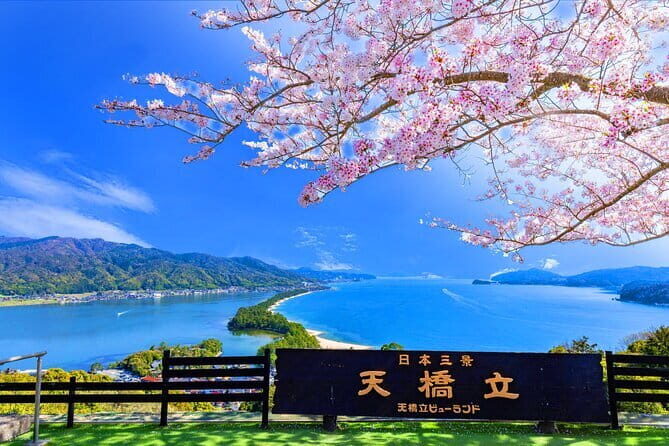
If your Kyoto itinerary is heavy on temples and city neighborhoods, this day trip gives you a clean change of scenery. Ine Bay feels like a working coastal community first, with those distinctive wooden boat houses (funaya) lining the shoreline. Then you shift to Amanohashidate, where the drama comes from the natural shape of the coast: a pine-covered sandbar with nearly 8,000 trees stretching across Miyazu Bay.
What I like about combining these two places is that they solve two travel cravings at once. Ine scratches the itch for small, real places with sea life and local rhythms. Amanohashidate scratches the itch for a big view, the kind you remember even after your photos fade.
This tour is set up for that rhythm: guided movement between stops, then real time on your feet at each location. That balance matters, because coastal scenery is best when you can linger where the light hits, not when you’re sprinting to the next photo spot.
A few more Osaka tours and experiences worth a look
Price and What You’re Really Buying for $64.90
At $64.90 per person, you’re mainly paying for three things: an air-conditioned vehicle, a guide, and round-trip transfer from designated meeting points around Osaka or Kyoto. That’s good value for a day where you’d otherwise spend time figuring out trains, transfers, and timing on your own.
The other key point: two big add-ons are not included. You’ll likely want to budget for:
- Amanohashidate chairlift/monorail (JPY 1,000 per person, JPY 500 per child)
- Ine Bay sightseeing boat (JPY 1,200 per person, JPY 600 per child)
Lunch is also on you. So the smartest way to look at this price is as a base tour cost plus the optional experiences that make the views feel three-dimensional. If you skip those extras, you’ll still see plenty on land. But if you care about perspective, plan for both.
The Bus Ride Reality: Seats, Timing, and Comfort Hacks
This is a true full-day trip, roughly 9 hours. The ride out and back can be around 2–2.5 hours each way, so treat it like part of the experience rather than something to suffer through.
A few practical notes that matter more than you’d think:
- Seats are assigned. If you have a preference, tell your tour leader.
- There’s an air-conditioned vehicle, which helps on warmer days and makes the day feel more manageable.
- The group size is capped at 45 people, which usually keeps things organized rather than chaotic.
Also, remember this is a moving day. You’re not just hopping between attractions; you’re syncing to a schedule. Build your plan around that: keep your phone charged, wear shoes you can walk in, and have a small bag ready so you’re not digging for essentials during transitions.
Ine Fishing Village and Funaya Boat Houses (Your First Real Coastal Fix)
Ine fishing village is where the trip starts feeling different right away. You’re at the Sea of Japan side of northern Kyoto Prefecture, and the vibe is old-coastal Japan: quiet streets, sea air, and those wooden boathouses called funaya.
You’ll get about 30 minutes here. Admission is free for this portion, so the value comes from what you do with the time:
- Walk at a slow pace and look for the details in the wooden structures.
- Watch how the waterfront layout shapes the village.
- Snap photos from angles where the waterline and boathouses both show up.
One tip worth taking: if you’re sensitive to crowds, aim to arrive ready to move quickly for your favorite viewpoints. Ine is not a mega-attraction, but it can still gather people, especially when everyone hits the best photo angle at once.
Funaya No Sato Observation Deck: Big Views Without Extra Fuss
Next comes Funaya no Sato Park, which gives you a higher vantage over Ine Bay. You’ll have about 30 minutes here, with free admission.
This is one of those stops that works even if you’re not a “stand-and-stare” person. From the observation deck, the whole bay layout makes more sense. You can see how the boat houses sit along the shore and why Ine looks the way it does in photos.
If you only do one viewpoint in Ine, make it this one. It’s the quickest way to translate the village you walked through into a larger picture.
A few more Osaka tours and experiences worth a look
Ine Cafe and Ineura Park: Where You Recharge and Get the Best Sea Views
You’ll also have time at Ine Cafe (about 20 minutes, free). This is one of those spots that’s famous for a reason: coffee and cake with a view over Ine Bay and the funaya scenery.
I like Ine Cafe as a reset moment. It breaks up the walk-heavy parts of the day and gives you a simple way to handle lunch planning nearby, especially if your guide shares food recommendations for what’s open and worth trying.
Then you’ll move into Ineura Park (about 20 minutes, free). This area focuses on the boathouse buildings facing the sea, with a chance to get closer to the historical-style look without turning it into a long museum-style stop. It’s ideal if you want more visual texture after the wider deck view.
A small caution: depending on the day, some shops can be closed, which can make the area feel a bit quieter than you expected. If shopping matters to you, don’t build your day around it.
Ine Bay Sightseeing Boat: The Water-Level Perspective (and Seagulls)
The part that turns “pretty photos” into “I get it now” is the Ine Bay sightseeing boat. It’s about 30 minutes, but the ticket is not included (JPY 1,200 per person, JPY 600 per child).
You’re out on the water so the funaya boathouses look different: taller, closer, and more layered. You also get to see how the bay space opens up in front of you, which you can’t fully catch from land.
Now for the fun practical warning: seagulls can show up in force. I’d pack a light poncho if the weather looks even slightly uncertain or if you’re sensitive to sudden bird attention. People also note that the deck can become a noisy snack zone fast, so don’t plan on a quiet escape—plan on an eventful ride.
Amanohashidate Viewland: Get Up High for the Sandbar’s Real Shape
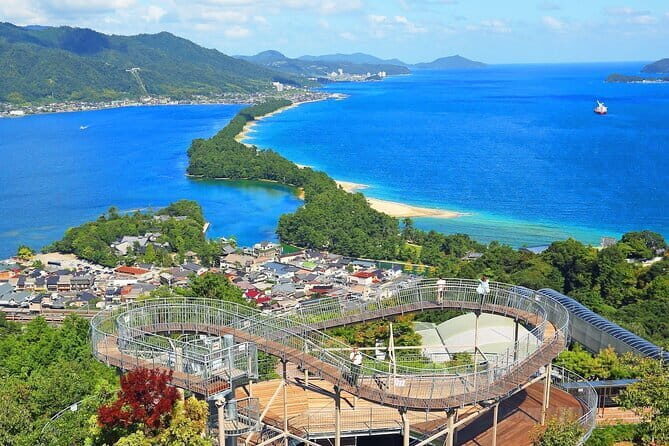
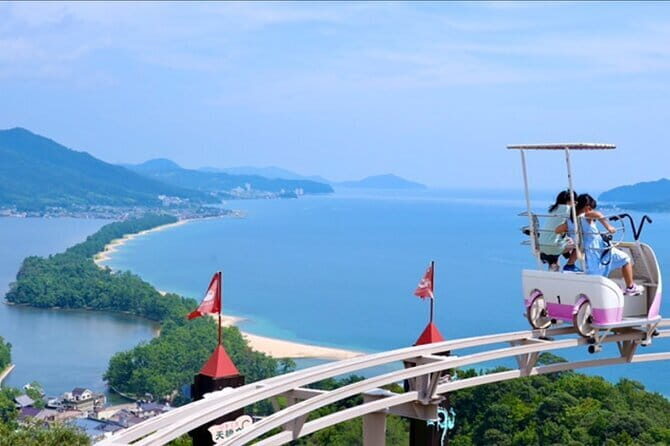
After Ine, the coast shifts to a different kind of wow. Amanohashidate is known as one of Japan’s Three Most Scenic Views, and the sandbar is the star: nearly 8,000 pine-covered trees arranged along the stretch across Miyazu Bay, described as resembling a dragon flying up to heaven.
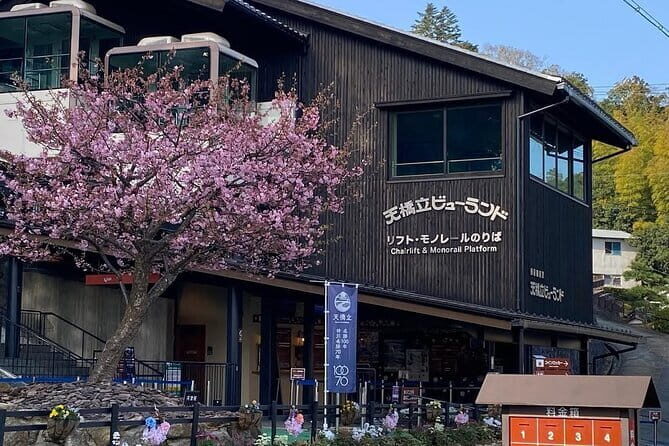
At Amanohashidate Viewland, you’ll have about 50 minutes. Admission isn’t included for this stop, and you’ll likely want the chairlift or monorail (JPY 1,000 per person, JPY 500 per child). The big takeaway from people who’ve done this: the viewpoint is where the sandbar clicks into place.
If you’re going on a weekend, plan for busier lines at the lift. That can cut into the time you want at the top. A weekday usually gives you more breathing room, especially for wandering around and getting a calmer look over the pines and water.
If you’re visiting in winter, it can be cold enough that outdoor time feels shorter. Bring a layer you’ll actually wear.
Chion-ji Temple by the Sandbar and the Rotating Kaisen Bridge
Once you’re back down from the viewpoint area, you’ll hit two classic “small stop, strong memory” moments.
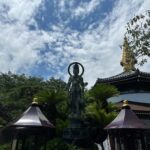
First is Chion-ji Temple (about 20 minutes, free). It’s located near the southern entrance of the Amanohashidate sandbar and houses one of Japan’s Three Important Statues of Monju Bosatsu, a Buddhist deity associated with wisdom and intellect. You’re not here for a long temple immersion. You’re here for a calm pause right where the sandbar area begins.
Then comes Kaisen Bridge (about 20 minutes, free). This bridge has a clever engineering trick: it rotates 90 degrees when ships pass through the waterway and connects the Amanohashidate landbridge and the Monju area. If you happen to time it well, you’ll see the bridge in action, which turns a simple photo stop into a practical slice of how the area works.
Amanohashidate Beach: Finish with a Walk Along the Pines
To wrap the day, you’ll spend about 20 minutes at Amanohashidate Beach (free). The eastern coast of the sandbar features white sand beaches backed by deep blue water and dense pine scenery.
This is the best way to end the day because it connects the earlier viewpoint to real sensory ground-level reality. You’ve seen the shape from above. Now you feel the coastline and get a final look at how the sand, pines, and sea meet.
If you like photos, keep your camera accessible here. The colors can look especially good late in the day, and it’s often easier to take clean shots when you’re not competing for lift lines.
Who This Tour Is Best For (and Who Might Want Another Option)
This tour works especially well if you:
- Want a break from Kyoto’s temple-and-neighborhood rhythm
- Like coastal scenery and want both a town vibe (Ine) and a big-view natural spectacle (Amanohashidate)
- Prefer guided coordination with room to wander on your own
It might be less ideal if you:
- Hate long bus rides and want an easier half-day instead
- Are going on a weekend and would rather avoid lift-line crowds
- Expect deep storytelling at every stop. Some guides run a more logistics-heavy format, so go in ready to enjoy the scenery first, then let the commentary add context.
One more smart move: double-check your meeting point information before you head out. A mix-up here can cost you the whole day, and you don’t want that stress on a vacation.
Should You Book This Full-Day Coast Trip from Kyoto or Osaka?
I’d book it if you want maximum “Japan coast” impact in one day. The value makes sense because you’re getting transportation, a guide, and a lineup of stops that cover both land details and water-level views. The two optional add-ons, the Ine Bay boat and the Amanohashidate lift, are the difference between seeing things and really understanding the geography.
If you’re flexible on the day of the week, try for a weekday to protect your time at the top viewpoint. And if you’re sensitive to weather, pack a layer and a light poncho.
Overall, this is a practical, well-paced coastal day that trades city crowds for pine sandbars, wooden boathouses, and a sea breeze you’ll miss once you’re back in Kyoto or Osaka.
FAQ
How long is the Amanohashidate and Ine full-day trip?
It runs for about 9 hours.
How much does the tour cost?
The price is $64.90 per person.
What’s included in the price?
You get an air-conditioned vehicle, a guide, and round-trip transfer from designated meeting points in Osaka or Kyoto. You also receive a mobile ticket.
What extra costs should I expect?
Amanohashidate chairlift or monorail tickets cost JPY 1,000 per person (JPY 500 per child), and the Ine Bay sightseeing boat costs JPY 1,200 per person (JPY 600 per child). Lunch and personal expenses are not included.
How long do I spend at each main stop?
The schedule includes roughly 30 minutes in Ine fishing village and Funaya no Sato, about 20 minutes at Ine Cafe and Ineura Park, about 30 minutes on the Ine Bay boat, about 50 minutes at Amanohashidate Viewland, and about 20 minutes each at Chion-ji Temple, Kaisen Bridge, and Amanohashidate Beach.
Do I need to buy tickets for the chairlift/monorail and the boat separately?
Yes. Those tickets are not included, and you’ll pay for them separately.
What’s the maximum group size?
The tour has a maximum group size of 45 people.