REVIEW · FUKUOKA
Fukuoka: Takachiho Gorge, Amano Iwato & Scenic Train Tour
Book on GetYourGuide →Operated by Hakuu Co Ltd. · Bookable on GetYourGuide
My favorite Kyushu myth starts with cliffs. This Fukuoka day trip strings together Takachiho Gorge with basalt walls and falls, an optional ride to the famous Neon Tunnel, and a quiet walk at Amano Iwato where the stories feel close to the ground. I especially like the way you get real walking time at Takachiho, not just a quick stop at a viewpoint.
The main drawback is that the schedule is packed and the cave approach involves natural stone trails. Also, the famous train bridge segment is optional and the rail tickets aren’t included, so you’ll want to plan a bit before you hop on.
In This Review
- Key highlights you’ll feel in the day
- Takachiho to Amano Iwato: why this route hits the right notes
- The Fukuoka meetup that keeps the day from unraveling
- Takachiho Gorge: basalt walls, Manai Falls, and a real walk
- Lunch in Miyazaki: plan for food costs (and pick your moment)
- Takachiho Amaterasu Railway and the Neon Tunnel (optional, but worth deciding)
- What changes on the third Thursday
- Takachiho Shrine: a forested myth stop when the train is down
- Amano Iwato Cave: myth, stone stacks, and serene trails
- Pacing and timing: how to enjoy every stop without rushing
- Guides, language, and how to make the day feel personal
- Price and value: what $75 buys you (and what costs extra)
- Who should book this tour, and who should skip it
- Should you book this Fukuoka day trip?
- FAQ
- Where is the meeting point for the tour?
- What time does the tour start and when do you return to Fukuoka?
- What’s included in the tour price?
- Is lunch included?
- Are Takachiho Amaterasu Railway tickets included?
- What happens if the Takachiho Amaterasu Railway is closed?
- How long do you spend at Takachiho Gorge?
- What should I wear for Amano Iwato Cave?
- Is the tour suitable for wheelchairs, strollers, or limited mobility?
- What is the cancellation policy?
Key highlights you’ll feel in the day
- Takachiho Gorge (1 hour): a guided day that still leaves you time to wander and take photos at your pace.
- Manai Falls viewpoint vibes: basalt cliffs and rushing water that make the whole gorge feel dramatic.
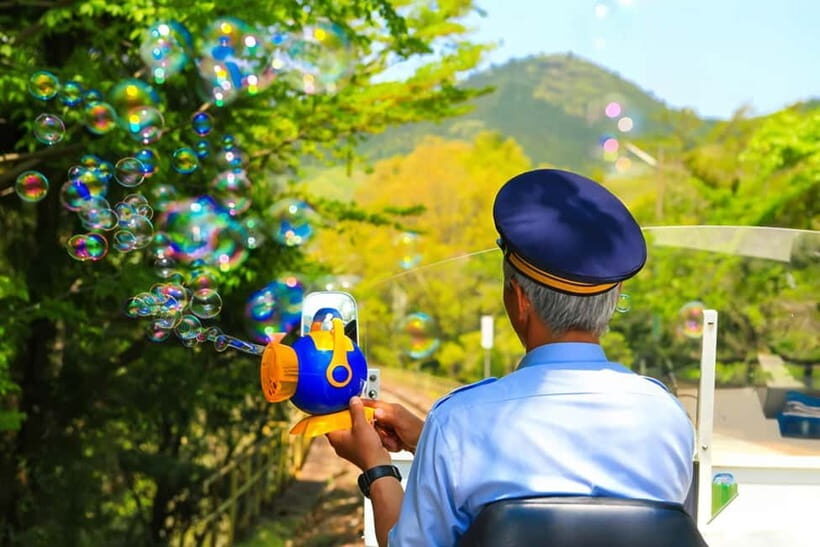
- Optional Amaterasu Railway ride: the famous bridge crossing and the Neon Tunnel moment.
- Third-Thursday change: if the train is under maintenance, you swap in a visit to Takachiho Shrine instead.
- Amano Iwato Cave walk: a serene, myth-steeped stop with stone-trail walking and wish-stone stacks nearby.
- Round-trip coach from Fukuoka: less hassle than arranging trains and transfers on your own.
Takachiho to Amano Iwato: why this route hits the right notes
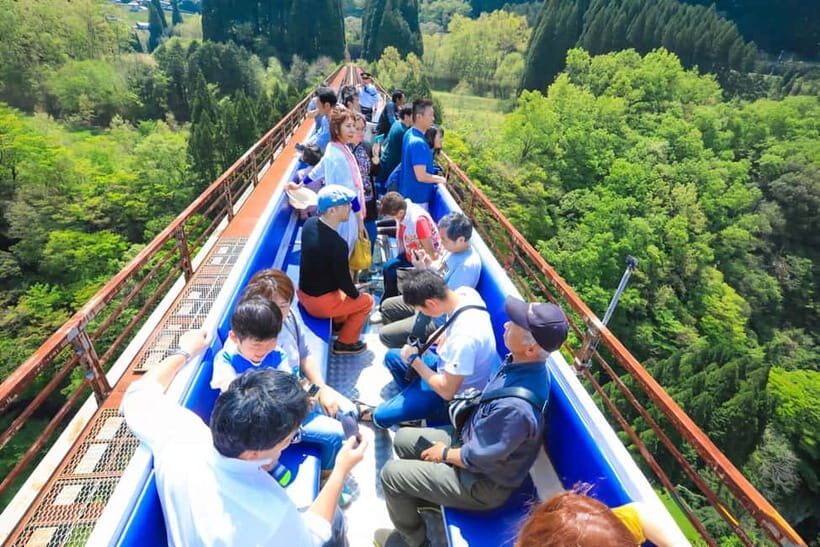
This tour works because it doesn’t rely on just one wow moment. You get three different kinds of “Kyushu magic”: dramatic nature at Takachiho Gorge, a modern-yet-mystical rail moment over a top record bridge, and then a quieter myth stop in a forested cave area.
What I like for your planning is that you’re not stuck behind glass. You walk trails around Takachiho, and you actually go through the cave area on foot. That’s the difference between seeing something and absorbing it—especially at a place tied to Japanese mythology.
The day is also structured so you can choose your intensity. The train bridge segment is optional, so you can decide based on your interest in that specific experience and whether you want to keep your budget simple.
You can also read our reviews of more tours and experiences in Fukuoka.


The Fukuoka meetup that keeps the day from unraveling
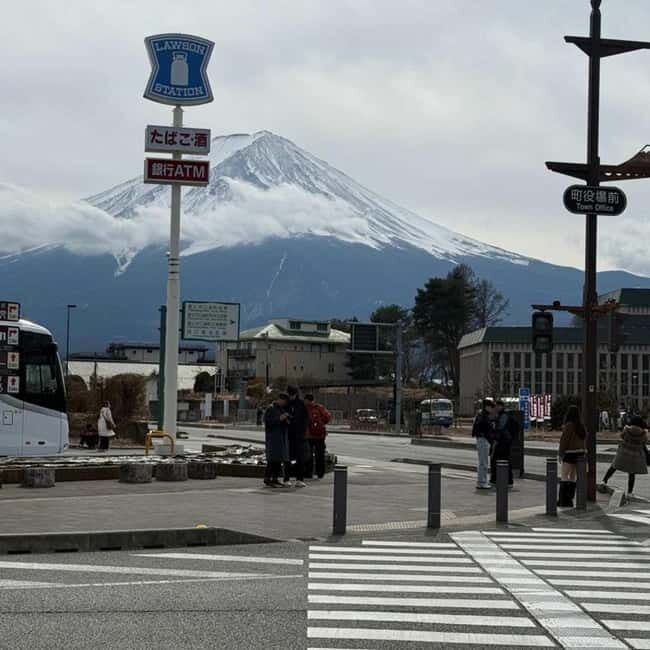
You meet at the Lawson downstairs of Fukuoka Oriental Hotel, address 4-23 Hakataekichuogai, Hakata Ward, Fukuoka (near Hakata Station’s Chikushi Entrance). Plan to arrive about 15 minutes early, because the bus leaves on time with no exceptions.
This tour includes WhatsApp/LINE contact from your guide the night before. That’s a small detail, but it matters a lot in real life—especially if you’re jet-lagged or you’re arriving from another part of town. Download the app and keep your phone charged so you can confirm everything quickly.
One more practical note: luggage space is limited on the coach. If you’ve got a big suitcase, it’s worth thinking ahead about what you really need for a 10-hour day.
Takachiho Gorge: basalt walls, Manai Falls, and a real walk
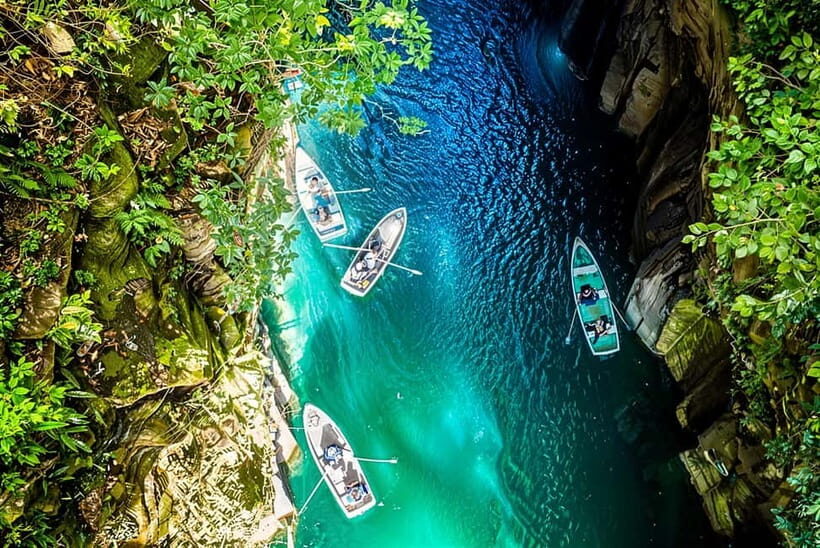
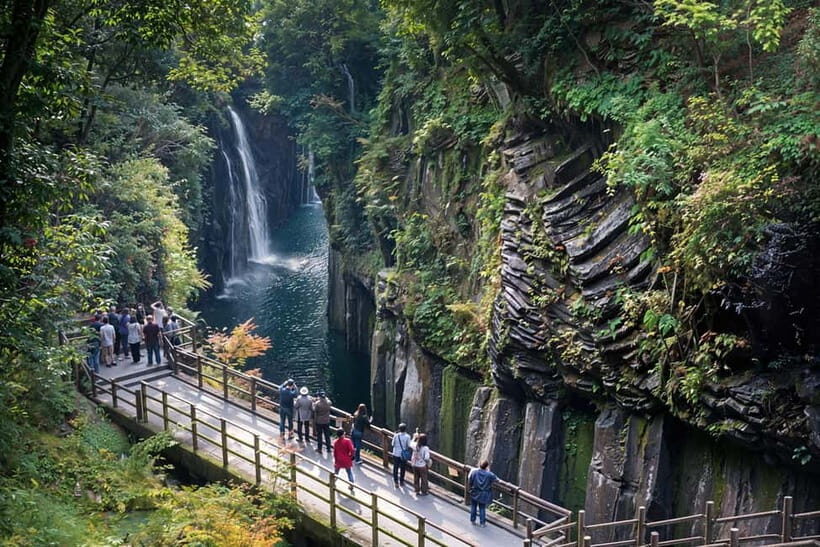
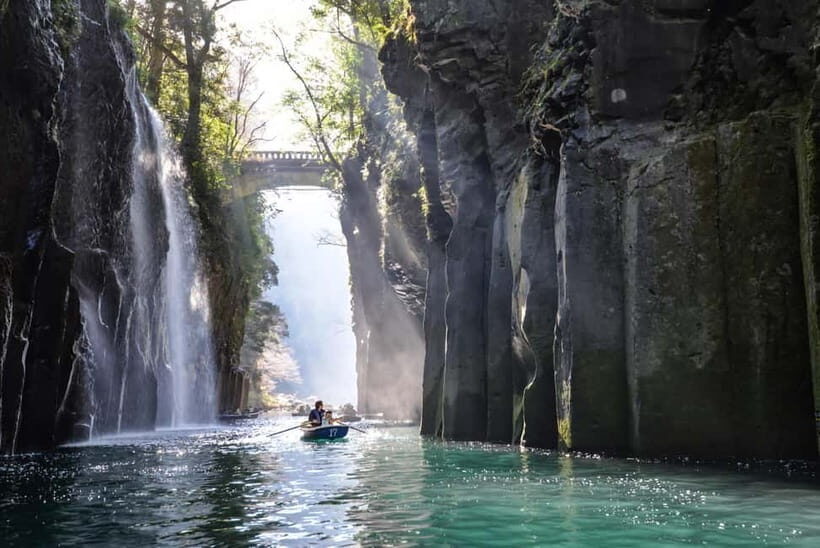
You’ll reach Takachiho Gorge around late morning (with the gorge stop starting around 11:00 AM). Expect towering basalt cliffs, clear water, and views that look like they were designed for postcards. The gorge is famous for a reason, but what makes this stop feel special is your time to walk.
You’ll have about one hour to explore. That’s long enough to stretch your legs along the trails and find better angles for photos than the main front-of-the-gorge viewpoints. It’s also short enough that you won’t feel trapped on a long hike with a tight tour clock.
Manai Falls are a centerpiece here. When water is falling through a canyon, it changes the whole soundscape—so even if you’re not a waterfall superfan, you’ll still feel it.
If you’re the type who likes to add optional activities, this is the kind of place where you might spot river-related experiences while you’re there. Just remember: any add-ons aren’t part of the main tour package, so keep your feet on solid ground and your time budget in mind.
Lunch in Miyazaki: plan for food costs (and pick your moment)
Lunch is around 12:00 PM, and it’s not included in the tour price. The good news is you’ll have time to eat without rushing the rest of your afternoon.
Miyazaki Beef is the obvious local target if you want something truly regional. If you’d rather keep it simple, you’ll also have plenty of other dining options available at the lunch stop.
For value, I’d frame lunch like this: the $75 price is mainly buying your transportation + guide time, and lunch is your flexible budget item. If you want a proper sit-down meal, plan extra cash. If you just want something quick, you can control costs easily.
Also note the day is structured so you’re not going to be starving later—you’ll just need to decide what kind of lunch experience you want now.
Takachiho Amaterasu Railway and the Neon Tunnel (optional, but worth deciding)
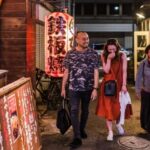
Around 1:00 PM, you have the option to ride the Takachiho Amaterasu Railway for about 30 minutes. This is the part most people talk about: a crossing on a record-setting bridge with wide views and the famous Neon Tunnel.
Two key things to know before you decide:
- Train tickets are not included, so expect an additional cost if you pick this option.
- The ride is time-limited, so treat it as a “one big moment” rather than a long sightseeing loop.
If you want the rail experience for the story and the visuals, this is the moment to choose it. If you’d rather save money, or if you’re more interested in nature and the shrine/cave stops, you can skip it and go straight to the cultural side.


What changes on the third Thursday
On the third Thursday of every month, the train undergoes maintenance. On those days, the itinerary shifts to a visit to Takachiho Shrine instead of the train ride. It’s still a cultural highlight, so you’re not losing the day—you’re swapping one kind of sight for another.
Takachiho Shrine: a forested myth stop when the train is down
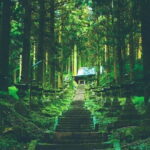
When the rail isn’t running, you’ll visit Takachiho Shrine. It’s described as over 1,900 years old, and that age matters here because the setting is calm and old-world compared with the gorge.
This isn’t just about architecture. The shrine is tied to Japanese mythology, and it’s especially known for nightly Yokagura dance performances. Your daytime visit won’t include the performance itself, but you’ll still get a sense of why locals treat this place as meaningful rather than scenic.
For me, this is a good “temperature change” in the schedule. After the gorge’s strong nature energy and the rail option’s visual drama, the shrine is quieter and more reflective. You can slow down, look up at details, and just watch the forest light move.
If you’re hoping to feel the mythology through places (not just through explanations), this shrine stop is a smart substitute.
Amano Iwato Cave: myth, stone stacks, and serene trails
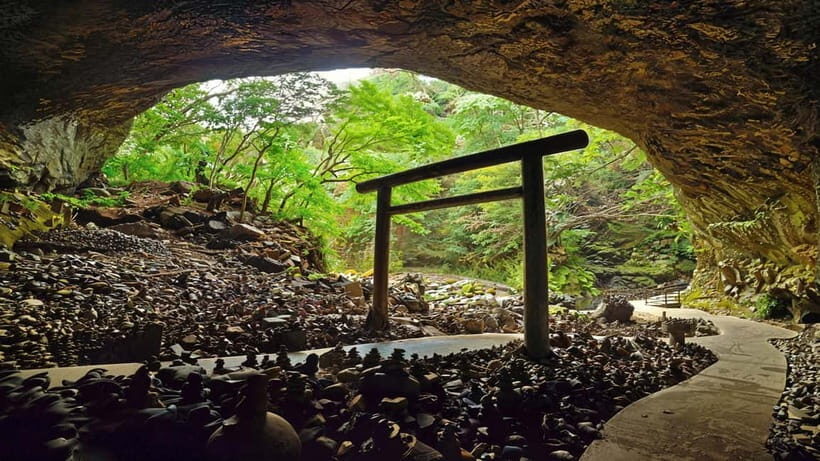
Amano Iwato Cave comes later in the day, around 2:00 PM. This is where the tour leans into story and atmosphere. The cave area is surrounded by greenery and flowing rivers, and it has that calming feel you get in places that people visit for spiritual reasons rather than just photos.
You’ll walk along natural stone trails. That’s the practical part to respect. Bring sturdy, comfortable walking shoes because footing matters here. This section isn’t suitable for wheelchairs or strollers, so if that affects you, it’s worth reconsidering the tour for your needs.
You’ll also see stone stacks left by visitors—described as wishes of hope. Whether you plan to participate or just observe, that little detail changes how you view the cave. It feels less like a static attraction and more like an ongoing tradition.
If Takachiho Gorge is the day’s motion, Amano Iwato Cave is the pause.
Pacing and timing: how to enjoy every stop without rushing
This tour is built around travel time and a few timed blocks:
- Outbound coach ride is about 3 hours.
- Takachiho Gorge is about 1 hour for exploring.
- Lunch is 1 hour and not included.
- The rail option is about 30 minutes (optional).
- Then you head into shrine-only days or toward Amano Iwato Cave.
- You return to Fukuoka by around 6:30 PM.
So yes, it’s a long day. But it’s designed so each major stop gets a meaningful chunk of time. The gorge walk gives you movement. The rail moment gives you spectacle. The shrine/cave gives you stillness.
Where it can feel tight is the buffer for delays. Traffic on weekends and holidays can push the return later than 7 PM. The guide and driver overtime fees are covered, but the time at attractions can shrink or shift if delays happen. My advice: don’t schedule anything right after you come back to Hakata.
Guides, language, and how to make the day feel personal
This tour includes an English/Chinese-speaking guide (with live guidance also offered in Traditional Chinese and Japanese). Even when the day’s agenda is fixed, a good guide helps you interpret what you’re seeing.
From the overall feedback profile, people tend to rate the tour highly when the guide explanation makes the places feel understandable and fun, not just listed. The guiding style matters most at myth-related stops like Takachiho Shrine and Amano Iwato Cave, where context turns scenery into meaning.
You’ll also get round-trip transportation, which is a big deal if you’re trying to do this area with minimal stress. You’re spending your energy on walking and observing, not managing trains and transfers.
Price and value: what $75 buys you (and what costs extra)
At $75 per person for a 10-hour day, you’re basically paying for:
- round-trip coach transport from Fukuoka,
- a live guide with multiple language options,
- and a structured route that hits Takachiho Gorge plus the myth/cultural stops.
The main things not included are:
- meals (lunch is on you),
- Takachiho Amaterasu Railway tickets (optional),
- personal expenses.
So the value depends on your choices. If you take the rail ride and eat a full lunch, your total day cost rises. If you keep lunch budget-friendly and skip the optional train tickets, the $75 covers a lot of sightseeing with a lot less coordination on your end.
For most people, the biggest “value question” is really this: do you want the Neon Tunnel bridge moment enough to pay extra for the train ticket? If yes, build that into your budget and go enjoy the spectacle. If no, you’ll still have a strong day with nature and mythology.
Who should book this tour, and who should skip it
This is a great fit if you:
- like guided structure but still want time to walk on your own,
- want a nature-meets-myth day without renting a car,
- enjoy Japanese cultural sites and don’t mind a longer day schedule.
It’s a weaker fit if you:
- need wheelchair access or rely on strollers (the cave trails aren’t suitable),
- have limited mobility or prefer very flat, low-step walking,
- are older than recommended in the tour notes (people over 70 are listed as not suitable).
Also, wear shoes you trust. If you’re tempted to use slippers or very soft footwear, don’t. You’ll be happier—and safer—if your feet can handle stone trails.
Should you book this Fukuoka day trip?
I’d book it if you want one day in Kyushu that covers Takachiho’s nature power and Japan’s myth sites without you doing logistics homework. It’s especially compelling if you’re interested in the optional rail moment, because the bridge crossing and Neon Tunnel are the kind of visual story you don’t easily recreate on your own.
I’d hesitate if you’re the type who needs perfect schedule flexibility or if you’re worried about the phone-based coordination. The bus departs on time, and the guide will contact you the night before via WhatsApp/LINE, so you’ll want to be reachable and show up at the correct meeting point.
One last practical check: keep your next plans open for the evening. With possible traffic delays, you’ll enjoy the day more when you’re not rushing to catch a separate appointment right after you return.
FAQ
Where is the meeting point for the tour?
You meet at LAWSON downstairs of Fukuoka Oriental Hotel (4-23 Hakataekichuogai, Hakata Ward, Fukuoka, 812-0012). You should arrive 15 minutes before departure.
What time does the tour start and when do you return to Fukuoka?
The tour starts at 8:00 AM and you return by about 6:30 PM to Hakata Station.
What’s included in the tour price?
Round-trip transportation and an English/Chinese-speaking guide are included.
Is lunch included?
No. Lunch is not included in the tour price, and you’ll have about 1 hour for lunch around noon.
Are Takachiho Amaterasu Railway tickets included?
No. The train ride is optional, and tickets for the Takachiho Amaterasu Railway are not included (you can purchase on-site).
What happens if the Takachiho Amaterasu Railway is closed?
On the third Thursday of every month, the railway undergoes maintenance. In that case, the itinerary changes to a visit to Takachiho Shrine instead.
How long do you spend at Takachiho Gorge?
You get about 1 hour at Takachiho Gorge for photos and self-guided exploring.
What should I wear for Amano Iwato Cave?
Bring comfortable, sturdy walking shoes. The cave paths are natural stone trails and aren’t suitable for slippers.
Is the tour suitable for wheelchairs, strollers, or limited mobility?
No. The cave part of the tour is not suitable for wheelchairs or strollers, and the tour notes that it isn’t suitable for people with mobility impairments or people over 70.
What is the cancellation policy?
You can cancel up to 24 hours in advance for a full refund.
If you want, tell me your travel date and whether you plan to ride the Neon Tunnel train—I can help you decide how to think about the optional ticket versus keeping the day simpler.