REVIEW · OSAKA
Half day Osaka Bay Area Cycling with E-Assist Bicycle Tour
Book on Viator →Operated by Banri · Bookable on Viator
Osaka Bay on two wheels beats the usual scramble. In a half day, you’ll pedal with e-assist help past temples, bridges, and working neighborhoods most visitors skip. The route is guide-led, so you spend less time figuring out connections and more time looking out at the water and skyline.
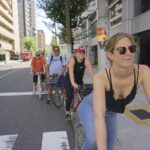
What I like most is the small feel of the trip. With a max group size of 3, Banri can slow down for the tricky bits, answer questions, and keep the pace comfortable. I also like that the essentials are handled for you: bicycle, helmet, and bottled water are included, so you show up and ride.
One thing to plan for: parts of the route mix with heavy truck traffic and a few steep, technical bridge moments. Add in the fact that the bicycle may be too small for people over 180cm tall, and you’ll want to go in with realistic expectations and proper clothing.
In This Review
- Key highlights worth carving out time for
- Riding Osaka Bay with an e-bike, not a headache
- Banri’s small-group style: more talk, less waiting
- E-bike logistics that matter: comfort, size, and traffic reality
- Your Osaka Bay route: bridges, shrines, and local ferry minutes
- Stop 1: Sumiyoshi Taisha Shrine
- Stop 2: Shinkizugawa Bridge viewpoints
- Passing the Black Rain film factory district
- Stop 3: Funamachi Ferry Facilities (bicycles-only friendly)
- Stop 4: IKEA Tsuruhama lunch break (including a vegetarian option)
- Stop 5: Namihaya Bridge, the 360-degree bay look
- Stop 6: Mt. Tempozan break near major bay icons
- Stop 7: 甚兵衛渡船場 (Osaka City local ferry)
- Stop 8: Sensai Bridge steep sections plus a ferry escape
- Stop 9: Sembonmatsu Bridge and the glasses bridge effect
- Price and value: where $78.38 actually goes
- Weather, rain odds, and the truck traffic you can’t ignore
- Who this Osaka Bay cycling tour is best for
- Should you book this Osaka Bay e-bike ride?
- FAQ
- FAQ
- How long is the Osaka Bay cycling tour?
- What time does the tour start?
- Where do I meet the group?
- Is lunch included?
- What’s included in the price?
- What are the basic limits for riders?
Key highlights worth carving out time for
- Small group of up to 3 keeps the tour personal and flexible on steep or busy stretches
- E-assist cycling makes longer bridge-and-bay stretches doable without turning it into a workout contest
- Local-only ferries for bicycles and pedestrians give you a rare view of everyday Osaka
- Sumiyoshi Taisha Shrine adds a serious cultural stop early in the ride (free entry)
- Osaka Bay views from multiple bridges including the 360-degree Namihaya Bridge viewpoint
- Banri’s route storytelling uses history and maps to explain what you’re actually seeing
Riding Osaka Bay with an e-bike, not a headache
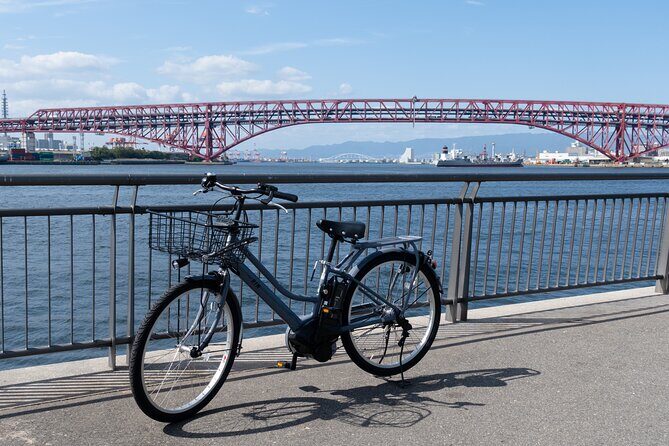
This tour is built for people who want to see the edges of Osaka Bay without spending your day on transit schedules. You start at 10:00am and finish back at the meeting point, so you’re not left guessing how to get yourself home after a long day out.
You also get a clear structure. In about 4 to 6 hours, you hit a chain of memorable places: a major shrine, scenic bridges, short local ferry crossings, and bay-area stops that range from modern to old-school. Instead of chasing one famous landmark at a time, you get a connected route where each stop makes the next one easier to appreciate.
And yes, the e-assist matters. Even if you’re comfortable riding a bicycle, Osaka is all bridges and changes in elevation. The motor support keeps you moving steadily so you can enjoy the sights rather than arriving sweaty and fried.
You can also read our reviews of more cycling tours in Osaka
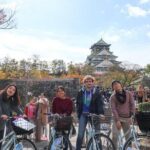
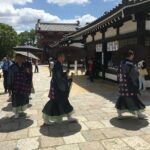
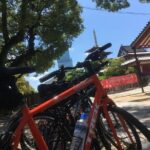
Banri’s small-group style: more talk, less waiting
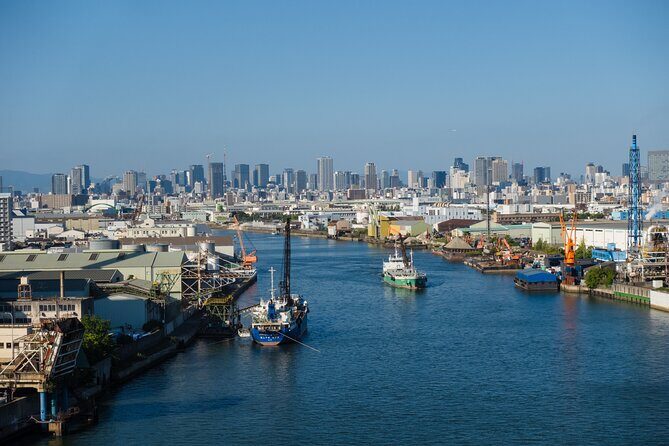
The biggest quality-of-life difference is the small group size. With no crowd to manage, Banri can keep the group tight on turns and slow sections and still maintain momentum. It also means you’re not constantly stopping just to wait for stragglers.
Banri is especially good at making the route feel like a place, not a checklist. You’ll get context about the areas you pass through, and the explanations come with practical details—often with maps that show how the neighborhood has changed over time. That makes the bridge views more meaningful, because you understand what you’re looking at and why it matters.
From the experience vibe—patient guidance and helpful direction—you should feel comfortable if you’re not an expert cyclist. The ride is designed for people with moderate physical fitness, not for athletes trying to set personal records.
E-bike logistics that matter: comfort, size, and traffic reality
Here’s the practical stuff to check before you book.
First, you do need to be able to ride a bicycle, and the tour is intended for moderate physical fitness. The route includes steep stretches and tricky approaches at some bridge access points, so if you’re recovering from an injury or you’re nervous on hills, consider that carefully.
Second, bicycle sizing can be a dealbreaker. The tour notes that the bicycle may be too small for people over 180cm tall. If you’re close to that limit, it’s worth double-checking your fit so you’re not fighting the bike the whole time.
Third, safety and comfort: the roads are heavily trafficked by large trucks. If you’re sensitive to air or fumes, the tour suggests bringing a mask and eye drops. That’s not just a nice-to-have. Truck traffic plus wind around the bay can make eye irritation worse than you expect.
Finally, plan your clothing. Wear comfortable clothes that let you ride comfortably, and keep in mind that you’ll be out for several hours. If you’re prone to getting cold near water in the morning, bring a light layer.
Your Osaka Bay route: bridges, shrines, and local ferry minutes
Think of this ride as a line drawn across the bay. Each stop gives you a different angle—religious, industrial, river-based, and finally the bay-view circuit.
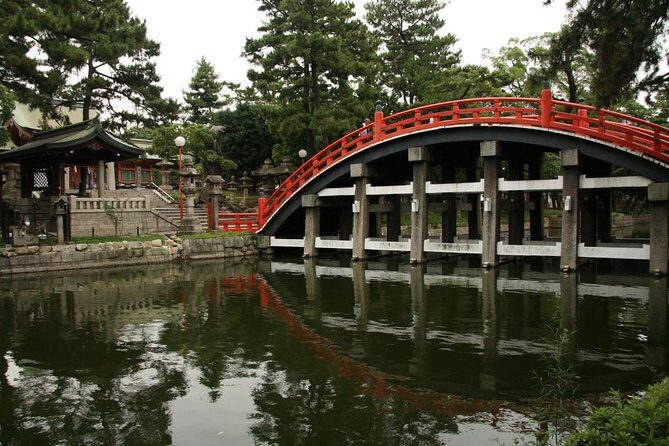
Stop 1: Sumiyoshi Taisha Shrine
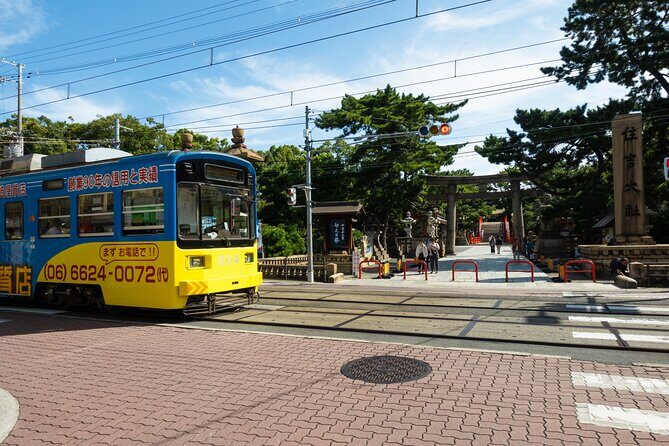
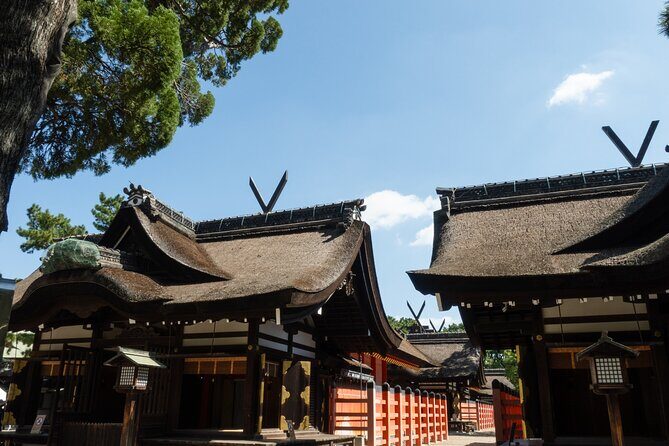
You’ll start at Sumiyoshi Taisha, one of Japan’s oldest shrines, with nearly 2,000 years of history. It’s associated with the three sea gods, which makes the location feel extra appropriate for a bay-focused cycling route.
The shrine’s main building is designated as a national treasure. Entry is free here, and you’ll get about 30 minutes, which is enough time to slow down, read a few key details, and take photos without feeling rushed.
Stop 2: Shinkizugawa Bridge viewpoints
Next is Shinkizugawa Bridge, where the scenery opens toward Tennoji and the Ikoma Mountains. You’ll also get the fun part: enjoying the descent of a three-stage loop bridge while taking in the view.
This is a good stop for photos because you can look outward while still feeling connected to the ride. Entry is free, and the time here is short—about 20 minutes—so you’ll want to decide quickly where you want your best angles.
Passing the Black Rain film factory district
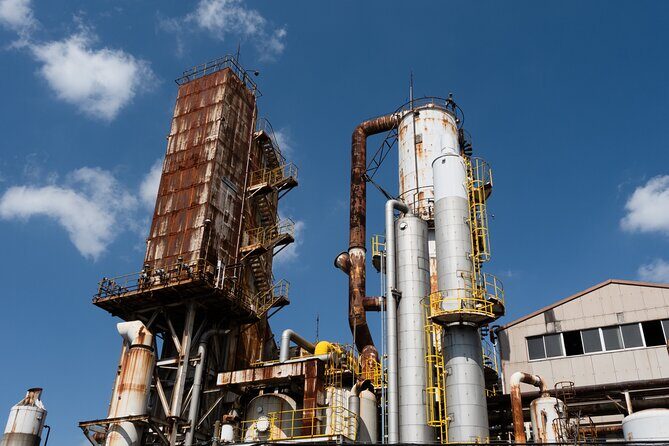
Between bridges, you’ll pass through an area tied to Ridley Scott’s film Black Rain, filmed in Osaka and New York City. This is one of those stops that doesn’t feel like a stop, but it adds a layer of modern cultural context as you roll through working parts of the city.
If you like recognizing places from film, this moment will click. Even if you don’t, it breaks the ride out of the purely scenic mode and reminds you you’re seeing real Osaka functions, not just views.
Stop 3: Funamachi Ferry Facilities (bicycles-only friendly)
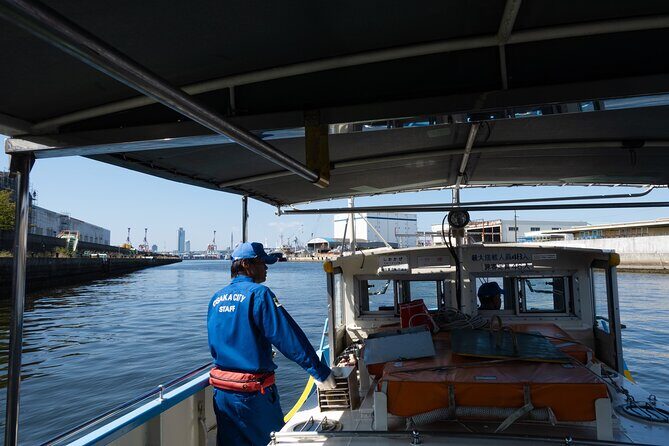
Then comes a very “only-in-this-place” moment: a short ferry crossing run by Osaka City. It’s used by locals and is about one minute, and it’s specifically for bicycles and pedestrians.
This tiny ferry segment does a lot for the ride. It gives you a break from pedaling, and it also changes your perspective instantly—water, motion, and a quieter rhythm than the road. It’s free and around 10 minutes total at the facilities.
Stop 4: IKEA Tsuruhama lunch break (including a vegetarian option)
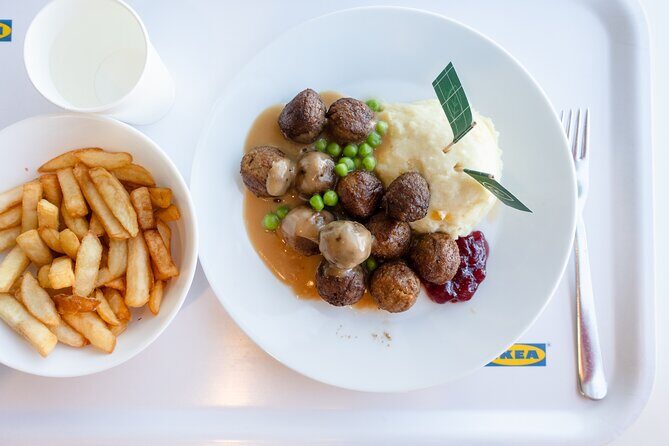
At IKEA Tsuruhama, you get a break of about 15 minutes. The ride doesn’t include lunch, but you’ll have a choice for what to eat. For vegetarians, the plan is lunch at Sweden Food Market of IKEA.
This isn’t a “wander and shop” stop. It’s a practical recharge point in the middle of the ride where you can choose food without stress. If you’re hungry, you’ll appreciate that predictability.
Stop 5: Namihaya Bridge, the 360-degree bay look
Namihaya Bridge is one of the big view stops. It sits near the middle of the bay area and offers a 360-degree look at Osaka’s city spread.
It’s also a bridge that allows ships to pass through a channel with a 47m height above the water. That technical detail matters because it explains why the view feels so wide and open: the bridge is designed to work with the bay, not block it. You’ll spend about 20 minutes here, and entry is free.
Stop 6: Mt. Tempozan break near major bay icons
At Mt. Tempozan, you’ll take another break—about 40 minutes. The area is connected to big bay attractions like the aquarium Kaiyukan, a Ferris wheel, and Tadao Ando architecture, even if you’re not doing all of those inside.
Lunch here is suggested at a Japanese diner in Tempozan. If you’ve been cycling with a steady pace, this is the moment where you’ll likely feel grateful for a real sit-down meal.
Tempozan is also known for cherry blossoms in spring. Even if you’re not traveling during that season, the stop gives you a sense of how the bay area changes with the year.
You’ll also pass by a photo-heavy moment where three expressways intersect and subway tracks cross. It’s photogenic in a technical, human-engineering way, especially if you like city geometry.
Stop 7: 甚兵衛渡船場 (Osaka City local ferry)
Another very short local ferry crossing follows at 甚兵衛渡船場 on the Senri? side area noted as 大正区泉尾側. Like the earlier ferry, it’s operated by Osaka City and used only by locals.
You’re looking at around one minute on the water for bicycles and pedestrians, with about 10 minutes on-site overall. This is a repeat experience, and that’s good: you’re not just passing through once, you’re getting a mini pattern of bay-life transportation.
Stop 8: Sensai Bridge steep sections plus a ferry escape
Sensai Bridge is where you’ll feel the route’s elevation. The bicycle road is steep, but there’s an option to take a ferry to cross the river instead if you prefer a less punishing approach.
This is also a good example of how the ride supports different riding styles. If you want to keep pushing, you can ride; if you’d rather save energy, you can use the ferry option. Entry is free, and you’ll have about 15 minutes here.
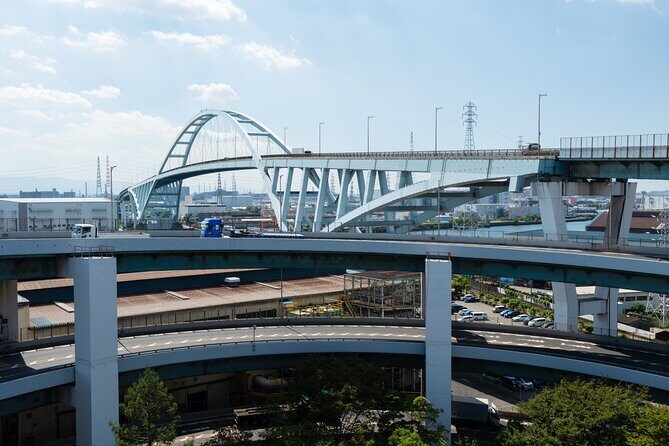
Stop 9: Sembonmatsu Bridge and the glasses bridge effect
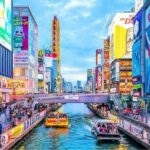
To wrap the bay circuit, you’ll reach Sembonmatsu Bridge, which crosses the Kizu River. It connects toward Dotonbori, so the ride feels like it’s linking Osaka Bay to the more famous city core.
This bridge has a nickname—Megane-bashi, meaning glasses bridge—because its shape resembles a pair of glasses. It’s one of the more distinctive bridge silhouettes in the area, and you’ll spend about 15 minutes at the stop.
Price and value: where $78.38 actually goes
$78.38 for a half-day e-bike tour may sound like a splurge until you break down what’s included and what you’re avoiding.
You get use of the bicycle, helmet, and bottled water. Those add up, especially in a city where renting gear can be annoying. You also get a guide who keeps the route moving and prevents you from wasting time on map reading or transit juggling.
Then there’s the big value driver: you’re riding a custom, connected route that includes local ferry moments and multiple bridges. Those segments are exactly the kind of thing that’s hard to stitch together on your own without either over-planning or missing the good parts.
Lunch isn’t included, and Mt. Tempozan admission isn’t included either. But the tour gives you scheduled breaks so you can eat without guesswork. If you’re budgeting lunch separately anyway, the rest of the package still feels like solid value for what you’re seeing in a short window.
Weather, rain odds, and the truck traffic you can’t ignore
This tour depends on good weather. It would be canceled if rain probability is 40% or more, and if it’s canceled due to poor weather, you’ll be offered a different date or a full refund.
In practice, that’s good news: it means you’re less likely to get stuck on soggy roads. Wet conditions can be especially tricky around bridges.
The harder challenge isn’t rain, it’s the mix with large trucks. The route notes that roads are heavily trafficked by large trucks, which is why the mask and eye drops suggestion is included. If you’re okay with being on roads for a few hours, you’ll likely find it manageable. If you’re extremely sensitive to air, plan for it up front.
Also, remember that a few bridge approaches can be steep and tricky. The tour is built for moderate fitness, and Banri’s guidance helps, but you should still go in prepared for uneven moments.
Who this Osaka Bay cycling tour is best for
This is a great fit if you want Osaka Bay’s highlights without spending your whole day grinding through transit. It’s also ideal if you like seeing real neighborhoods—industrial edges, river life, and bridge views—rather than only sticking to the most famous tourist zones.
It’s especially good for:
- People who can ride a bicycle and don’t mind some hills
- Travelers who prefer small-group guiding over big tours
- Anyone who loves bridges and city engineering details
- Visitors who want local-style ferries, not just sightseeing
It might not be ideal if:
- You can’t comfortably handle steep sections
- You’re taller than 180cm and worry about bike fit
- You strongly dislike cycling near busy road traffic
- You have a fragile health situation and want a fully gentle pace
Should you book this Osaka Bay e-bike ride?
If your goal is a memorable half-day in Osaka Bay with less planning stress and more real local rhythm, this is a very smart booking. The combination of Banri’s guided storytelling, multiple scenic bridges, and those quick local ferry crossings is exactly the kind of experience that feels uniquely Osaka.
I’d book it if you’re willing to ride a bicycle with some steep bits and you can handle busy roads for a few hours. If you want a mostly flat, traffic-free ride, you may prefer a different style of tour.
FAQ
FAQ
How long is the Osaka Bay cycling tour?
It runs for about 4 to 6 hours.
What time does the tour start?
The start time is 10:00am.
Where do I meet the group?
The meeting point is Lawson Tamadenaka 2-chome 6-12, Tamadenaka, Nishinari Ward, Osaka.
Is lunch included?
Lunch is not included. You can have lunch at a Japanese diner in Tempozan, or for vegetarians at IKEA’s Sweden food market.
What’s included in the price?
The tour includes use of the bicycle, a helmet, and bottled water.
What are the basic limits for riders?
There is a minimum height of 140cm and a maximum weight of 90kg. You must be able to ride a bicycle. The bicycle may be too small for people over 180cm tall, so that’s worth considering before you go.