REVIEW · HIROSHIMA
Hiroshima: Itsukushima Shrine and Miyajima Summit Tour
Book on GetYourGuide →Operated by DeepExperience, Inc. · Bookable on GetYourGuide
Torii on stilts over the sea. I love how this trip pairs Itsukushima Shrine with Shugendo mountain-worship context, then pays you back with summit views over the Seto Inland Sea.
The main thing to watch is the pace and the climb. Expect a moderate amount of walking plus uphill sections, and the tour can feel a bit tight toward the end if you like to linger. On the plus side, this tour is led by English guides such as Gordon Michasiw and Hine, who are described as especially helpful and calm when people need a hand.
In This Review
- Key points that make this tour worth your time
- Why Miyajima feels different from a typical shrine stop
- Entering Itsukushima Shrine: the torii moment and the sea’s role
- Ropeway up: saving your legs for the summit views
- The summit of Miyajima: where Shugendo and mountain worship make sense
- More than the main shrine: Senjokaku and Itsukushima’s heritage stops
- Pace, walking effort, and what to pack so you’re comfortable
- Price and value: why $179 can make sense here
- Who should book this private Miyajima summit tour
- Should you book? My take on the decision
- FAQ
- Where do we meet for this tour on Miyajima?
- How long is the Hiroshima: Itsukushima Shrine and Miyajima Summit Tour?
- What is included in the price?
- What is not included?
- Is this tour suitable for wheelchair users or people with mobility impairments?
- What should I bring with me?
- Will there be an English guide?
Key points that make this tour worth your time
- UNESCO Itsukushima Shrine: the famous torii setting and its sea-linked design
- Ropeway/cable car included: you save time and energy for the viewpoints
- Shugendo on the mountain: sea and mountain beliefs explained in plain language
- Summit time for the big views: you get the high perspective, not just the entrance photos
- Senjokaku and the Gojunoto stop: extra heritage stops beyond the main shrine
- Private, English-guided: fewer crowds in your group, better Q&A and pacing
Why Miyajima feels different from a typical shrine stop
Miyajima isn’t just a place to check off famous sights. It’s a sacred island where the story is built into the geography: water all around, forest up the slopes, and spiritual paths that connect the two. That matters, because you’re not simply touring buildings. You’re walking through the logic of the place.
On this tour, you’ll move between the island’s most iconic shrine imagery and the mountain side of the tradition. The guide’s job is to translate what you see—why the shrine is shaped the way it is, why pilgrims historically walked the routes, and why the summit traditions matter. If you like your travel with context (not a script), this format usually works well.
The duration is about 330 minutes (a little over 5 hours), so you’re not rushed all day. Still, you should plan to keep moving. This is a “see it and walk it” kind of outing.
You can also read our reviews of more tours and experiences in Hiroshima.

Entering Itsukushima Shrine: the torii moment and the sea’s role
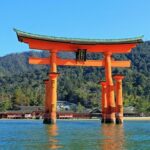
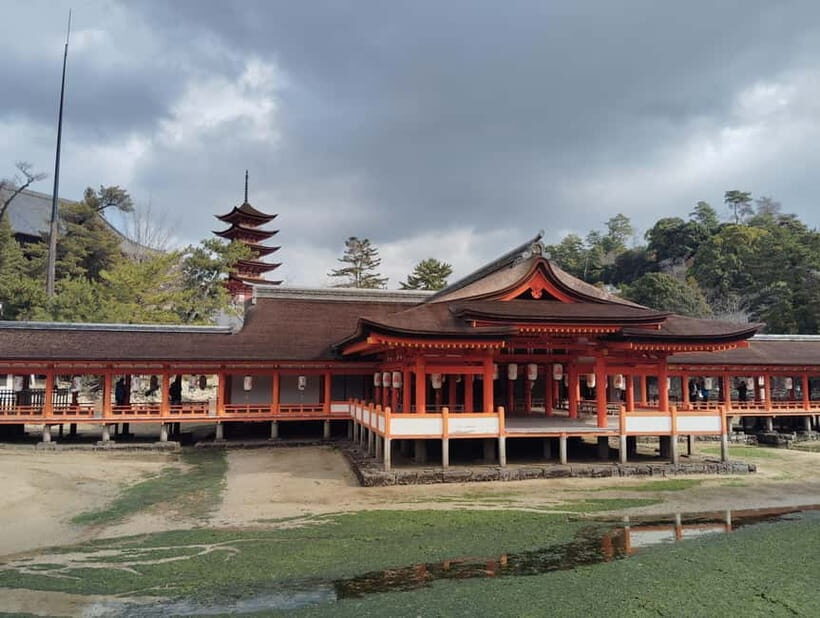
Itsukushima Shrine is the headline for a reason. The most famous view is the torii standing out over the water—an image so recognizable it almost looks like a logo. But what makes it more than a postcard is the intention behind it. The shrine’s structure on stilts is designed to respect the island’s sanctity and to preserve the natural beauty rather than disrupt it.
When you visit, you’ll get a guided walk that slows you down enough to notice details you might otherwise miss. The guide explains how the shrine setting ties to Shinto reverence for nature, and how the surrounding sea helped shape what people believed and where they went. Miyajima’s spirituality isn’t tucked away inside a museum. It’s out in the open air, right where the waves meet the land.
A practical note: the shrine area can be busy around the classic photo spots. Your best “value move” is to listen to what the guide points out first, then take your photos without turning it into a frantic stampede.
Ropeway up: saving your legs for the summit views
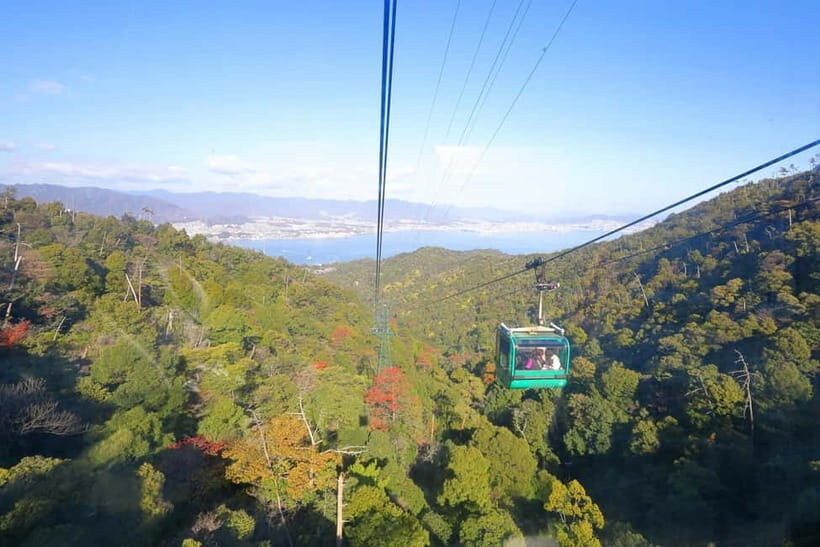
One of the smartest parts of this tour is that the ropeway/cable car is part of the plan. Instead of burning energy on the easiest parts you can later appreciate from above, you use the transport to reserve your stamina for the viewpoints and the actual walking segments on the island.
This is also where the feel of Miyajima changes fast. Near the water, the mood is open and coastal. As you go up, the air shifts toward forest and slope. That’s not just scenic contrast—it matches the theme you’re learning. The guide’s framing of sea-and-mountain harmony becomes more real once you’re literally transitioning from one world to the other.
You’ll want comfortable shoes here. Even if you’re not a big hiker, the walk portions plus stairs and uneven paths add up.
The summit of Miyajima: where Shugendo and mountain worship make sense
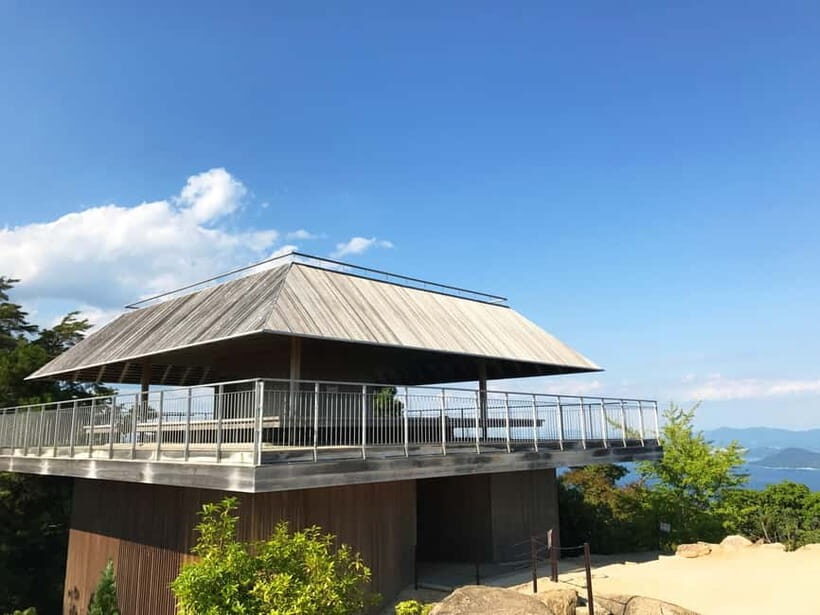
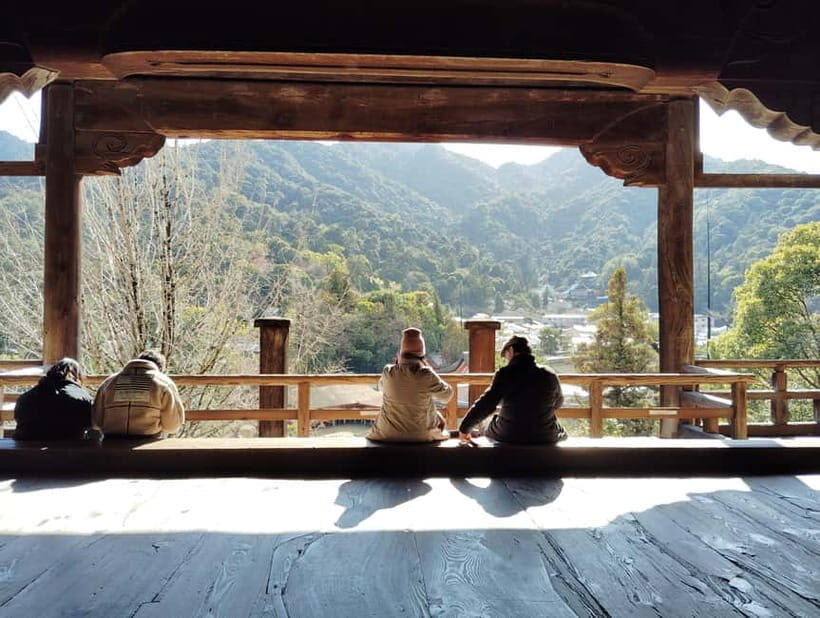
Climbing to the summit is the reason this tour feels different from a simple “shrine and return” outing. At the top, you’re not just rewarded with broad views—you’re standing in the spiritual logic that shaped Shugendo practices.
Shugendo is a tradition of mountain asceticism that blends elements of Buddhism and Shinto with a strong focus on spiritual discipline in nature. On Miyajima, that blend shows up in how people approached the island historically: worship wasn’t only about looking. Pilgrims walked paths, sought enlightenment through the sacred landscape, and connected themselves to both the sea below and the mountain above.
During the summit portion, your guide ties those ideas to what you can see from up there. This is when the tour’s “why” clicks. You start to understand how the physical climb supports the spiritual meaning—an approach that turns sightseeing into a lived feeling, even if you’re only there for a few hours.
On a clear day, the views can be a big payoff. If visibility is poor, you’ll still gain value from the explanations and the sheer perspective of being higher than the shrine grounds.
More than the main shrine: Senjokaku and Itsukushima’s heritage stops
This tour doesn’t stop at the easiest-to-photograph places. You’ll also visit key heritage sites that help round out the island’s religious atmosphere.
Two stops in particular add texture:
- Senjokaku Pavilion: You get a guided visit that helps you understand its place in Miyajima’s spiritual world. It’s the kind of site that feels more meaningful when you know what it was meant to represent.
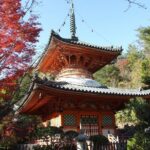
- Itsukushima Jinja Gojunoto: Another guided stop that keeps you from thinking of Miyajima as only torii gates and shore views.
There’s also a short pocket of time for you to do your own thing. Use it smartly: grab water, take quick photos away from the main cluster, and let your legs recover for the final return flow.

Pace, walking effort, and what to pack so you’re comfortable
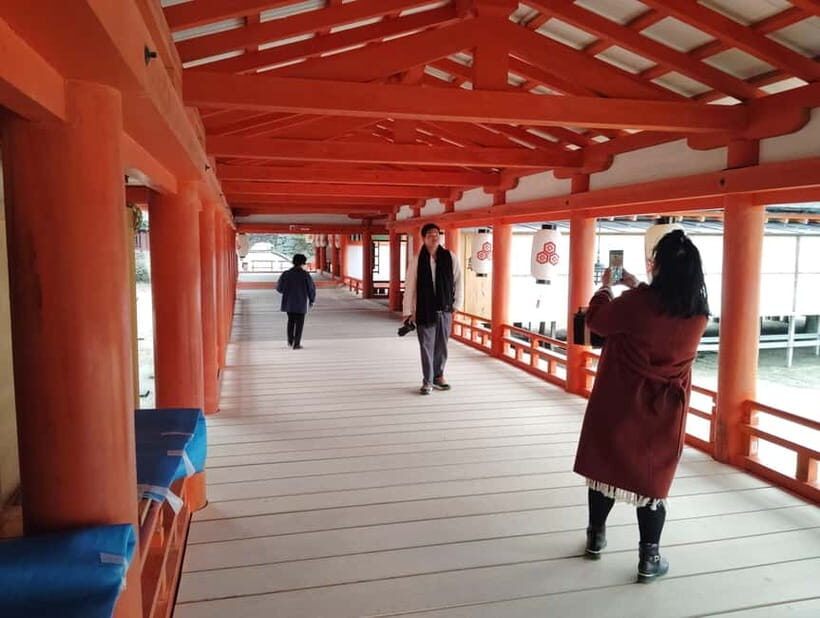
This is a private group experience with a live English guide, and it’s designed to be engaging rather than slow and ceremonial. That’s great—until you realize “private” doesn’t mean “easy.”
Here’s what to expect physically:
- You’ll do shrine viewing and guided walking.
- There’s cable car/ropeway time to help.
- You’ll still have uphill walking and stairs.
- Overall, it’s a moderate effort.
So pack like you mean it:
- Comfortable shoes with grip
- Water
- Hat and sunscreen
- Camera (and spare phone battery if you like lots of photos)
One more “don’t make it harder than it needs to be” tip: start hydrated. Japan’s walking heat can feel sneaky, even when the air seems mild.
And a clear boundary: this tour isn’t suitable for people with mobility impairments or wheelchair users. If that applies to you, you’ll want a different Miyajima plan that matches your ability level.
Price and value: why $179 can make sense here
At $179 per person, this tour isn’t a budget add-on. It’s priced like a guided experience with real components included—not just a walking tour with a name badge.
Here’s what you’re getting for the money:
- A professional live English guide
- Admission to Itsukushima Shrine
- Access tied to the summit experience
- Ropeway fee included
And what you’re not getting:
- Meals
- Hotel pickup/drop-off
So the value equation is simple. If you plan to do Itsukushima Shrine plus the summit in one day without figuring out transport and timing yourself, the guide saves friction. And the summit is where your guide’s explanations are most useful, because that’s where the “sea-mountain spirituality” theme can feel abstract without help.
Is it worth it if you only care about the torii photos? Probably not. But if you want the story behind the architecture and the living belief system tied to the mountain, it’s priced in the sweet spot for guided context.
Who should book this private Miyajima summit tour
This is a great fit for you if:
- You want more than surface-level shrine viewing
- You like learning how traditions connect to place
- You’re comfortable with moderate walking and an uphill climb
- You want an English guide who can explain what you’re seeing as you go
It’s also a strong choice if you prefer a smaller feel. This is a private group, which often means less waiting and more flexibility when someone needs a slower moment.
It may not be for you if:
- You need wheelchair access or have mobility limitations that make uneven paths difficult
- You want a fully seated experience with minimal walking
- You’re hoping for a relaxed stroll with no climb at all
Should you book? My take on the decision
If you’re spending time around Hiroshima and want one Miyajima experience that actually changes how you understand the place, book this. The mix of Itsukushima Shrine, heritage sites, and the summit gives you the full “island as spiritual system” picture, not just the famous landmark view.
Just go in with realistic expectations: you’ll walk, you’ll climb, and you’ll want proper shoes. If you do that, you’ll get the best of both worlds—sea shrine imagery down low, and Shugendo-inspired mountain perspective up high.
FAQ
Where do we meet for this tour on Miyajima?
You meet in front of the Miyajima-guchi Tourist Information Center. The guide will be holding a yellow sign with the DeepExperience logo.
How long is the Hiroshima: Itsukushima Shrine and Miyajima Summit Tour?
The tour duration is 330 minutes.
What is included in the price?
The price includes a professional guide, admission to Itsukushima Shrine, visits to the summit of Miyajima, and the ropeway fee.
What is not included?
Meals are not included, and hotel pickup and drop-off are not included.
Is this tour suitable for wheelchair users or people with mobility impairments?
No. This tour is not suitable for people with mobility impairments or wheelchair users.
What should I bring with me?
Bring comfortable shoes, a hat, a camera, sunscreen, and water.
Will there be an English guide?
Yes. The tour includes a live English guide.