REVIEW · KYOTO
Fish Cutting workshop in Kyoto Japan
Book on Viator →Operated by しおやん · Bookable on Viator
Knives, fish, and a big lunch lesson in Kyoto. This workshop is interesting because you learn hands-on fish prep with guidance meant for real beginners, then you get to eat what you cut. The class runs in a small group inside the market area, so you can ask questions while learning how to handle and slice sashimi fish properly; the only real catch is that you’ll be using knives with no children under 8.
I like the focus on practical technique: how to prepare raw fish safely, how to break it down into clean pieces, and how to keep the fish looking (and tasting) right. A possible consideration is simple: raw fish prep isn’t for everyone, so if the idea of cutting and eating sashimi-grade fish makes you uneasy, this may not be your best fit.
What makes it feel like Kyoto is the setting and the teacher setup. You meet at Kimura Fresh Fish (483 Nakauoyachō, Nakagyo Ward) at 10:00 am, and the experience ends back at the same spot. It’s also built for comfort: you’re taught handling first, so you’re not thrown in blind.
In This Review
- Key Highlights You’ll Care About
- Fish Cutting in Kyoto: What You Actually Learn (and Why It Matters)
- Meeting Kimura Fresh Fish at 10:00: Location, Timing, and Getting There
- The Hands-On Class Flow: From Fish Handling to Cutting Three Pieces
- Sashimi Lunch: How Your Cuts End Up on the Plate
- Price and Value at $98.53 for 2.5 Hours
- Who Should Book This Kyoto Workshop (and Who Might Skip It)
- Practical Tips for First-Timers Cutting Raw Fish
- Should You Book This Fish Cutting Workshop in Kyoto?
- FAQ
- Where is the fish cutting workshop meeting point?
- What time does the workshop start?
- How long does the workshop last?
- How big is the group?
- Is lunch included?
- Is private transportation provided?
- Are children allowed?
- Can I cancel and get a refund?
Key Highlights You’ll Care About
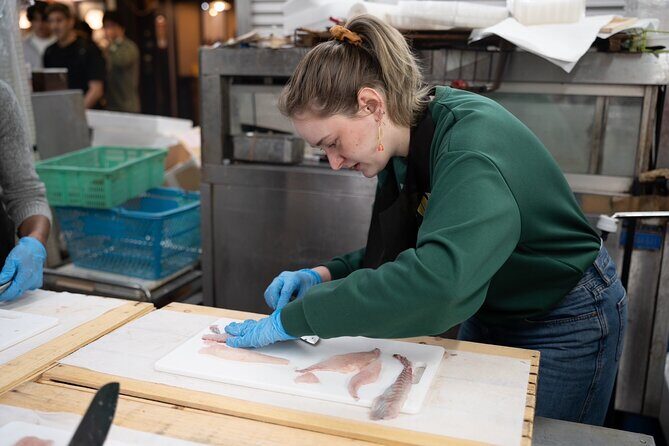
- Cut fish yourself: you’ll cut the fish into three pieces during the class
- Eat your work: the lunch includes the sashimi you prepare
- Small group = real coaching: up to 6 people, with lots of chances to ask questions
- Knife and fish handling basics: taught carefully before you start cutting
- Historic fishmonger instruction: you learn processing methods tied to long-standing tradition
- Mobile ticket: easy to manage day-of
Fish Cutting in Kyoto: What You Actually Learn (and Why It Matters)
This is not a sushi tasting. It’s a real fish prep skill session, the kind you usually only pick up by hanging around a fish shop or learning from a regular who knows what they’re doing.
The big idea is simple: you’ll learn how to handle and cut raw fish for sashimi. That includes learning how to work with the fish first, then how to make the cuts with control. The goal isn’t to make you a pro chef by the end. The goal is to leave you with techniques you can understand, repeat, and use next time you’re eating Japanese fish and wondering why it tastes the way it does.
In particular, I like that the class is set up for confidence. Instruction starts with how to handle the fish safely and correctly, so you’re not just handed a knife and hoped-for-the-best. You’ll also get prompt help when questions come up, which matters a lot when you’re learning something hands-on.
A final reason this matters: sashimi tastes better when it’s cut and handled the right way. Even if you never plan to buy raw fish yourself, you’ll understand why good cutting isn’t only about looks. It affects texture, mouthfeel, and how cleanly the fish comes apart.
A few more Kyoto tours and experiences worth a look

Meeting Kimura Fresh Fish at 10:00: Location, Timing, and Getting There
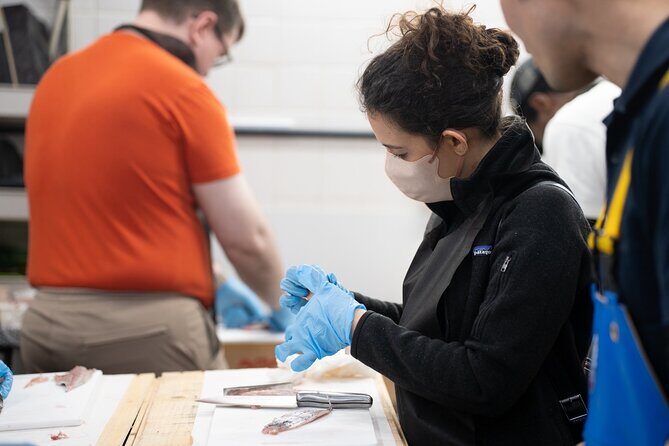
You start at Kimura Fresh Fish, 483 Nakauoyachō, Nakagyo Ward, Kyoto, 604-8125. The start time is 10:00 am, and the activity runs about 2 hours 30 minutes.
This is one of those Kyoto experiences where location is part of the point. The class takes place in the market area in a historic building, so you’re not learning the skill in a modern kitchen set up for tourists. You’re learning next to the real ingredients and the real rhythm of a fish shop setting.
Getting there is also straightforward. The meeting point is described as being near public transportation, and the tour doesn’t include private transportation. That means you’ll want to plan on walking the last bit from a nearby station or bus stop like you would for any market visit.
Day-of tip: treat this like a workshop, not a sightseeing stop. You’ll want to arrive on time so you don’t feel rushed when the handling portion begins.
The Hands-On Class Flow: From Fish Handling to Cutting Three Pieces
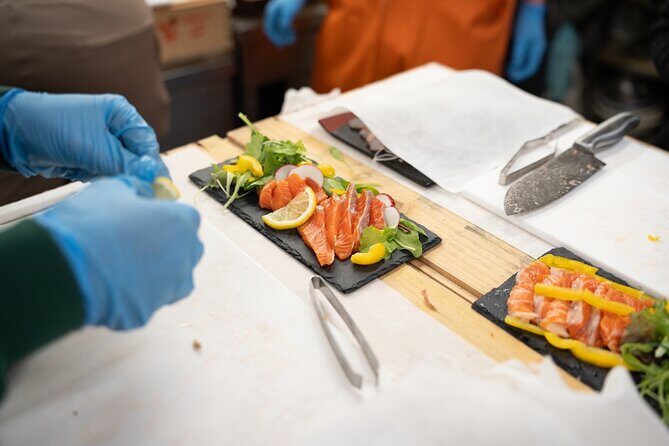
The class teaches basics Japanese fish processing techniques in a very direct way. You’ll be working under supervision, and the pace is built for people who may have never handled raw fish before.
Here’s the flow you can expect:
First, you’ll be taught how to handle the fish. This part matters because fish handling isn’t just about being gentle. It’s about learning how to position the fish, manage the surface, and avoid mistakes that mess up the cut. The instruction is described as careful, and it’s designed so newcomers can participate without worry.
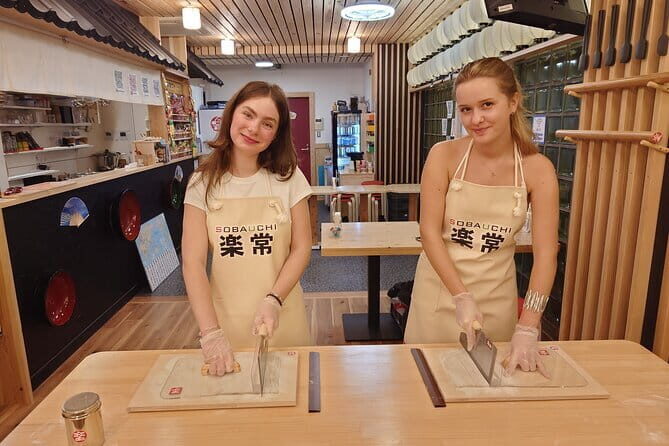
Then comes the cutting practice. You’ll cut the fish into three pieces yourself. The teacher explains what they want to see, and when it becomes your turn, you’re watched closely to help you get the cuts right. This is a huge value factor. Knife skills are mostly muscle memory, and you don’t build that well from watching someone once.
At each step, you’ll have chances to ask questions immediately. The class is capped at a maximum of 6 people, which keeps the teacher’s attention on individuals rather than a crowd. If you’re the type who thinks while you’re working, this setup is ideal.
And yes, the whole point is that you’ll understand what you’re doing. You’re not just copying motions. You’re learning the practical reasons behind the cuts.
Sashimi Lunch: How Your Cuts End Up on the Plate
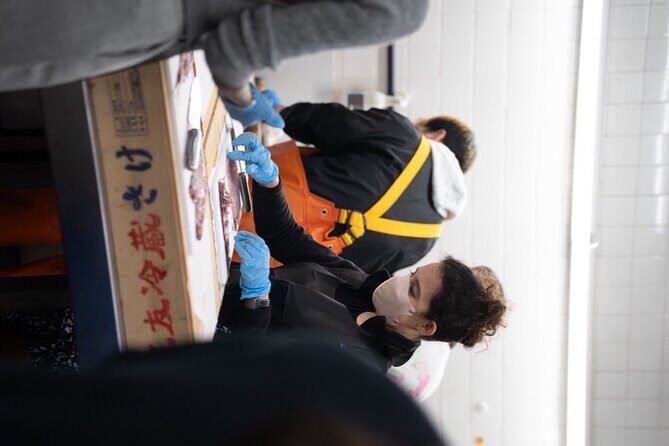
The best part is also the most practical: after you prepare the fish, you eat it. The workshop includes lunch, and the lunch is made from what you process during class.
That means you get two wins:
1) No hanging around hungry while everyone else eats.
2) You can actually connect technique to taste.
There’s something satisfying about tasting fish you’ve broken down yourself. When the teacher teaches you how to handle the fish and how to cut it into the right pieces, you’re not collecting facts. You’re testing results.
A key point here is that this is sashimi lunch. So you’ll be eating raw fish prepared in a way that’s meant for sashimi. If you’re comfortable with raw fish and want to understand it, you’ll likely enjoy this a lot more than a standard meal.
If you’re new to sashimi, start mentally ready for that learning curve. The texture and flavor can be different from cooked fish, but that’s also why the cutting technique matters so much.
Price and Value at $98.53 for 2.5 Hours
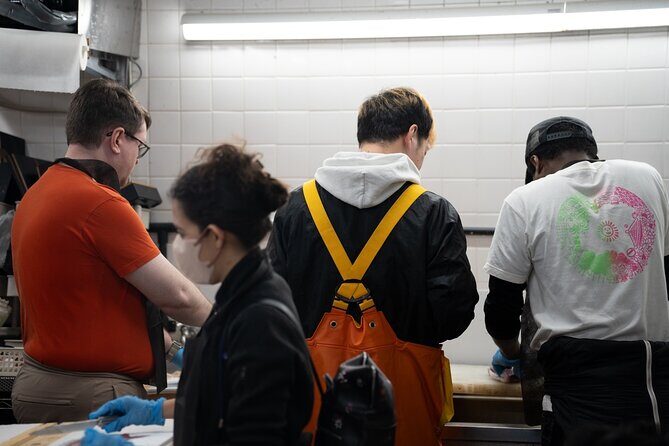
At $98.53 per person for about 2 hours 30 minutes, this isn’t the cheapest thing you can do in Kyoto. But it’s also not trying to be. You’re paying for real instruction, real ingredients, and the chance to eat what you prepared.
Here’s why I think it’s good value if you like food skills:
- You’re learning knife and fish handling technique, not just watching someone cook.
- The lunch is included, and it’s the food you make, not a separate menu item.
- The group is small, which usually costs more in instruction time.
- You’re getting expert guidance from a fishmonger described as having decades of experience and teaching techniques passed down through generations.
Also worth noting: this workshop is booked on average about 48 days in advance. That suggests demand stays steady. If you want a spot on a specific date, plan ahead instead of hoping.
If you’re the type who enjoys trying new cooking styles and wants more than a photo and a meal, this price starts to make sense fast.




Who Should Book This Kyoto Workshop (and Who Might Skip It)
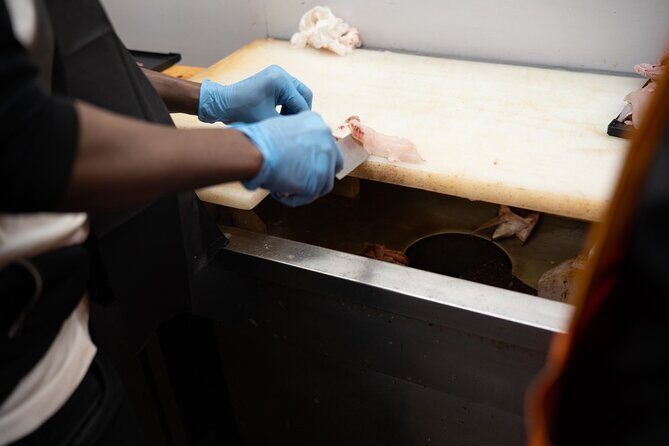
This workshop is a great fit if you:
- Want a hands-on food experience in Japan, not a passive one
- Like cooking, knives, or learning practical kitchen skills
- Enjoy sashimi and want to learn how it’s actually prepared
- Prefer small groups where you can ask questions while you work
It’s also a nice choice if you’re traveling with curiosity. Kyoto has plenty of history and plenty of temples. This is different: it’s about the food craft behind the culture.
Who might skip it? If you’re strongly uncomfortable with raw fish or cutting with knives, don’t force it. The class includes an explicit age rule: no children under 8, because children handle knives. Even if you’re an adult, your comfort matters.
Also consider your comfort with attention. This is taught step by step, but you’re also actively cutting. If you prefer to watch first and try later, this setup may feel a little more intense than you want.
Practical Tips for First-Timers Cutting Raw Fish
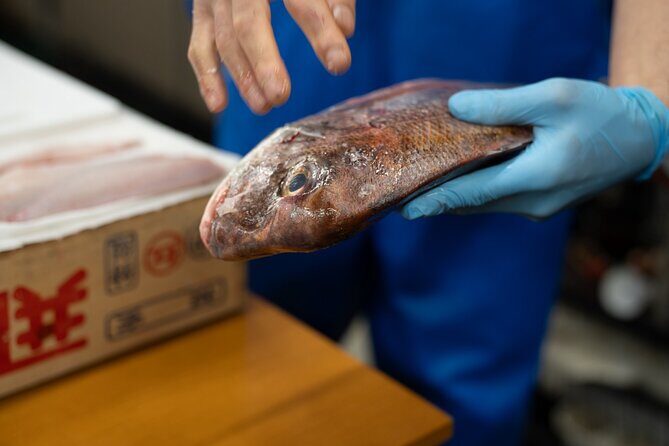
If you’ve never handled raw fish, you’ll do best by showing up with the right mindset.
- Come hungry, because the lunch is part of the pay-off. The workshop is designed so you eat what you prepare, so you won’t be left wondering what you’re missing.
- Listen hard during the handling instruction. The teacher’s approach starts with safe handling, and that first phase makes the cutting phase much easier.
- Ask questions right away. With a group of up to 6, you’re not competing for attention. If something feels unclear, it’s usually better to ask before you start cutting yourself.
- Don’t expect perfection. The class is structured to help you improve your cuts while you’re doing it. Focus on getting steady and following the guidance.
One more thing: the experience is in a market setting. Treat it like a working food environment. You’ll learn faster if you keep your energy focused on what’s happening at the fish counter.
Should You Book This Fish Cutting Workshop in Kyoto?
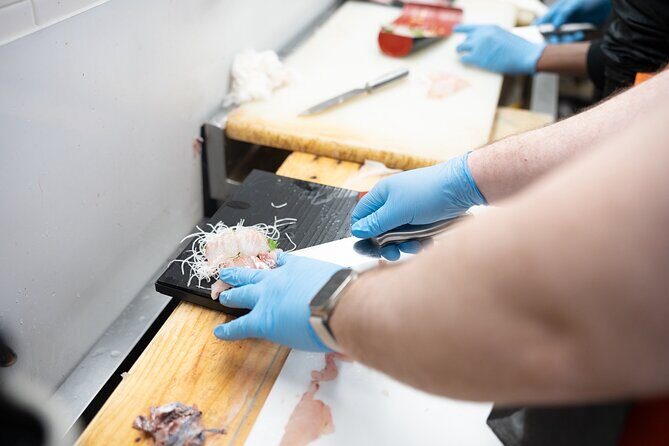
If you want a Kyoto experience with real skills and a satisfying meal attached, I’d say this is worth booking. The combination of hands-on cutting, small group coaching, and lunch made from what you prepared makes it more memorable than a typical food tour.
Book it especially if you like one of these tracks: learning knife technique, eating sashimi with more understanding, or stepping into a market craft that feels tied to everyday life rather than staged performance.
Skip it if you don’t want to handle knives or you’re uneasy about raw fish. In that case, you’d be better off with a simpler food and sightseeing day where you can relax.
Bottom line: if you’re the kind of person who loves a hands-on lesson, this is the Kyoto move.
FAQ
Where is the fish cutting workshop meeting point?
It starts at Kimura Fresh Fish, 483 Nakauoyachō, Nakagyo Ward, Kyoto, 604-8125, Japan.
What time does the workshop start?
The start time is 10:00 am.
How long does the workshop last?
It runs for approximately 2 hours 30 minutes.
How big is the group?
The class has a maximum of 6 travelers.
Is lunch included?
Yes. Lunch is included.
Is private transportation provided?
No. Private transportation is not included.
Are children allowed?
Children under 8 years old are asked to refrain, since they handle knives.
Can I cancel and get a refund?
Yes. You can cancel for a full refund up to 24 hours in advance of the experience start time. If you cancel less than 24 hours before, the amount paid is not refunded.