Kyoto at night has a special hush. This Gion Night Tour pairs an easy 1 hour 30 minute walk with classic sights—plus a real shot at seeing geisha or maiko as the lanterns glow in Gion. I especially like how the route mixes Gion district landmarks with quieter stops at shrines and a pagoda, so the evening doesn’t feel like one long photo line.
If you’re the type who likes learning while you walk, you’ll also appreciate the local English-speaking guide—one guide named Ikki in past tours was praised for being easy to talk to. The only real watch-out: it’s a walking experience, and if you’re late, you won’t be able to join.
In This Review
- Key things to know before you go
- Why a 6:30 pm Walk in Gion Makes Sense
- Meeting Point: Finding Izumo-no-Okuni Fast
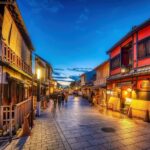
- Hanamikoji Street at Night: Lantern Light and Machiya Views
- Gion’s Famous Streets: Teahouses, Old Streets, and Real Perspective
- Yasui-Konpiragu Shrine: A Quick Prayer With a Clear Purpose
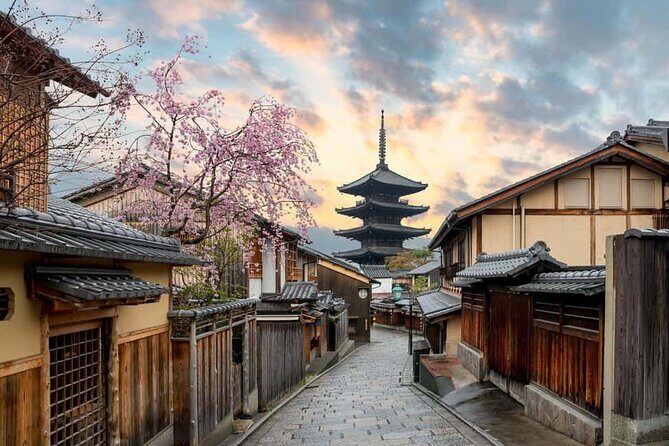
- Yasaka Pagoda (Hokanji): Old Wood and a “No Nails” Story
- Sannenzaka and Ninenzaka Steps: The Slopes That Feel Like a Time Machine
- Yasaka Shrine Finale: Prosperity and Protection
- Price and Value: Why $26.06 Is Actually Reasonable
- Guide Energy, Photos, and How to Get Better Results
- Walking Time, Group Size, and Who This Tour Suits
- Should You Book This Kyoto Gion Night Walk?
- FAQ
- What time does the Kyoto Gion Night Tour start?
- How long is the tour?
- Where do I meet the guide?
- Is the tour mostly walking?
- What is included in the price?
- What is not included?
- How many people are in the group?
- Does it include chances to see geisha or maiko?
- Do I need a printed ticket?
- What should I know about being late?
Key things to know before you go
- 6:30 pm start: the timing catches Kyoto in its evening mood, when lantern-lit streets really work.
- Up to 20 people: a smaller group keeps the walk feeling personal rather than crowded.
- All temple and shrine admissions included: you’re not paying add-on entry fees as the night goes on.
- Professional photos during the tour: you’ll get helped angles and timing instead of fumbling with your phone.
- Built for walking: expect plenty of time on foot between stops.
- Geisha and maiko are a possibility: especially around Hanamikoji Street in Gion.
Why a 6:30 pm Walk in Gion Makes Sense
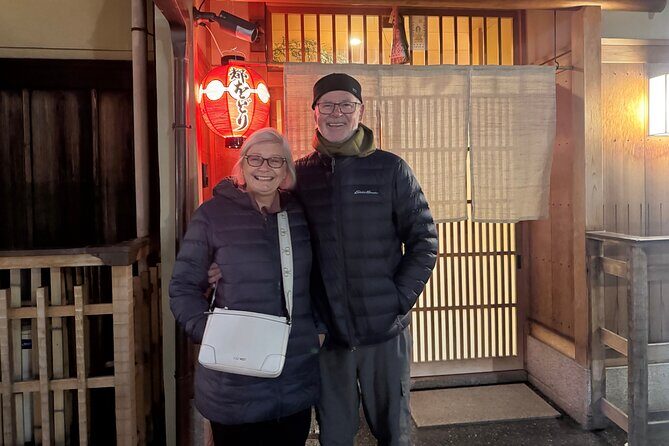
A Kyoto evening is when the city finally slows down. Starting at 6:30 pm means you’re walking while streets switch from daytime bustle into something softer and more atmospheric. Gion in particular comes alive at night: wood facades, lantern light, and the sense that you’re seeing the district as residents see it.
I also like that the tour is paced. You’re not trying to sprint between highlights. It’s designed to let you look, ask questions, and still have energy for the last stretch back at the meeting point.
One more smart detail: the stops are a mix of “iconic” and “a bit calmer.” You get famous Gion streets and also places like Yasui-Konpiragu Shrine and Yasaka Pagoda that make the evening feel layered, not repetitive.
You can also read our reviews of more evening experiences in Kyoto



Meeting Point: Finding Izumo-no-Okuni Fast
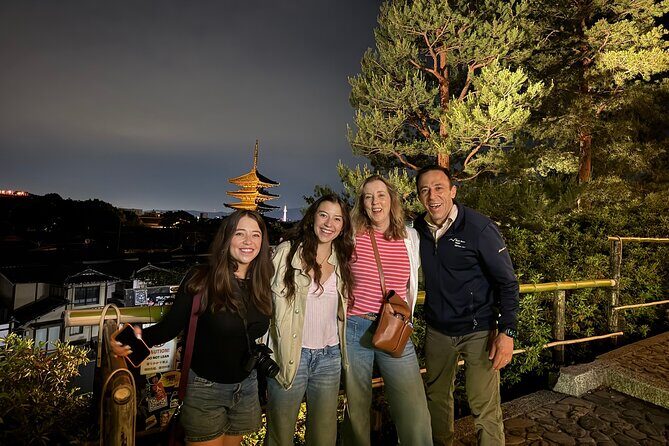
You meet at the Statue of Izumo-no-Okuni in Higashiyama Ward. That matters because Gion area streets can be confusing at night. Give yourself a little buffer, arrive early, and take a moment to orient before the group forms.
This tour uses a mobile ticket, and it ends back at the start, so you’re not stuck figuring out transit at night. Just do not gamble on being “close enough.” If you’re late, you won’t be able to join and there won’t be a refund.
Good to know if you’re planning logistics: the meeting area is near public transportation, and the tour allows service animals.
Hanamikoji Street at Night: Lantern Light and Machiya Views
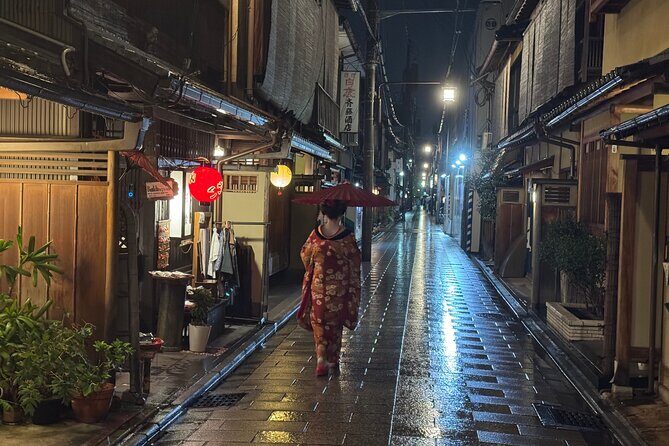
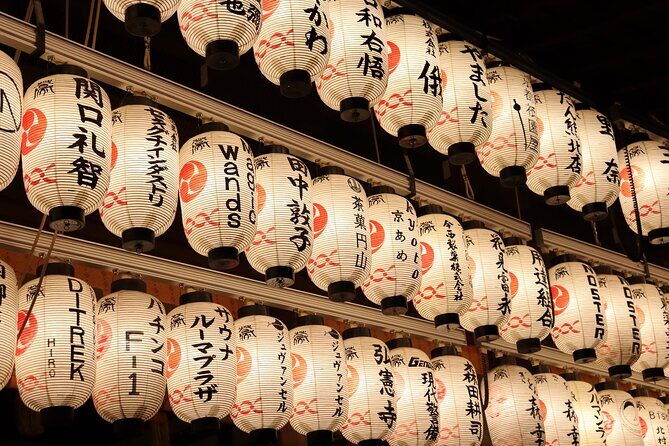
Your first stop is Hanamikoji Street, one of Gion’s best-known streets. This is where the Kyoto-night feeling clicks: traditional teahouses, historic wooden machiya houses, and lantern light that turns casual walking into something cinematic.
This is also the part of the route where you have the best odds of spotting geisha or maiko, since it’s an area associated with that world. You won’t get a guaranteed meeting, but you’ll be in the right place at the right time and guided on where to look respectfully.
What I like here as a visitor: the street is famous, but at night it feels more like a lived-in neighborhood than a theme park. You can take in architecture details and still stay focused on the street-level atmosphere.
Potential drawback: because Hanamikoji is well known, you may encounter other pedestrians too. The guide helps you keep things organized so you’re not wandering in circles.
Gion’s Famous Streets: Teahouses, Old Streets, and Real Perspective
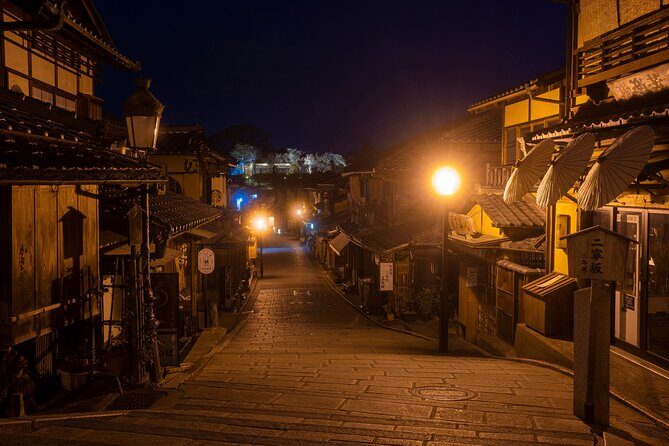
Next you spend time in Gion, Kyoto’s best-known geisha district. You’ll notice the difference between looking at Gion in daylight versus experiencing it at night. The wooden buildings take on a warmer tone, and the street layout becomes easier to read when lights guide your way.
This segment is also where your guide’s explanations matter. It’s easy to see Gion as only a picture backdrop. A good local guide helps you connect what you’re looking at—teahouses, preserved street character, and the sense of how the district functions historically.
If you enjoy small culture details—like why certain streets feel carefully maintained—this is one of the most satisfying stops. It’s not just sightseeing; it’s learning what the place is and why it holds attention beyond its image.
Yasui-Konpiragu Shrine: A Quick Prayer With a Clear Purpose
At Yasui-Konpiragu Shrine, the vibe shifts from street walking to a brief pause for a specific kind of prayer. This shrine is known for helping people sever bad relationships and find new, positive connections.
Even if you’re not the type who prays at shrines, it’s worth taking the moment seriously. The meaning behind the shrine gives you context for why people visit, and it changes how you see the stop. It stops being just another building and becomes a lived tradition.
Time here is short, so don’t treat it like a long temple tour. Think of it as a meaningful break—look around, absorb the atmosphere, and move on with your evening still feeling calm.


Yasaka Pagoda (Hokanji): Old Wood and a “No Nails” Story
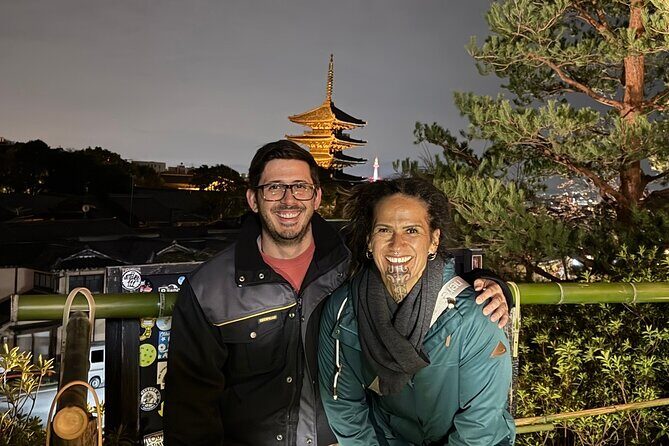
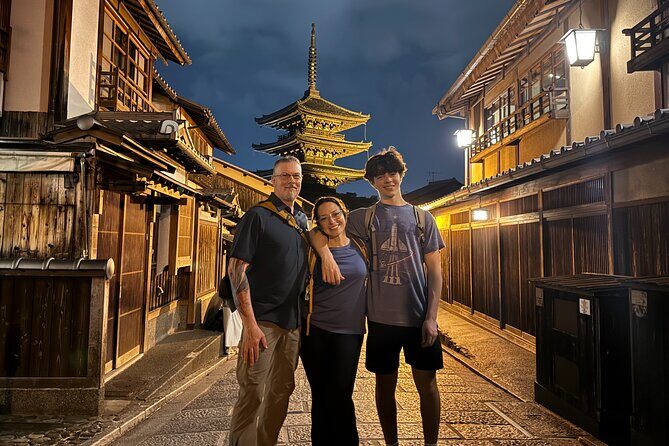
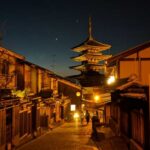
Your next major landmark is the Yasaka Pagoda (Hokanji Temple). It’s known as one of Japan’s oldest wooden structures, and there’s a striking detail people share about it: it’s said to have been built without using nails.
Night is a great time to see this kind of landmark. Bright lights and street reflections help the pagoda feel more dramatic, and the scale hits differently when you aren’t fighting midday crowds and glare.
What’s especially valuable for first-timers: the pagoda becomes a visual anchor. After the street scenes in Gion, you get a monument that feels rooted and enduring. It makes the whole walk feel more like Kyoto, not just Gion.
Sannenzaka and Ninenzaka Steps: The Slopes That Feel Like a Time Machine
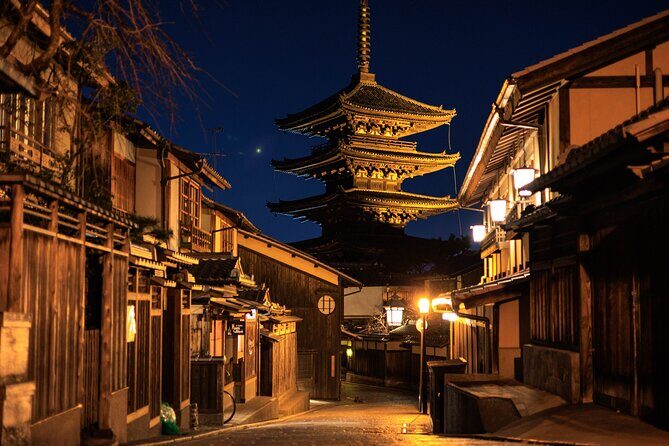
Then you hit Sannenzaka and Ninenzaka, two traditional stone-paved slopes lined with souvenir shops and restaurants in historic wooden buildings. This is one of those Kyoto areas where the street itself is the attraction.
These slopes are fun because they slow you down naturally. Walking up and down stone steps makes you notice details—street textures, shop fronts, and the rhythm of the lane as you move.
Practical note: the route involves a lot of walking on uneven surfaces. Wear shoes that handle stone steps without slipping. You’ll enjoy the atmosphere more when you’re not thinking about your footing.
Yasaka Shrine Finale: Prosperity and Protection
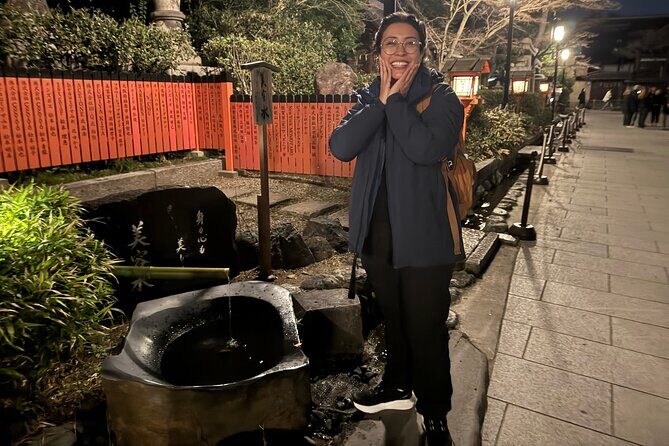
Your last stop is Yasaka Shrine, which serves as the headquarters for about 2,300 related shrines across Japan. That’s a big number, and it gives the place context fast: this isn’t a small local shrine you’ll forget after a quick photo.
Yasaka Shrine is dedicated to gods connected with prosperity and protection, which makes the final stop feel like a natural close to an evening walk. After the Gion sights, the shrine offers a quieter ending and a strong sense of what Kyoto’s spiritual side looks like at night.
Time here is not long, so focus on the main features you can see clearly and take in the setting. Let the evening end with calm rather than rushing.
Price and Value: Why $26.06 Is Actually Reasonable
At $26.06 per person, this tour is priced like a solid value because several key costs are handled for you. You’re getting:
- a local English-speaking guide
- admission fees for all temples and shrines
- professional photos taken during the tour
For a night out that includes multiple stops, that combination matters. In Kyoto, the gap between a cheap walk and a meaningful one is often the guide and entry fees. Here, you’re not paying extra to step into shrine and temple areas, and someone is guiding you so you don’t spend the evening guessing what to look for.
The other value piece is time. At about 1 hour 30 minutes, you’re getting a full, structured evening without needing a huge commitment. It’s a great fit if you have limited nights or if you don’t want to plan transit and separate tickets for every stop.
Guide Energy, Photos, and How to Get Better Results
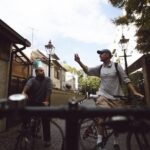
A strong guide makes a night walk work. Past participants praised a guide named Ikki for being easy to talk to and for sharing cultural context in an approachable way. Even if your guide isn’t Ikki, the role should feel similar: clear explanations, good pacing, and practical help so you’re not just walking, but understanding.
The professional photos are another underrated perk. Instead of trying to pose every time you pass a landmark, you can let the tour moment handle it. Bring yourself with clean clothes and expect that you may be guided on where to stand.
A couple of practical tips for your best photos and comfort:
- Keep your phone charged, but don’t rely on it for every shot.
- Bring something light for evening air changes.
- Use comfortable shoes. Stone and slopes show up at the right moment, like they always do in Kyoto.
Walking Time, Group Size, and Who This Tour Suits
This is a walking experience, and it’s designed for most travelers. The small group size—maximum 20 travelers—makes a difference. You’re less likely to feel lost or ignored, and it’s easier to move as a unit through quieter lanes.
This tour is a good match if you:
- want a structured night plan in Kyoto without building your own route
- care about cultural context, not only photos
- like the idea of possibly spotting geisha or maiko, especially around Gion’s main streets
It may feel less ideal if you hate walking, have mobility limits that make stone steps difficult, or want a long, slow sit-down temple experience. This is meant to move.
Should You Book This Kyoto Gion Night Walk?
I’d book it if you want a low-stress evening that strings together Gion streets, a pagoda, and key shrine moments in one organized walk. The value is real because shrine and temple admissions are included, you get guided cultural explanations, and you come away with professional photos.
You might skip it if you’re hoping for a long itinerary with lots of resting stops, or if you’re the kind of traveler who wants to freely wander without any structured timing. Also, if you think you might be late, don’t take the risk—this one is strict about meeting on time.
If you’re doing Kyoto for the first time and want a night plan that feels authentic rather than random, this is a smart way to spend your evening.
FAQ
What time does the Kyoto Gion Night Tour start?
It starts at 6:30 pm.
How long is the tour?
The tour lasts about 1 hour 30 minutes.
Where do I meet the guide?
Meet at the Statue of Izumo-no-Okuni, Kawabatacho, Higashiyama Ward, Kyoto 605-0076, Japan.
Is the tour mostly walking?
Yes. It’s designed as a walking experience with plenty of time on foot to explore Kyoto.
What is included in the price?
The tour includes a local English-speaking guide, admission fees for all temples and shrines, and professional photos taken during the tour.
What is not included?
Food and drinks and personal expenses are not included.
How many people are in the group?
The tour has a maximum of 20 travelers.
Does it include chances to see geisha or maiko?
The tour visits Hanamikoji Street in Gion, where you may have the chance to encounter geisha and maiko.
Do I need a printed ticket?
No. It uses a mobile ticket.
What should I know about being late?
If you are late for the meeting time, you will not be able to join the tour and you will not receive a refund.