REVIEW · OSAKA
Kyoto Customized Private Car Tour
Book on Viator →Operated by Japan Travels · Bookable on Viator
Kyoto by car feels like cheating—in a good way. You get a tight one-day run at the city’s top sights, with private transport and a guide who can steer the day to your pace instead of forcing a fixed group march.
What I like most is the customization. You can bring a list of places, and the driver/guide helps you get there efficiently with helpful info along the way. The other big win is timing: when the day starts early, you spend less time stuck in lines and more time actually looking around (as shown by guides like Talha and Ali, who were praised for punctual, smooth driving).
One thing to plan for: several major stops can require paid admission tickets, and food isn’t included, so you’ll want to budget for entries and snacks. If you hate dealing with tickets or you’re picky about meals, this is worth thinking through before you book.
In This Review
- Key reasons this Kyoto private tour works
- Kyoto in a day: what this private tour is really good at
- Price and value: $553.80 per group (up to 6)
- Pickup, mobile ticket, and bottled-water comfort
- The bilingual guide advantage: Talha, Ali, and Mani energy
- Stop 1: Fushimi Inari Taisha and its red-gate walking rhythm
- Stop 2: Arashiyama Bamboo Grove for that calm, green hush
- Stop 3: Kinkaku-ji Golden Pavilion and the mirrored-pond effect
- Stop 4: Kiyomizu-dera hillside views and temple-street energy
- Stop 5: Ginkaku-ji Silver Pavilion, mossy calm, and sand garden
- Stop 6: Nijo Castle rooms, gardens, and the nightingale floors
- Stop 7: Sanjusangendo and its 1,001 Kannon statues
- Stop 8: Gion Corner culture show and performance-style Kyoto
- Stop 9: Nishiki Market for smart snack stops and souvenirs
- How to plan your day so it doesn’t feel rushed
- Who should book this Kyoto customized private car tour
- Should you book it?
- FAQ
- How long is the Kyoto Customized Private Car Tour?
- What does the price include for up to 6 people?
- Do I need to buy entry tickets separately?
- Is food included during the tour?
- Do you offer pickup?
- What languages is the guide available in?
- Can I cancel for a refund if plans change?
- What date/time is the tour available at the meeting point?
Key reasons this Kyoto private tour works
- Private group comfort: your party moves together, not with strangers.
- Bilingual guide support: Spanish, Hindi, Urdu, and English are covered.
- Flexible day planning: adjust based on what you care about most.
- Major landmarks packed into 8 hours: efficient routing without feeling rushed all the time.
- Early-start advantage: better chances to see the first stops with fewer crowds.
- Easy shopping and snack stop: Nishiki Market is built into the day.
Kyoto in a day: what this private tour is really good at
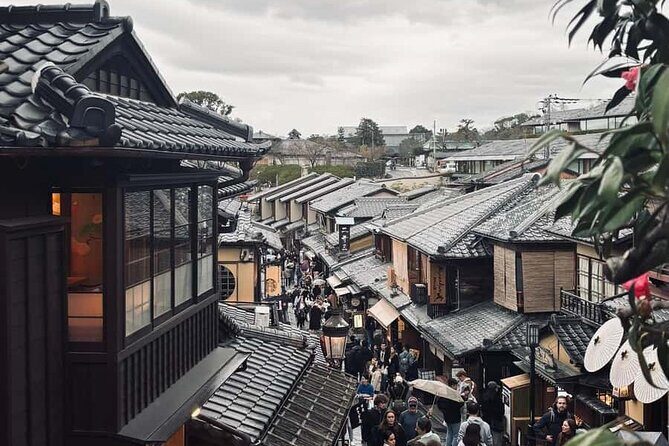
This is built for people doing Kyoto as a day trip while they’re based in Osaka—or anyone who wants a maximum-results day without turning it into a stressful logistics project. The day is designed around iconic places that are spread out, so getting around by car/transport makes a real difference.
You’re also not stuck in a “watch-and-leave” rhythm. The tour includes flexible plans, meaning you can slow down for photos, spend extra minutes where you care, and generally keep the day aligned with your interests. For families, couples, and first-timers, that flexibility matters more than you’d think.
And because it’s private (up to 6 people), it feels more like a custom itinerary day with a pro driver than a typical group bus day.
You can also read our reviews of more private tours in Osaka
Price and value: $553.80 per group (up to 6)
The price is $553.80 per group for up to 6 people, for about 8 hours. That works out best when you’re traveling with others and can split the cost.
Where the value shows up isn’t just “transport included.” It’s the combination of:
- private movement between far-apart Kyoto highlights
- a guide who can explain what you’re looking at
- an itinerary that hits multiple big-name sites without making you study transit maps all day
If you’re traveling solo, the same total cost can feel steep. But if you’re two to six people, it often becomes a smart way to buy time and reduce friction.
Pickup, mobile ticket, and bottled-water comfort
This tour includes pickup offered from the meeting point area, plus transportation from that meeting point. You’ll also get bottled water, which sounds small until you’re out all day in Kyoto heat or humidity.
You’ll receive a mobile ticket, which is handy because you don’t need to hunt for paper tickets on your phone’s battery. The meeting point is noted as near public transportation, which is useful if you need to reposition yourself before the driver arrives.
Also, it’s a private activity, meaning only your group participates. That reduces the common “everyone waits, nobody knows why” energy you get on shared tours.
The bilingual guide advantage: Talha, Ali, and Mani energy
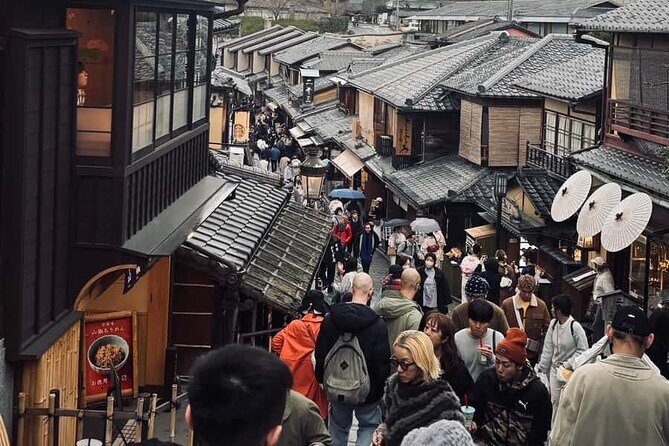
Kyoto is packed with details, and a good guide helps you notice them instead of just taking photos and rushing onward. This tour includes a bilingual guide with Spanish, Hindi, Urdu, and English support.
The standout from the guide feedback is how smooth and professional the day felt. Names like Talha, Ali, and Mani came up in the context of punctuality, driving skill, and friendly, practical guidance. That’s the kind of support you want when your schedule is only 8 hours and you don’t want to lose time.
If you care about culture beyond the postcard view—how the spaces work, what to look for, why certain areas feel different—having an on-the-ground explanation beats reading alone on your phone.
Stop 1: Fushimi Inari Taisha and its red-gate walking rhythm
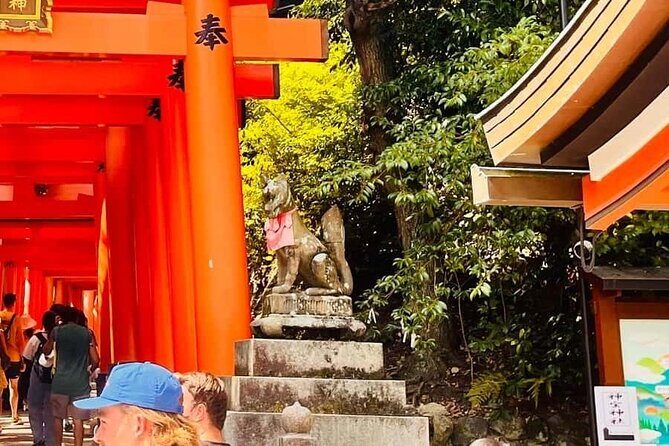
Fushimi Inari is one of the most recognizable shrine experiences in Japan for a reason. You walk under thousands of red torii gates, and the path shifts from busy entry areas to quieter forest-trail moods as you continue.
Plan for two different vibes:
- At the start, it’s lively and photogenic, with lots of people orbiting the main views.
- As you go farther along the trails, the mood changes—more still, more grounded, and better for slower wandering.
Admission here is listed as free. The real consideration is time and energy. If you want the full feeling of walking through the gates (not just snapping a few pics), you’ll want a moment to pause and decide how far you want to go before your next stop.
A few more Osaka tours and experiences worth a look
Stop 2: Arashiyama Bamboo Grove for that calm, green hush
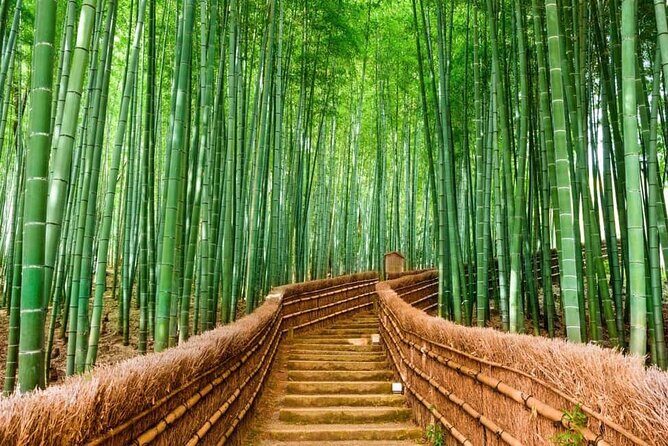
Arashiyama Bamboo Grove is famous, but it still earns its reputation because the bamboo columns create a real sense of enclosure. The wind through the shoots adds motion, and you get that slightly magical, quiet feeling even in a popular area.
You’ll get about one hour at this stop. That’s enough time to:
- walk the main grove path slowly
- take photos without sprinting
- find a spot to just watch the light move through the bamboo
Admission is listed as free for this stop. The main drawback is crowd management. Even with a private tour, Arashiyama can get busy, so the best strategy is to treat the first minutes like your priority window and then decide whether to linger or move on.
Stop 3: Kinkaku-ji Golden Pavilion and the mirrored-pond effect

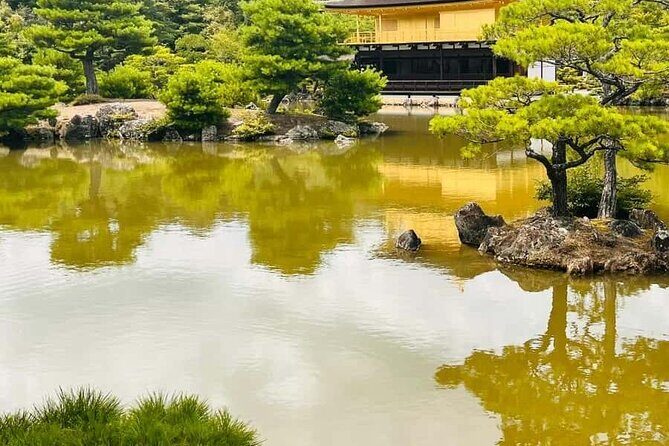
Kinkaku-ji is the Zen icon most people picture first when they think of Kyoto. The gold-leaf exterior, paired with a reflective pond, makes the whole scene feel balanced and formal.
This stop is listed as about one hour. You’ll want to take your time with the pond view and the surrounding angles, because Kinkaku-ji photography is all about perspective: you’ll see different versions of the same subject from different points.
Admission status is listed as free in the stop breakdown, but the overview also flags entry as ticketed for Kinkaku-ji. So the practical takeaway is simple: assume you may need paid entry for major temples like this one. If your tour offers ticket options, factor that into your planning.
Stop 4: Kiyomizu-dera hillside views and temple-street energy
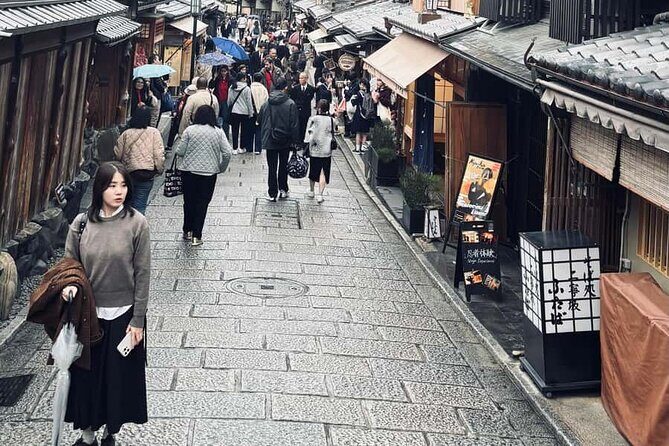
Kiyomizu-dera sits on a hillside, and that location is the whole point. You’ll step into the atmosphere of the temple and the nearby shopping streets, with sweeping Kyoto views that make the climb feel worth it.
The tour includes about one hour here. What you’ll notice most is how the viewpoint changes your understanding of Kyoto: you go from seeing individual streets to seeing the city as a whole.
The overview notes ticket-only entry for Kiyomizu-dera, even if the stop list shows free admission. So again, treat this as a place where a paid ticket might be required. If you want to keep the day relaxed, don’t plan on improvising at the entrance—get ticket details settled in advance.
Stop 5: Ginkaku-ji Silver Pavilion, mossy calm, and sand garden
Ginkaku-ji (the Silver Pavilion) is a different kind of Kyoto feeling than Kinkaku-ji. Instead of gold-and-glamour, you get refined Zen design, moss gardens, and the famous sand garden reference that draws people to slow down.
This stop is also about one hour. For me, the best approach here is to treat it like a “look, then sit” environment:
- look closely at the garden elements
- pause in quieter spots
- don’t try to rush every photo angle
Admission is listed as free for this stop, but you should still be prepared for occasional ticket rules depending on the specific areas open during your visit.
Stop 6: Nijo Castle rooms, gardens, and the nightingale floors
Nijo Castle is included in the tour highlights, and it’s one of the most rewarding stops if you enjoy palace-like interiors and historical design. The famous feature here is the “nightingale floors,” built to make noise—part of the castle’s security and atmosphere.
This is a great pairing with the Zen temples because it shifts the day from sacred gardens to refined architecture and indoor experience. You’ll also get time for the gardens, which help the castle feel less like a museum and more like a place meant to be experienced.
The overview flags ticketed entry for Nijo Castle. So make peace with the fact that some of your biggest stops may not be free-admission, even if you see free labeling in parts of the itinerary summary.
Stop 7: Sanjusangendo and its 1,001 Kannon statues
Sanjusangendo is impressive in a very specific way: you stand in a long wooden hall and face 1,001 golden statues of Kannon, the goddess of mercy in Japan. That number is part of the thrill, but what you really remember is the visual repetition and the sheer scale.
This stop takes about one hour. It’s a strong “wow” moment in the middle of the day when you may be slightly temple-weary. The statue room changes the pace: it’s less about walking paths and more about focusing your attention in one big interior space.
Admission is listed as free in the stop breakdown. If ticket rules change on-site, you might find minor variation, but the hall itself is the key experience.
Stop 8: Gion Corner culture show and performance-style Kyoto
Gion Corner is a culture-focused stop tied to geisha traditions—dance, tea ceremony demonstrations, and other performances. It’s not the same as walking Gion streets looking for real-life geiko sightings (those plans can be hit-or-miss), but it gives you a structured cultural introduction.
You get about one hour. If you’re a first-timer and you want Kyoto beyond shrines, this is a useful add-on because it turns your day from “places” into “performing arts.”
Admission is listed as free for this stop in the summary, but as with other entries, confirm ticket requirements in your provided details.
Stop 9: Nishiki Market for smart snack stops and souvenirs
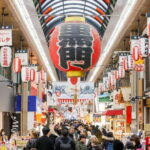
Nishiki Market is where your one-day Kyoto plan gets human-sized again. You’re in the “Kyoto’s kitchen” zone: local specialties, street food, and shopping for smaller souvenirs.
This stop is about one hour. It’s perfect for a late-day reset because you can:
- snack as you go (rather than needing a full meal plan)
- pick up food gifts that are easier to pack
- buy small items without committing to a big shopping detour
Food isn’t included on the tour, so you’ll pay here. But that can be a good thing. You choose what you like instead of being steered into one pre-selected meal.
How to plan your day so it doesn’t feel rushed
A private tour makes a big difference, but 8 hours still has limits. To keep it fun:
- Pick your top 2 must-sees, and let the rest be supportive choices.
- Wear shoes you can walk in for shrine paths and market lanes.
- Bring a light layer, since Kyoto weather can shift during the day.
- Save energy for viewpoint stops like Kiyomizu-dera, where you’ll want time to actually look out.
Since ticket rules may apply for some major sights (Kinkaku-ji, Nijo Castle, Kiyomizu-dera are specifically flagged as ticketed in the tour description), it helps to keep your expectations aligned. If your guide offers ticket assistance or options, take it. It saves time and reduces stress.
Also, use the guide’s time wisely. If you’re curious, ask while you’re in transit—those short moments often turn into the best explanations of the day.
Who should book this Kyoto customized private car tour
This tour is a great fit if you want:
- a first-timer-friendly way to hit key Kyoto sights in one day
- private pacing for families or mixed-experience groups
- guide help in English plus other languages (Spanish, Hindi, Urdu)
It’s also ideal for people staying in Osaka who don’t want to figure out transit timing across the city.
You might want to choose a different option if you:
- hate paying separate entry tickets at major sites
- want a slower “only two places” day with long museum-style breaks
- prefer self-guided walking with no scheduled stops
Should you book it?
Yes—if your priority is seeing Kyoto’s top landmarks with minimal hassle, this is a strong value play for a group. The private setup, bilingual guide support, and praised driver professionalism (from guides like Mani, Talha, and Ali) add up to a smoother day than you’d get going it alone.
But go into it knowing it’s a packed 8-hour plan, with some likely paid admissions and no included meals. If you plan for that, you’ll leave with the kind of Kyoto overview that actually helps you plan a second visit—because you’ll know what you loved and what you want to return to.
FAQ
How long is the Kyoto Customized Private Car Tour?
The tour duration is approximately 8 hours.
What does the price include for up to 6 people?
The price is $553.80 per group (up to 6). It includes bilingual guide support, bottled water, and private transportation from the meeting point.
Do I need to buy entry tickets separately?
Some sights are described as entry ticket required (including Kinkaku-ji, Nijo Castle, and Kiyomizu-dera in the tour overview). The tour also notes entry options based on ticket purchase, so you should confirm what you need for your chosen inclusions.
Is food included during the tour?
No. Food and drinks are not included.
Do you offer pickup?
Yes, pickup is offered, and you’ll be transported from the meeting point area.
What languages is the guide available in?
The tour includes a bilingual guide in Spanish, Hindi, Urdu, and English.
Can I cancel for a refund if plans change?
You can cancel for a full refund up to 24 hours in advance of the experience start time. If you cancel less than 24 hours before, the amount paid is not refunded.
What date/time is the tour available at the meeting point?
The meeting point opening hours are listed as 9:00 AM to 6:00 PM (Monday to Sunday), covering 07/27/2025 to 02/02/2027.