REVIEW · TOKYO
Japanese Garden & Western Architecture: Akasaka exploration tour
Book on Viator →Operated by OTOMO Travel Guide · Bookable on Viator
Tokyo hides quiet Edo-era corners. This Akasaka exploration blends a 400-year Japanese garden with Akasaka Palace and shrine-and-park walks tied to Japan’s Edo period. It’s an easy way to get out of the office-tower mood and into calmer Tokyo spaces without feeling like you need a day off work.
I especially like the pace: you’re moving for about 3 to 4 hours, but you’re not sprinting from photo to photo. I also like the way the guide links Edo and Meiji eras while you wander—Meiji-era art indoors, Tokugawa-era symbolism outdoors, all in one run.
One drawback to plan for: not everything is included, and some stops may not accept credit cards. You should bring cash for the Akasaka Palace entrance fee and any other admission costs you run into.
In This Review
- Key things that make this Akasaka tour worth your time
- Akasaka’s calm pocket: Edo stories and garden time in 3–4 hours
- Hotel New Otani Japanese Garden: 400 years of waterfalls and seasonal color
- Akasaka Palace State Guesthouse: VIP rooms, castle-like architecture, and history
- Meiji Memorial Picture Gallery: the dome that links art to the Meiji era
- Inari Shrine, Shimizudani Park, and tea by the pond
- Jingu Gaien ginkgo street: why this short walk feels like Tokyo in seasons
- Price, pacing, and practical tips for a smooth walk
- Should you book this Akasaka Japanese Garden and Western Architecture tour?
- FAQ
- How long is the Akasaka exploration tour?
- How much does the tour cost?
- Is this a private tour?
- What entrance fees are not included?
- Do I need to bring cash?
- Where do I meet, and where does the tour end?
- Is there free cancellation?
Key things that make this Akasaka tour worth your time
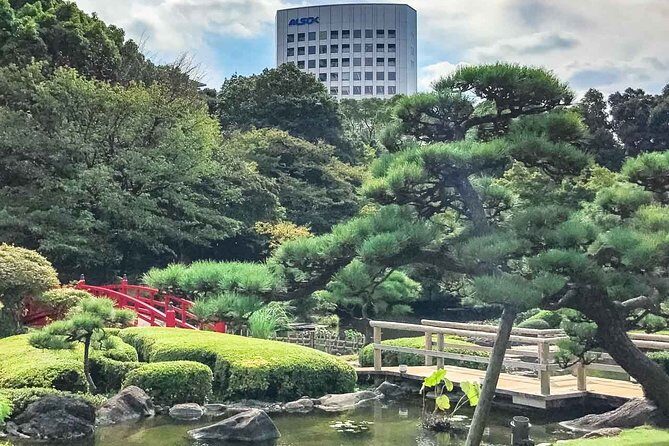
- 400-year-old Hotel New Otani Japanese Garden with waterfalls, seasonal plants, and different seasonal looks across the year
- Akasaka Palace (State Guesthouse), a high-profile reception site for world leaders that many guides say is the highlight
- Meiji Memorial Picture Gallery in a dome-shaped museum focused on the Meiji era, with paintings and murals
- Inari Shrine for spirit-clearing vibes plus nearby park time that breaks up city streets with calm walking
- Jingu Gaien ginkgo arches—a short, scenic walk designed around seeing Tokyo through the seasons
- Real guide energy: named guides in past groups include Ayako-san, Sayaka, Mutsuko Takano, and Ume, with English support and flexible pacing
Akasaka’s calm pocket: Edo stories and garden time in 3–4 hours
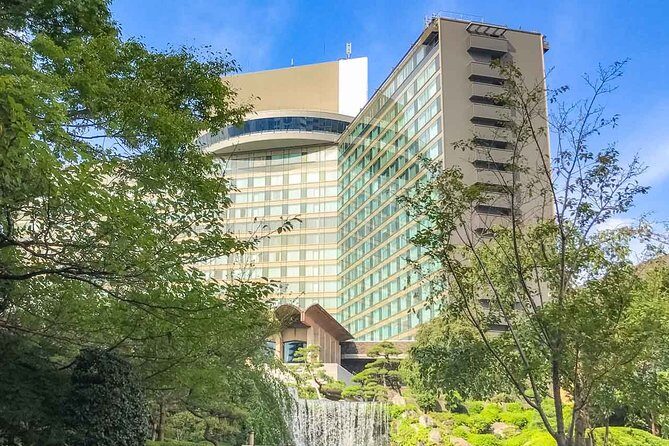
This tour makes a clever promise: you’ll see a quieter side of Tokyo that connects to the Tokugawa shogunate, without turning it into a long slog. You start at Akasaka-Mitsuke Station and finish at Gaiemmae Station, so you’ll get a true neighborhood feel rather than doing an in-and-out loop.
What I like about the flow is that it mixes stillness and story. One moment you’re in a garden built for slow attention. Next you’re at a state-facing site with formal architecture and public-access history. Then you shift to a Meiji-era museum—inside, you’re dealing with art and murals rather than open-air symbolism.
The time window matters. At roughly 3 to 4 hours, it’s long enough to feel like you actually saw something, but short enough that you can still plan dinner or a later museum visit the same day. Since it’s a private tour with just your group, your guide can set the tempo around your questions—past guides described as calm and flexible, and some with strong English.
You can also read our reviews of more tours and experiences in Tokyo.



Hotel New Otani Japanese Garden: 400 years of waterfalls and seasonal color
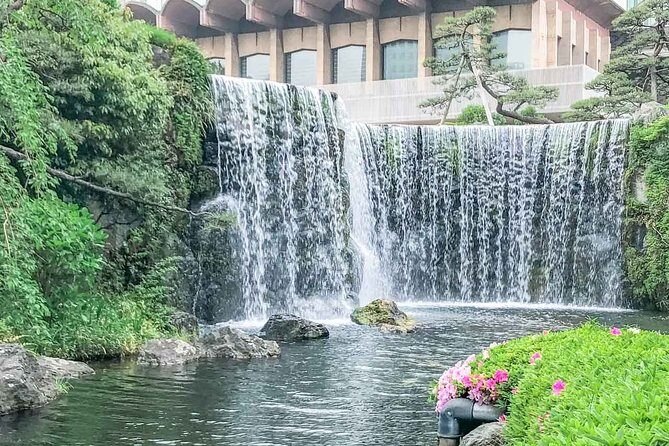
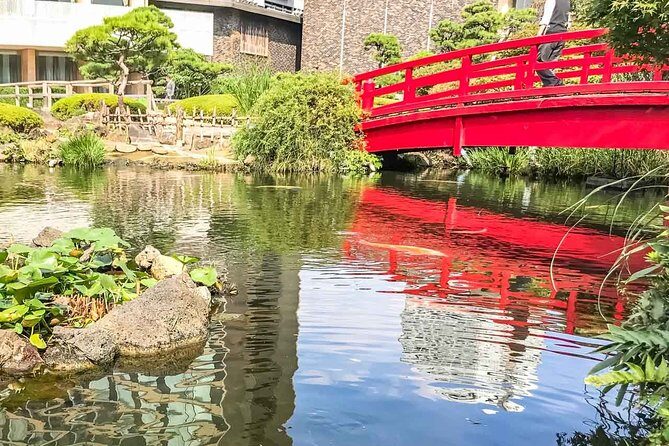
Your first stop is the Hotel New Otani Japanese Garden, known for its long history—about 400 years—and for the way it changes with the season. Even if you only catch part of the garden, it’s the kind of place where your eyes naturally slow down. Waterfalls, seasonal plants, and pond-side views make it feel like the city is far away.
Here’s how to enjoy it most:
- Look for movement: waterfalls and water features give you motion even when everything else is quiet.
- Use the season theme: the garden’s presentation shifts—cherry blossoms in spring, deep greenery in summer, and colorful illumination in autumn. If you go in the “wrong” season, you’re still getting a garden designed around change.
- Don’t rush the edges: Japanese gardens are often about transitions—paths that reveal things gradually rather than all at once.
Admission here is listed as free for the tour, which is a nice bit of value. You’ll also have a garden rhythm that sets up the rest of the day: calm, then culture, then architecture.
Akasaka Palace State Guesthouse: VIP rooms, castle-like architecture, and history
Next comes Akasaka Palace, a reception facility connected to state visits, described as welcoming guests from around the world, including kings and presidents. The outside and general presence feel formal and monumental—like a castle-style statement in the middle of modern Tokyo.
This is also the stop where costs can surprise you if you don’t read the fine print. The tour notes an entrance fee for Akasaka Palace of ¥2,000 per person, and that fee is not included in the base price.
In practical terms, this stop is worth budgeting for. It’s not just another building: it’s a place with a public-facing story. One past participant specifically highlighted Akasaka Palace as a major history marker and mentioned it opened to the public in 2016. That kind of detail matters, because it turns the visit from sightseeing into a “why is this accessible now?” conversation your guide can answer.
What to expect inside (based on descriptions):
- a sense of ceremony and status, not a quick photo stop
- time to take in the scale and the formal reception setting
If your main goal is Edo-era Tokyo, you might think the palace would feel like a detour. But it actually complements the theme: Japanese governance and public presence evolved, and the palace represents a later, modern state-facing version of power and presentation.
Meiji Memorial Picture Gallery: the dome that links art to the Meiji era
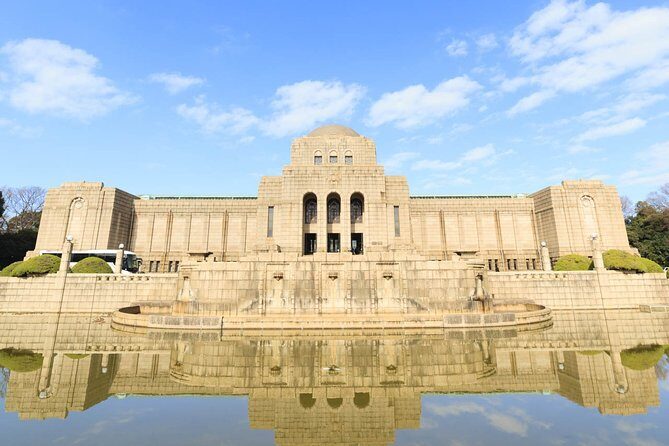
After the palace, you’ll shift from state guesthouse formality to Meiji-era storytelling. The Meiji Memorial Picture Gallery is described as a dome-shaped museum focusing on the Meiji era. Instead of a collection of objects you have to decode, this is built around paintings and murals, which makes it feel more visual and easier to follow.
The name sounds dry until you’re in the room. The Meiji period is often explained in big political terms; the museum format helps you get the emotional and artistic side. You also get an architecture moment: the dome shape gives you a distinct silhouette compared with typical Japanese garden structures.
One practical tip: because it’s an indoor museum-style stop, pace yourself. If you’ve been walking outdoors all morning, your eyes may need a minute to reset. This is a good place to slow down, ask questions, and let the guide connect what you’re seeing to the broader Edo-to-Meiji shift.
Admission here is listed as not included. Still, the museum is capped at about 40 minutes, which keeps it from dragging. It’s enough time to see what the museum is doing without turning the day into a museum marathon.
Inari Shrine, Shimizudani Park, and tea by the pond
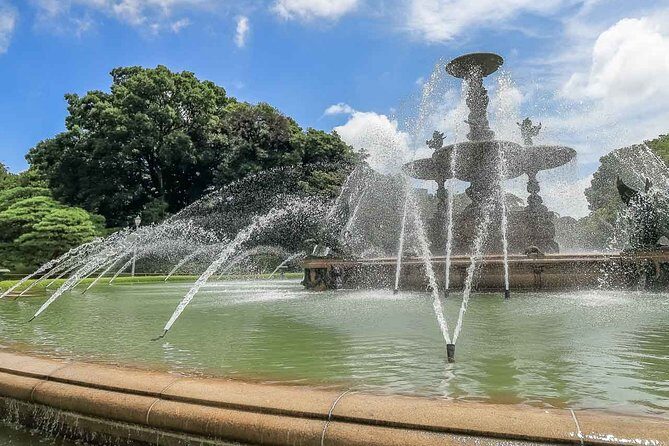
This tour’s biggest “Tokyo escape” moment is the combination of shrine and park walking. The overview specifically frames an Inari Shrine stop as a chance to kick out bad spirits, with the Edo period in the background of the symbolism. You’re not just ticking a box—you’re getting a cultural cue about how places and beliefs shape everyday rituals in Japan.
Along the walk, Shimizudani Park is part of the mix. Parks like this matter in Tokyo because they interrupt the constant street grid. Even if you only take a short stroll, it changes your body’s rhythm: fewer sharp corners, more space to breathe.
And yes, there’s tea time in the concept of this experience. The overview mentions sipping a cup of tea beside a pond, which fits the garden-and-park pattern. It’s the kind of pause that makes the rest of the day easier to absorb.
One extra note from a past experience: a guide named Ayako-san helped someone with a reservation for a Japanese authentic tea shop. That’s not guaranteed for everyone, but it’s a good sign. If tea is a priority for you, ask your guide what’s closest and most worth it.






Jingu Gaien ginkgo street: why this short walk feels like Tokyo in seasons
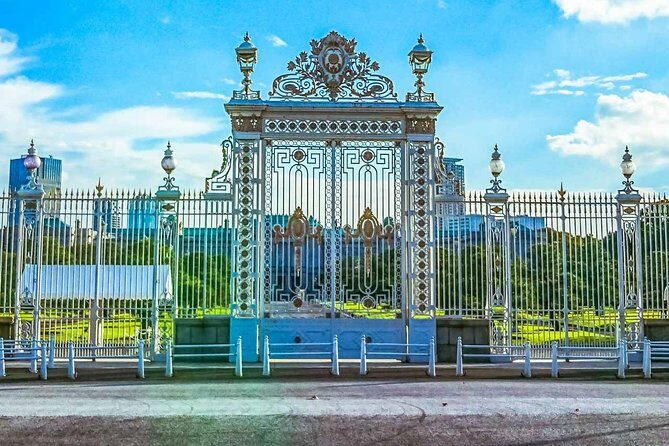
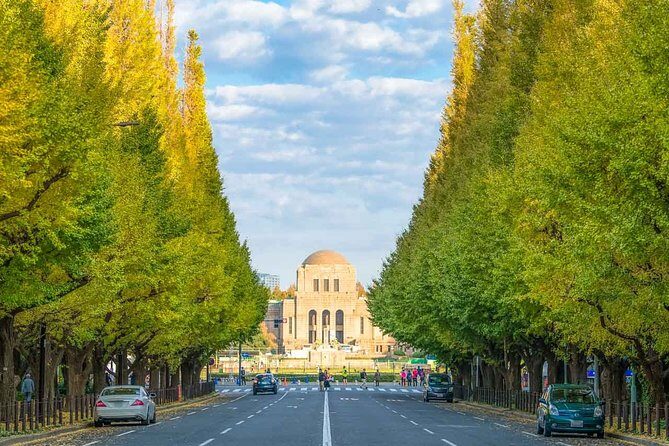
You end with Jingu Gaien’s ginkgo tree-lined street. It’s listed as around 20 minutes, with scenery designed to represent Tokyo across the seasons—ginkgo arches, and the feeling of a tunnel-like walk.
Why this stop works:
- it’s short, so it doesn’t feel like a “forced finish”
- it’s visual and easy to appreciate without needing deep background knowledge
- it connects to the garden theme: both places are about watching how the environment changes
If you want a final photo that looks like Tokyo but also feels calmer than the city core, this is the kind of street that delivers.
Also, because the tour ends at Gaiemmae Station, it’s a good launch point for continuing on your own. You’re not walking all the way back to your starting station.
Price, pacing, and practical tips for a smooth walk

Let’s talk money and value, because $82.42 per person isn’t just cheap “walking tour” pricing—this is a guided, private experience. It includes a tour guide, and it covers the necessary expenses for the guide during the tour. You also get a mobile ticket and group discounts.
Now the real cost picture:
- The tour states the estimated additional costs are 2,000 JPY per person, with the breakdown mainly pointing to admission fees.
- The entrance fee for Akasaka Palace is explicitly listed at ¥2,000 and is not included.
- Some stops are listed as free (like the Japanese garden and the ginkgo street), while others like the Meiji Memorial Picture Gallery are listed as not included.
So for many people, you’ll likely end up paying roughly the Akasaka Palace admission and then whatever museum fee applies at the Meiji stop. That keeps the add-on cost predictable.
Also, check the “small print” that can affect your day:
- You’ll walk a lot, so comfortable clothing is a must.
- Some places do not accept credit cards, so bring cash.
- There is no dedicated dining spot included. Tea is part of the experience concept, but don’t plan on this tour being your full meal solution.
One scheduling thought: the average booking lead time is about 164 days. That suggests demand. If you want specific timing, don’t wait for the last minute.
Finally, weather can change routes and destinations. The operator notes that if conditions are bad, the transportation, destinations, and routes may be adjusted. It’s rare you’ll get a full cancellation, but you should stay flexible.
Should you book this Akasaka Japanese Garden and Western Architecture tour?
Book it if you want a Tokyo day that feels calmer and more cultural than the typical sightseeing loop. I think this is a strong fit for:
- people who like Japanese gardens and want to see one with real history behind it
- anyone curious about the Tokugawa shogunate and how Edo-era stories show up in specific places
- visitors who enjoy a mix of outdoor calm and indoor art, especially the Meiji Memorial Picture Gallery’s murals and dome setting
- small groups that value questions, pacing, and a guide who can adjust when needed
Skip it if you’re mainly after shopping, nightlife, or a long list of major-ticket attractions. This tour is about focused places—garden, palace, museum, shrine/park, and a seasonal street—not a marathon of city landmarks.
If your ideal Tokyo day is part quiet walking, part guided context, and part “wait, this is real history in the middle of town,” then this Akasaka experience is a solid choice.
FAQ
How long is the Akasaka exploration tour?
The tour lasts about 3 to 4 hours.
How much does the tour cost?
The price is listed as $82.42 per person.
Is this a private tour?
Yes. It’s private, so only your group participates.
What entrance fees are not included?
Akasaka Palace (State Guesthouse) has an entrance fee of ¥2,000 per person. The tour also notes that some other admission costs may apply, including the Meiji Memorial Picture Gallery.
Do I need to bring cash?
Yes. The tour states that some spots do not accept credit cards, so bring cash.
Where do I meet, and where does the tour end?
You start at Akasaka-Mitsuke Station and end at Gaiemmae Station.
Is there free cancellation?
Yes. You can cancel up to 24 hours in advance for a full refund.