Temples can feel like secret scenes. This private car tour mixes off-the-main-path shrines with night lanterns and a guide who connects the dots between Buddhism and Japanese culture.
I particularly like the way the day is paced for comfort while still getting that eerie, atmospheric temple mood.
One thing to note: there’s some walking and stairs and entry fees are not included for every stop.
What I’d focus on before you go
- Private car comfort with parking handled, so you spend less time wrestling transit
- Daiki’s storytelling and humor, which makes the religious details feel human, not academic
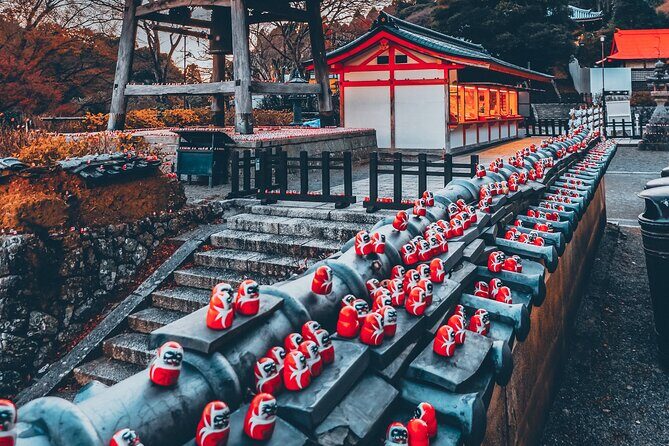
- Katsuo-ji’s Daruma doll overload, a temple photo-op that’s also genuinely fun to walk through
- A crowd-light feel, with evening lantern lighting that shifts the whole atmosphere
- Mixed Shinto and Buddhist stops, so you get a fuller sense of Japan’s spiritual landscape
- Lantern-lit Mt Shigi temples at the end, the part most people remember
In This Review
- Why a private car beats a temple stampede
- The rhythm of the day: 1 pm pickup to night lanterns
- Stop 1: Katsuo-ji Temple and the Daruma doll world
- Stop 2: Mitsushima Shrine, a short Shinto pause in nature
- Stop 3: Hozan-ji Temple on Mount Ikoma and the incense mood
- Stop 4: Shingisan Chogosonshiji’s night lantern paths
- Daiki’s value: culture explained without turning it into a lecture
- Comfort and movement: what your body should expect
- Price and value: when $248.22 per group makes sense
- Who this tour is perfect for
- Quick planning tips that actually matter
- Should you book this Osaka Kyoto Nara private car tour?
- FAQ
- How long is the tour?
- What time does the tour start?
- Is pickup included?
- Is this a private tour?
- What’s included in the price?
- Are temple or shrine entry fees included?
- How much walking is involved?
- Are service animals allowed?
- What is the cancellation policy?
- Do I need to book far ahead?
Why a private car beats a temple stampede
Osaka is a great launch pad, but Kyoto-style temple hopping can turn into a timed-entry, photo-by-photo grind. This tour is built around the opposite idea: move efficiently by private transportation, then slow down once you arrive.
You’re starting in the early afternoon (1:00 pm) and ending after dark. That timing matters. Daytime temples can be peaceful, sure, but the best magic here comes later—when lanterns light up paths and the mountain-air mood makes everything feel quieter.
Another underrated win: this is a private tour, so you’re not stuck matching a big group’s speed or priorities. If you want a short pause to look around (or just to breathe for a minute), you can usually make that work.
The rhythm of the day: 1 pm pickup to night lanterns
The total duration is about 6 to 7 hours, give or take. Pickup is offered, and the day is structured as a sequence of temple and shrine stops that gradually become more atmospheric.
Plan for a late-day shift. You’ll begin with the big visual hit at Katsuo-ji (2 hours), then do two shorter stops (30 minutes and 1 hour) where you’re more about atmosphere and meaning than rushing. The final stop (about 1 hour 30 minutes) is where the mood flips into evening: isolated buildings, stony lanterns, and that almost storybook feeling people love.
This matters for first-time Japan visitors, because it helps you experience the spiritual side without getting trapped in the logistics. You’re also using a mobile ticket, which makes check-in feel simple.
You can also read our reviews of more guided tours in Osaka

Stop 1: Katsuo-ji Temple and the Daruma doll world
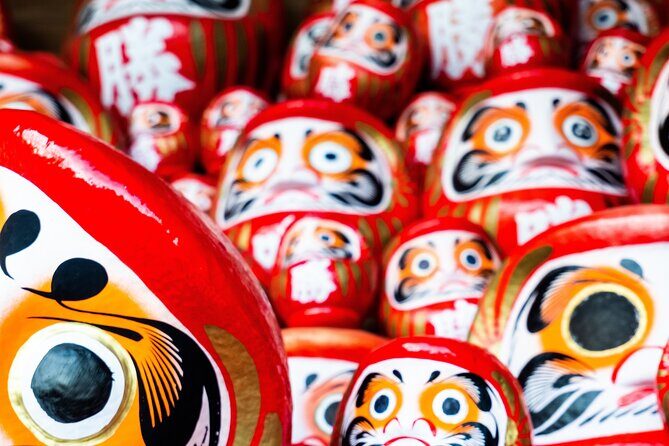
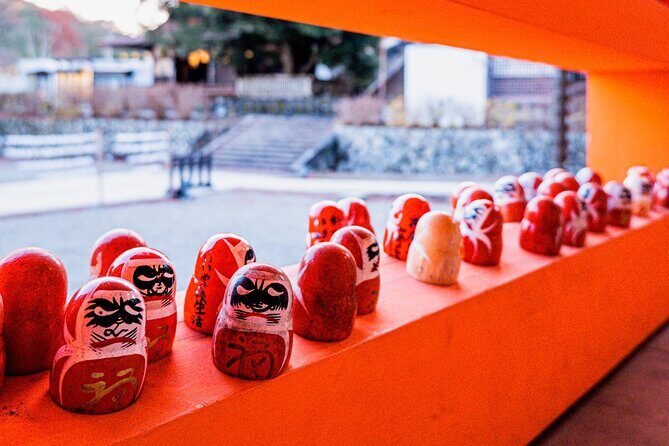
Katsuo-ji Temple is the signature “wait, what am I looking at?” moment of the day. It sits in the mountain area between Osaka and Kyoto, and it’s famous for being decorated with thousands of Japanese Daruma dolls placed everywhere around the temple grounds.
That kind of themed visual art does two things at once. First, it gives you something instantly memorable, even if you don’t know the background of the practice. Second, it creates texture—walking through Daruma after Daruma turns the visit into a slow stroll rather than a quick glance.
A practical note: Katsuo-ji requires an admission ticket, and those entry fees are not included. You’ll want to budget for that one paid stop so the day stays smooth.
Stop 2: Mitsushima Shrine, a short Shinto pause in nature
After Katsuo-ji, the tour shifts to something smaller and quieter: Mitsushima Shrine. This stop is free and lasts about 30 minutes, which is ideal if you don’t want every part of the day to feel like a long hike.
What makes Mitsushima Shrine interesting is its focus on nature worship. In other words, it’s not only about architecture or views—it’s about the idea of respecting the natural world as part of spiritual practice.
Because it’s short, you won’t feel rushed. It also works as a reset between the heavy “temple spectacle” of Daruma and the incense-filled mood of the next stop. Think of it as a breath of calm.
Stop 3: Hozan-ji Temple on Mount Ikoma and the incense mood
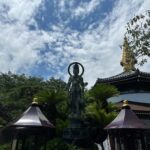
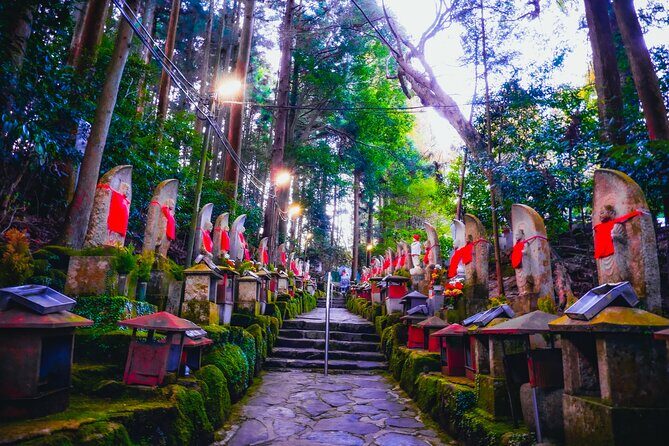
Halfway up the slopes of Mount Ikoma (in Nara prefecture), Hozan-ji Temple leans into atmosphere. It’s described as being shrouded in incense smoke, and that detail is a big part of what makes the stop feel like more than just a pretty location.
The temple complex is dedicated to Kangiten, a Buddhist god of joy and prosperity. Even if you’re not fluent in religious terms, a guide who explains what the dedication means helps it land in a personal way. You’re not just sightseeing; you’re understanding why people come here and what they’re hoping for.
This stop is free, and it’s about 1 hour. It’s long enough to explore at an easy pace without turning into a marathon. Still, you should expect the mountain setting to be slightly more demanding than flat-city walking.
Stop 4: Shingisan Chogosonshiji’s night lantern paths
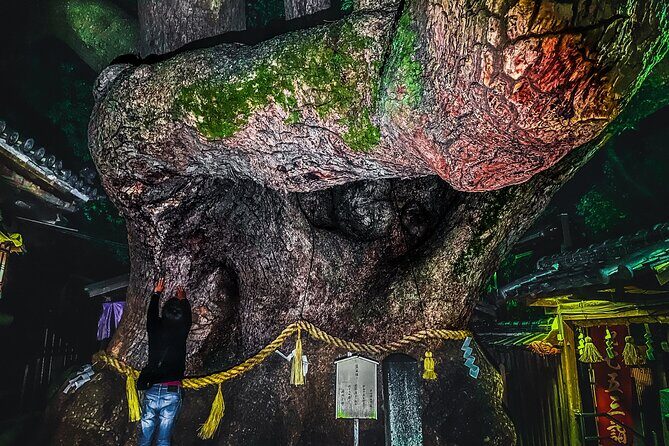
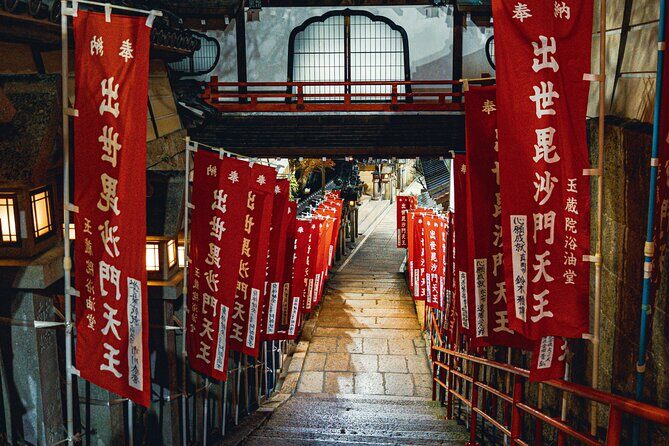
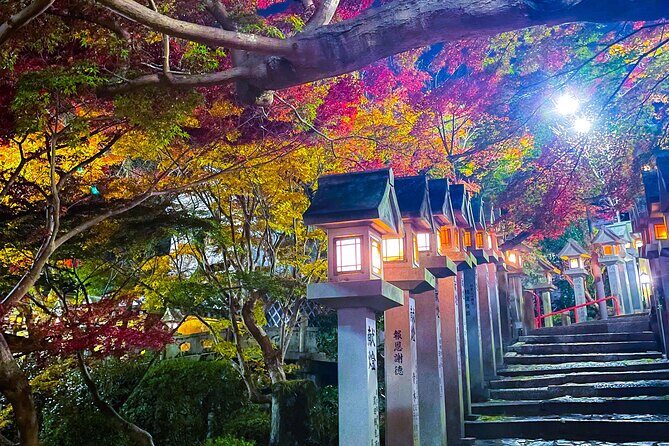
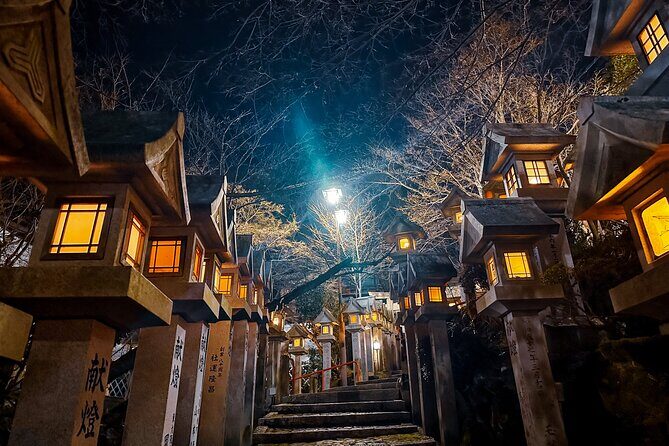
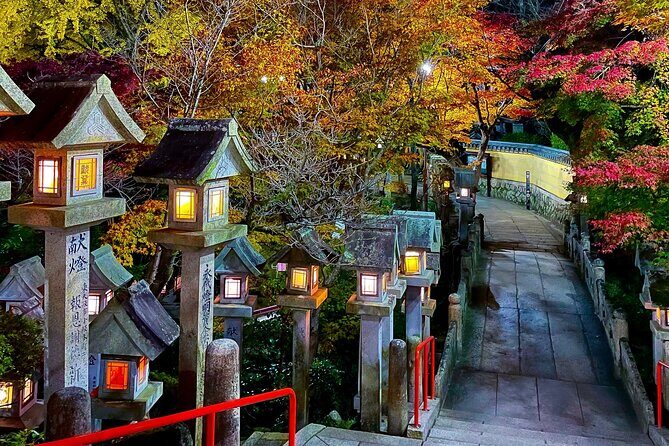
The finale is where the tour earns its reputation for atmosphere. Shingisan Chogosonshiji Temple sits at the mountaintop and includes isolated temples and shrines. At night, it becomes dreamy and nostalgic, lit by stony lanterns along the paths.
This is also the part that helps the day feel different from the usual big-city sightseeing. Reviews point to a movie-like feeling—one of those evenings where the scenery looks like it’s been staged just for you. Even if you’ve seen photos before, the night lighting changes everything.
This stop is free and lasts about 1 hour 30 minutes. I’d treat it like a slow walk. Don’t rush for the perfect angle; the best experience is letting the lantern glow set the pace. It’s the kind of ending that sticks with you on the train home.
You can also read our reviews of more private tours in Osaka


Daiki’s value: culture explained without turning it into a lecture
One theme jumps out across the feedback: the guide experience really drives the quality here. Daiki is repeatedly mentioned as friendly, entertaining, funny, and highly informative.
That combination is rare. Lots of tours provide facts, but fewer make the facts feel usable. Daiki’s approach—connecting what you see with Buddhism and Japanese culture—helps you understand why each place matters beyond its Instagram value.
You also get the benefit of a guide who can answer questions on the spot. If you’re new to Japan, that’s huge. Temple visits can feel confusing if you only know the basics. With Daiki, the spiritual details become clearer as the day goes on.
Comfort and movement: what your body should expect
This is a private car tour, so you’re not doing the whole day on public transit. However, it’s still a temple itinerary, so movement is part of the deal.
The tour notes that there are walks and some stairs to some temples. Most travelers can participate, but you’ll want to dress for uneven ground and steps. If you’re traveling with mobility challenges, it’s worth thinking ahead about which stops may be harder for you.
The good news: the itinerary mixes longer and shorter stops. Katsuo-ji is the biggest chunk. Then the day becomes more bite-sized with a shrine pause, an hour at Hozan-ji, and a final evening stroll at Shingisan. That pacing makes it feel manageable.
Price and value: when $248.22 per group makes sense
The price is listed as $248.22 per group (up to 1) and the booking is commonly made about 101 days in advance. Since it’s a private car tour, you’re paying for convenience and for a local guide who drives you between multiple stops without you having to map transit yourself.
Is it expensive? For one person, it can feel that way. But the trade-off is meaningful: you’re saving time, reducing hassle, and getting fewer crowds at the stops—especially at the night-lit finale. If you’ve ever lost an hour to transfers, queues, or wrong-platform stress, you understand why private logistics cost extra.
Also, parking fees are included, and private transportation is included. Those small line items add up. The main cost you still need to consider is entry tickets—Katsuo-ji is specifically noted as admission-ticket-based, while the other listed stops are free.
Who this tour is perfect for
This tour fits best if you want a temple-focused day without turning it into a crowded checklist.
You’ll likely love it if:
- You’re interested in spiritual places and want explanations that connect to daily meaning
- You prefer fewer people around you, especially during evening lantern hours
- You want a first-timer-friendly introduction that doesn’t stay stuck only in the most famous districts
- You like the idea of Shinto nature worship mixed with Buddhist temple stops
You might skip it if you want a purely urban day in Osaka/Kyoto, or if stairs and walking would be a problem for your group.
Quick planning tips that actually matter
Bring realistic footwear for temple steps and uneven ground. The day includes walks and some stairs, and you’ll be on foot at multiple stops.
Budget for the paid entry where needed. Katsuo-ji requires an admission ticket, and entry fees aren’t included across the board.
Finally, think about the timing. The 1:00 pm start means you’re trading a chunk of afternoon daylight for an evening lantern ending. If you’re chasing nighttime atmosphere, this start time works well.
Should you book this Osaka Kyoto Nara private car tour?
I’d book it if you want a guided, spiritual day with a comfortable car, fewer crowd moments, and a guide who knows how to explain what you’re seeing. Daiki’s reputation for being friendly, entertaining, and informative is a big part of the value—especially if this is your first trip to Japan.
I’d hesitate only if you’re sensitive to stairs and walking, or if you’d rather keep the day strictly low-cost with zero paid entry. Since one major stop needs an admission ticket, the all-in cost depends on your choices there.
If you like temple atmosphere after dark, and you want to get away from the biggest tourist circuits without giving up comfort, this is a strong fit.
FAQ
How long is the tour?
It runs about 6 to 7 hours.
What time does the tour start?
The start time is 1:00 pm.
Is pickup included?
Pickup is offered.
Is this a private tour?
Yes. It’s private, and only your group participates.
What’s included in the price?
Private transportation and parking fees are included. You also receive a mobile ticket.
Are temple or shrine entry fees included?
No. Entry fees are not included. Katsuo-ji requires an admission ticket, while Mitsushima Shrine, Hozan-ji, and Shingisan Chogosonshiji are listed as free.
How much walking is involved?
There are walks and some stairs to some temples.
Are service animals allowed?
Yes, service animals are allowed.
What is the cancellation policy?
You can cancel for a full refund up to 24 hours in advance of the experience’s start time.
Do I need to book far ahead?
It’s commonly booked about 101 days in advance, so earlier planning can help.