REVIEW · TOKYO
Japanese Traditional Entertainment Experience in Tokyo
Book on GetYourGuide →Operated by Japanticket Inc. · Bookable on GetYourGuide
Night in Tokyo turns theatrical fast.
This Japanese traditional entertainment experience mixes a nighttime stroll with an ozashiki-style parlor show, so you’re not just watching from a distance. What I like most is how you start dressed as an Edo townsman, then move into a room where the performance feels personal. One thing to consider: it’s only 30 minutes, so it’s best if you want a compact evening highlight rather than a long cultural deep session.
Second, I really love the way the event layers entertainment with hospitality. The hosts are described as elegant and professional, and the session includes explanations connected to a traditional tea ceremony, plus traditional dances and shamisen. The possible downside is that it’s a “big Japanese party” setup where strangers mingle, so if you prefer quiet, slow pacing, you might want to manage expectations.
In This Review
- Key things to know before you go
- From Kimono to Edo Town: What the Night Walk Feels Like
- Ozashiki Parlor With Geisha: The Show Part You’ll Actually Remember
- Three Courses, Three Different Levels of Food: UME, TAKE, MATSU
- UME COURSE: Sweets and matcha focus
- TAKE COURSE: Add a meal set
- MATSU COURSE: Kaiseki with Fukagawa meshi, plus a drink
- Value and Pricing: Why $74 Can Actually Make Sense
- The Temple Grounds + Parlor Format: How the Flow Works
- Logistics That Matter: Timing, Meeting Point, and Optional Filming
- Who Should Book This Tokyo Edo Night Party
- Should You Book This Experience?
- FAQ
- How long is the experience?
- Where do I meet for the activity?
- What’s included in the UME course?
- What’s included in the TAKE course?
- What’s included in the MATSU course?
- Is transportation included?
- Is the period-drama-style short movie included?
Key things to know before you go
- Kimono transformation: You change into period-style clothing and get to move through the grounds like an Edo resident.
- Night walk on temple grounds: You get a stroll-at-night vibe, not just a seated show.
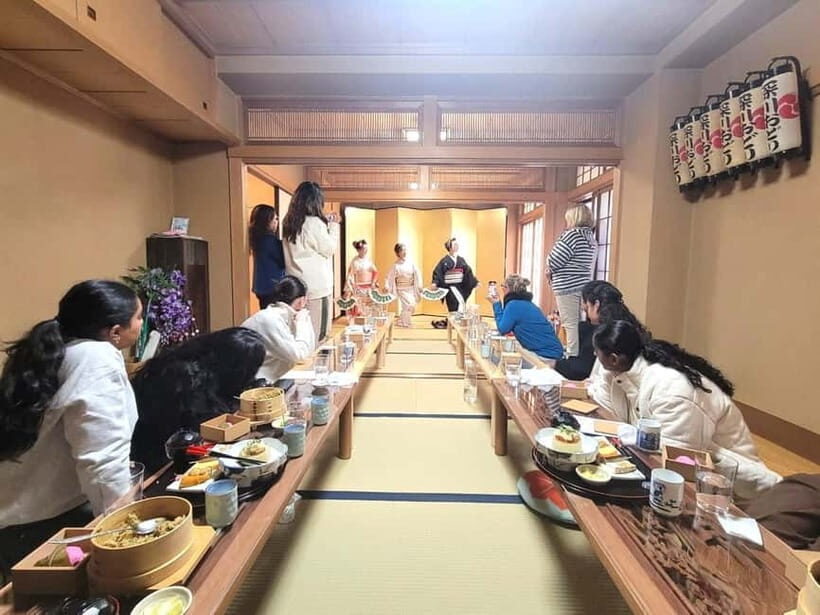
- Ozashiki parlor energy: Geisha entertainment is delivered in a social parlor format, not a distant stage setup.
- Performers include dance and shamisen: You’re set up to watch multiple styles of traditional performance.
- Your course controls the food level: UME is sweets and matcha, TAKE adds a meal set, MATSU includes kaiseki with Fukagawa meshi and a drink.
- Optional period-drama short movie: A professional cameraman can film you if you choose, but it’s not included.
From Kimono to Edo Town: What the Night Walk Feels Like
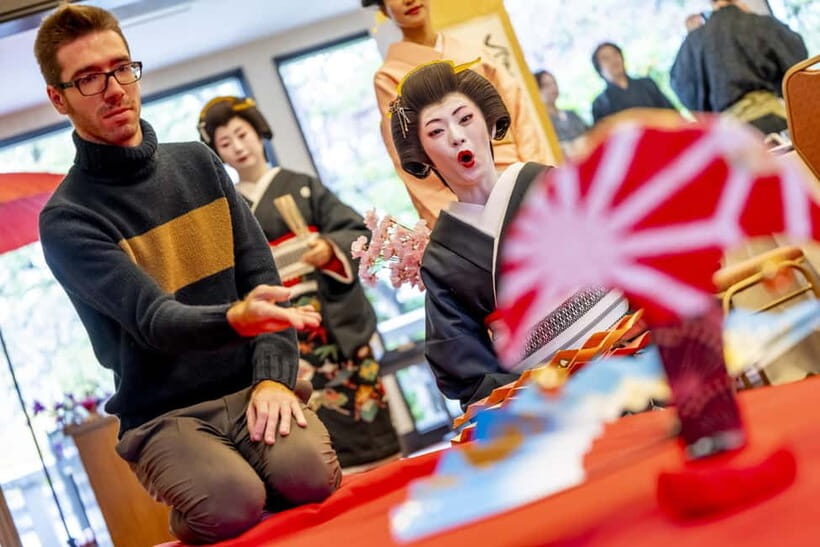
This experience begins with a simple but important switch: you get transformed into kimonos. It’s not just for photos. The costume cues you into the role, and that changes how the rest of the evening lands.
Then you head into a walk-through attraction at night. You’ll be moving around the temple grounds as if you’re part of an Edo-era town. Think lantern-lit streets and period-appropriate atmosphere, but with the practical twist that you’re still following a guided flow. It’s the kind of start that helps you warm up fast, even if your Japanese is limited. English support is available through the host or greeter.
Two practical notes if you’re planning to go:
- Wear shoes you can walk in. The setting is outdoors at night, and you’re already in costume, so comfort matters.
- Expect it to be more “experience” than “museum.” You’re there to participate and watch, not to quietly read plaques.
You can also read our reviews of more tours and experiences in Tokyo.



Ozashiki Parlor With Geisha: The Show Part You’ll Actually Remember
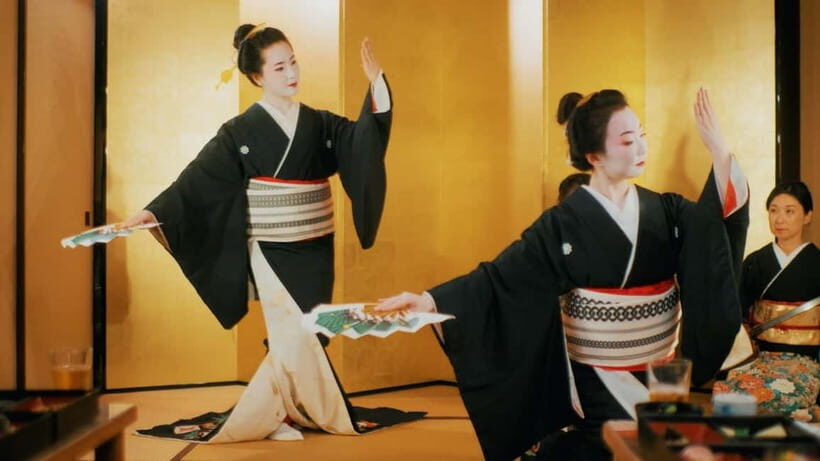
After the night stroll, the format shifts into the ozashiki style. This is the core of the evening: a parlor setup with entertainment delivered in a way that feels close and conversational.
The event centers on geisha experience and traditional performing arts. From the way guests describe it, the hosts handle the mood well: they’re hospitable, elegant, and professional. You’ll also get cultural explanations tied to the traditional tea ceremony approach. Even if you’ve never seen a tea ceremony before, this helps you understand what you’re witnessing instead of treating it like a performance with no context.
What you can look forward to inside the show:
- Traditional dances
- Shamisen performances
- A final “big party” moment where you’re encouraged to have fun with others in the room
One more detail that matters: the atmosphere is social. People meet, laugh, and settle into the same room energy. If you’re nervous about mingling, you can still enjoy it. Just remember the goal is interaction, not hushed observation.
Three Courses, Three Different Levels of Food: UME, TAKE, MATSU
You choose between three course styles: UME, TAKE, and MATSU. The big difference isn’t the entertainment identity so much as how the evening ends up feeding you.
UME COURSE: Sweets and matcha focus
The UME course includes:
- Admission fee
- Performance
- Souvenir
- Japanese sweets and matcha
For me, UME makes sense when you’re trying to keep the evening light. You still get performance time and the social ozashiki vibe, but you’re not locked into a full multi-course meal. It’s also a good pick if you want to sample this kind of cultural evening without having your dinner plans fully taken over.
TAKE COURSE: Add a meal set
TAKE includes everything in UME’s spirit plus:
- Ozashiki geisha entertainment experience
- Fukagawa Meal Set
If you want your night out to feel more like a dinner-and-a-show combo, TAKE is the middle path. It gives you something substantial without going all-in on the most formal, kaiseki-style experience.






MATSU COURSE: Kaiseki with Fukagawa meshi, plus a drink
MATSU includes:
- Ozashiki geisha entertainment experience
- Kaiseki cuisine with Fukagawa meshi
- Drink
This is the course for people who think food is part of the cultural show. Guests mention delicious organic food, and the MATSU package is where that “full meal” feeling fits best. If you’re visiting Tokyo and want one evening that doesn’t leave you hungry or scrambling for a late replacement dinner, MATSU is the cleanest option.
Value and Pricing: Why $74 Can Actually Make Sense
At $74 per person for a 30-minute experience, the pricing logic comes down to what’s included.
You’re not only paying for a short performance. You’re also getting:
- Admission and performance
- A souvenir
- Costume-based transformation into a period look (part of the experience flow)
- Tea-linked elements (matcha and sweets in UME; and tea ceremony explanations noted by guests)
- Traditional performing arts such as dance and shamisen
- Food level that depends on course (meal set for TAKE, kaiseki + drink for MATSU)
So the best value isn’t necessarily that it’s cheap. It’s that it’s efficient. You get a lot of “Tokyo night culture” per minute: look the part, see multiple performance elements, then eat depending on the course you pick.
Still, here’s the consideration to keep yourself happy: because it’s time-limited, you should treat this like a curated highlight. If you’re hoping for a slow, long immersive cultural program, this may feel compact.
The Temple Grounds + Parlor Format: How the Flow Works
This is one of the clearer “two-part” experiences in Tokyo. The structure matters because it prevents the evening from feeling like only one thing.
You start outside, you move through the night grounds, and then you switch into the ozashiki parlor for the main show. That pacing makes it easier to stay engaged. There’s a visual shift, a setting change, and a focus shift: from walking and roleplay atmosphere to seated performance and social interaction.
It also helps with first-time visitors. Even if you’re not sure what to expect from Japanese traditional entertainment, the evening guides you step-by-step:
1) costume and atmosphere
2) nighttime grounds walk
3) parlor entertainment with geisha experience
4) food and tea-linked elements, depending on your course
If you like experiences that feel like a mini night program, this format clicks.
Logistics That Matter: Timing, Meeting Point, and Optional Filming
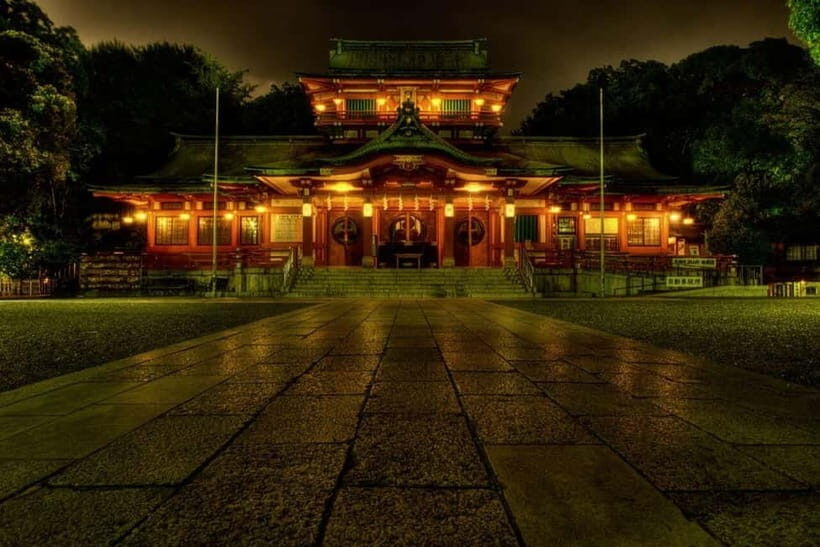
This event runs for 30 minutes, and starting times depend on availability. Check times before you lock your evening plans, especially if you’re combining this with other Tokyo activities.
Your meeting point is:
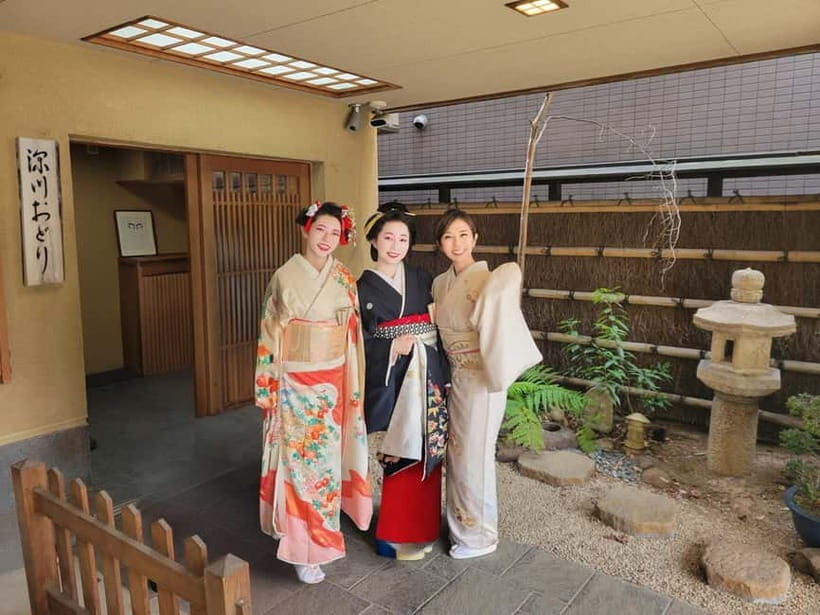
- English address: Fukagawa Odori Hachiman Zashiki, 1-22-8 Tomioka, Koto-ku, Tokyo
- Japanese address: 東京都江東区富岡1-22-8 深川おどり八幡座敷
Two practical tips:
- Plan to arrive a little early. Costume changes take time, and being late usually turns the first part of the experience into stress.
- Transportation isn’t included, so build in time and cost from where you’re staying.
There’s also an optional add-on: shooting of a period drama-style short movie by a professional cameraman. It’s not included in the base price. If you’re the type who likes a fun, staged souvenir, it’s worth considering, but it’s clearly elective.
Language is Japanese and English, with a host or greeter who can help you get through the flow.
Who Should Book This Tokyo Edo Night Party
This experience fits best if you want:
- Traditional performing arts you can actually see up close (dance and shamisen)
- A geisha-focused ozashiki-style show format
- A night activity that includes both atmosphere and food (especially TAKE and MATSU)
- An experience where English support is available
It’s also a solid pick for people who like social energy. The “big Japanese party” vibe is part of how the evening works, and guests emphasize the hospitality of the hosts.
Who might not love it:
- If you hate mingling with strangers and prefer quiet solo experiences, the social nature may feel like work.
- If you’re trying to maximize time with a long, deeply structured cultural program, the 30-minute length may feel short.
Should You Book This Experience?
Yes, if you want a compact, high-efficiency Tokyo night that mixes kimono roleplay, an ozashiki geisha entertainment show, and traditional performance elements, plus food if you choose TAKE or MATSU. The value is strongest when you treat it like a one-evening highlight and pick the course that matches how hungry you’ll be.
Choose UME if you want a lighter option with sweets and matcha. Choose TAKE if you want dinner-level comfort. Choose MATSU if you want the full kaiseki-style meal with Fukagawa meshi and a drink.
If you’re deciding based on one thing, decide based on food. That choice shapes how satisfying the evening feels at the end.
FAQ
How long is the experience?
The duration is 30 minutes.
Where do I meet for the activity?
You meet at Fukagawa Odori Hachiman Zashiki, 1-22-8 Tomioka, Koto-ku, Tokyo (東京都江東区富岡1-22-8 深川おどり八幡座敷).
What’s included in the UME course?
UME includes the admission fee, performance, souvenir, plus Japanese sweets and matcha.
What’s included in the TAKE course?
TAKE includes admission and performance, a souvenir, plus ozashiki geisha entertainment experience and a Fukagawa Meal Set.
What’s included in the MATSU course?
MATSU includes everything tied to the ozashiki geisha entertainment experience, plus kaiseki cuisine with Fukagawa meshi and a drink.
Is transportation included?
No. Transportation to the venue is not included.
Is the period-drama-style short movie included?
No. Shooting of a period drama-style short movie by a professional cameraman is optional and not included.