REVIEW · HIROSHIMA
Kimono and Calligraphy Experience in Miyajima
Book on Viator →Operated by Okeiko Japan · Bookable on Viator
A kimono day can feel staged. This one is different because it happens in a working temple setting on Miyajima, with calligraphy that’s hands-on, not just a demo. You’re dressed by staff first, then you practice brush strokes, choose your own character, and finish with a personal keepsake you can bring home.
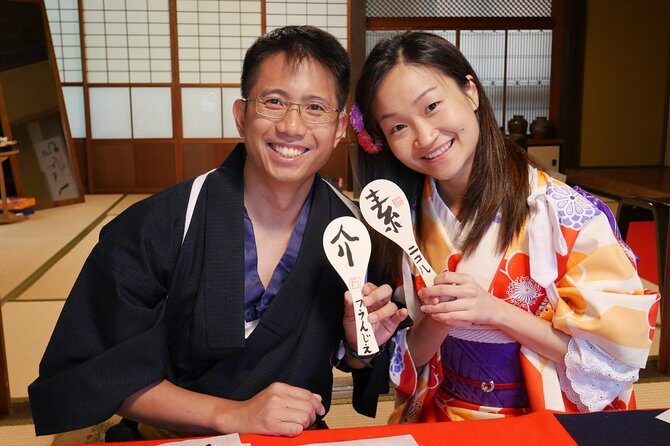
I really like two things here. First, the small group size (max 6) makes it feel calm and personal, not rushed. Second, I love that you don’t just watch calligraphy—you write your own, stamp it, and take home a personalized rice scoop for good luck.
One consideration: getting to the meeting spot can require a bit of walking on the mountain-side roads. If you hate stairs or long uphill stretches, plan for extra time before your session.
In This Review
- Key takeaways before you go
- Miyajima temple setting, not another kimono shop
- The 1-hour flow: kimono, brush basics, Kanji, and your finished piece
- 1) Choose your kimono and get dressed
- 2) Learn how to hold the brush and practice basic lines
- 3) Move to Kanji: pick one sample and practice it
- 4) Add your name in hiragana and katakana
- 5) Sign, stamp, and take your art home
- Photo moments and garden time: plan to enjoy being in the moment
- Your take-home keepsake: why the rice scoop is more than a souvenir
- Price and value: $84.92 for a full lesson, not just a costume
- Getting there from Miyajima: simple maps, but expect walking
- Who this works best for (and who might skip)
- Should you book the Kimono and Calligraphy Experience in Miyajima?
- FAQ
- What’s included in the kimono and calligraphy experience?
- How long does the experience take?
- How big is the group?
- Where does the tour meet?
- Do you offer morning and afternoon sessions?
- What exactly do I take home?
- Is it fully refundable if my plans change?
Key takeaways before you go
- Temple setting, away from the busiest sights: Miyajima without the crush.
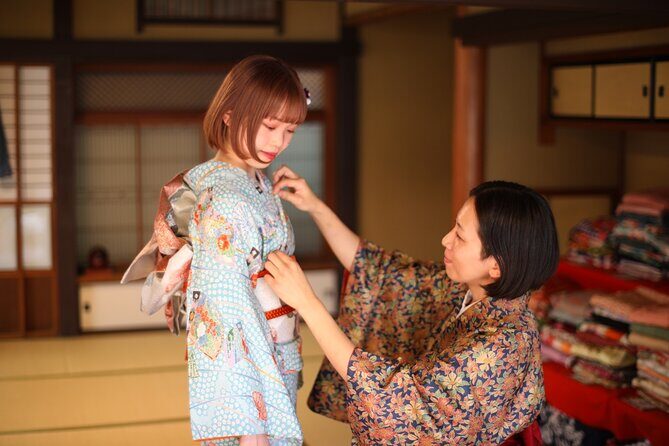
- Kimono from a large collection: you’ll pick from 100+ options and get help with the obi.
- Learn the brush method first: you start with basic lines before moving to Kanji.
- Choose your own Kanji and your name scripts: hiragana and katakana are part of the lesson.
- You’ll get photos during the experience: plus time to take pictures in a Japanese garden.
- A keepsake with your writing: you sign, stamp, and receive a proper container to take it home safely.
Miyajima temple setting, not another kimono shop
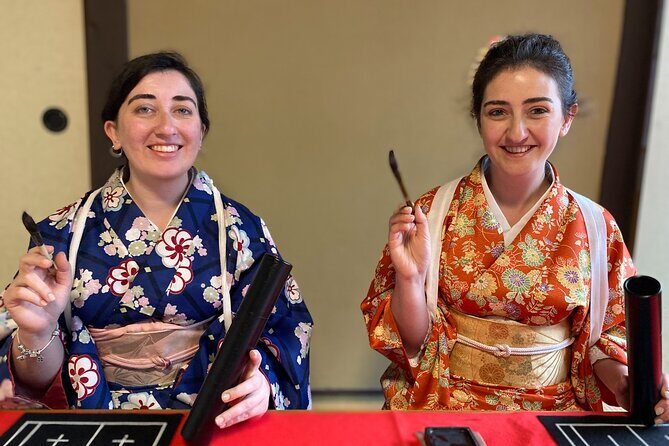
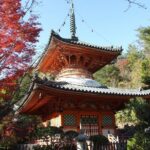
On Miyajima, it’s easy to spend your time orbiting the same few tourist lanes. This experience starts at a temple address in Hatsukaichi—Tokujii Temple (徳寿寺 / 曹洞宗 金光山 徳寿寺). That location matters. It gives you a quieter rhythm for dressing up and learning, and it makes the whole kimono moment feel more connected to place.
The vibe is also a little Zen-like. You’re not hustling between photo spots. Instead, you settle in, get your kimono on, and then focus on the lesson. It’s a nice option if you’re visiting around the Itsukushima Shrine tide moments, because you still get a meaningful activity while you wait.
You can also read our reviews of more tours and experiences in Hiroshima.
The 1-hour flow: kimono, brush basics, Kanji, and your finished piece
This is built as a compact 1-hour session (approx.), combining kimono dressing and calligraphy practice. Here’s how it typically unfolds so you know what to expect.
1) Choose your kimono and get dressed
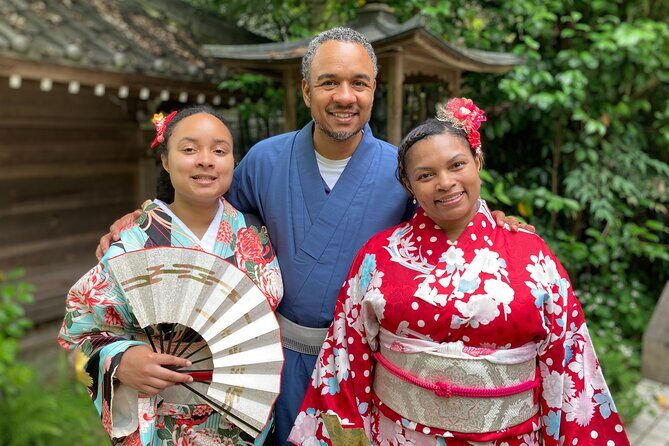
You start with kimono selection. The collection includes more than 100 kimono choices, and staff help you put everything on correctly: the kimono itself, the obi belt, and other needed items.
If you’re wondering about fit, don’t worry about asking questions. The experience is designed so you can pick from a range of options, and staff are patient about getting you comfortable in your outfit.
2) Learn how to hold the brush and practice basic lines
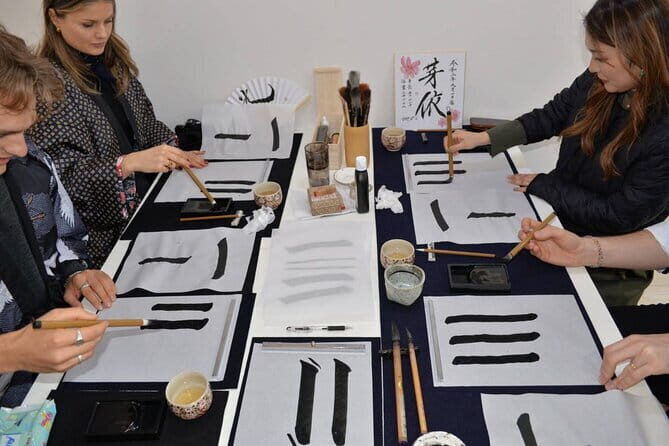
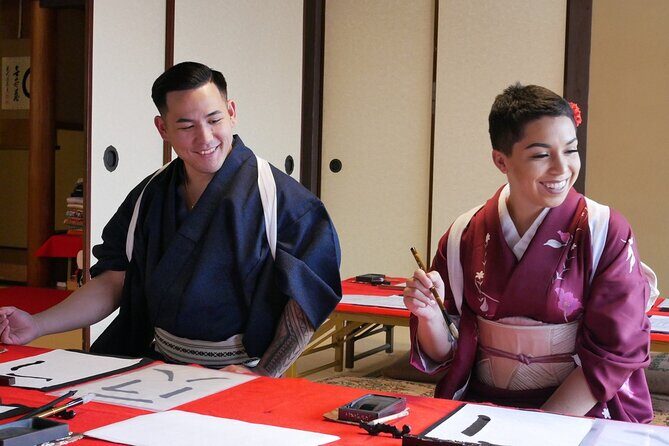
Before you jump to characters, you start with technique. Staff explain how to hold the brush and go through the basic lines so you can get used to how the ink flows.
This is a smart pace. Calligraphy can look simple from a distance. Up close, the brush angle and pressure matter. Starting with basic strokes helps your hand catch up quickly, even if you’ve never written Japanese characters before.
3) Move to Kanji: pick one sample and practice it
Next, you work on Kanji. You’ll be given sample characters to choose from, and you practice the one you like best. It’s not random writing practice. You have a choice, and that makes the final keepsake feel more personal.

4) Add your name in hiragana and katakana
You’ll also make a sample of your name using hiragana and katakana. This part is especially useful for non-Japanese speakers, because it turns the lesson into something you can read instantly later.
5) Sign, stamp, and take your art home
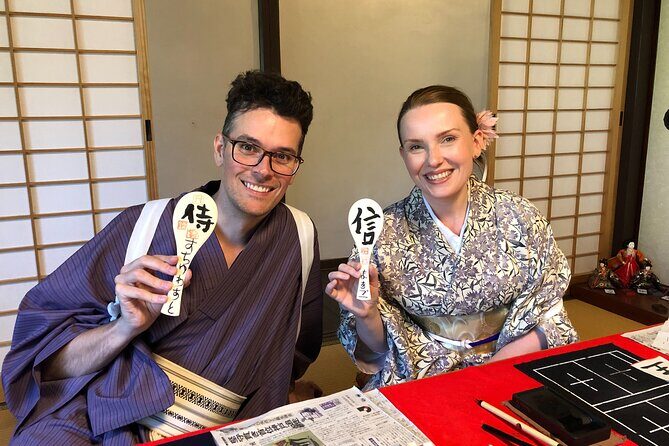
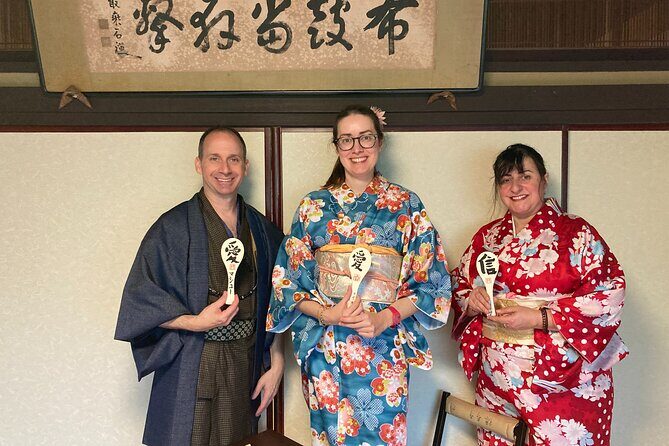
When your piece is ready, you sign it in Japanese and stamp it. Then you can take your work home in a container made for it.
That container detail is more important than it sounds. A painted/inked keepsake needs protection during the walk back to your hotel or ferry line. Having the right container saves you from improvising.
Photo moments and garden time: plan to enjoy being in the moment
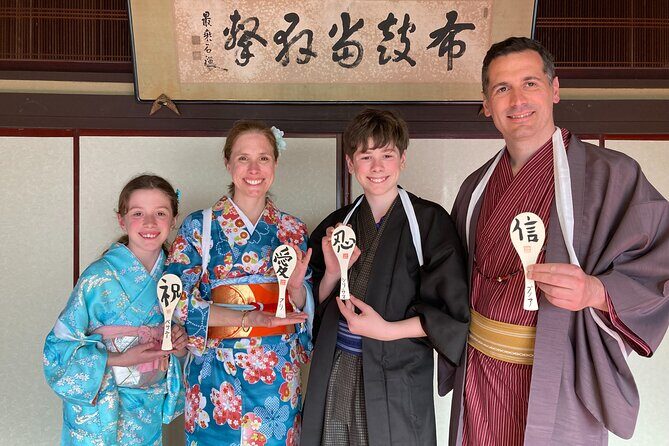
This experience isn’t only hands-on writing. It also includes photo opportunities built into the flow.
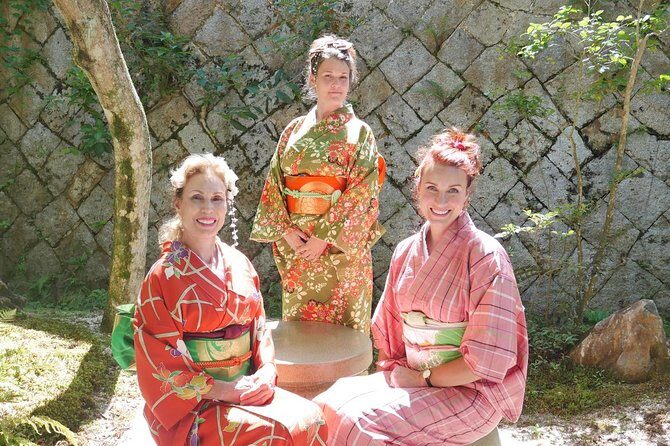
While you do the lesson, your instructor takes pictures of you during the activity. You also get time to take photos in a Japanese garden. If you want more than one kimono photo, this is a better setup than showing up, changing, and then rushing to the next crowd hotspot.
One practical thing: you’ll be asked to answer a questionnaire, and then the photos get shared with you. So if you’re privacy-conscious, think about what you’re comfortable answering on a small digital form.
Your take-home keepsake: why the rice scoop is more than a souvenir
The standout value here is the final object: your personalized rice scoop (often described as a wooden scoop used for the writing). It’s not just printed souvenir art. You create it through the lesson, choose a character, and then complete it with your signature and stamp.
In practical terms, that means:
- You’re making something you can actually remember by feel and effort.
- It’s easier to pack than larger craft items.
- It works as a gift, because your writing is part of the meaning, not just decoration.
If you’re used to buying small Japanese crafts, this one is more interactive. The act of writing is the souvenir.
Price and value: $84.92 for a full lesson, not just a costume
At $84.92 per person (mobile ticket, 1 hour approx.), the price makes sense when you look at what’s included.
You’re paying for:
- Kimono dressing (including obi setup and staff help)
- A structured calligraphy lesson (brush basics, Kanji practice, name scripts)
- A finished piece you take home
- Instructor photos during the session
- A quiet setting in a temple area rather than a high-rent rental shop
If you’ve ever tried a simple kimono rental and then felt like you were paying for clothing only, this is the better match. You still get the look, but you also get a skill, a keepsake, and a calmer place to do it.
Booking can be competitive—on average, people reserve about 36 days ahead—so I’d secure your slot earlier rather than later, especially if you have a specific morning or afternoon window in mind.
Getting there from Miyajima: simple maps, but expect walking
The meeting point is Tokujii Temple. It’s near public transportation, which helps. Still, one real-world wrinkle is the terrain.
Directions often route you toward mountain-side roads, and you may need to walk more than you expect. On Google and Apple Maps, the directions can look clear, but the final approach can still involve a bit of uphill walking.
My advice: give yourself extra buffer time. If you’re visiting during peak periods, add a little slack so you’re not rushing your kimono appointment.
Also note: the experience requires good weather. If conditions are poor, the operator will offer a different date or a full refund. So if you have a tight itinerary, keep your schedule flexible when you can.
Who this works best for (and who might skip)
This is a strong fit if you want:
- A cultural activity that feels hands-on
- A kimono experience outside the busiest tourist lanes
- A calm, small-group setting (max 6)
- Something tangible to take home that your writing helped create
It’s especially nice for people who feel nervous about calligraphy. The lesson starts with basic brush strokes, and staff guide you step by step. If you can write your name, you can do this.
Who might not love it: if you dislike time-based appointments or you have trouble with walking to a temple-side meeting point, you may find the logistics less pleasant. In that case, check your comfort level with short-to-medium walks and uphill terrain before booking.
Should you book the Kimono and Calligraphy Experience in Miyajima?
Book it if you want a kimono day with substance. You get the costume, but you also get a real lesson and a keepsake you made yourself. The small group format and the temple setting make it feel more respectful and less like a factory line.
Skip or reconsider if your top priority is minimizing walking and you’re not keen on weather-dependent outdoor-adjacent conditions. Otherwise, this is a smart, high-satisfaction way to spend an hour on Miyajima—especially when you’re already planning time around shrine tides and want something meaningful in the gaps.
FAQ
What’s included in the kimono and calligraphy experience?
You’ll dress in a kimono, learn calligraphy with brush basics and practice, choose Kanji to write, create your name in hiragana and katakana, sign and stamp your artwork, and take your finished rice scoop keepsake home. Photos are taken during the lesson, and there’s also time for photos in a Japanese garden.
How long does the experience take?
It runs for about 1 hour.
How big is the group?
The experience has a maximum group size of 6 travelers.
Where does the tour meet?
The meeting point is Tokujii Temple (徳寿寺 / 曹洞宗 金光山 徳寿寺), 741-1 Miyajimachō, Hatsukaichi, Hiroshima 739-0513, Japan.
Do you offer morning and afternoon sessions?
Yes. You can participate in either a morning or afternoon session.
What exactly do I take home?
You take home a personalized rice scoop with your calligraphy. The experience also provides a container for taking your work home.
Is it fully refundable if my plans change?
Yes, you can cancel for free up to 24 hours before the experience starts for a full refund. The experience also requires good weather, and if it’s canceled due to poor weather, you’ll be offered a different date or a full refund.