REVIEW · OSAKA
Kintsugi Workshop: Beauty in Brokenness
Book on Viator →Operated by Pinpoint Traveler, Inc · Bookable on Viator
Broken pottery can be beautiful again.
This Osaka kintsugi workshop takes place in a real artisan studio where you repair ceramics the traditional way, with lacquer and gold-toned dust. I like that the session is hands-on from start to finish, and you finish with a restored piece you can actually use or display. I also like the small group size (max 8) and the patient guidance, including time with Tomoko-san and her team. One thing to consider: the studio provides broken pottery to choose from, so if you’re very picky about shape or color, you may want to plan for that.
You’ll spend about 3 hours learning the process, starting with the philosophy of wabi-sabi and ending with a repaired object that shows its break in a deliberate, golden way. The tools and materials are included, so you’re not juggling equipment or learning on someone else’s supplies. A small drawback: you’re responsible for your own transport to the meeting point, and you should expect the workshop to go on a fixed start time (3:00 pm).
In This Review
- Key points to know before you go
- Osaka Kintsugi Workshop: Turning Breaks Into Golden Lines
- The 3-Hour Flow: What You’ll Do From Start to Finish
- Arrive, choose, and understand what you’re making
- The repair stage: bonding and filling missing parts
- The gold-toned finish: adding the line that tells the story
- Leaving with your restored piece
- Price and Value: Is $97.73 Worth It?
- What Makes This Workshop Feel Authentic
- Tomoko-san’s style: patient, hands-on guidance
- You repair something that already has a history
- The One Consideration I’d Plan For: Choosing the Right Piece
- Where to Meet and How to Get There in Osaka
- Who Should Book This Kintsugi Workshop (And Who Might Skip It)
- Small Practical Tips for a Smoother Workshop Day
- Should You Book This Kintsugi Workshop?
- FAQ
- FAQ
- How long is the kintsugi workshop in Osaka?
- What is the price per person?
- Where is the meeting point?
- What time does the workshop start?
- Is transportation to the venue included?
- Is prior experience required?
- How many people are in a group?
- What’s included in the workshop fee?
- What materials and technique will I use?
- Can I cancel and get a refund?
- What if the weather is bad?
Key points to know before you go
- Real studio, not a demo: you repair a piece with guided step-by-step instruction
- Materials included: synthetic lacquer, resin filling, and silver-based gold powder are part of the deal
- Small group energy: max 8 people, with lots of attention from Tomoko-san and staff
- Take-home finish: your completed kintsugi piece is wrapped and returned to you
- Pick from studio pieces: you choose from a selection of broken pottery (so variety may be limited)
- Most travelers can join: no prior craft experience required
Osaka Kintsugi Workshop: Turning Breaks Into Golden Lines
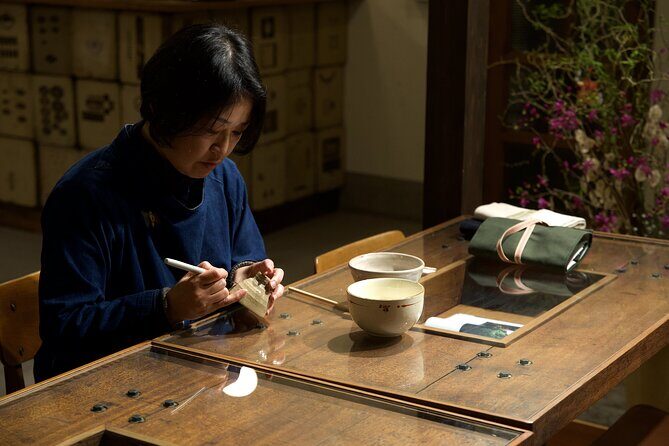
Kintsugi is one of those ideas that feels simple until you see it in real life: when something breaks, you don’t hide it. You mend it in a way that makes the repair part of the story—usually with lacquer and metal dust so the “scar” looks intentional and luminous.
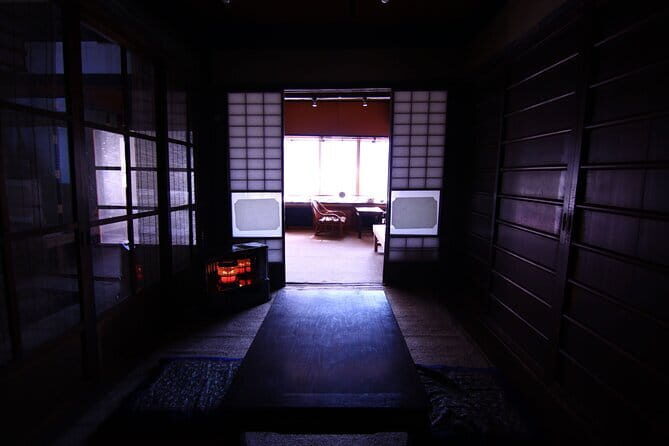
In this Osaka workshop, you get to learn that philosophy and then translate it into a real object in about 3 hours. The setting matters. You’re in an artisan’s studio, not a classroom or a staged showroom, so the whole experience feels like work you can touch. Even if you’ve never done crafts before, the basic steps are taught in a practical way, and the staff keep things relaxed and focused.
Two details I’d underline for your planning:
First, your piece is part of the process, not a souvenir created without you. You’ll bond pieces back together, fill missing areas, and apply the metal-toned finish.
Second, the group stays small (max 8), which makes a difference when you’re working with delicate steps and trying to follow along in real time.
A few more Osaka tours and experiences worth a look

The 3-Hour Flow: What You’ll Do From Start to Finish
Because this is a workshop format, the “itinerary” is really a sequence of craft steps. You can think of it as three phases: context, repair work, and the final reveal.
Arrive, choose, and understand what you’re making
You meet at 102, 1-chōme-4-18 Shigita, Joto Ward, Osaka (536-0015), starting at 3:00 pm. The location is described as near public transportation, so you should be able to reach it without a car.
Once you’re settled, the session includes an explanation of kintsugi’s history, philosophy, and cultural significance. That matters more than you might think. Kintsugi isn’t just decorative—it’s about honoring time, damage, and impermanence. You’ll use that mindset as you work, because the visual style of the repair only looks right when you treat the break as something worth highlighting.
Then comes the selection part: you’ll have access to a set of broken pottery pieces to repair. This is where the experience becomes personal. Your final result depends on what the studio has available that day, including the shape you choose and where the break lines are.
The repair stage: bonding and filling missing parts
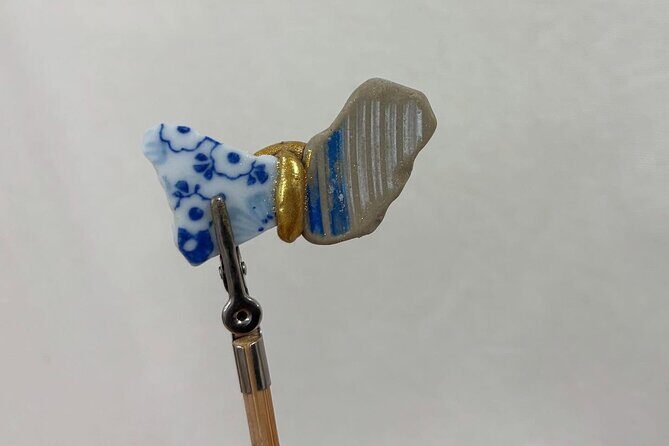
Next, you move into the technical steps. The workshop focuses on traditional technique using modern materials. You’ll bond broken pottery with synthetic lacquer, then fill missing fragments using resin. This is the part where you learn how to handle the “gap problem”—because repairs look good when the filled areas match the form of what’s missing.
Your instructor(s) guide you through each step and keep the process realistic for beginners. You’re not expected to be a potter; you’re expected to follow the procedure carefully and make the repair clean enough to support the final finish.
The gold-toned finish: adding the line that tells the story
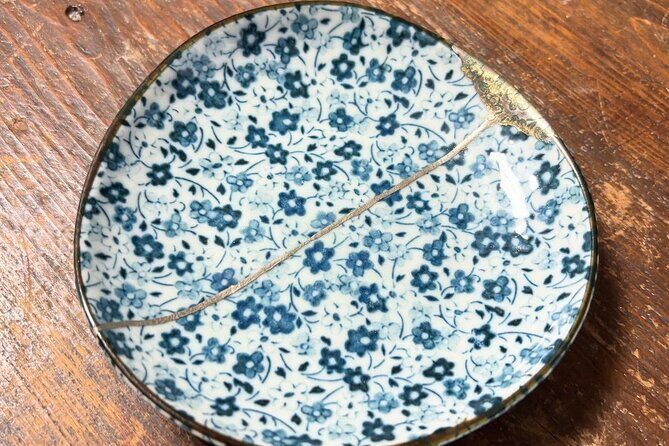
After the structural repair comes the signature look. You’ll use silver-based gold powder (a gold-toned effect) after the resin and lacquer are ready. The way you dust or apply the powder is what gives kintsugi its recognizable character: the repair becomes a visible line, a decision, not a patch.
This is also where patience pays off. The finish is delicate, and it’s best when you work at the pace of the studio guidance rather than rushing to “get it done.” Expect a calm rhythm—hands move, instructor checks, adjustments happen, and then you move to the next step.





Leaving with your restored piece
At the end, you take home your completed kintsugi piece. The experience includes that finished item as part of the workshop. You’ll also want to plan for safe transport: treat it like a fragile keepsake. One practical tip from past participants is that the final piece is handled in a way that makes it possible to bring it home safely wrapped.
Price and Value: Is $97.73 Worth It?
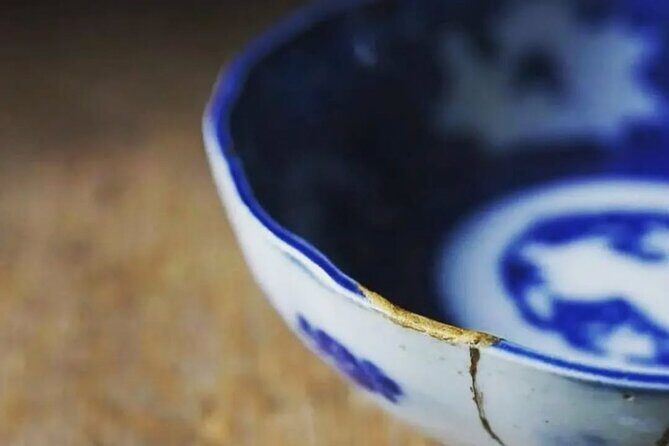
At $97.73 per person for about 3 hours, this workshop sits in a reasonable “hands-on craft” category. The key is what’s included.
You’re not paying just for someone to show you kintsugi. Your fee covers:
- Tools and materials (brushes, lacquer, resin, powder, and the rest of what you need)
- Hands-on instruction by a professional artisan
- A choice of broken pottery to work on
- Your finished piece to take home
- Background context on the philosophy and significance of kintsugi
If you’ve done DIY craft classes elsewhere, you may know the pattern: the project is prepped, or you do a small part, or you leave without something you truly made. Here, the value comes from the full repair arc—bonding, filling, and finishing—plus the fact that the studio provides everything.
One more value point: advance booking is common (on average, about 20 days). That’s a hint that the workshop runs on a schedule with limited spots. If you want a specific date in Osaka, book early so you’re not waiting for availability.
What Makes This Workshop Feel Authentic
There are craft classes that feel like entertainment. Then there are classes that feel like apprenticeship at a visitor-friendly pace. This one leans toward the second.
Tomoko-san’s style: patient, hands-on guidance
In the feedback I’m taking into account, Tomoko-san comes up as accommodating and patient. That sounds like a soft trait, but it’s actually practical: kintsugi has steps that look easy until you try them. If your instructor slows down, corrects technique early, and helps you avoid avoidable mistakes, your final repair has a much better chance of looking like it belongs.
Also, the workshop atmosphere seems intentionally warm and focused, not rushed. A small group helps you feel like you’re doing real work, not waiting your turn at a station.
You repair something that already has a history
Part of the authenticity is that you’re working from broken pottery pieces provided by the studio. You aren’t just creating an object from scratch. You’re restoring an object that already has damage and age. That aligns with the kintsugi philosophy of honoring what happened rather than erasing it.
If you love the idea of visible repair, this is a plus. If you’re hoping for a very specific aesthetic, you may want to think about the “selection” limitation.
The One Consideration I’d Plan For: Choosing the Right Piece
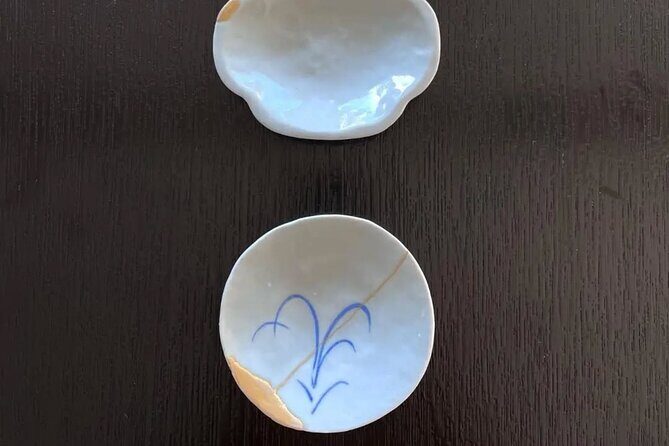
The studio provides broken ceramics to repair, which keeps things simple for you. But it also means you don’t control everything about the final look.
One important tip: if you’re picky about the color or shape of what you’ll end up with, you might want to ask about the selection available. Some past participants suggested bringing your own broken dish if you want a particular form or preference in the visual outcome.
That said, choosing from a set of existing breaks can also be part of the fun. It turns the workshop into a little creative negotiation: you work with the piece in front of you and make the gold lines tell the story of its break.
Where to Meet and How to Get There in Osaka
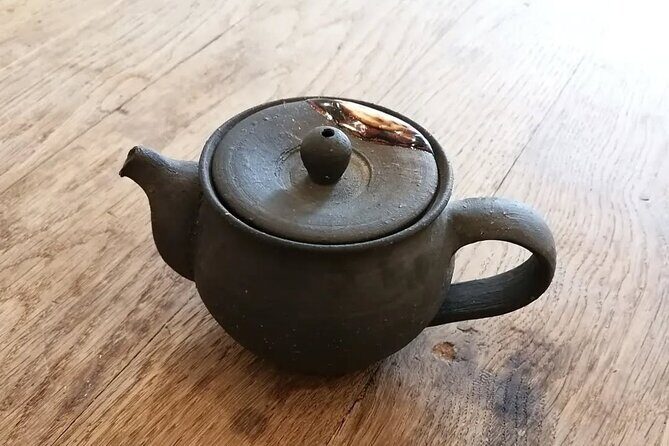
You’ll start at 102, 1-chōme-4-18 Shigita, Joto Ward, Osaka with a 3:00 pm start. The venue is described as near public transportation, which is the kind of detail that makes or breaks a plan in Osaka.
A practical note: one thing mentioned in feedback is that the studio is on an easy route using the Osaka Loop Train, which should help you get there without complicated transfers. Still, do yourself a favor and plug the exact meeting address into your map app the day before. Osaka streets can be straightforward, but you don’t want to burn time arriving late.
Since transportation is not included, factor this into your schedule. If you’re also doing other sightseeing, keep a buffer so you can focus on the workshop rather than sprinting.
Who Should Book This Kintsugi Workshop (And Who Might Skip It)
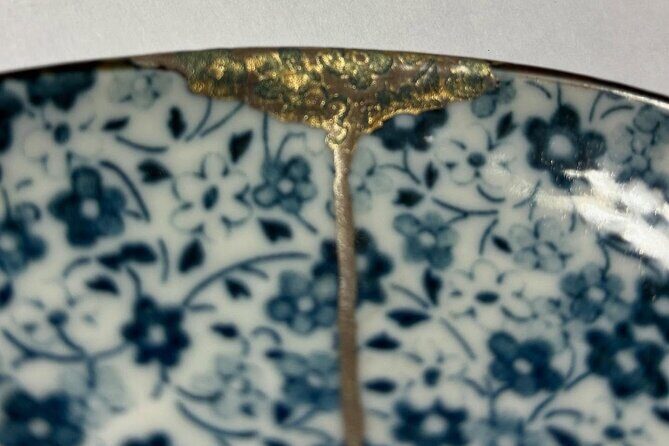
This workshop is a great fit if you want more than a quick cultural stop. It’s especially good for you if:
- You like hands-on activities
- You enjoy Japanese aesthetics like wabi-sabi and quiet imperfection
- You want a take-home object made through your own work
- You prefer smaller-group teaching where you can ask questions as you go
It may be less ideal if:
- You want full control over the exact shape and look of your final piece
- You’re short on time or hate fixed scheduling (the start time is 3:00 pm)
- You don’t want to handle fragile take-home items after class
Also, no craft experience is required, and most people can participate, so it’s beginner-friendly in a practical way.
Small Practical Tips for a Smoother Workshop Day
A few things to do before you go so you can enjoy the session fully:
- Wear clothes you don’t mind getting a little messy. Lacquer and powders are part of the process.
- Plan on careful packing for the walk or ride back with your piece. Think “fragile museum object,” not “paper bag.”
- If you have a strong preference for a specific mug/dish shape, ask in advance how the selection works.
- Bring curiosity. Kintsugi isn’t just technique—it’s an attitude. The gold lines look better when you understand why they exist.
And yes, if you’re the sort of person who loves a calm, crafts-focused afternoon, this workshop is the kind you’ll remember when the rest of the trip blurs together.
Should You Book This Kintsugi Workshop?
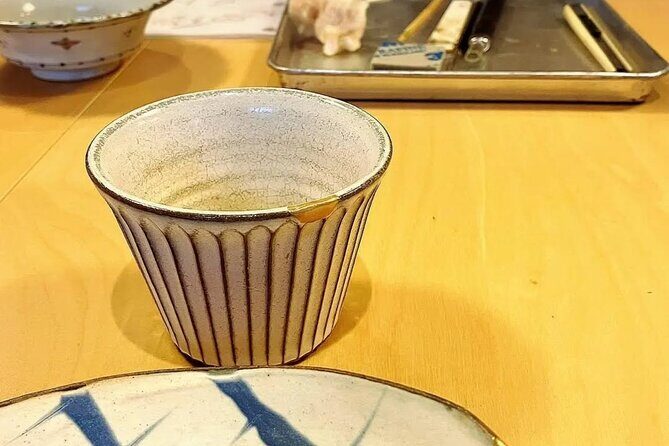
If you’re in Osaka and want a meaningful, hands-on cultural experience that also produces a real take-home artifact, I think this is an easy yes. For roughly $97.73, you get expert instruction, materials, and a finished repaired piece—plus the philosophy behind it, not just the technique.
Book it if: you want a small-group workshop, you value craftsmanship, and you’d enjoy working with break lines instead of trying to hide them. Consider another option if you need a very specific final object design and don’t want any uncertainty from the studio’s selection.
FAQ
FAQ
How long is the kintsugi workshop in Osaka?
The workshop lasts about 3 hours.
What is the price per person?
The price is $97.73 per person.
Where is the meeting point?
The start point is 102, 1-chōme-4-18 Shigita, Joto Ward, Osaka, 536-0015, Japan.
What time does the workshop start?
The start time is 3:00 pm.
Is transportation to the venue included?
No. You are responsible for getting to the meeting point.
Is prior experience required?
No experience is needed. Most travelers can participate.
How many people are in a group?
The workshop has a maximum of 8 travelers.
What’s included in the workshop fee?
You get all necessary tools and equipment, hands-on instruction, access to broken pottery pieces to repair, and your completed kintsugi piece to take home, plus an overview of the history and philosophy.
What materials and technique will I use?
You’ll bond pottery with synthetic lacquer, fill missing pieces with resin, and dust the piece with silver-based gold powder.
Can I cancel and get a refund?
Yes, you can cancel for a full refund up to 24 hours before the experience starts. There is free cancellation.
What if the weather is bad?
This experience requires good weather. If it’s canceled due to poor weather, you’ll be offered a different date or a full refund.