REVIEW · NAGOYA
Nagoya: Japanese Alps “Kamikochi” One-Day Round-trip Tour
Book on GetYourGuide →Operated by 株式会社KKT · Bookable on GetYourGuide
Instant altitude gain, no car needed. This Nagoya one-day Kamikochi tour is interesting because the park area is car-restricted, so you experience the mountains in a more car-free way right from the start. I especially like the pond-and-bridge walking loops that let you choose your pace, and the views from places like Kappa Bridge. One possible drawback: you’re on a clock—expect only a few hours on the ground before you head back toward Nagoya.
You’ll meet in central Nagoya around 7:50 and depart at 8:00, then arrive at Kamikochi roughly late-morning. The return timing can shift a bit based on traffic and the guide’s on-the-day notice, but you’ll generally gather to leave around 15:00–15:30 and disperse back around 19:30.
In This Review
- Key Points Before You Go
- Getting to Kamikochi From Nagoya Takes Time, Not Talent
- The Big Deal: Car-Restricted National Park Means You Walk More
- Your Day on the Ground: Two Walking Routes to Match Your Energy
- Route 1: Ponds to Tashiro Area, Then Kappa Bridge
- Route 2: Kappa Bridge Through Wetlands Toward Myojin and Okumiya
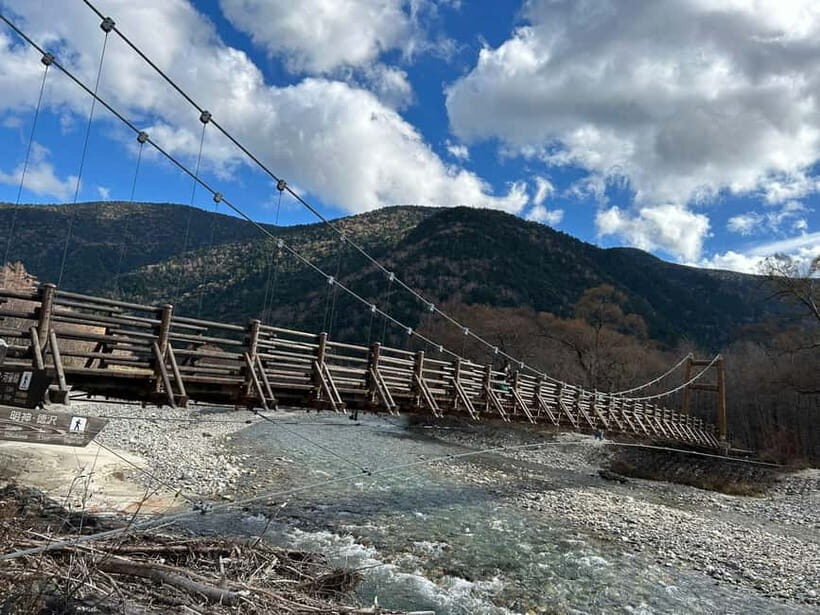
- Kappa Bridge: The Easy Win That Frames the Whole Area
- Myojin Pond and Okumiya: Quiet Power, Longer Walk
- The Real Time Limit: 3.5 Hours Feels Shorter Than It Sounds
- Food, Lines, and a Simple Bring-Something Plan
- Weather at 1,500m: Dress Like the Alps, Not Like a Forecast
- Group Size and Guide Language: Great When It’s Smooth
- What If Roads Close? You Need a Plan B Mindset
- Price and Value: $84 for a One-Day Alps Fix
- Should You Book This Kamikochi One-Day Tour?
- FAQ
- Where do I meet the tour in Nagoya?
- What time does the tour depart from Nagoya?
- How long do I spend at Kamikochi?
- Are there walking routes or hikes planned?
- Do I need to pay any extra fees?
- What languages are available for the tour?
- How big are the groups?
- What happens if access to Kamikochi is blocked?
- Is luggage allowed on a one-day tour?
- What’s the policy for children?
Key Points Before You Go
- Car-restricted Kamikochi access: you can’t drive in, so the day feels more like transit + walking than “park-and-go.”
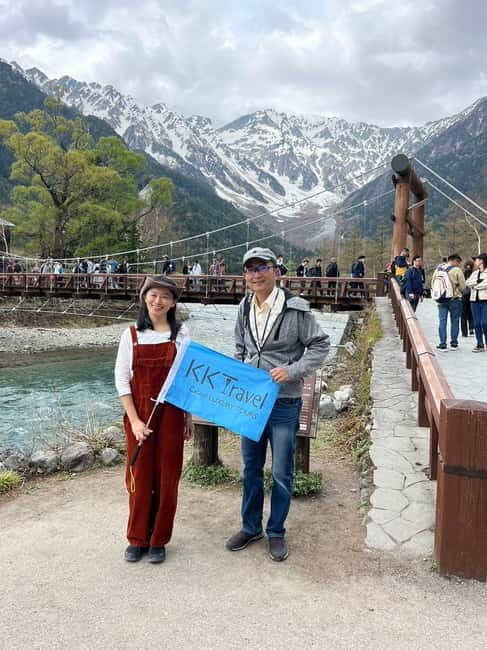
- Kappa Bridge is a built-in highlight: it’s only about a 5-minute walk from the bus center and gives classic mountain-and-river views.
- Two walking options: you can pick a pond-focused route or a wetlands-and-shrine direction depending on what you feel like doing.
- Altitude at about 1,500m changes the day fast: pack for shifting weather, not just sunshine.
- Language quality can vary: the tour advertises English support, but actual guide language may depend on the day’s group.
- Crowd logistics matter: bus/taxi lines at the end of the day can get very long, so plan snacks and timing.
Getting to Kamikochi From Nagoya Takes Time, Not Talent
This is not a quick hop. You leave Nagoya at 8:00 and (when conditions are normal) you’ll be looking at a long road stretch before you reach Kamikochi—about a 3.5-hour drive each way is common when you’re counting real travel time.
The practical upside is that the tour handles the hard part: you get picked up in Nagoya and delivered back at the same meeting point. The catch is that the ride eats up daylight, so you’ll want your hiking mindset to be flexible. Think of the day as a “mountain hit” rather than a full hiking holiday.
Meeting point details are very specific, which I appreciate when timing matters. You gather at the Mini Stop Meijun Chunmachi branch, at the back door of Nagoya West Exit BIC CAMERA area, and then you roll out at the scheduled departure time.
You can also read our reviews of more tours and experiences in Nagoya.

The Big Deal: Car-Restricted National Park Means You Walk More
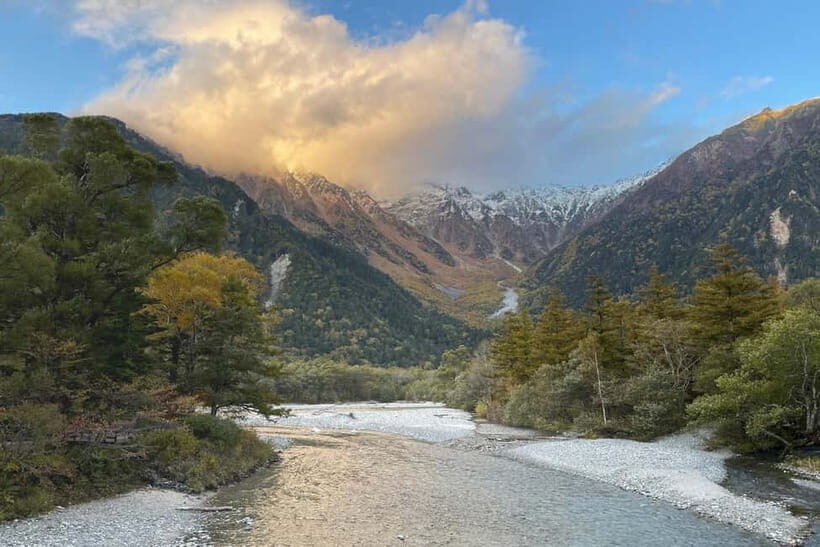
Kamikochi’s experience starts with a rule: private cars can’t go into the park area, and you can’t enter by car. That changes the vibe immediately. Instead of fighting for parking or designing a route around a vehicle, you move on foot among the river, bridges, and viewpoints.
You’ll arrive at a bus-centered area where the main walkway network begins. From there, Kappa Bridge becomes an easy anchor point—you don’t need “navigation skills” to enjoy the scenery. You just follow the well-worn path and let the area do what it does best.
One other detail worth knowing: the day includes time where you’ll pay local ticket fees during the trip. That’s normal for how Kamikochi works, but it also means you should keep a little cash/card-ready and don’t assume everything is paid up front.
Your Day on the Ground: Two Walking Routes to Match Your Energy
Once you’re in Kamikochi, you’re not locked into one single “single-file” path. You get a recommended walking plan with choices, and that’s a big part of why this tour can feel good value.
Route 1: Ponds to Tashiro Area, Then Kappa Bridge
Route 1 is designed around a chain of calm natural stops: Taisho Pond, Tashiro Pond, wetlands, and riverbank walking before returning toward the bus area via Kappa Bridge.
If you like scenery that feels slow and readable—water, bridges, and strolling—this direction fits well. The walk segments are short enough that you can pause often without feeling like you’re falling behind. You’ll also pass Kappa Bridge again near the end, which gives you a chance to see it at a different angle than you might on a first pass.
A practical note: Route 1 is about 3.5 hours of hiking overall for the guided plan, but you can vary where you spend time. This is the kind of trip where you’ll probably spend longer at the places that feel photogenic, then speed up on the less interesting connectors.
Route 2: Kappa Bridge Through Wetlands Toward Myojin and Okumiya
Route 2 shifts the feel toward wetlands and then a more “sacred place” tone near Hotaka Shrine Okumiya and Myojin Pond. This is for you if you want a longer, slightly more goal-driven walk rather than pond-hopping.
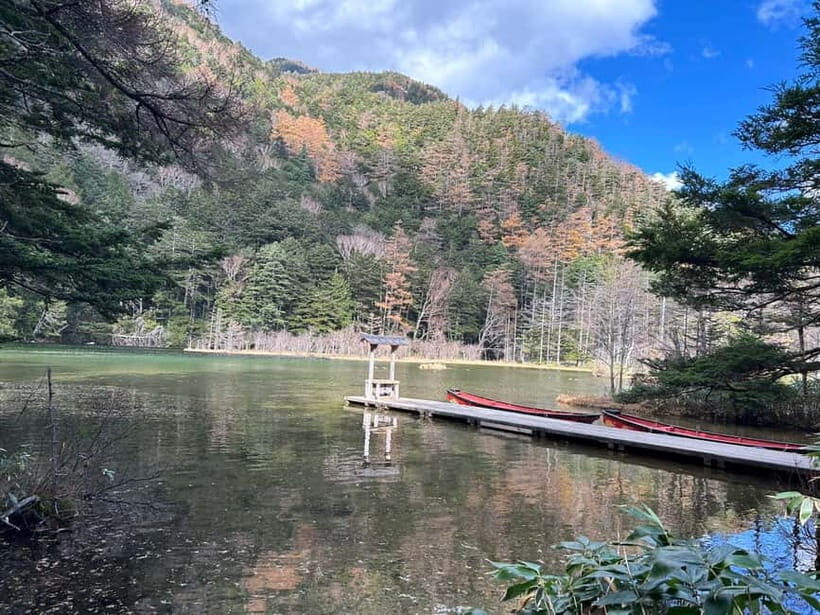
The route includes Takezawa Wetlands, then Myojin Bridge, and the shrine/pool area. The info you get for this walk is specific: the Myojin area is described as a sacred realm feel, and there’s an emphasis on quiet, nature sound, and wildlife. Even if you don’t go chasing birds, the change in atmosphere is what people usually remember from this section.
Route 2 also comes with a “view payoff” idea: the view of Mt. Myojin from Myojin Bridge is called out as spectacular and a favorite for photography.


Kappa Bridge: The Easy Win That Frames the Whole Area
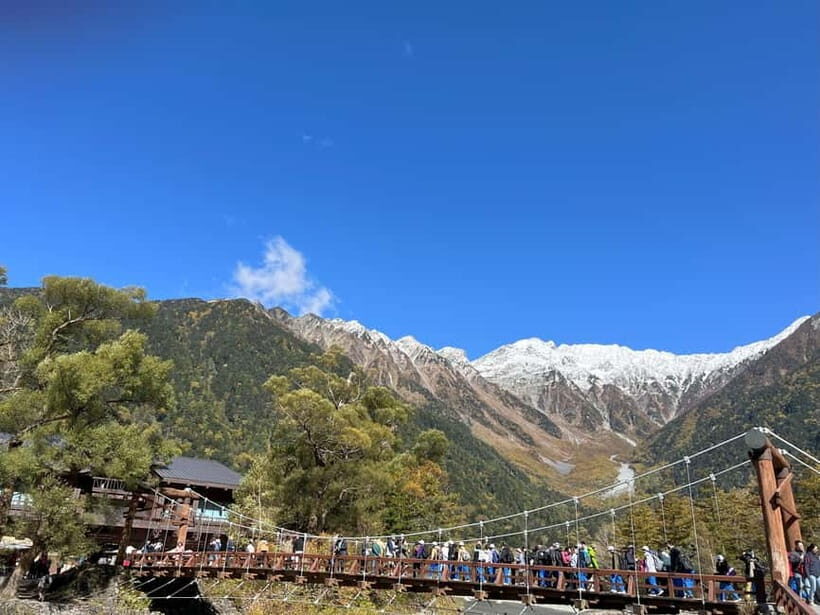
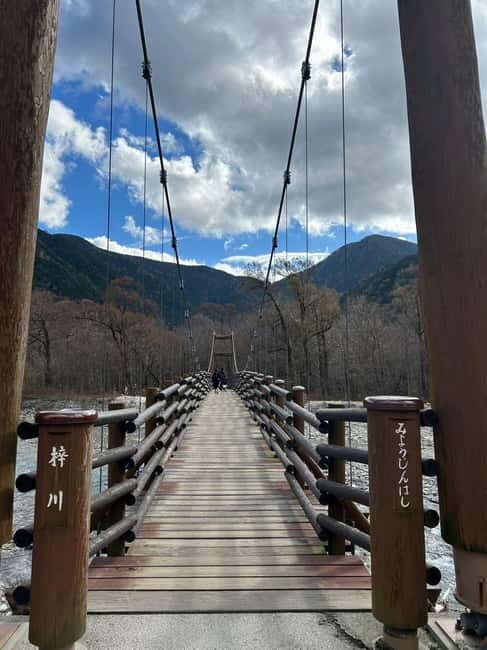
If you do only one thing, make it get to Kappa Bridge. It’s described as a symbolic attraction and it’s very close to the bus center—about a 5-minute walk from there.
What you get at Kappa Bridge is a classic Kamikochi composition: the river in the foreground and mountain drama in the background, including views linked to the Hondaka Mountain Range and Yakidake. The bridge is also useful for orientation. When you feel turned around later, you can mentally map your day back to the bridge and the river corridor.
Timing matters too. On busy seasons like spring holiday weeks, summer vacations, and red leaf season, the bridge can be crowded. If you want space to breathe, aim to be there earlier in your hiking window rather than waiting until the busiest late-morning rush.
Myojin Pond and Okumiya: Quiet Power, Longer Walk
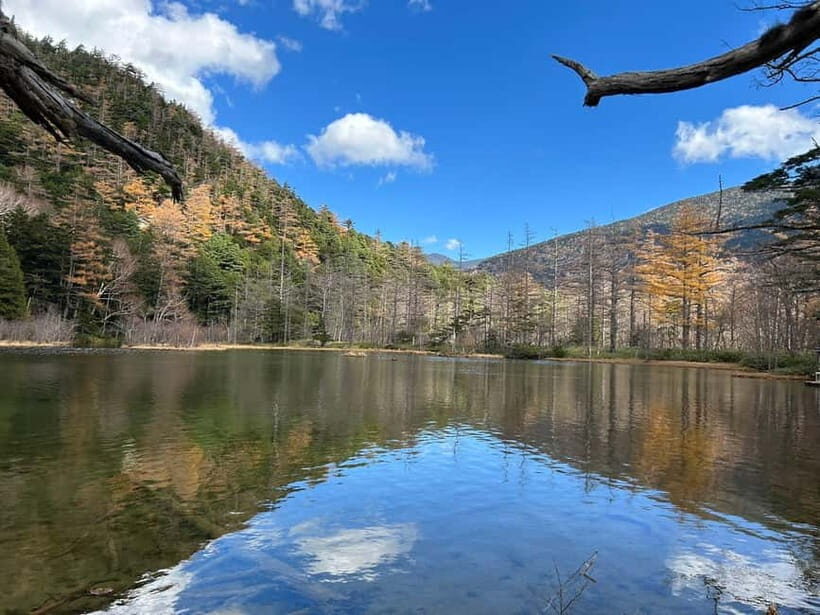
For me, the Myojin section is where the trip becomes more than a quick photo stop. The walking guidance says it takes about 60 minutes from Kappa Bridge along the upper Azusa River to reach Myojin, and that the place is tied to the Okumiya of Hodaka Shrine.
What makes this section appealing is the way it’s framed: wild plants and wild birds, a calming, tranquil feeling, and a sacred context. Even if you’re not into shrine details, it often changes the way you move through the area. Instead of chasing the next vista, you slow down and look around at smaller things.
There’s also the practical angle: the walk to Myojin is long enough that you should start it with a clear plan. Don’t set off near the end of your free time unless you’re comfortable with turning back early or trimming the loop.
The Real Time Limit: 3.5 Hours Feels Shorter Than It Sounds
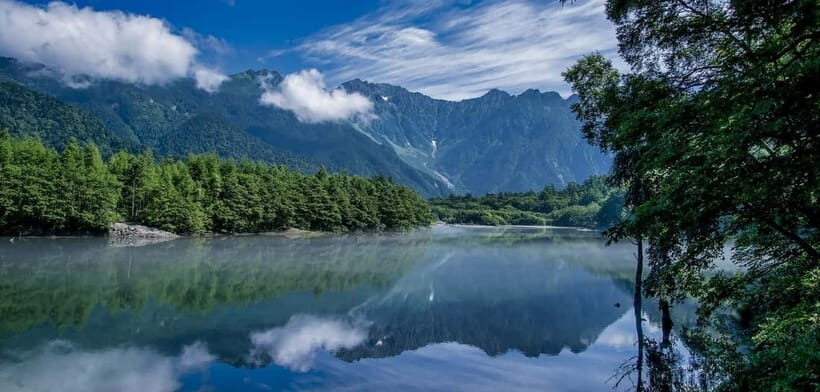
The hiking block is about 3.5 hours (with the exact feel depending on which route you choose and how often you stop). That’s enough time to enjoy several key spots and still feel like you did something meaningful.
But you need to be honest with yourself about pacing. Kamikochi has high appeal, and the area can feel busy—especially around central photo spots like Kappa Bridge. If you’re the type who stops for every viewpoint, you’ll likely want to skip one “optional” segment to make sure you don’t panic near departure.
The schedule pressure is real. You gather to return to Nagoya around 15:00–15:30, and traffic can influence the exact timing. On the way back, crowds can be intense. The bus and taxi lines at the end of the day can get enormous, so be mentally ready for a slow wrap-up and don’t assume you’ll stroll out of the mountain and into an empty station.
Food, Lines, and a Simple Bring-Something Plan
This isn’t a place where you should rely on finding quick meals the moment hunger hits. Dinner-type planning isn’t relevant on a one-day trip, but lunch and snacks matter.
I’d pack provisions if you can. Restaurant queues can be long, and once you’re in line, you lose the option to keep walking. On the return day, you’ll also have to factor in long bus/taxi waits, so having water and a light snack can turn a stressful “where do we eat now” problem into a calm one.
If you’re someone who hates feeling rushed, you’ll probably be happier bringing your own simple food strategy. It’s a small effort that protects your hike time.
Weather at 1,500m: Dress Like the Alps, Not Like a Forecast
Kamikochi sits on a mountainous plateau at around 1,500 meters, and the day-to-day weather can be unstable. That means sunshine can change quickly, and clouds can move in fast enough to feel like a different plan.
Bring comfortable, lightweight sports shoes. Also bring a rain layer and something warm you can layer up or down. The practical list includes a raincoat, an umbrella, a hat, sunglasses, and a jacket. I treat this as a checklist, not a suggestion.
One smart move: plan your clothing so you can peel layers off during sunny sections and re-layer quickly when wind or rain starts. Mountain weather punishes stubbornness. You just adjust and keep going.
Group Size and Guide Language: Great When It’s Smooth
The tour supports both small cars and bus groups, depending on headcount. The operator mentions a small group model of 1–13 people (using vehicles like Toyota Alphard as reference models) and larger bus options for 14–45 people and beyond.
That matters because communication experience can change with the group. The day is set up to include a guide component and explanations, and the tour is offered with languages including English, Chinese, and Japanese.
Here’s the honest consideration: English availability can be inconsistent on the day. I’ve seen cases where a guide’s spoken languages didn’t match what someone expected from an English tour, and the guide assistance may be more limited than you hope. If you really need constant English narration to feel comfortable, keep your expectations flexible and be ready to rely on signage and your own route sense.
The upside is that guides can be friendly and story-focused when language matches the group. When it clicks, the day feels warmer and more informative, not just like a “ride to a hiking spot.”
What If Roads Close? You Need a Plan B Mindset
This area is serious mountain terrain, so access can be impacted by road conditions.
If the Anbo Tunnel is closed to traffic, the tour can’t go to Kamikochi and instead will be changed to Matsumoto City or Takayama. That’s a clear warning to keep an open mind about what you might actually get that day.
Even if you still go to Kamikochi, the local approach road can close. In that scenario, the day can shift to a free walk in the mountains, and the return trip can be about 2 hours earlier than expected. If there’s a traffic jam, your return time may also be delayed.
Translation note: the product description you may see is machine-translated, so I’d treat details as “verify before you pay the final minutes of attention.” The safest move is to confirm any day-of access constraints with the guide or operator once you’re on the ground.
Price and Value: $84 for a One-Day Alps Fix
At $84 per person, this tour is priced like a practical shortcut: you pay for organized transport, a driver, and a guided structure that gets you out to Kamikochi without needing to master rail transfers and local connections.
The real value depends on what you’d do without the tour. If you’re short on time and want one strong mountain day from Nagoya, this looks like a reasonable spend. You also get a vehicle and driver service, plus reference vehicle types depending on group size.
But it’s not a bargain if your goal is long independent hiking. With limited hours in the park and a fixed window to return, you might feel constrained. I think this tour makes most sense if you can enjoy nature in short bursts, hit the main icons, and treat the day as structured breathing time rather than a deep trek.
One extra cost detail: children under 3 are free if they don’t occupy a seat, and children over 3 pay the adult price. If you’re traveling with kids, that structure can help you plan costs more clearly.
Should You Book This Kamikochi One-Day Tour?
Book it if you:
- Want a simple one-day Alps experience starting and ending in Nagoya.
- Like guided route suggestions but still want freedom to choose your pacing.
- Are comfortable hiking about 3.5 hours at about 1,500m and then handling a busy departure window.
Skip it (or at least think twice) if you:
- Need reliable, fluent English narration all day.
- Want a long, low-pressure hike with minimal crowds and lots of extra buffer time.
- Prefer to control everything and dislike fixed return timing.
My take: this is a good fit for a “one big day” mission. If you show up with the right shoes, a rain layer, snacks for the crowded stretch, and a flexible attitude about timing and language, Kamikochi can feel like a real escape—even when you’re only there for part of the day.
FAQ
Where do I meet the tour in Nagoya?
You meet at Mini Stop Meijun Chunmachi branch, near the back door of Nagoya West Exit BIC CAMERA.
What time does the tour depart from Nagoya?
You gather around 7:50 and the departure is at 8:00.
How long do I spend at Kamikochi?
You arrive around 11:30–12:00 and the hiking time is about 3.5 hours, with the exact return timing explained by the guide (you generally gather around 15:00–15:30).
Are there walking routes or hikes planned?
Yes. You’ll follow one of two recommended walking routes that include pond/wetland sections and key bridge areas, and you can choose between Route 1 and Route 2.
Do I need to pay any extra fees?
The description says you pay ticket fees for the hike during the trip. The price also does not include attraction tickets or other local personal expenses.
What languages are available for the tour?
The tour is offered in English, Chinese, and Japanese.
How big are the groups?
The operator notes small group vehicle service for 1–13 people and bus groups for 14–45 people, with the actual setup adjusted based on daily participants.
What happens if access to Kamikochi is blocked?
If the Anbo Tunnel is closed to traffic, the trip changes to Matsumoto City or Takayama. If the road leading to Kamikochi is closed, the itinerary may change to a free mountain walk and you may return earlier.
Is luggage allowed on a one-day tour?
It’s not recommended to carry luggage. If you bring it, you should inform staff, and the group is limited to one piece of luggage with a fee of 2,000 yen per piece of luggage or more.
What’s the policy for children?
Children under 3 are free without occupying a seat. Children over 3 are charged the same price as adults.