REVIEW · NIKKO
Nikko: Toshogu Shrine Ticket(Exchange at Tobu Nikko Station)
Book on GetYourGuide →Operated by LINKTIVITY Inc. · Bookable on GetYourGuide
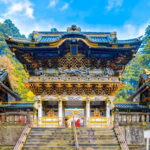
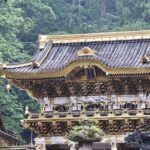
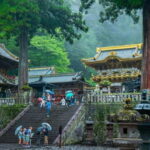
Gold leaf greets you before you even enter. This ticket takes you to Nikko Toshogu Shrine, a UNESCO site in a wooded setting where gold-leaf buildings and intense wood carvings do most of the storytelling for you.
I especially like how the shrine complex makes the Tokugawa world feel tangible—more than a dozen buildings, not just one hall. I also love the Shinto and Buddhist mix, including the famous carved three monkeys (see no evil, hear no evil, speak no evil). One possible drawback: this ticket is for Toshogu admission only, so you may want extra time (and cash) for other nearby sights that aren’t covered.
In This Review
- Key highlights if you’re deciding
- Ticket Exchange at Tobu Nikko Station: Don’t Get Tripped Up
- Logistics That Save Time: Trains, Bus, and a Short Walk
- First Impressions Inside Toshogu: What Makes It Worth the Journey
- What You’ll Notice Most: Wood Carvings and Gold Leaf Everywhere
- The Tokugawa Story You Can Read in the Buildings
- Shinto Meets Buddhism: The Detail That Keeps Surprise in the Visit
- Timing Tips for a 1-Day Visit (Without Feeling Rushed)
- Price and Value: Is $10 for Toshogu a Good Deal?
- Who This Fits Best (And Who Might Want to Rethink)
- Should You Book This Nikko Toshogu Shrine Ticket?
- FAQ
- Do I need to exchange a digital ticket before entry?
- Where do I exchange my voucher, and what are the hours?
- What do I actually get included in this ticket?
- How do I get from Tobu Nikko Station to the shrine area?
- When can I use the ticket?
- Are there any rules once I’m at the shrine?
- Is this experience wheelchair friendly?
Key highlights if you’re deciding
- UNESCO Toshogu in a forest setting, with over a dozen buildings you can actually slow down for
- Gold leaf + intricate wood carvings that stand out against Japan’s usual shrine simplicity
- Tokugawa Ieyasu story in the architecture, from mausoleum roots to later expansions
- Shinto and Buddhist elements sharing the same sacred space
- On-site audio guide option (around 500 yen) if you want help reading each building
Ticket Exchange at Tobu Nikko Station: Don’t Get Tripped Up
This experience is basically two steps: exchange your voucher for a physical ticket, then show the correct phone screen to confirm use. You cannot enter Nikko Toshogu Shrine with the digital ticket alone. That detail matters.
Go to the Tobu Nikko Station Tourist Center (8:20 AM–5:00 PM, open year-round). After you exchange your voucher for the ticket, you’ll need to open the usage screen from the link in your voucher email, press the Use button, and show that screen to staff. Screenshots and printed versions can’t be used, and you’ll want a stable network connection on your phone.
If your link under the QR code doesn’t open right away, don’t waste time fighting your phone. Ask staff at the tourist center for help after you’ve checked in; they can often solve the issue quickly when they can see what you’re trying to do.
You can also read our reviews of more tours and experiences in Nikko.

Logistics That Save Time: Trains, Bus, and a Short Walk
The day is designed around getting you from Tokyo-area rail to Nikko, then moving you into the shrine area without complicated transfers.
From Tobu Railway Asakusa Station, take the express train to Tobu Nikko Station (about 2 hours). Then take the Tobu Bus World Heritage Tour Route to the Omotesando bus stop (about 15 minutes). Get off there and walk roughly 10 minutes to the shrine area.
This pattern matters because Nikko can feel spread out. Having a simple, fixed route helps you avoid wasting your “one day” on last-minute local transit research.
A small practical tip: plan to arrive at the tourist center earlier rather than later. The exchange hours run 8:20–5:00, so your buffer is your friend if you want a calm start.
First Impressions Inside Toshogu: What Makes It Worth the Journey
Once you’re at Toshogu, the place hits you with scale and detail. The complex started as a mausoleum and later grew into the dramatic layout you see today, shaped by Tokugawa Ieyasu and expanded by his grandson Iemitsu in the early-to-mid 17th century.
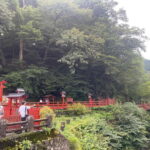
You’re visiting more than a dozen buildings set inside a beautiful forest. That forest setting isn’t just scenery—it gives the carvings and gold leaf a stage. In open city temples, you can lose details at a glance. Here, your pace changes naturally because the paths pull you along.
I also like the contrast: Toshogu is lavish, while Japanese shrine architecture often leans toward simpler, restrained forms. Walking through Toshogu, you feel how deliberate this display was—this wasn’t about quiet devotion only. It was also about power, legitimacy, and a visible message meant to last.
What You’ll Notice Most: Wood Carvings and Gold Leaf Everywhere
The shrine buildings are decorated with countless wood carvings and large amounts of gold leaf. This is not a “take a photo and move on” stop. The best value is slowing down enough to spot what’s carved into beams, panels, and structural details.
Here’s the payoff for your time: once you notice how much work goes into the decoration, the whole complex stops looking uniform. Different surfaces carry different kinds of detail, and the craftsmanship becomes the main lesson of the visit.
If you like having context as you walk, an audio guide rental is available on-site (around 500 yen, based on what visitors report). It can help you connect specific features to what they represent—especially useful if you want more than general impressions.
And yes, photography rules apply. Flash photography isn’t allowed, and you also can’t litter or touch plants. Keep your camera in check and treat the space like a working sacred site, not a theme park.
The Tokugawa Story You Can Read in the Buildings
Toshogu is a memorial to Tokugawa Ieyasu, the founder of the Tokugawa Shogunate, which ruled Japan for over 250 years until 1868. Rather than telling you this as a museum lecture, Toshogu communicates it through design decisions—who gets honored, how the space is organized, and how the complex grows over time.
The key historical idea is that Toshogu didn’t become spectacular all at once. It started as a relatively simple mausoleum. Then it expanded into the awe-inspiring complex you see now, driven by Iemitsu’s role in shaping the shrine into a major statement for the shogunate.
For you, that means the “what” is one part, but the “why” is the real hook. When you understand the timeline—early mausoleum to later expansion—you’ll start noticing how the complex feels engineered to impress.


Shinto Meets Buddhism: The Detail That Keeps Surprise in the Visit
One of the most interesting things at Toshogu is that it contains both Shinto and Buddhist elements. That blend shows up in how certain carvings and symbols are presented together, even though Shinto and Buddhism have different traditions and meanings.
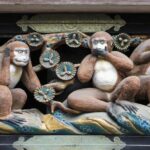
A standout detail is the carved three monkeys: see no evil, hear no evil, speak no evil. Even if you only catch them briefly, they’re memorable because they’re both visually clear and symbolically loaded.
This is where Toshogu feels different from “pure” shrine architecture you might expect. If you’re traveling in Japan and want one stop that reflects how religious practice and iconography can overlap, Toshogu is a strong choice.
Timing Tips for a 1-Day Visit (Without Feeling Rushed)
This is a full day activity in practice, even if it’s a single-ticket product. Your visit length isn’t stated as a strict tour schedule, and visiting hours vary by day and season. Closing times can change, so you’ll want to check the Toshogu information page for the latest haikan (closing) details before you go.
A good approach is to plan your day around two things:
- Exchange your voucher smoothly at the tourist center during open hours
- Arrive on-site with enough daylight to explore the complex slowly, including time for carvings and any audio guide
Because opening hours vary, I recommend treating this like a flexible block, not a tight appointment. If you try to cram it in during the final hour of the day, you’ll lose the part that makes Toshogu special: the details.
Also remember: this ticket is for Toshogu admission only. You can see the limits of what you paid for if you’re hoping to walk to other temples or sites as part of the same ticket. Budget time for “extra stops,” but expect you’ll handle those separately.
Price and Value: Is $10 for Toshogu a Good Deal?
At about $10 per person, this is strong value if your priority is a world-class site without added complexity. You’re paying for admission to Toshogu Shrine, and that’s the core experience: the UNESCO complex, the architecture, and the decoration.
The value equation is simple:
- You’re getting entry to one of Nikko’s major heritage sites
- The experience is detail-heavy, so admission matters more than a quick photo stop
- If you bring the right mindset—slowing down to read carvings and symbols—you’ll feel like the price is more than fair
Where value can wobble is if your plan includes more than Toshogu. Because this ticket doesn’t automatically cover every nearby attraction, your total day cost can rise once you add extras.
Still, for a first-time visit focused on Toshogu itself, the price-to-experience ratio is very reasonable.
Who This Fits Best (And Who Might Want to Rethink)
This ticket is a great fit if you:
- Want a single, clear Nikko highlight with a big UNESCO payoff
- Enjoy detail-focused stops: wood carving, symbolic design, and gold leaf
- Like historical context shown through real places, not just signage
It may be less ideal if you:
- Prefer minimal walking and quick stops (the shrine complex is spread across multiple buildings)
- Need a wheelchair-focused route plan without uncertainty
One note to keep in mind: the activity info lists wheelchair accessibility, but it also states not suitable for wheelchair users. Since the data conflicts, it’s worth confirming on the ground at the shrine or with staff before you commit your day around this visit.
Should You Book This Nikko Toshogu Shrine Ticket?
Yes, if Toshogu is on your must-do list. This is one of the best ways to spend a one-day stop in Nikko when you want something iconic and visually intense without extra fuss. Just don’t underestimate the exchange step: swap the voucher at Tobu Nikko Station Tourist Center and use your smartphone screen exactly as instructed.
I wouldn’t book this expecting it to cover a bigger Nikko sightseeing day. Think of it as the anchor, not the whole trip. If you plan your timing, arrive ready for the rules (no flash, don’t touch plants), and give yourself enough hours to notice carvings, you’ll walk away with a clear sense of why Toshogu became a UNESCO standout.
FAQ
Do I need to exchange a digital ticket before entry?
Yes. You can’t enter Nikko Toshogu Shrine with the digital ticket by itself. Exchange the voucher for a physical ticket at the Tobu Nikko Station Tourist Center.
Where do I exchange my voucher, and what are the hours?
Exchange at the Tobu Nikko Station Tourist Center. It’s open from 8:20 AM to 5:00 PM, all year.
What do I actually get included in this ticket?
Your admission to Toshogu Shrine.
How do I get from Tobu Nikko Station to the shrine area?
Take the Tobu Bus World Heritage Tour Route to the Omotesando bus stop (about 15 minutes), then walk about 10 minutes to the shrine.
When can I use the ticket?
It’s valid for 1 day, and starting times depend on availability. Visiting hours vary by day, so check the shrine’s haikan details online.
Are there any rules once I’m at the shrine?
Yes. Flash photography is not allowed, and you also can’t litter or touch plants.
Is this experience wheelchair friendly?
The info lists wheelchair accessibility, but it also states not suitable for wheelchair users. If you need wheelchair access, confirm details with staff at the shrine or the exchange point before you plan your day.