REVIEW · OSAKA
Osaka: All-Inclusive Local Eats & Backstreets Food Tour
Book on GetYourGuide →Operated by GoWithUs Tours · Bookable on GetYourGuide
Osaka at night is all about the smells—and this tour turns them into a plan. You start near Namba Station and spend about 150 minutes eating through Dotonbori side streets with an English-speaking local guide. I like that you can try up to 9 dishes plus dessert without having to guess what’s worth ordering on your own.
Two things I really value: the food mix (savory, sweet, and a couple that feel a little unexpected) and the way the guide helps you understand Osaka’s love of street food as you walk. One thing to consider is that it’s a walking evening, so comfortable shoes matter, especially if you’re not used to lots of restaurant stops.
In This Review
- Key highlights you should care about
- A Dotonbori side-street tour with a real-food focus
- Price and value: what you’re really paying for
- Start at FamilyMart: how the 150-minute walk actually feels
- The food plan: what you’ll likely taste along the route
- Stop-by-stop pacing: why the long first session helps
- The Dotonbori stories: the history you can taste
- The guide experience: social, practical, and picky-eater friendly
- Who this tour is best for (and who should think twice)
- Solo traveler angle: the “just you” option
- Where to go after: turning the tour into a night plan
- Should you book Osaka: All-Inclusive Local Eats & Backstreets Food Tour?
- FAQ
- Where does the tour meet?
- What time commitment should I expect?
- What food and drinks are included?
- What kinds of dishes are on the menu?
- Is the tour suitable for people with mobility needs?
- What if I have allergies or dietary restrictions?
- What’s the group size?
- What happens if I’m the only solo guest?
Key highlights you should care about
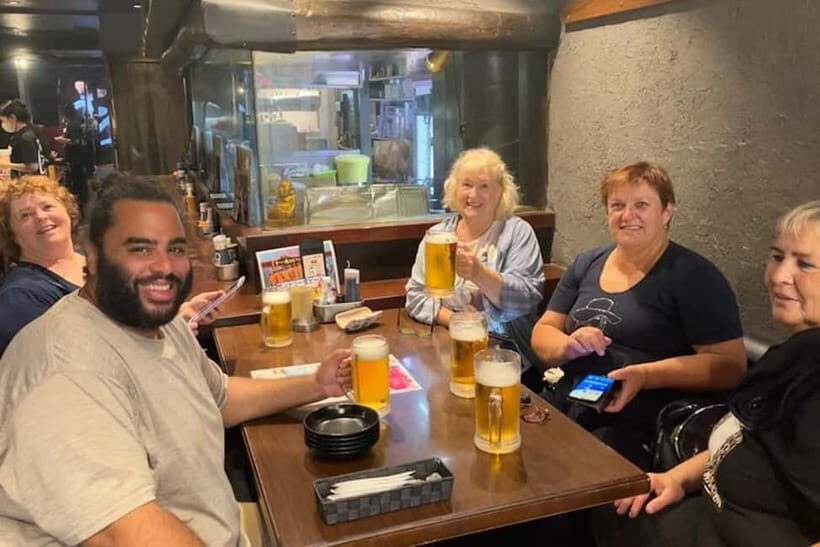
- Up to 9 local dishes plus dessert: You leave full, not just “snacked.”
- One included beverage: Alcoholic or non-alcoholic, chosen by the tour.
- Small group of up to 10: Easier pacing and better conversation with your guide.
- English + local context: You get stories while you eat, not just a list of items.
- Old-school backstreets near Dotonbori: You see lanes and spots most first-time visitors miss.
- Rain or shine: You keep moving, so bring an umbrella if the forecast looks sketchy.
A Dotonbori side-street tour with a real-food focus
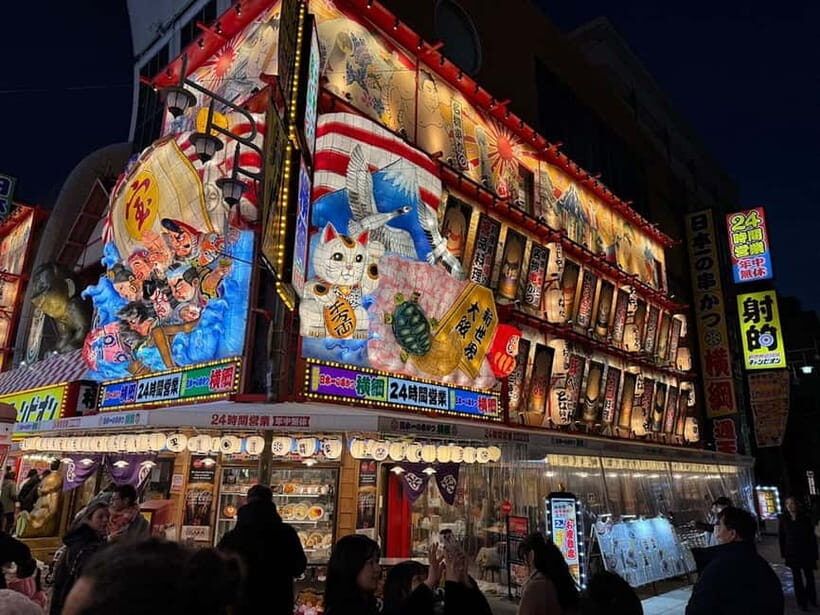
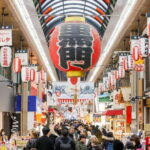
If Osaka’s Dotonbori district looks like a food theme park from far away, this tour is what it looks like up close. Instead of staying only on the busiest strips, you walk through backstreets and older neighborhoods where the vibe feels more lived-in. That difference matters, because the best street food in Japan often depends on local rhythm: when places open, how people order, and what gets repeated night after night.
What I like most is the guide setup. You’re not stuck with a script or a generic explanation. The tour is led by a local who speaks English fluently, and the reviews mention guides named Kieran and Callum who are friendly, quick to answer questions, and good at steering picky eaters toward options they’ll actually like.
The other big plus is the “all-inclusive” part done the useful way. At this price point (about $83 per person), you’re not just paying for walking and storytelling. You’re paying for a structured evening where food is the main event: up to 9 dishes plus a dessert, along with one drink.
You can also read our reviews of more food & drink experiences in Osaka

Price and value: what you’re really paying for
Street food tours can be hit-or-miss: you might get one or two iconic items and then be on your own for the rest. This one is more upfront. You get multiple tastings over a set 150 minutes, plus dessert and a beverage, and the guide also shares tips for where to eat and drink after the tour.
Think about value like this: if you order a few individual street-food items in Dotonbori on your own, costs climb fast, and so does uncertainty. What’s good here? What should I order? Is there a line for the popular thing? The tour reduces that guesswork by putting you in the right places and keeping the pacing comfortable.
Also, this is a small-group format with a max of 10 participants. That’s not just a comfort detail. Smaller groups generally mean less waiting, fewer awkward pauses at crowded stalls, and more time to ask questions while you’re eating. And yes, that makes the night feel more social.
Start at FamilyMart: how the 150-minute walk actually feels
The meeting point is simple: FamilyMart near Namba Station, Exit 14. Your guide waits there, so you’re not wandering around the station trying to match a vague photo to a real human. From that point, you’re on foot for the whole experience.
The schedule is built around short walks between restaurant tastings. You start with about a 5-minute walk, then settle in for a tasting session lasting roughly an hour. After that, you keep moving with several quick hops (usually just a few minutes) between places, with later tastings around 30 minutes each. In total, the timing works out to a steady flow where you’re never waiting forever, and you’re not stuck in one long line either.
Walking 150 minutes is the only real physical tradeoff. You’ll want comfortable shoes, and the tour runs rain or shine, so an umbrella is smart. This isn’t the kind of activity where you can easily pop out for a coffee break and still make the group flow.
The food plan: what you’ll likely taste along the route
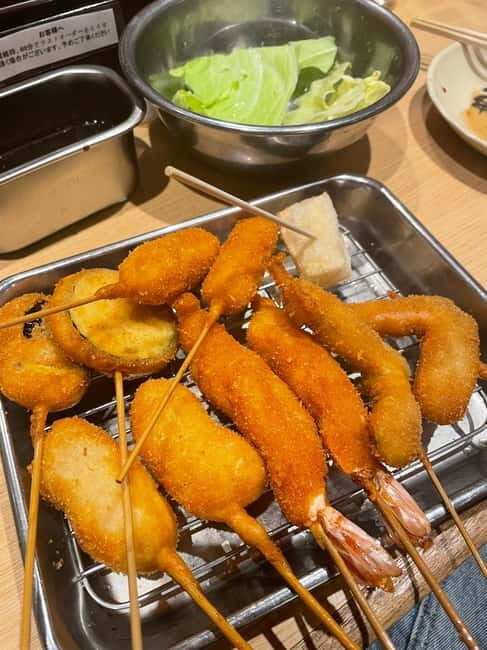
The tour description is clear about the range: up to 9 authentic dishes plus one dessert, and one beverage (alcoholic or non-alcoholic). The included items listed include classic Osaka street food and a few items that help balance the fry-and-grill lineup.
Here are the dishes on the menu for this tour, so you can map your expectations:
- Kushi katsu: Skewered meat or vegetables breaded and deep-fried. Expect a crunchy texture and a sauce that’s simple but addictive.
- Takoyaki: Osaka’s signature octopus balls, usually served hot with a savory sauce and toppings.
- Butaman (pork buns): Soft, warm buns with a savory filling. This is the comfort-food counterweight to all the crisp frying.
- Gyoza: Pan-fried dumplings, often juicy and flavorful right off the hot plate.
- Yakisoba: Stir-fried noodles with a sweet-salty sauce and smoky edges.
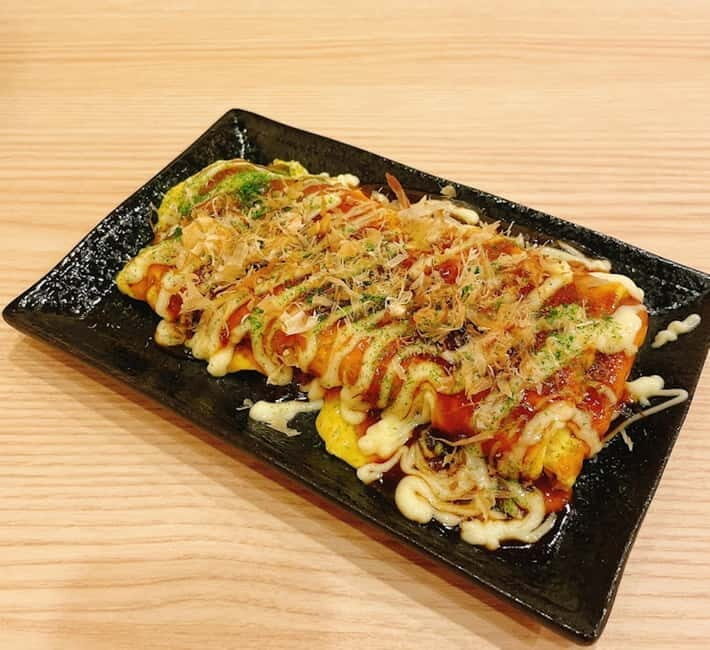
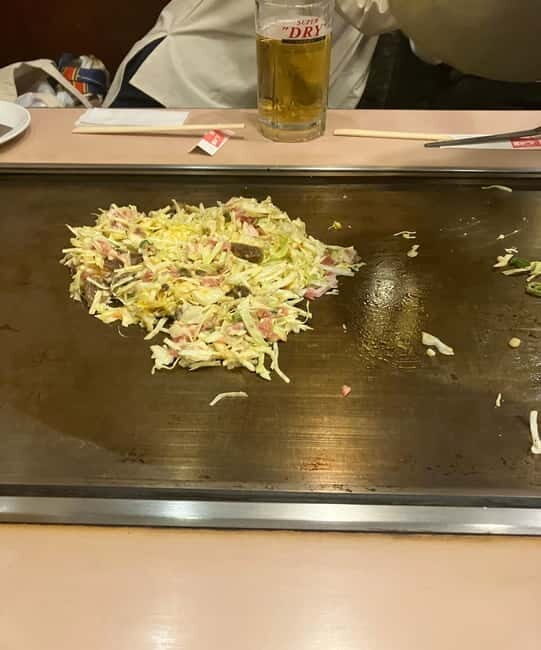
- Tonpeiyaki: A grilled savory pancake, often with cabbage and a tangy sauce profile.
The “more” in that list matters too. You’re not limited to a single flavor lane. The tour aims for a mix of savory, sweet, and a couple of surprises, so you’re less likely to hit the wall where you’re full of the same thing.
One practical note: Osaka street food can include ingredients that may be tough for strict diets. The tour asks you to inform them of allergies or dietary restrictions when booking. They’ll try to accommodate, but they can’t guarantee alternatives for every dish, especially for gluten-free or vegan diets. If that’s your situation, message ahead early and be realistic about what “possible” means.
Stop-by-stop pacing: why the long first session helps
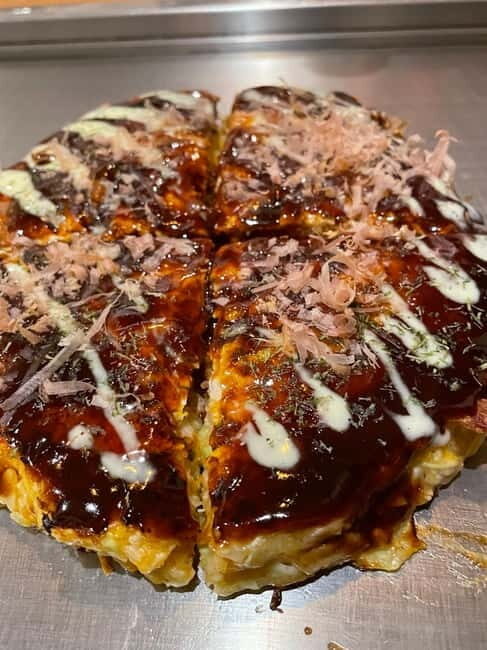
Even without a named menu for each exact shop, the timing pattern says a lot. The first restaurant tasting runs about an hour. That longer block is useful for two reasons.
First, it gives you time to start the night smoothly. You get a chance to settle in, try multiple dishes, and get your bearings before the pace increases. Second, it’s where the guide can set the tone: how to order, what to watch for, and what flavors to expect as you move through the district.
Then the remaining tastings are shorter, around 30 minutes each, with brief walks between. This creates a rhythm that keeps your appetite sharp. You’re eating often enough to stay satisfied, but not so often that you feel like you’re only shoveling food. It’s also easier on first-timers because you’re always moving toward the next “yes, this is what it tastes like” moment.
If you’re the type who needs a bathroom break or tends to eat slowly, this pacing is usually workable. The guide will keep the group on schedule, which is exactly what you want during a food crawl.
A few more Osaka tours and experiences worth a look

The Dotonbori stories: the history you can taste
You’re not just tasting food; you’re getting the context behind Osaka’s street-food obsession. Dotonbori is famous for spectacle, but it’s also famous for repeat habits. People go back for the same stalls, the same sauces, and the same comfort flavors that fit into night-out routines.
The tour’s big strength is that the food stories are woven into the walk. As you head through lanes and older neighborhoods most tourists skip, the guide explains the quirky side of Osaka’s street-food culture. That turns what could be a simple “try this, try that” evening into something you can remember later when you’re planning your own meals.
It also helps you read the area when you’re on your own after the tour. You’ll know what the food looks like when it’s being cooked well, and you’ll have a sense of what kinds of places are worth returning to.
The guide experience: social, practical, and picky-eater friendly
This is one of those tours where the guide makes the experience feel safe and fun. The group is limited to 10, and the reviews emphasize a friendly, conversational approach. People like Kieran and Callum are called out for being easy to talk to and for answering questions without making you feel rushed.
And there’s another practical layer: your guide can steer you away from intimidation. If you don’t read Japanese menu labels comfortably, you’re not just relying on your own guesswork. Even small guidance helps, because Japanese street food is often straightforward in taste but specific in ordering.
There’s also a social element. It’s relaxed enough for couples and solo travelers, but structured enough that you’re not stuck wondering what to do next. If you like chatting while you eat, this tour hits the sweet spot.
Who this tour is best for (and who should think twice)
I’d strongly consider this tour if you:
- Are first-time visitors to Osaka and want Dotonbori without only seeing neon-from-the-outside.
- Want a guided path through multiple places so you don’t waste dinner on the wrong choice.
- Like trying classic street food like takoyaki and kushi katsu, but still want variety (including buns and dumplings).
- Prefer a small group rather than a large group bus crawl.
You might think twice if:
- You have very strict dietary needs where substitutes are essential, not just “we’ll try.”
- You dislike walking or you’re dealing with knee/foot limits. This tour is wheelchair accessible, but it’s still a walking route.
- You’re the type who hates the idea of eating “by schedule.” This one is timed, not freeform.
Solo traveler angle: the “just you” option
If you book as a solo traveler and end up being the only guest, you have two choices: you can pay an additional solo guest fee of ¥10,000 to proceed with a private tour, or you can cancel for a full refund. That’s a good safety net, because you’re not stuck with an awkward “solo in a group” situation.
If you like the idea of extra attention and fewer people to coordinate with, the private option can be worth it. If your priority is simply keeping costs down, you’ll want to decide based on how important pacing and attention are for you.
Where to go after: turning the tour into a night plan
One of the most underrated parts of this kind of experience is what it gives you for later. The tour includes tips on where to eat and drink for the rest of your trip. That matters because Osaka is so food-focused that having even a couple of good leads can save you time.
After the tour, you’ll be better at choosing places that match what you felt on the walk: crispy fried items if you want crunch, noodle-and-pancake spots if you want comfort, or lighter choices if you’re still recovering from all the tastings.
The other win: you’ll know how to navigate the Dotonbori zone with less stress. When you understand the pattern of the streets and what areas feel more local, you get to enjoy your own meals rather than just surviving them.
Should you book Osaka: All-Inclusive Local Eats & Backstreets Food Tour?
I think this tour is a solid pick if you want a guided, food-centered night that shows you Dotonbori’s sides while feeding you like a local would. The value is strong because the price covers multiple dishes (up to 9), dessert, and a drink, and you’re not left piecing meals together yourself.
Book it if you’re excited by street food classics like takoyaki, kushi katsu, and butaman, and you’ll enjoy stories as you walk. I’d also book it if you want a friendly English-speaking local guide and a smaller group size that keeps the evening relaxed.
Pass or reconsider if you have complicated allergy needs or you don’t want to commit to a walking schedule. With those two caveats in mind, this is the kind of night that turns Osaka’s food reputation into something you can actually taste—and remember.
FAQ
Where does the tour meet?
The guide meets you at FamilyMart at Namba Station Exit 14.
What time commitment should I expect?
The tour duration is 150 minutes.
What food and drinks are included?
You get up to 9 local dishes plus 1 dessert, and one beverage (alcoholic or non-alcoholic).
What kinds of dishes are on the menu?
Included options listed for the tour include kushi katsu, takoyaki, butaman (pork buns), gyoza, yakisoba, tonpeiyaki, and more.
Is the tour suitable for people with mobility needs?
The tour is listed as wheelchair accessible, but it is still a walking tour, so comfortable shoes are recommended.
What if I have allergies or dietary restrictions?
You should inform the provider when booking. They will do their best to accommodate, but they may not be able to guarantee alternatives for every dish, especially for gluten-free or vegan diets.
What’s the group size?
The tour is a small group limited to 10 participants.
What happens if I’m the only solo guest?
If you are the only guest booked, you can either pay an additional solo guest fee of ¥10,000 for a private tour (¥23,000 total) or cancel for a full refund.