REVIEW · OSAKA
Osaka Castle & Dotonbori Lively One-Day Walking Tour
Book on Viator →Operated by KAMNAVI Tours · Bookable on Viator
Osaka needs more than one photo stop. This small-group walking tour strings together the city’s samurai past and its street-life present, with guided museum time, Osaka Castle tickets, plus the famous shopping and food corridors.
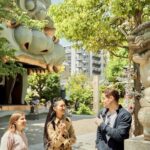
Two things I like a lot: you get hotel pickup (so you’re not hunting meeting points), and you’re in a group capped at five people, which keeps the pace calm and questions easy. If you end up with a guide like Chuji, Tomoko, Noriko, or Toshi, the day tends to run smoothly and at human speed.
One consideration: this is a walking day. One guest summed it up best—wear comfy shoes, not boots—because you’ll be on your feet through multiple neighborhoods.
In This Review
- Key highlights you’ll actually care about
- Small-group Osaka start: pickup, transport, and an easy 9:00 am flow
- Stop 1: Osaka Museum of History—big-picture Osaka from above the castle
- Stop 2: Osaka Castle—why the fortress still makes sense
- Stop 3: Tenjinbashi-suji arcade—2.6 km of locals, not just tourists
- Stop 4: Osaka Museum of Housing and Living—walk through time
- Stop 5: Kuromon Market—short time, smarter food choices
- Stop 6: Dotonbori district—nightlife energy with a guided lens
- What’s included—and how that changes the value of the price
- The pacing lesson: what “7 hours” feels like on your feet
- Guide factor: names that show you what to look for
- Who this tour suits best (and who should think twice)
- Should you book this Osaka Castle & Dotonbori walking tour?
- FAQ
- FAQ
- How long is the Osaka Castle & Dotonbori tour?
- What time does the tour start?
- How big is the group?
- Where does the tour start and where does it end?
- Is hotel pickup included?
- What’s included in the price?
- Is food included?
- What should I wear for this tour?
- What happens if the weather is poor?
- What is the cancellation window?
Key highlights you’ll actually care about
- Max 5 people keeps questions answered and the pace manageable
- Osaka Station start plus possible hotel pickup lowers your “where do I go?” stress
- Osaka Museum of History + Osaka Castle gives you museum-to-stonewall context in one run
- Tenjinbashi-suji (2.6 km arcade) is a fun local-watching stretch, not a quick look-and-leave
- Kuromon Market time is short but focused—ideal for tasting decisions
- Dotonbori after your day work helps you see why Osaka is Osaka
Small-group Osaka start: pickup, transport, and an easy 9:00 am flow
This tour is built for people who want a guided day without feeling locked into a rigid bus schedule. It starts at 9:00 am and is designed around public transportation, so you’re not stuck walking long distances just to get from one highlight to the next.
The big practical win is the small group size (maximum five). That matters more than you might think in Osaka, where stations are layered and signs can be confusing when you’re tired. With fewer people, your guide can adjust timing, keep everyone together, and answer questions without turning into a running commentary.
Also pay attention to the start setup: the activity lists Osaka Station (3-chōme-1-1 Umeda) as the meeting point, but the tour also advertises hassle-free pickup from your Osaka hotel. In real terms, that usually means less time wasted in transit before you even start seeing things. If your pickup isn’t offered for your exact lodging, the listed station start still keeps the plan anchored.
One more mindset tip: treat this like a day tour, not a souvenir run. You’ll have shopping and market time, but your guide is steering the day toward “why this place matters,” not just “look at this, next!”
You can also read our reviews of more walking tours in Osaka



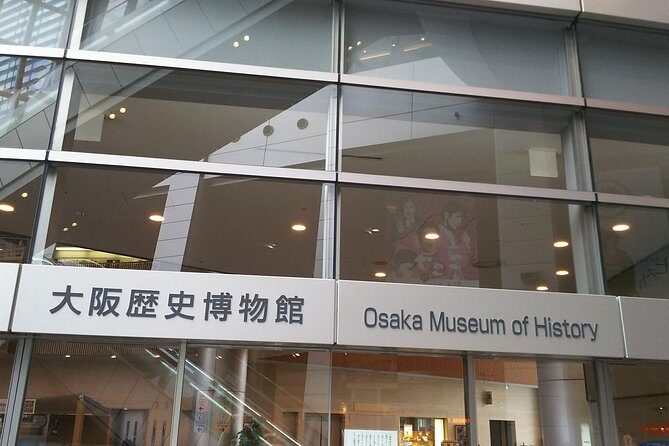
Stop 1: Osaka Museum of History—big-picture Osaka from above the castle
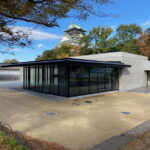
Your first main stop is the Osaka Museum of History, right in front of Osaka Castle. The museum sits on the site of an older palace, so you start with the idea that today’s Osaka isn’t random—it’s layered.
You’ll spend about 1 hour here, and admission is included. The highlight for most people is simple: the museum has a high viewpoint, and the upper level is a great way to orient yourself before you walk around the castle. I like this order because it gives you context. You’re not just looking at a famous structure; you’re learning how the city’s story connects to it.
Potential drawback: museums are sometimes hit-or-miss when you’re tired. The fix is mental. Go in ready to use the viewpoint and exhibits as a roadmap. Even if you only catch the main threads, the rest of the day feels more connected.
Stop 2: Osaka Castle—why the fortress still makes sense
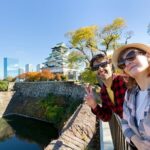
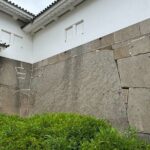
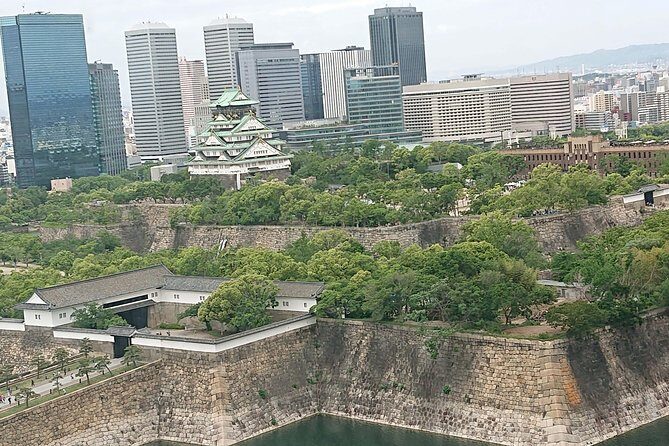
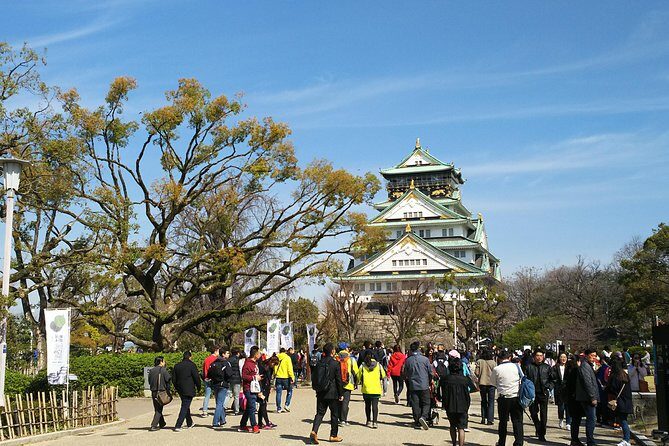
Next comes Osaka Castle for about 1 hour 30 minutes, with tickets included. The castle you’re seeing connects to the 17th-century era and the Tokugawa Shogunate period. It’s described as a sturdy fortress with defenses like double moats, stone walls, and tall structures—built to be more than ceremonial.
I love that your guide helps you see what you’d otherwise overlook. From the outside, a castle can feel like a pretty landmark. With commentary, it becomes a lesson in strategy: how control and protection worked in a pre-modern city, and why this site kept showing up in power struggles.
Practical note: castle grounds and interiors require walking and stairs. If you’re booking this, plan for movement. One guest specifically praised the experience of being able to get into the castle with the tour, plus getting history explained while walking around—so if you like your sightseeing with a brain attached, this stop is the payoff.
If you’re the type who reads signs slowly, you’ll probably appreciate a smaller group. With more people, castle time can feel rushed. Here, the pace is better suited to actually looking.
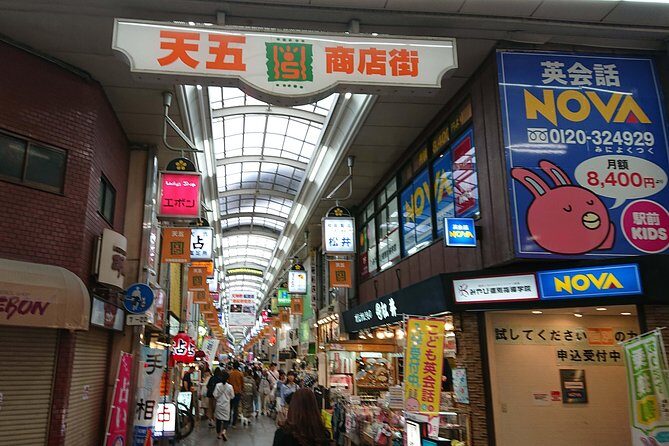
Stop 3: Tenjinbashi-suji arcade—2.6 km of locals, not just tourists
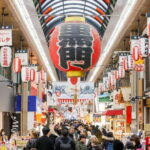
After the castle, the tour shifts from strongholds to everyday life at Tenjinbashi-suji Shopping Street. You’ll have about 1 hour here, and it’s free to enter.
This shopping arcade is Japan’s longest at 2.6 km, with around 600 shops. The best way to enjoy it is not to shop hard. I treat it like a guided wandering mission: notice how people move, how storefronts work, and what kinds of goods dominate. Your guide helps you sort what’s worth your attention so you don’t waste time guessing.
A smart strategy: walk a full loop or at least a substantial stretch before you decide what you want. Some shops call out for your attention; others only make sense once you see what’s around them. The arcade layout encourages that slow “oh, that’s why” moment.
Possible drawback: if you’re looking for huge, standalone attractions every few minutes, an arcade day can feel like “just walking and looking.” The tradeoff is that you see Osaka in a real, local rhythm rather than only famous set pieces.
Stop 4: Osaka Museum of Housing and Living—walk through time
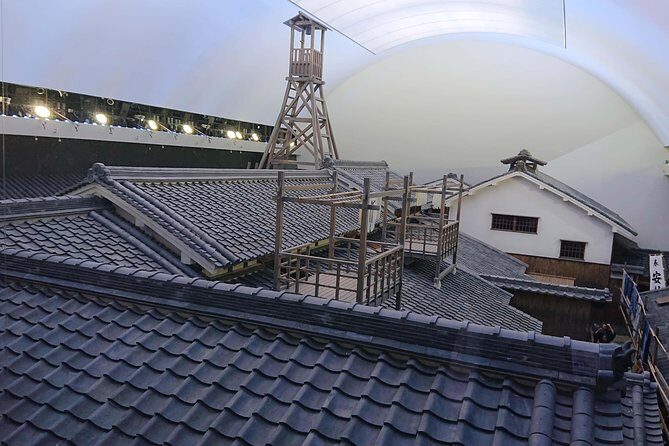
The Osaka Museum of Housing and Living is one of those stops that’s quietly useful. You’ll spend about 40 minutes here, with tickets included.
The museum reproduces the townscape of Osaka roughly 180 years ago, and it’s set up so you can actually walk around and experience old-time domestic space—houses, structure, and everyday goods. This is a different type of history than castle walls. Instead of power and weapons, you get a sense of daily life: what homes looked like, how things were arranged, and what people bought and used.
I find this stop especially helpful if you’ve been seeing Japan through shrines and ceremonies. It gives your brain a more ordinary perspective, which makes the rest of the neighborhoods you’ll walk later feel less random.
Potential drawback: if you prefer outdoor sights, museum time can feel like a pause. But because this one is interactive and walk-through oriented, it generally plays well even for non-museum people.


Stop 5: Kuromon Market—short time, smarter food choices
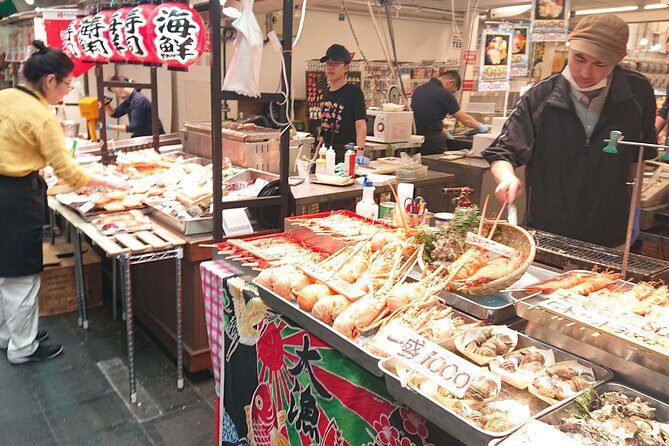
Next is Kuromon Market for about 30 minutes. Admission is free, and the market time fits well after the museum—your day shifts back toward sensory Osaka.
The theme here is food. Osaka’s food culture is described as something built over a long time by locals who love delicious things, and Kuromon is where that energy shows up. Since the tour doesn’t include food and drink, you’ll have to decide what you want to try. That’s actually part of the value: you’re not forced into a fixed tasting menu.
Here’s how I’d approach the market segment: arrive hungry enough to enjoy it, but don’t commit immediately. Walk a bit, compare what looks good, and only then buy. With a guide, you can also ask what’s typically freshest or most worth the money—use that question power.
One limitation: 30 minutes is not a full market exploration. It’s a taste-and-scan window. Plan to treat it as a “pick your favorites” stop, then save deeper market time for later on your own if you want.
Stop 6: Dotonbori district—nightlife energy with a guided lens
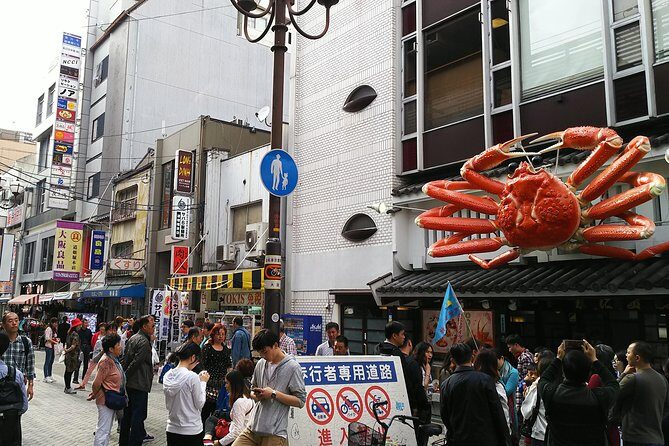
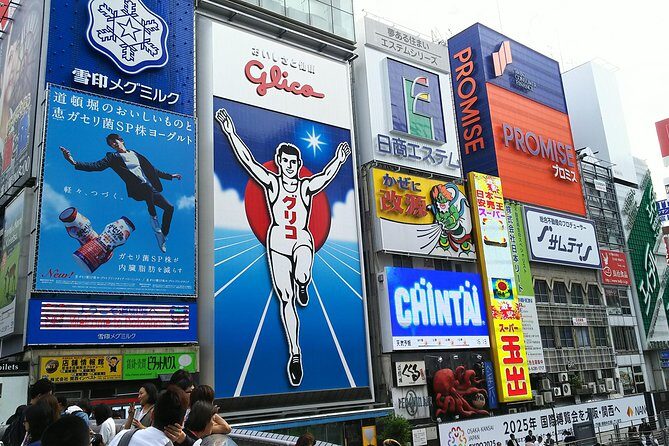
Your final highlight is Dotonbori, roughly 30 minutes. This is where Osaka’s reputation for nightlife and neon shows up hard.
The area originally developed as a local entertainment district, with theaters along the canal. Today it’s known for restaurants and eye-catching signage—perfect for photos, yes, but also perfect for understanding how Osaka performs its identity in public.
I like that your schedule keeps Dotonbori for the end. After museums, arcades, and castles, the district’s commercial energy feels more meaningful. You’re seeing a city that runs on both tradition and showmanship.
One consideration: Dotonbori is a high-traffic zone. Your best move is to let the guide lead your route so you’re not stuck crossing the busiest parts at the worst time.
And if rain happens, don’t panic. One guest specifically mentioned still having a great day despite rain, which usually means the guide keeps the plan moving without turning it into a doom spiral.
What’s included—and how that changes the value of the price
The tour price is listed at $141.23 per person, and that’s for about 7 hours of guided time. What makes the price feel more reasonable is what’s actually included:
- Professional guide fare
- Public transportation fare
- Admission fees for the paid stops
Food and drink are not included. That’s common, and it keeps you from paying for meals you might not want.
So the value equation is pretty straightforward: you’re paying for the guide + transit + multiple entry tickets, while keeping food flexible. For a city day where you’d otherwise buy tickets on your own and spend time figuring out routes, having everything stitched together can save effort and reduce decision fatigue.
Small-group tours can cost more than standard group options, but max five is the trade you’re making. If you want personal pace and clearer explanations, it’s a decent swap.
Booking timing also matters. The average booking lead is 65 days in advance, which tells me demand is steady. If you’re traveling in peak periods, book earlier rather than rolling the dice.
The pacing lesson: what “7 hours” feels like on your feet
Even though it’s called a walking tour, the day doesn’t mean you’re stuck walking nonstop. You’re using public transportation between stops, which cuts down on pointless travel time. Still, you should expect real walking:
- Castle grounds and entrances
- Long arcade stretches
- Market navigation
- Museum walking inside exhibits
One guest literally said be prepared to walk. Another mentioned pace that didn’t feel rushed. That matches what I’d expect from a small group and a guide who wants you to absorb each site instead of racing you through it.
My practical advice: wear comfortable sneakers with solid soles. Bring a small umbrella or rain layer if the forecast looks iffy. And keep water in your plan—since food and drink aren’t included, you’ll want control over what you buy and when.
Guide factor: names that show you what to look for
This kind of tour lives or dies on the guide. The experience here has earned strong praise for guidance style—clear explanations, good organization, and accommodating different interests.
Some guides named by past guests include Chuji, Tomoko, Noriko, Taka Sakai, Yoko-san, Mizuho, Satomi, Nick, Toshi, Saori, and Leo. Across those names, common themes pop up in the feedback:
- guides keeping the schedule organized without rushing
- answers delivered clearly
- help navigating subway and getting oriented
- adjusting pace for different needs, including rain days
- going a step beyond by pointing to a reasonably priced lunch option when asked
If you’re the kind of traveler who enjoys conversation as much as sightseeing, this is exactly the format you want: guided, but not stiff.
Who this tour suits best (and who should think twice)
This tour is a strong fit if you:
- want one guided day that covers castle, traditional urban life, food culture, and modern entertainment
- like learning with your sightseeing
- prefer small groups so you can ask questions and move at a human pace
- want transit help so stations don’t eat your time
It might be less ideal if you:
- hate walking for sustained periods (this is not a minimal-movement tour)
- want long stretches in just one place (the day is balanced across many stops, so no single site dominates)
Also, the tour is described as requiring good weather. If weather is bad, you’ll be offered a different date or a refund, so build flexibility into your Osaka schedule.
Should you book this Osaka Castle & Dotonbori walking tour?
If your goal is a smart first taste of Osaka that mixes history, daily-life neighborhoods, food culture, and Dotonbori’s modern energy, I think you should book it. The value is strongest when you want the ticketed sites handled for you and you appreciate an expert guide steering your day.
The main reason not to book is simple: if you don’t want a full day on your feet, find a shorter option. Otherwise, this is a well-structured “great Osaka highlights” day—small-group friendly, museum-to-street paced, and designed so you don’t spend your trip stuck figuring things out.
FAQ
FAQ
How long is the Osaka Castle & Dotonbori tour?
It runs about 7 hours.
What time does the tour start?
The start time is 9:00 am.
How big is the group?
It’s a small-group tour with a maximum of 5 travelers.
Where does the tour start and where does it end?
It starts at Osaka Station 3-chōme-1-1, Umeda, Kita Ward, Osaka, and it ends back at the meeting point.
Is hotel pickup included?
The tour advertises hassle-free pickup from your Osaka hotel.
What’s included in the price?
The price includes the professional guide fare, public transportation fare, and admission fees.
Is food included?
No. Food and drink are not included.
What should I wear for this tour?
You should have a moderate physical fitness level and wear comfortable shoes, since it’s a walking day.
What happens if the weather is poor?
This experience requires good weather. If it’s canceled due to poor weather, you’ll be offered a different date or a full refund.
What is the cancellation window?
Cancellation is free up to 24 hours in advance for a full refund.