REVIEW · OSAKA
Osaka Harbor and Guided Sightseeing Ride
Book on GetYourGuide →Operated by Road Bike Rental Japan · Bookable on GetYourGuide
Two bridges later, Osaka looks brand new. This guided Osaka Harbor cycling ride strings together riverside lanes, island-hops by mini ferry, and big-view bridges over neighborhoods that feel both old-school and brand new.
I especially like the traffic-light river cycling on the Oo and Yodo Rivers, where you can settle into road-bike rhythm without weaving through traffic. I also love how the route keeps switching “genres,” from Umeda’s business skyline view to the post-war attitude around Tsutenkaku and Shinsekai.
The trade-off is the 42km of road riding and the serious climb up Namihaya Bridge. If you’re not used to sustained pedaling, the day can feel more like training than cruising.
In This Review
- Key highlights to watch for
- Price, pace, and who this Osaka Harbor ride is for
- Start at Kema Sakuranomiya Park: bikes, coffee, and first momentum
- Oo River to Kema lock gate: learning the road-bike feel
- Yodo River cycling and Sugihara Johoku Bridge views
- Tempozan and the bay switch: ferries, Ferris wheel, Aquarium area
- Namihaya Bridge and Chitose Bridge: the workout with the best payoff
- Nishinari and Shinsekai: Tsutenkaku Tower and street-level Osaka
- Shitennoji and Osaka Castle: culture stops and a finish you’ll remember
- What’s included, what to bring, and the practical stuff
- Who should book this Osaka Harbor cycling tour
- Should you book this tour
- FAQ
- How long is the Osaka Harbor and Guided Sightening Ride?
- How much does the tour cost?
- Where do I meet the guide and when should I arrive?
- What’s included in the price?
- Is this suitable for beginners?
- What languages are the guides?
Key highlights to watch for
- Oo River to Kema lock gate: a smooth warm-up that sets you up for the day’s road-bike time
- Yodo River cycle paths: calmer riding that still feels like you’re moving through real Osaka
- Tempozan bay-area views: see the Ferris wheel, Osaka Aquarium area, and tiny Mount Tenpo from above and around the water
- Mini ferry crossings with your bike: a fun change of pace that also expands your route options
- Namihaya Bridge 360-degree reward: a hard climb followed by harbor-and-city views
- Shitennoji to Osaka Castle finish: culture stops plus cycling right through castle grounds
Price, pace, and who this Osaka Harbor ride is for
This tour runs about 270 minutes (4.5 hours) and costs $77 per person. For that price, you get a real guided circuit with a road bike and helmet, plus a local guide and a pre-ride coffee. It’s good value if you want a lot of Osaka in one go without spending your whole day stitching transit routes together.
The pace is steady and the distance is real: 42km (26 miles) of road cycling, described as suitable for intermediate riders. You’re not expected to race, but you are expected to pedal for stretches. In other words, think sightseeing with purpose, not sightseeing at a walking pace.
Small group matters here. It’s limited to 6 people, which usually means fewer delays, more bike-chat, and a guide who can spot issues early. You’ll also ride in English or Japanese with a live guide, which helps when you’re dealing with bridges, crossings, and route changes.
You can also read our reviews of more guided tours in Osaka
Start at Kema Sakuranomiya Park: bikes, coffee, and first momentum
The meeting point is one minute north of Sakuranomiya Station (west exit), and you should arrive about 15 minutes early to set up your bike and gear. That little buffer is worth it. Road bikes move faster than you think, and being sorted early keeps you from feeling rushed right as the route begins.
The ride starts on the Oo River outside RBRJ at Kema Sakuranomiya Park. If you’re the type who likes getting your bearings, this is a good place to start because it’s close to the river system that drives the whole tour.
Included at the beginning is pre-ride coffee, and that’s more useful than it sounds. You have a day with climbs and bridges, and caffeine plus a calm start helps you settle into the rhythm before the route gets physical.
Oo River to Kema lock gate: learning the road-bike feel
After you get moving, the plan is to follow the riverside cycle path up to the Kema lock gate on the Yodo River. This is the “practice without stress” part of the day. The riverside paths let you get comfortable with road-bike handling and pacing without having to constantly dodge traffic.
This section is also where you’ll understand the tour style. Your guide is basically training you for the rest: where to focus on the lane, when to expect turns, and how to keep momentum. It’s not complicated, but it helps if you’re mentally ready to ride, not just stare at the scenery.
If you’ve only ridden flat-city bikes before, road bikes feel quicker and a little more responsive. That’s great when the path is smooth, but you’ll want to pay attention when the route narrows or changes feel.
Yodo River cycling and Sugihara Johoku Bridge views
You get a nice 5km stretch along the Yodo River, and then the route crosses to the north side via Sugihara Johoku Bridge. This move matters because it changes both the scenery and your sense of scale. You’re no longer just moving beside water. You’re starting to see Osaka as a layered machine of river, city blocks, and distant towers.
From the Sugihara Johoku Bridge area, you get impressive views over both the river system and Osaka. The good part for most people: these are view points you’d never reach as quickly on foot. The tour turns the time between “attractions” into usable scenery.
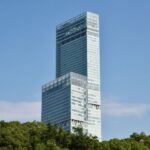
As you head back along the north side of the Yodo River, you’ll also get the panoramic cityscape moment aimed at Umeda. The landmark here is the Umeda Sky building. This section works especially well if you like contrast: the city’s commercial core shown from a river-level perspective.
Tempozan and the bay switch: ferries, Ferris wheel, Aquarium area
After cycling away from the Umeda view, the route weaves across toward the area near Universal Studios and reaches the first mini ferry ride. Before boarding, you’ll have a clear sightline for the giant Ferris wheel at Tempozan and the Osaka Aquarium. You’ll also notice something easy to miss: Mount Tenpo, described as Japan’s most miniature mountain.
This is one of my favorite “tour tricks,” and you’ll feel it right away. Cycling gives you speed and control, but ferries add variety. On a mini ferry, your bike becomes part of the scene, and your brain gets a short rest from steering.
Then comes a coffee and cookie break at 9 Borden. That’s a practical checkpoint. You’ll be about to tackle the day’s hardest climb, and this is your chance to fuel up before your legs start filing complaints.
Namihaya Bridge and Chitose Bridge: the workout with the best payoff
If you want one moment to remember from an Osaka Harbor ride, it’s the route over Namihaya Bridge. This is the hardest climb of the day. Plan for effort. Breathe. Keep steady pressure on the pedals.
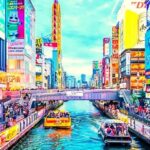
The reward is a 360-degree view of Osaka and its harbor. This kind of panorama is the reason cycling tours exist. You get height and perspective without spending hours transferring between viewpoints.
After that, you walk up the Chitose Bridge and then roll down into Kitamura Minami Park. The walk section is short, but it’s a useful reset. Also, you’ll see kids artwork along the way, which adds a human layer to what could have been just another bridge passage.
In a tour like this, small sensory details are what keep it from feeling like a treadmill. A park stop with local art and a quiet break can make the rest of the route feel lighter.
Nishinari and Shinsekai: Tsutenkaku Tower and street-level Osaka
From the park, the ride weaves to a second mini ferry ride, crossing the Kizu River. Again, the ferry is part route strategy and part mood change. It helps the day feel like a journey instead of one long grind.
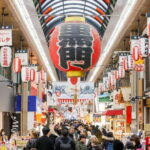
After you land, you start making your way toward Tsutenkaku Tower through Nishinari. This area has a more gritty, street-and-shopping-arcade vibe. If you like your cities with texture, this is where you’ll feel it.
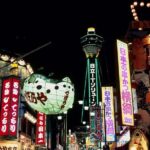
The route specifically aims you at Tsutenkaku Tower, and then Shinsekai. Shinsekai is associated with an older, more local Osaka feel, and you’ll get that post-war boom atmosphere around the tower. It’s a different Osaka than the river and office skyline, and that contrast is half the point of choosing a harbor-and-rivers route instead of only doing castle-and-temple blocks.
One practical note: the industrial stretches can be less visually exciting than the big-view moments. Still, you need those “in-between” segments to connect the story, and the guide’s pacing helps you get through without feeling bored or lost.
Shitennoji and Osaka Castle: culture stops and a finish you’ll remember
Once you leave Shinsekai, the tour shifts toward a major culture moment: Shitennoji. You’ll visit its five-story pagoda and turtle-filled ponds, both mentioned as part of the stop. This isn’t just a photo break. It’s a chance to slow your brain after the physical riding and let the day turn from motion to meaning.
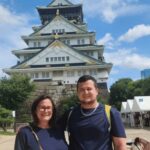
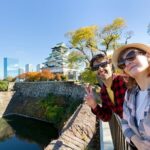
Then you head north to Osaka Castle. This is where the cycling finish feels special: you cycle through the castle grounds before returning along the Oo River back toward RBRJ HQ.
Cycling around castle property is a rare experience. In most cities, you either walk inside, or you only see the exterior. Here, you get the “move through the grounds” feeling, which makes the castle feel less like a fenced-off relic and more like a lived-in part of the city.
What’s included, what to bring, and the practical stuff
Included:
- Pre-ride coffee
- Road bike and helmet
- Local guide (English and Japanese)
Not included:
- Hotel pickup and drop-off
What to bring:
- Comfortable clothes that let you pedal and handle some wind or sun.
You should also plan around the rules: no alcohol or drugs. Simple, but it matters because it keeps the ride safe and focused.
Bike skill expectations are clearly part of the deal. The route is road cycling with 42km in total. This tour isn’t listed for beginners, and it’s not designed for people who can’t ride a bike confidently.
Group size is small, which is great for attention, but it can also mean you’re grouped by ability and pace. If you’re unsure whether you match the intermediate level, it’s worth thinking hard before booking.
(For flexibility, the tour offers free cancellation up to 24 hours in advance and a reserve now, pay later option. Those details can help if you’re still shuffling Osaka plans.)
Who should book this Osaka Harbor cycling tour
You should book if you want to:
- See Osaka from river-level paths and also from high bridge viewpoints
- Get a workout that still feels like real sightseeing
- Mix old neighborhoods like Shinsekai with the skyline energy around Umeda
- Enjoy mini ferry rides without giving up your bike
You might skip or choose something easier if:
- You’re not comfortable with 42km of road-bike pedaling
- Big climbs like Namihaya Bridge will make you anxious
- You prefer purely scenic cycling with minimal industrial stretches
In short: this is for people who like motion, variety, and being outdoors for a few hours. If you want a gentle stroll, this isn’t the match.
Should you book this tour
Book it if your Osaka goal is breadth: harbor views, river paths, skyline moments, and neighborhood contrasts, all in one guided loop with a real cycling setup. The price feels fair because you’re not just buying a guide; you’re buying a bike day that strings together ferries and multiple zones efficiently.
Pass if you’re looking for an easy day or you don’t ride road bikes comfortably. The route includes climbs, and the day is built around pedaling.
If you’re an intermediate cyclist with comfortable shoes and a can-do attitude, this Osaka Harbor Cycling tour is one of those smart picks that pays you back with variety you can’t easily copy on your own.
FAQ
How long is the Osaka Harbor and Guided Sightening Ride?
The duration is 270 minutes.
How much does the tour cost?
The price is $77 per person.
Where do I meet the guide and when should I arrive?
Meet 1 minute north of Sakuranomiya Station (west exit). Arrive 15 minutes early so there’s time to set up the bike and gear.
What’s included in the price?
The tour includes pre-ride coffee, use of a road bike and helmet, and a local guide.
Is this suitable for beginners?
It’s described as suitable for intermediate cyclists, with 42km (26 miles) of road cycling.
What languages are the guides?
The live tour guide works in English and Japanese.