REVIEW · KYOTO
Kiyomizu Temple and Backstreets of Gion, Half Day Group Tour
Book on Viator →Operated by Japan Wonder Travel · Bookable on Viator
Kyoto’s classics come with a built-in route. This half-day walking tour threads Kiyomizu-dera (UNESCO) together with Zen and Shinto stops, then finishes with a slow stroll through Gion’s backstreets—so you’re not spending your energy on directions and crowds.
I love the small group pace (max 8), which makes it easier to keep moving without feeling rushed. I also love how guides like Mika and Takuma break down what you’re seeing—Buddhism, Shinto, and Kyoto’s history—so the sites connect instead of feeling like separate postcards.
One possible drawback: expect steep streets and uphill walking around the Kiyomizu-dera area, plus about four hours on your feet. If you have a tight plan right after the tour, give yourself buffer time because the tour can run a little long near the finish.
In This Review
- Key points worth showing up for
- Why this half-day Kyoto walk works so well
- Starting at Kyoto Ceramic Center: a calm launch
- Kiyomizu-dera and the UNESCO temple payoff
- Sannenzaka and Ninenzaka: the steep streets you’ll remember
- A quiet Japanese garden interlude near the main sights
- Yasaka Pagoda and the Shinto detours that add variety
- Yasaka Kōshin-dō Temple
- Yasui-Konpiragu
- Kennin-ji: Kyoto’s oldest Zen temple in about 50 minutes
- Gion and Hanamikoji: how to enjoy the geisha district the smart way
- Price and value: what $59.45 buys you here
- What to expect on the ground: pacing, crowds, and footwear
- Who should book this Kyoto tour
- Should you book this Kiyomizu and Backstreets of Gion tour?
- FAQ
- How long is the Kiyomizu Temple and Backstreets of Gion tour?
- What is the price per person?
- Where is the meeting point, and where does the tour end?
- How many people are in the group?
- Are temple admissions included?
- Does the tour run rain or shine?
- What ticket format do I receive?
Key points worth showing up for
- Max 8 people keeps the experience practical and easier to ask questions
- Kiyomizu-dera + Kennin-ji cover both UNESCO temple vibes and Zen Buddhism in one morning/afternoon
- Sannenzaka and Ninenzaka are short, steep streets with historic character leading right to the main sights
- Shinto stops like Yasui-Konpiragu add variety beyond temples
- Guided Gion walk through Hanamikoji helps you enjoy the district without getting turned around
- Mobile tickets mean less fuss on the day
Why this half-day Kyoto walk works so well
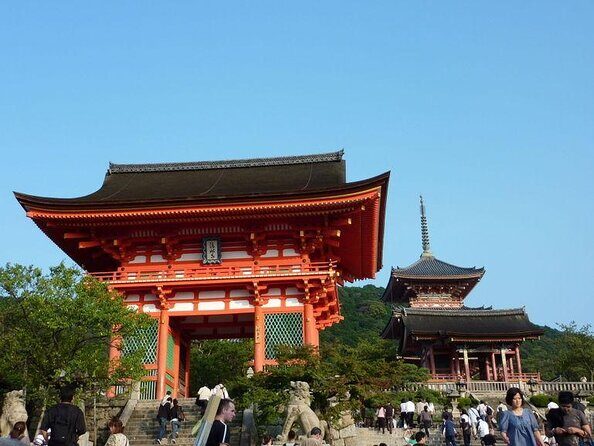
Kyoto is one of those cities where “I’ll just figure it out” can turn into a lot of backtracking. This tour is designed to solve that with a tight route through Higashiyama, so you can focus on what matters: the temples, the shrine details, and the streets that make Kyoto feel like Kyoto.
The best part is the balance. You’re not only hitting the headline sights—you also get the smaller stops that explain the culture behind the big places. That makes the route feel like a guided story, not a checklist.
And yes, you’ll walk. But you’re walking in the right order, at a pace that aims to cover major highlights in about 4 hours without turning the day into a marathon.
You can also read our reviews of more tours and experiences in Kyoto.



Starting at Kyoto Ceramic Center: a calm launch
You meet at the Kyoto Ceramic Center (Kyoto Ceramic Art Association Official Shop and Gallery). The tour includes an on-site visit there for about 10 minutes, and the admission ticket is listed as free.
Even if you’re not a ceramics shopper, this is a smart start. Before you hit the temple crowds, you get a quick orientation to the Higashiyama area and a gentler warm-up. It’s also a nice reminder that Kyoto isn’t only temples—it’s crafts, design, and everyday culture, too.
If you’re into shopping, you’ll likely spot pottery and local crafts that feel more “Kyoto-made” than generic tourist souvenirs. Just remember: you’re here for the walk, so don’t lose your group to one last look at a display case.
Kiyomizu-dera and the UNESCO temple payoff
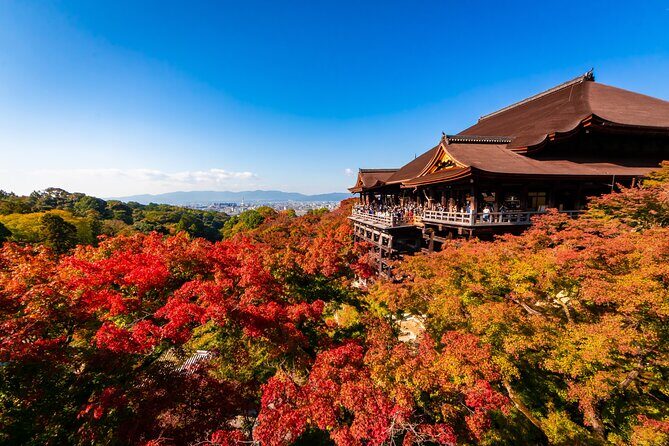
Next comes Kiyomizu-dera Temple. The plan is about 1 hour, and admission is included. This stop is one of Kyoto’s best-known temples and is described as a UNESCO World Heritage Site and among the city’s most visited sights.
Here’s why a guided stop matters. Kiyomizu-dera’s scale and layout can be a little overwhelming, especially when you’re arriving with everyone else in the same wave. A guide helps you know where to look, what details to pay attention to, and how the temple fits into Kyoto’s broader religious culture.
You’ll also get context as you explore—culture and history explained by the professional guide. I like this approach because you can actually connect what you’re seeing to the “why,” not just stand there and admire stone and wood.
If you’re sensitive to crowds, plan to take your photos quickly and then spend a little extra time looking at the smaller elements: the route through the complex, the moments between buildings, and the way the temple area opens into views.
Sannenzaka and Ninenzaka: the steep streets you’ll remember
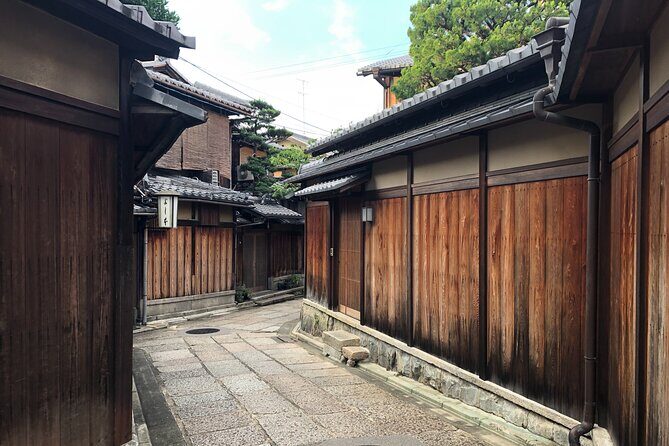
After Kiyomizu-dera, you walk the historic slopes leading up to (and down from) the temple area: Sannenzaka (Three-Year Slope) and Ninenzaka (Two-Year Slope). Together, this is about 30 minutes.
These are steep, traditional streets. That matters, because you’ll feel the change in elevation as you go—part of why they’re so memorable. They’re also where Kyoto’s old-street atmosphere shows up fast: historic buildings, layered architecture, and little corners that look like they’ve been used for centuries.
Practical tip: wear shoes you can trust on uneven stone. You’ll be moving on a gradient, and it’s easy to focus so hard on scenery that you forget your footing.
This stop is also a good reset. You’re transitioning from the temple intensity into street-level Kyoto—where you can slow down, browse, and soak in the design of the neighborhood.
A quiet Japanese garden interlude near the main sights
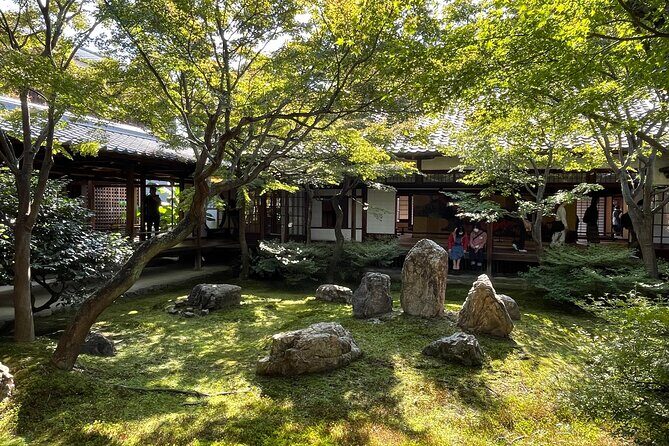
The route also includes a Japanese garden near Kiyomizu-dera. The description emphasizes design details: ponds, traditional wooden bridges, and carefully arranged plants—plus the fact that it feels like a peaceful retreat.
This is the “catch your breath” section of the tour. You’re coming from steep walking and big temple energy. A garden stop gives your brain a different kind of input—less crowd management, more calm observation.
I find these small pauses are what turn a half-day tour from “I saw stuff” into “I understood the mood of the area.” You’ll likely notice you slow down once you’re in the garden space, even if you only have a limited time slot.






Yasaka Pagoda and the Shinto detours that add variety
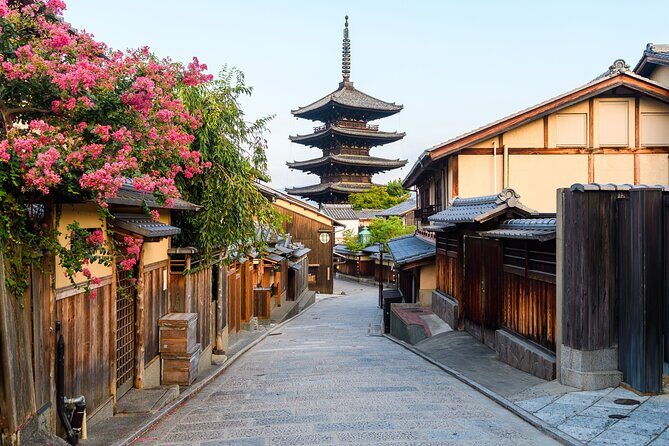
You’ll also pass by or visit the Yasaka Pagoda, described as a historic five-story pagoda and one of Kyoto’s iconic landmarks. It’s included in the route as a key visual anchor for the neighborhood.
What I like about building in a pagoda stop is that it gives you a clear landmark you can use to re-orient yourself while walking later. Even on a crowded route, a single iconic structure can act like a compass.
Then the tour shifts into shrine territory with two stops that help diversify the religious mix:
Yasaka Kōshin-dō Temple
This small traditional temple near Yasaka Shrine is dedicated to Koshin, a guardian deity believed to protect people from illness and misfortune. It’s also noted for colorful kukurizari—a detail that signals the shrine’s wish-ritual culture.
Even if you don’t plan to participate in rituals, these spots are useful for understanding how faith shows up visually in Kyoto: offerings, bright charms, and the idea of protection in everyday life.
Yasui-Konpiragu
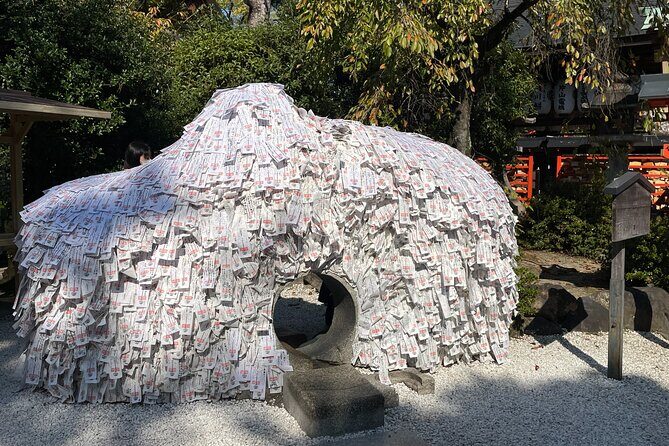
You’ll also visit Yasui-Konpiragu, a Shinto shrine in the Higashiyama district. It’s famous as a place to cut negative relationships and form positive ones, and it’s known for a unique ritual that draws long lines.
This is one of those stops that gives you a “Kyoto isn’t just museums” feeling. The shrine is active and culturally specific. It’s not only about history—it’s about what people still do today.
Kennin-ji: Kyoto’s oldest Zen temple in about 50 minutes
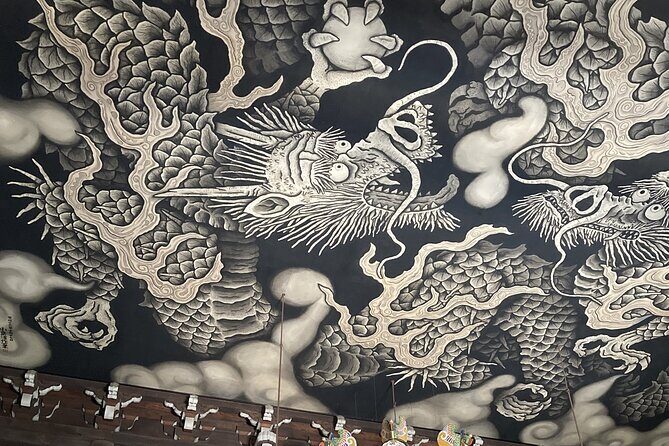
Kennin-ji Temple is a standout on this route. It’s described as Kyoto’s oldest Zen temple, founded in 1202, and it’s included for about 50 minutes with admission listed as included.
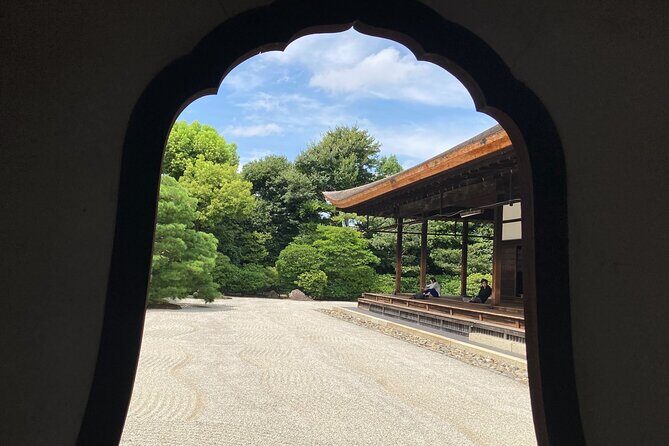
Despite being in a central area, the grounds are described as calm and spacious. That contrast is the point. You’re walking through busy streets and then stepping into a Zen temple space where the pace changes.
You’ll also hear about Zen Buddhism from the guide—ideal if you’ve come to Kyoto knowing the names of temples but not the meaning behind them. The Dharma Hall is called out as a key highlight, so you know what to focus on.
If you’re short on time in Kyoto, this stop is a smart investment. It’s not only a famous site—it’s also a cultural explanation stop. You come away with a better sense of how Zen shaped Kyoto’s religious identity.
Gion and Hanamikoji: how to enjoy the geisha district the smart way
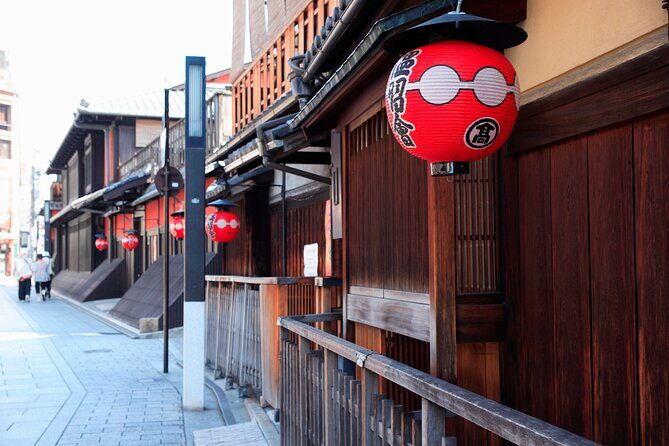
The tour finishes with a walk through Gion, described as Japan’s largest geisha district, and along its main street, Hanamikoji. The route includes time to explore the street’s traditional wooden machiya houses, teahouses, and shops.
The guide element matters here too. Gion is photogenic, but it’s also easy to wander in circles if you’re not sure where you’re going. A guided route helps you see the right stretch and understand the street’s character as you move.
I also like that the tour doesn’t pretend Gion is frozen in time. It feels like a living neighborhood with history layered into daily streets and architecture.
If you want to do one more thing after the tour, this ending area is a practical choice. You’re placed near the heart of the district, so you can keep exploring at your own pace without needing immediate transportation planning.
Price and value: what $59.45 buys you here
At $59.45 per person for about 4 hours, this is priced as a guided route through multiple major sites plus several smaller cultural stops. The value comes from the structure.
You’re getting:
- Multiple paid highlights where admission is included (notably Kiyomizu-dera and Kennin-ji)
- Efficient ordering, so you’re not wasting time getting from one area to another
- A guide who can explain Buddhism and Shinto in plain language, so your visit feels more coherent
In other words, the money isn’t only buying a walk. It’s buying direction, context, and less stress. When you’re trying to fit Kyoto into a short trip window, that can be worth a lot.
The free and included tickets also help: the ceramic center admission is listed as free, and several shrine/temple stops are listed as free entries in the plan. That means you’re not constantly paying small fees on the spot.
What to expect on the ground: pacing, crowds, and footwear
This is a walking tour with a maximum group size of 8. That’s big enough for the tour to feel lively, but small enough that you’re not lost in a herd.
You should expect uphill/downhill movement around the Kiyomizu-dera area, especially with the steep slopes like Sannenzaka and Ninenzaka. The tour also runs rain or shine, so your shoes matter even more if the stone gets slick.
A small note: the tour ends in the Gion area, and there could be a delay at the end. If you have an appointment right after, plan extra time and let the operator know ahead of time.
Who should book this Kyoto tour
This tour is a great match if you:
- Want to cover Kiyomizu-dera, Zen at Kennin-ji, and Gion in one half-day
- Like learning what you’re seeing, not just taking photos
- Appreciate a small-group pace (max 8) that stays practical in crowded areas
- Travel with kids or in a group that benefits from a flexible guide pace (some guides are described as accommodating children’s speed and interests)
You might choose something else if you’re the type who loves very long, unguided temple wandering and doesn’t want a structured route. This experience is built for focus and time efficiency, not for spending half a day inside one courtyard.
Should you book this Kiyomizu and Backstreets of Gion tour?
If your goal is to make your Kyoto time feel organized and meaningful, I’d book it. The combination of Kiyomizu-dera, Zen at Kennin-ji, and a guided walk through Gion’s Hanamikoji hits the main “first-timer” targets while still giving you variety through Shinto stops.
My main caution is the walking. If your knees or ankles don’t love slopes, plan for it or consider a gentler route. If you can handle comfortable shoes and a moderate pace, this tour is an efficient way to get a Kyoto overview that actually connects the dots.
FAQ
How long is the Kiyomizu Temple and Backstreets of Gion tour?
It runs for about 4 hours.
What is the price per person?
The price is $59.45 per person.
Where is the meeting point, and where does the tour end?
You meet at the Kyoto Ceramic Center and the tour ends at 571 Gionmachi Minamigawa, Higashiyama Ward, Kyoto.
How many people are in the group?
The tour has a maximum of 8 travelers.
Are temple admissions included?
Kiyomizu-dera admission is listed as included, and Kennin-ji admission is also listed as included. Other listed stops (like the ceramic center and several shrines) show free admission.
Does the tour run rain or shine?
Yes, it takes place rain or shine.
What ticket format do I receive?
You’ll have a mobile ticket.