REVIEW · OSAKA
Osaka: Private Japanese Traditional Ceramics Experience
Book on Viator →Operated by Ceramics Tocoton · Bookable on Viator
Clay under your hands, Osaka style. This private ceramics experience in the south of the city is built around hands-on making and the cultural chat that goes with it, led by Anna and Ryo in a century-old two-storey house. You’ll choose what you want to make from three Japanese gastronomy options, and you’ll do it with personal guidance instead of getting lost in a crowd.
I especially love the private, multilingual instruction. The workshop is offered in English, Spanish, Catalan, and Japanese, so you can actually understand the why behind the technique, not just copy the motions. I also like that you’re not pushed into some generic souvenir—your pieces are connected to everyday Japanese food rituals, from sake to tea to sushi presentation.
One thing to consider: your finished pottery takes time. Plan around about 1.5 months if you ship it home, and the shipping fee is not included.
In This Review
- Key things to know before you go
- Why This Private Osaka Workshop Feels Different Than a Standard Class
- Where You’ll Go: Teradachō Station to a Century-Old House in South Osaka
- Choosing Your Piece: Sake Set, Sushi Set, or a Tea Bowl (Chawan)
- What Actually Happens During the 2-Hour Hands-On Workshop
- The Souvenir You Leave With, Plus Your Finished Pieces
- Language Options: How You Get More Than “Just the Steps”
- Price and Value: Is $94.13 Fair for What You Get?
- Atmosphere Matters: Walking Into a Local Osaka Pocket
- Who Should Book Ceramics Tocoton?
- Should You Book This Osaka Ceramics Workshop?
- FAQ
- What can I make in this workshop?
- How long is the workshop?
- Is this experience private?
- What languages are available for the class?
- What will I receive as souvenirs?
- Is shipping included if I want my pottery sent home?
- How long does shipping take?
- What refreshments are provided?
- Where does the workshop start?
- Is the experience affected by weather?
Key things to know before you go
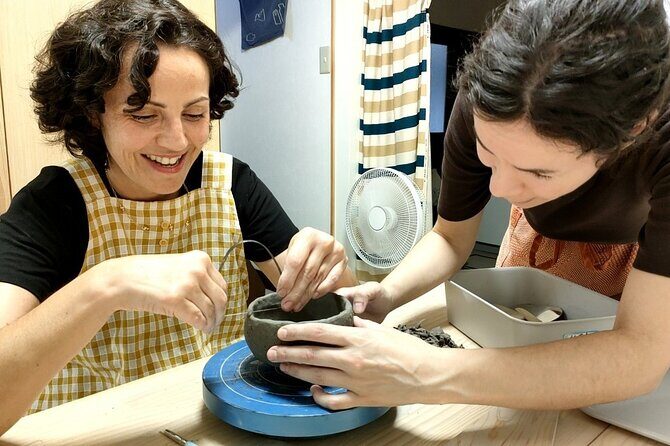
- Private workshop setting means real back-and-forth with Anna and Ryo, not a one-size-fits-all lesson
- Choose your project: sake set, sushi set, or chawan (tea bowl)
- Multilingual class in English, Spanish, Catalan, and Japanese
- Historic house in south Osaka adds atmosphere beyond the usual tourist loop
- Souvenir included: a small sushi dish with traditional-style glaze and a sakura-shaped chopstick rest
Why This Private Osaka Workshop Feels Different Than a Standard Class
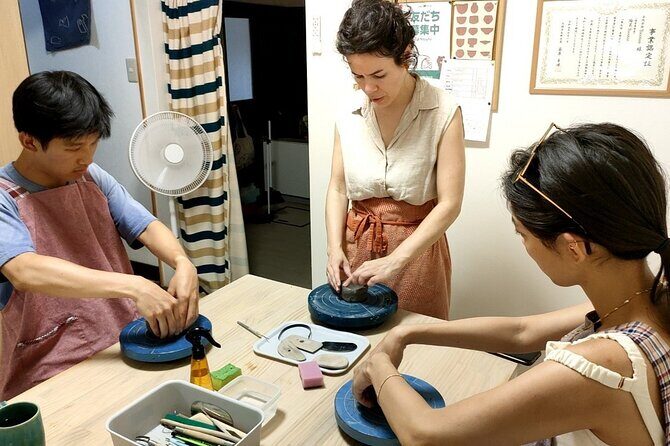
This isn’t the kind of ceramics class where you race through steps and hope the results are decent. The experience is designed as a private session, so the instructor can slow down when you need it and explain the details that matter. That personal attention shows up fast, especially if you’re a first-timer.
The setting helps too. The workshop happens in a century-old, two-storey house in south Osaka, not a modern studio that could exist anywhere. You’ll be near a street with shops selling local food, and the walk from the station to the workshop is part of the charm. It’s the Osaka you get when you’re not orbiting the same three attractions.
The other big reason I’d recommend it: you get cultural context while you work. Anna and Ryo talk about Japanese culture and how these ceramics connect to everyday food customs. It’s not only about making something pretty; it’s about understanding why those shapes and textures fit the meal.
You can also read our reviews of more private tours in Osaka



Where You’ll Go: Teradachō Station to a Century-Old House in South Osaka
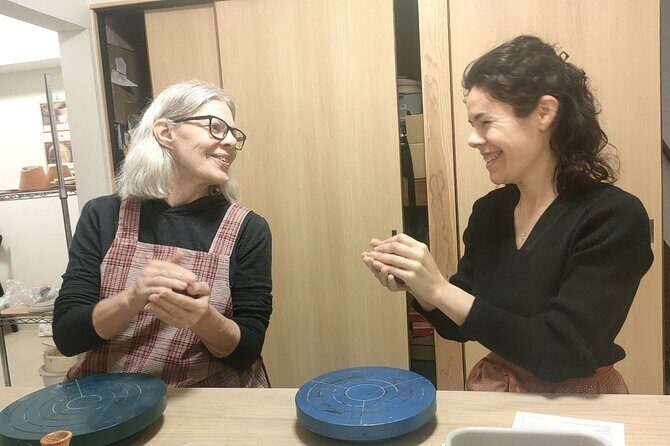
You start at Teradachō Station (2 Chome-3 Tennojichokita, Abeno Ward, Osaka, 545-0001, Japan). The meeting point is close to public transport, which matters because you don’t want your day hijacked by complicated last-mile directions.
From there, the workshop is in the south of the city, and the approach is described as a real slice of everyday Osaka. You’ll pass areas with local shops, so the whole experience feels less like a staged activity and more like a visit. That matters if you’re trying to balance sightseeing with something quieter and more personal.
A practical note: since the class runs for about 2 hours, you’ll want to build the rest of your day around it. This is one of those experiences where it’s worth showing up unhurried, since the conversation and instruction are part of what you’re paying for.
Choosing Your Piece: Sake Set, Sushi Set, or a Tea Bowl (Chawan)
At the workshop, you make ceramic related to Japanese gastronomy with clay. You get to choose between three options:
- Sake set: a small bottle and glass
- Sushi set: a sushi plate plus a chopstick holder
- Chawan for tea: a tea bowl
For first-timers, I like that the choices are clear and functional. A sake set isn’t abstract art; it’s designed for a specific ritual. A sushi plate and chopstick holder are about presentation, which is exactly what you’ll care about when you set the table at home. And a chawan is one of the most iconic shapes in Japanese tea culture.
If you’re torn, go with what matches your interests. Food people usually find this easiest: sake if you like cozy drinks, sushi if you love serving details, and chawan if you want something that feels calm and classic.
What Actually Happens During the 2-Hour Hands-On Workshop
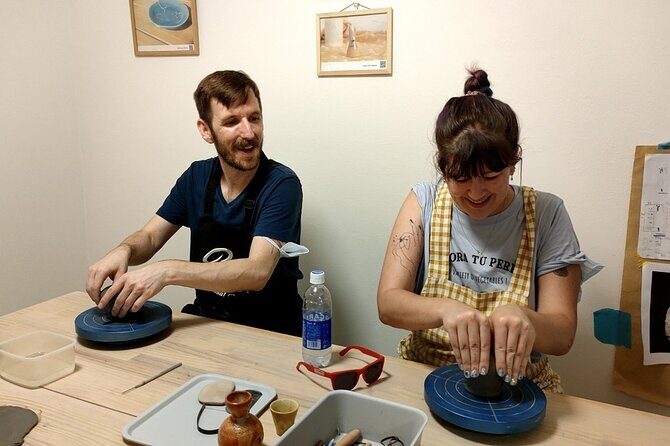
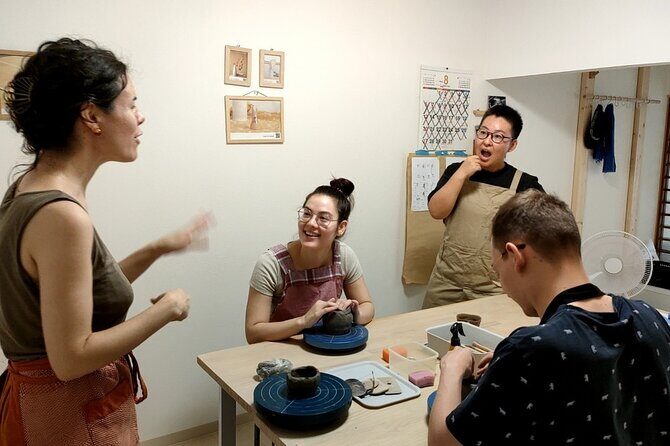
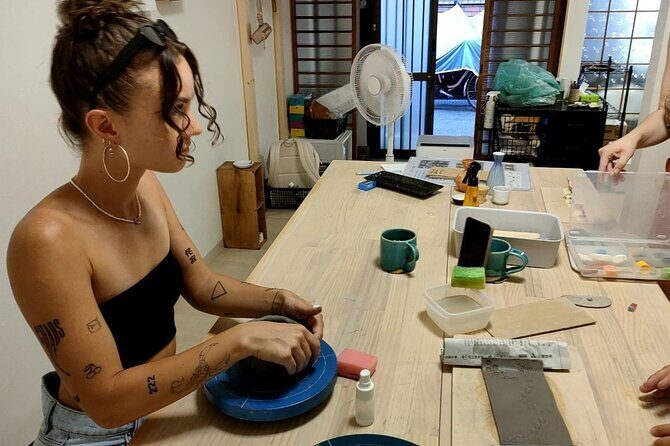
The workshop is about 2 hours (approx.), and it’s structured around doing the work with direct guidance. In a private setting, you’re not stuck waiting for someone else’s turn. You can ask questions while you’re shaping the clay, and Anna and Ryo can adjust instructions to what you’re doing.
You’ll also be doing more than just forming clay. During the session, Anna and Ryo talk about Japanese culture connected to the items you’re making. That’s one of the most praised parts of the experience, and it makes a difference if you care about context, not just crafts.
You’ll get a drink too: Japanese green tea, coffee, or water. It’s a small detail, but it adds to the “you’re in someone’s workspace” feeling, not a rushed classroom vibe.
One more practical reality: ceramics isn’t instant. The workshop includes firing, but your finished work will be handled afterward, which leads to the shipping part.
The Souvenir You Leave With, Plus Your Finished Pieces
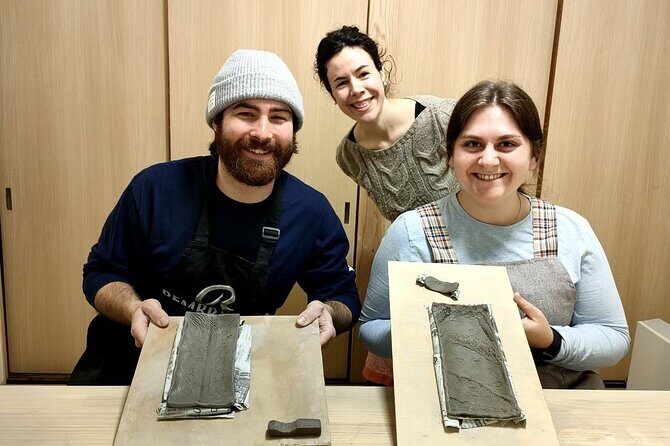
Even if you’re shipping your finished pottery, you don’t walk away empty-handed. You’ll receive a souvenir that includes:
- a small sushi dish decorated with traditional glaze
- a sakura-shaped chopstick rest made by Anna
That’s a smart move by the organizers because it means you still have a real take-home memory from Osaka even if your pottery is in the finishing pipeline.
If you want your pieces sent to your home, you can do that. It takes about 1 month and a half for shipping, and the shipping fee is not included. So yes, you can turn this into a true carry-on-friendly trip—but budget a little extra if you’re choosing that route.
If you prefer to travel light, this is a good plan. If you want the tactile joy of holding your own finished work right away, you’ll want to plan around shipping timing or make space to bring items back (though the exact on-site pickup option isn’t stated in the info you provided).




Language Options: How You Get More Than “Just the Steps”
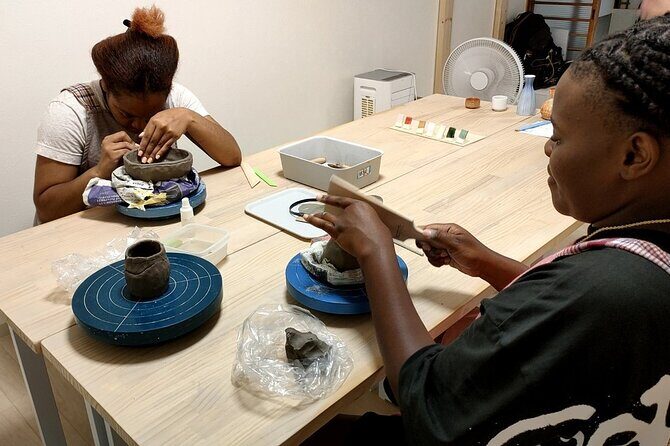
This is one of the clearest wins: the workshop is offered in English, Spanish, Catalan, and Japanese. Many craft classes stop at a few basic instructions. Here, the class is designed so you can understand the cultural explanation too.
You also get that benefit in a private setting. If you’re speaking Spanish or Catalan, you’re not forced to manage through a secondhand translation. That tends to make the experience feel more respectful and more relaxed.
If you’ve ever done a workshop where you nod along but can’t fully understand the “why,” you’ll appreciate that this one is explicitly multilingual.
Price and Value: Is $94.13 Fair for What You Get?
At $94.13 per person, this workshop is priced like a premium craft experience, and it doesn’t pretend otherwise. What makes it feel like good value is the combination of:
- private instruction
- material costs included
- firing fee included
- a set of items you receive as part of the souvenir
- and a real cultural component from Anna and Ryo
You’re not only paying for making something. You’re paying for the time, the teaching, and the finishing process (firing), which are the parts most people don’t think about when they compare it to cheaper DIY options.
What you should factor in:
- shipping isn’t included if you send your pottery home
- the timeline for shipping is about 1.5 months, which may affect when you want the items in your hands
If you want a hands-on activity that feels personal and culturally grounded, this price can work well. If you’re mainly chasing the lowest cost craft, you’ll probably find cheaper classes. But they usually don’t deliver the same private attention and built-in cultural explanation.
Atmosphere Matters: Walking Into a Local Osaka Pocket
I’d go out of my way for this part: the studio is in south Osaka, and it’s near local food shops. The walk from the station is described as a look at everyday Osaka that you won’t get by only bouncing between big-name areas.
That’s not a throwaway detail. When you spend two hours making something, you want to feel like your day has shifted gears. This workshop does that. You get a quiet, focused activity, but you still see the city in motion on the way there.
Who Should Book Ceramics Tocoton?
This workshop fits best if you want:
- a private, calm craft experience
- a meaningful souvenir tied to Japanese food culture
- instruction in English, Spanish, Catalan, or Japanese
- a chance to learn while you work, not just follow instructions
It’s also a good fit for beginners. The information says most people can participate, and the class is structured so you’re guided through the process.
If you’re traveling with someone and want a shared activity where you can both ask questions and work at your own pace, the private format is a real advantage.
Should You Book This Osaka Ceramics Workshop?
I’d book it if you want a ceramics experience that feels like a visit to a real workspace, not a production line. The big selling points are the private instruction, the language options, and the fact that you leave with an immediate souvenir plus a custom piece related to Japanese food culture.
Skip it if:
- you can’t wait for your pottery and shipping costs would be a dealbreaker
- you prefer high-energy, tourist-sightseeing style activities over slow, hands-on craft time
- you need a completely instantly wearable souvenir without any follow-up
If you’re the kind of person who likes learning by doing and appreciates a calm lesson with good conversation, this is a strong choice in Osaka.
FAQ
What can I make in this workshop?
You can choose one of three ceramic items: a sake set (small bottle and glass), a sushi set (sushi plate and chopstick holder), or a tea bowl (chawan).
How long is the workshop?
The class lasts about 2 hours.
Is this experience private?
Yes. It’s a private activity for only your group.
What languages are available for the class?
The workshop is offered in English, Spanish, Catalan, and Japanese.
What will I receive as souvenirs?
You receive a small sushi dish decorated with traditional-style glaze and a sakura-shaped chopstick rest made by Anna.
Is shipping included if I want my pottery sent home?
No. Shipping is not included, even though you can have your pieces sent home.
How long does shipping take?
It takes about 1 month and a half to ship your pottery.
What refreshments are provided?
You’re offered Japanese green tea, coffee, or water.
Where does the workshop start?
The meeting point is Teradachō Station, address listed as 2 Chome-3 Tennojichokita, Abeno Ward, Osaka, 545-0001, Japan.
Is the experience affected by weather?
Yes. It requires good weather, and if it’s canceled due to poor weather, you’ll be offered a different date or a full refund.
If you tell me your travel dates and which item you’re leaning toward (sake, sushi, or chawan), I can help you pick the best time slot and build it into a sensible Osaka half-day.