REVIEW · NAMBA
Private Nara Tour with Government Licensed Guide & Vehicle (Osaka Departure)
Book on Viator →Operated by Japan Guide Agency · Bookable on Viator
Nara is better when someone maps it. This private day trip from Osaka brings you a government-licensed English-speaking guide plus a private vehicle, so you spend the day between places instead of figuring out routes and timing. I especially like that the plan is customizable from the listed sites, and I like how the guide helps you connect the dots between giant temple icons and the quieter corners of Nara.
One thing to keep in mind: entrance tickets aren’t included, so your final total will rise once you add stops like Todai-ji, the museum, and the gardens. In my experience, the guides who lead these days can be flexible with pacing, and I saw that firsthand with guides like Hiro, Ichiro, and Taku.
In This Review
- Key points to know before you go
- Why this private Nara day feels easier than DIY
- Price and logistics: what $898.72 per group buys you
- Picking your Nara mix: temples, gardens, and old streets
- Todai-ji’s 15-meter Buddha and Nara Park’s deer moment
- Kofuku-ji and Yakushi-ji: pagodas and sacred geometry
- Gardens in a day: Isuien and Yoshikien’s pond, moss, and tea garden
- Mount Wakakusa and Naramachi: views and preserved merchant streets
- Nara National Museum: Buddhist art when you want a slower pace
- Should you book this private tour from Osaka?
- FAQ
- What’s included in the tour?
- How long is the private tour?
- Can I choose which sights to visit in Nara?
- Are entrance fees included?
- Is this tour private?
- How many people are in a group?
- Do you provide pickup from Osaka?
- Do I get a ticket on my phone?
- What’s the cancellation policy?
- What if I need a car seat or booster?
Key points to know before you go
- Private vehicle + licensed English guide: you get context, not just directions.
- Choose your mix of 3-4 major stops: temples, gardens, and old streets can match your pace.
- Todai-ji’s 15-meter Buddha anchors the day and sets the tone fast.
- Two garden styles: Isuien leans water-based, while Yoshikien splits into pond, moss, and tea-ceremony garden areas.
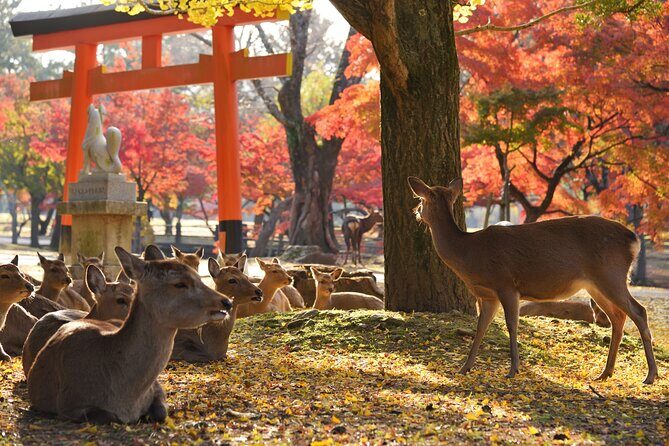
- Nara Park time is built in: deer-friendly sightseeing is part of the plan, not an afterthought.
- Guides adjust on the fly: Hiro and Ichiro both demonstrated real flexibility when preferences or energy levels changed.
Why this private Nara day feels easier than DIY
Nara has a way of pulling you in two directions: you want to see the big, famous sites, but you also want breathing room for gardens and streets. A private format helps you do both. You’re not locked into a crowded bus schedule, and you don’t have to sprint between places.
Your guide coordinates your personal route after you book, then meets you and drives you around with your group. That means the day feels calmer from the start, especially when you’re trying to fit multiple temple areas and landscaped gardens into an 8-hour window.
Also, you’re not limited to one “perfect” itinerary. Your guide can send recommendations if you’re unsure what to prioritize, and they’ll work around what you care about most.
You can also read our reviews of more guided tours in Namba


Price and logistics: what $898.72 per group buys you
This tour is priced at $898.72 per group (up to 2 people) for about 8 hours. If you’re traveling as a pair, that’s roughly $449 per person for a full private day with a licensed English guide and a private vehicle. If you’re traveling solo, the math changes because you still pay the group rate.
So where is the value? It’s in three places:
- You’re paying for time. A private vehicle and a guide reduce wasted transit and decision-making.
- You’re paying for interpretation. The day includes sites where the story matters, like Todai-ji and the pagoda-heavy temple complex at Kofuku-ji.
- You’re paying for flexibility. The guides on these tours (including Hiro and Ichiro in real examples) can adjust when plans need to change.
Budget a bit extra because entrance fees are not included. That includes stops like Todai-ji (home to the temple’s iconic 15-meter Buddha) and the museum, plus any garden admissions that apply. Lunch also isn’t included.
Picking your Nara mix: temples, gardens, and old streets
You’ll choose your stops from the options the tour offers. The “core” set commonly includes major temples and one or two calmer stops, usually landing around 3–4 sites during the walking time, with shorter breaks depending on what you pick.
Here’s a practical way to decide what to include:
- If you want the Nara highlights fast, prioritize Todai-ji + Kofuku-ji + a garden (Isuien or Yoshikien) plus Nara Park.
- If you love quieter atmosphere, swap one of the larger temple stops for Naramachi (the preserved merchant district) and add Mount Wakakusa for views.
- If your group likes art and context, make room for Nara National Museum so you get Buddhist art in a more indoor, slower setting.
Your guide will help you make those calls. That’s especially useful if your “must-sees” list doesn’t match how much walking feels good that day.
Todai-ji’s 15-meter Buddha and Nara Park’s deer moment

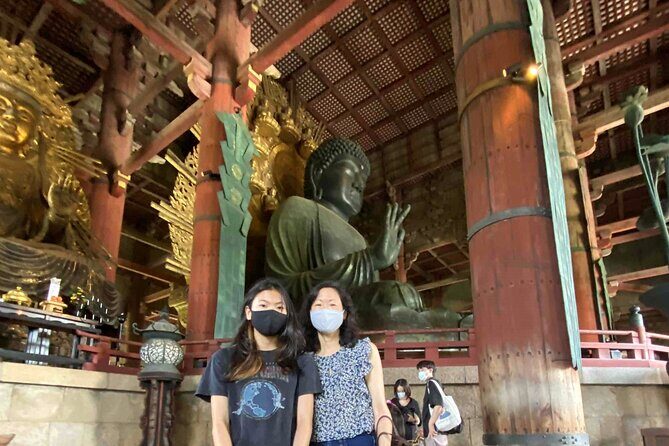
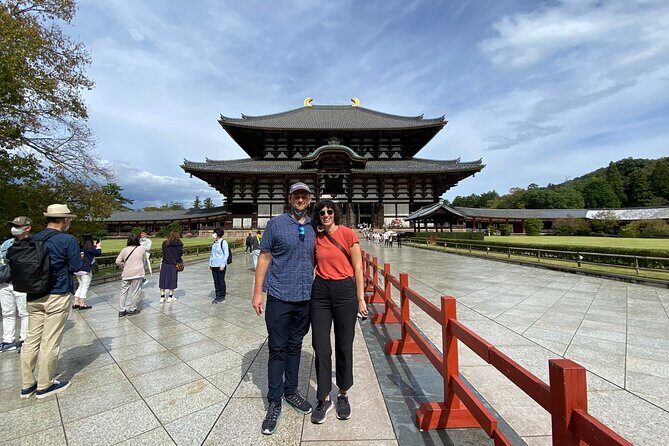
Todai-ji is the big first stop for a reason. You’ll spend about 30 minutes here, and it’s home to a Buddha that’s 15 meters tall. Even if you’ve seen temple photos, the scale is the kind of thing you feel in person. It’s the strongest “start” you can give to a Nara day, because it sets the religious and artistic context quickly.
One practical note: admission tickets aren’t included, so plan to pay for entry on site. If your group likes to take photos, you might need a little extra patience for shared viewing angles—this is one of the busiest sacred spots in the area.
Then the day moves toward Nara Park, where you get to see the city’s famous connection between reverence and everyday life. You’ll have about 30 minutes in the park, and deer are a central part of the experience—they may even bow to you.
This is a great segment to keep unhurried. Your guide can help you navigate around the flow of people and keep the focus on what you’re there for: a calm, fun end to a temple-heavy day.
Kofuku-ji and Yakushi-ji: pagodas and sacred geometry
If Todai-ji sets the emotional volume, Kofuku-ji and Yakushi-ji add structure to your understanding of Nara’s temple world.
Kofuku-ji takes about 45 minutes. It’s known for buildings of historic value, including a five-storied pagoda and a three-storied pagoda. Watching pagodas in person changes how you perceive them—your eye shifts upward fast, and you start seeing why these shapes became symbols. Like Todai-ji, entry can require paid admission, so remember that entrance fees aren’t included.
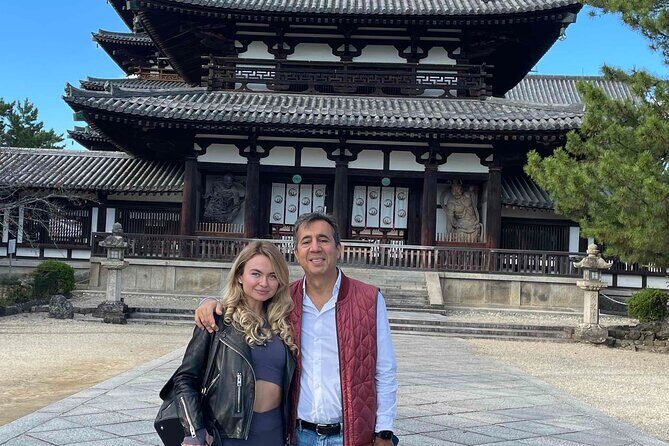
Next is Yakushi-ji, roughly 30 minutes. The standout here is the layout: a strictly symmetric design where the main hall and lecture hall sit on a central axis, flanked by two pagodas. That symmetry matters. It gives you an easy mental frame for understanding how the space was planned, and it makes the architecture feel purposeful rather than accidental.
If you like temples for their “design logic” instead of only their size, this pair of stops is an excellent match. It also breaks up the pacing so you’re not only in one style of sight.
You can also read our reviews of more private tours in Namba


Gardens in a day: Isuien and Yoshikien’s pond, moss, and tea garden
Gardens are where Nara stops feeling like a checklist and starts feeling like a place. You’ll have time for two garden options depending on what you choose.
Isuien Garden (about 30 minutes) is described as a garden founded on water. That’s your clue to expect a gentle, reflective pace. Gardens like this usually reward quiet time, so it’s best when your group isn’t trying to rush photos in every direction.
Then there’s Yoshikien (about 45 minutes), which is set up as three distinct gardens: a pond garden, a moss garden, and a tea ceremony garden. The value here is contrast. Instead of seeing one “pretty” space, you get multiple small scenes with different textures and moods.
Admission tickets are not included, so budget for entry if you pick these. The good news is that both gardens are time-friendly, so you can add them without breaking your day’s flow.
A tip for choosing between the two: pick Isuien if you want water-focused calm, and pick Yoshikien if your group likes variety in one stop.
Mount Wakakusa and Naramachi: views and preserved merchant streets
Two of the most different stops you can choose are Mount Wakakusa and Naramachi—and they work well as a balance.
Mount Wakakusa is about 1 hour and is known for views over Nara. It’s a grassy mountain, so it tends to feel more open and “airier” than temple yards. This is a great choice if you want one chunk of the day where you’re not under roofs and you can re-set your eyes before heading into more formal sacred space.
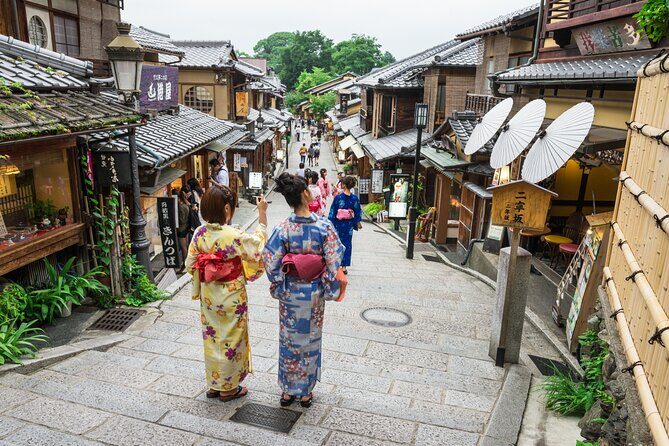
Then Naramachi gives you the historical “in-between” side of Nara. It’s the former merchant district, with traditional residential buildings and warehouses preserved and open to the public, and you’ll spend about 45 minutes here. This stop works like a cultural breather. You still see traditional architecture, but it’s not only about religion—it’s about how people once lived and traded in the area.
These two stops are also useful if your group includes different interests. One person can chase views, while another enjoys streetscape and architecture.
Nara National Museum: Buddhist art when you want a slower pace
If you’re the kind of person who likes to understand what you’re seeing (not just take pictures), you’ll likely appreciate Nara National Museum. It takes about 1 hour, and it displays Japanese Buddhist art.
It’s a smart addition on days when the outdoors feels busy or weather doesn’t cooperate. You’ll get a more controlled environment for context, and then your temple stops afterward can feel more connected to what you saw inside.
Admission tickets are not included, so plan for that cost if you choose it. If you have only a limited number of stops available for the day, museum time is often best when your group is curious rather than “temple tired.”
Should you book this private tour from Osaka?
I think this is a strong booking choice if you want a smooth Nara day with control. You’ll like it if you care about seeing big temple icons like Todai-ji’s 15-meter Buddha, but you also want space for gardens like Isuien and Yoshikien, plus time for Nara Park deer viewing.
Book it when:
- you’re traveling as a pair and want a private guide to make the day efficient
- your group has different interests, and you want your guide to balance temples, streets, and gardens
- you value flexibility (real examples include Hiro and Ichiro adjusting plans when circumstances changed)
- you want interpretation, not just a route
Skip it if you’re on a tight budget and you’re comfortable building your own day. With entrance fees added and the group rate being for up to two people, DIY can be cheaper. Still, if your priority is time, guidance, and fewer headaches, this private Osaka-to-Nara setup is easy to justify.
FAQ
What’s included in the tour?
You get a licensed local English-speaking guide, a customizable walking tour using selected sites, and a private vehicle. Pickup is offered, and you receive a mobile ticket.
How long is the private tour?
The duration is about 8 hours.
Can I choose which sights to visit in Nara?
Yes. After you book, a guide contacts you to plan a personalized tour. You can choose from the provided list of stops, and you can ask for recommendations.
Are entrance fees included?
No. Entrance fees are not included for the listed sights, and lunch is also not included.
Is this tour private?
Yes. It’s a private tour/activity, so only your group participates.
How many people are in a group?
The maximum number of participants per tour is 7. Pricing is per group (up to 2).
Do you provide pickup from Osaka?
Pickup is offered, and the tour departs from Osaka Prefecture.
Do I get a ticket on my phone?
Yes. Mobile ticketing is included.
What’s the cancellation policy?
You can cancel for a full refund if you cancel at least 24 hours before the experience’s start time. If you cancel less than 24 hours before, the amount paid is not refunded.
What if I need a car seat or booster?
There are limited car seats and booster seats. Rear-facing car seats are not available. If you need one, you must contact the provider directly.