REVIEW · NAMBA
Discover Real Osaka: A Cultural Walk with Food & Drink
Book on Viator →Operated by Yamamoto Travel · Bookable on Viator
Osaka tastes better with a local guide. Discover Real Osaka is a 4-hour cultural walk where you get street-food snacks like takoyaki and okonomiyaki, plus (optional) sake, while a local guide explains what you’re seeing in neighborhoods you’d otherwise zip past. I also love the lifetime access to the guide’s personal Google Map links, so the trip keeps paying off after you leave Osaka. The only real catch: it’s a walking tour, so good shoes matter.
This is run by Yamamoto Travel, and the feedback often points to guides like Mico Yamamoto when people talk about Osaka and Kyoto. The group stays small (max 9), you meet at Swissotel Nankai Osaka in Namba, and you finish near Dobutsuen-mae Station, which makes it easy to jump back onto the red line for your next stop.
In This Review
- Key points I’d highlight before you go
- Why this Osaka walk works: neons, lantern alleys, and real eating
- America-mura to Shinsaibashi: street style and the shopping “spine” of Namba
- Hozenji Yokocho and Dotonbori Tsuribori: lanterns, moss, and the Glico Running Man glow
- Kuromon Market: how “Osaka’s Kitchen” turns into your okonomiyaki plan
- DenDen Town plus Tower Knives: anime culture meets real-life kitchen tools
- Shinsekai: retro neon, Tsutenkaku views, and the feeling of old Osaka
- Nishinari street life: the real Osaka edge (only if your group wants it)
- Private-tour add-ons: Osaka Castle, ukiyo-e prints, Abeno Harukas, and Edo street recreations
- Price and value: what $78.38 buys you in the real world
- Logistics that actually help: Namba start, red-line finish, and shoes-first planning
- Who should book Discover Real Osaka (and who might not)
- Should you book this tour?
- FAQ
- How long is Discover Real Osaka?
- What’s the group size limit?
- Where does the tour start and end?
- What food and drink are included?
- Is pickup included?
- Is transportation included?
- Do the stops require paid admission?
- Can I cancel for a full refund?
Key points I’d highlight before you go
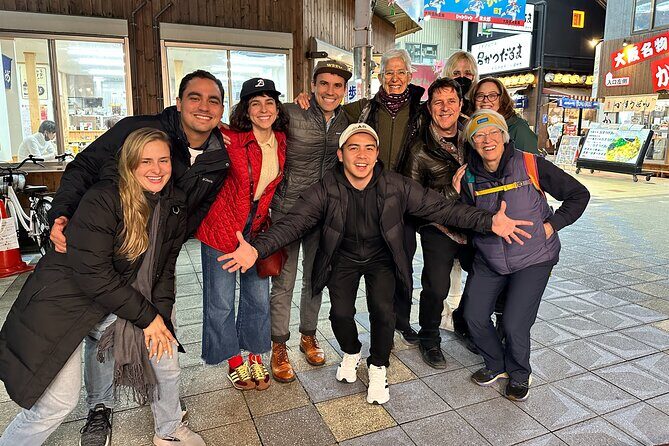
- Small group (max 9): less time herding and more time asking questions.
- Included food and drink: takoyaki, okonomiyaki, plus 1 sake and 1 non-alcoholic drink.
- Lifetime Google Map access: you get a long tail of tips for Tokyo, Kyoto, Osaka and beyond.
- Anime and gadgets in DenDen Town: shop streets built for geek culture and practical browsing.
- Tower Knives stop: a short detour for Japanese kitchen-knife know-how and demos.
- Optional stretch into Nishinari: a more raw slice of Osaka for groups who want it.
Why this Osaka walk works: neons, lantern alleys, and real eating
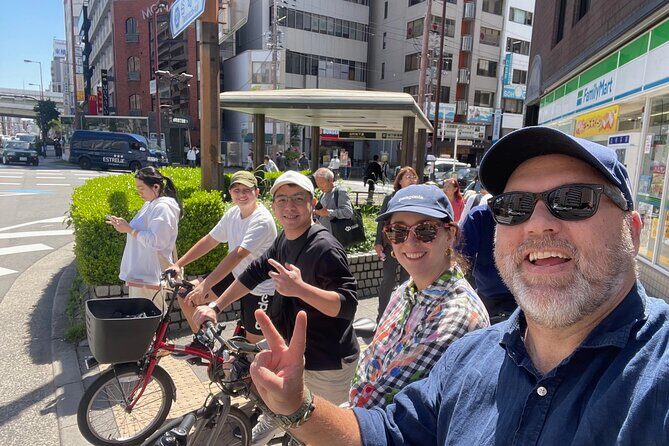
This tour is built like a good Osaka day: quick orientation first, then you move through neighborhoods that show different sides of daily life. You’ll spend time where people actually go—shopping streets, food markets, and the kind of side lanes you’d miss if you only stuck to big landmarks.
The big win is that food isn’t tacked on at the end. Snacks are scheduled early enough that you can use them to stay energized, not stuffed. And the guide’s local stories give you something to look for—signs, street layouts, and small details—so the walk feels like more than a checklist.
Finally, the format is practical. It’s designed for a group size that won’t feel like a slow-moving train. It’s also flexible: there are duration options (4, 5, or 6 hours), and train or taxi rides can be arranged on request (at your own expense) if you need to reset the pace.
You can also read our reviews of more walking tours in Namba
America-mura to Shinsaibashi: street style and the shopping “spine” of Namba
You start your Osaka day in Amemura, a district locals refer to as America Mura. This is where the city’s youth culture shows up in street fashion, street art, and music vibes. The stop is only about 20 minutes, so think of it as a fast “what kind of Osaka are we in?” signal.
What I like about leading off here is how it frames the rest of the walk. After Amemura, you’ll understand why the signage, colors, and shop types in nearby areas feel the way they do. It’s less about a single must-see spot and more about reading the neighborhood.
Then you hit Shinsaibashi, Osaka’s well-known shopping street. Again, you’re not there to shop like a maniac. You’re there to see how the area flips from day-to-evening energy and how shopfronts and side streets shape foot traffic. The 20-minute pace is enough to get the feel, without dragging you through every store.
Watch-out: if you hate crowds, Osaka’s shopping streets can feel like a lot. The time here is short, but the street environment is part of the experience, not something you can fully avoid.
Hozenji Yokocho and Dotonbori Tsuribori: lanterns, moss, and the Glico Running Man glow
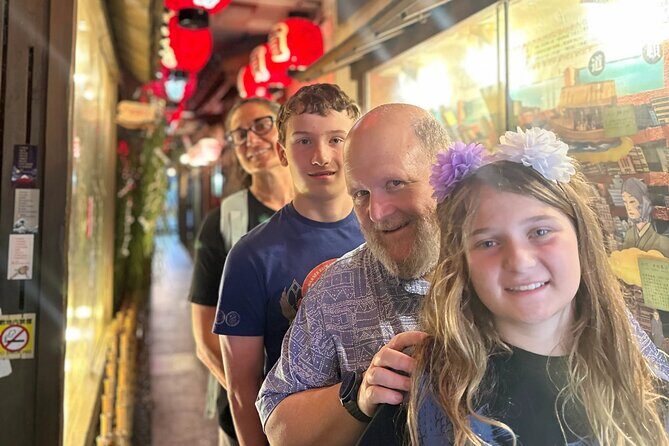
After the shopping street vibe, the tour slows down—literally. At Hozenji Yokocho, you step into a lantern-lit alley that feels quieter and older than the surrounding streets. The area sits next to a moss-covered Buddha, which is one of those details you only notice when someone points it out.
Why it’s worth your time: it shows Osaka as a city that keeps small, spiritual corners alive right next to mainstream commercial areas. This isn’t a museum moment—it’s a live neighborhood lane.
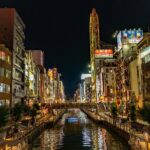
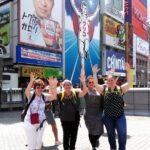
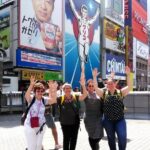
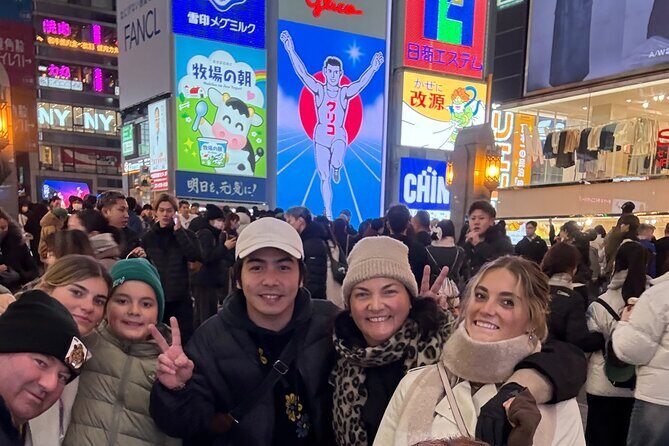
Then you move to Dotonbori Tsuribori, the part of Osaka that people come for when they want lights, food stalls, and the feeling that the city is always mid-performance. The iconic Glico Running Man sign is there for a reason: it’s a visual shortcut to the whole Dotonbori experience. If you’ve ever seen photos, this is where that mood comes from.
Practical note: Dotonbori is photo-friendly, but it’s also food-stall close-quarters. Plan to move with the flow and don’t expect wide open space to stop and stare.
Kuromon Market: how “Osaka’s Kitchen” turns into your okonomiyaki plan
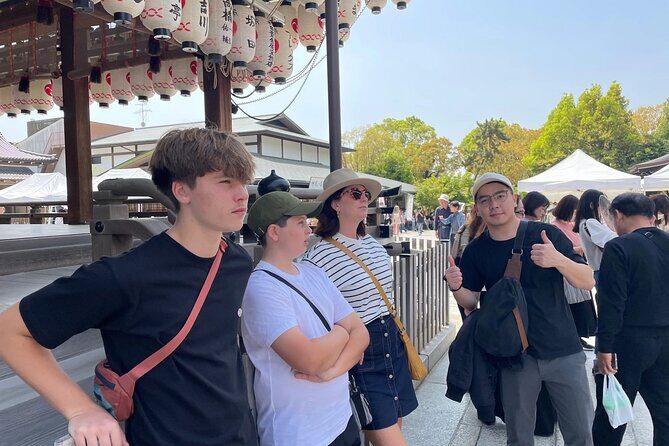
Next comes Kuromon Market, nicknamed Osaka’s Kitchen. It’s been serving locals and visitors for over 200 years, so you’re walking through something that long predates the modern tourism boom. The tour doesn’t try to cover everything; it targets one of the best ways to experience the market: eating.
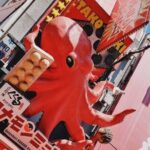
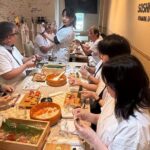
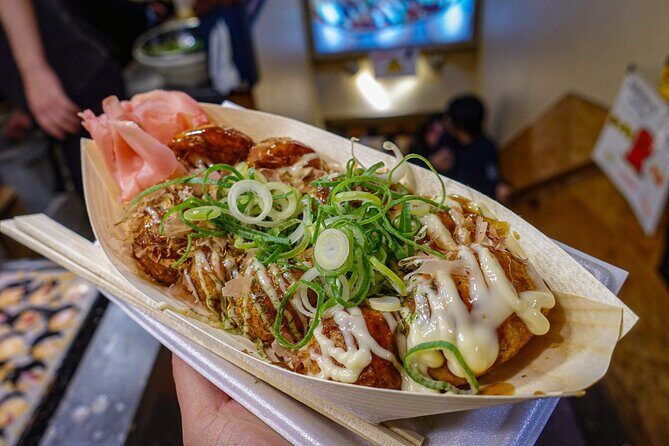
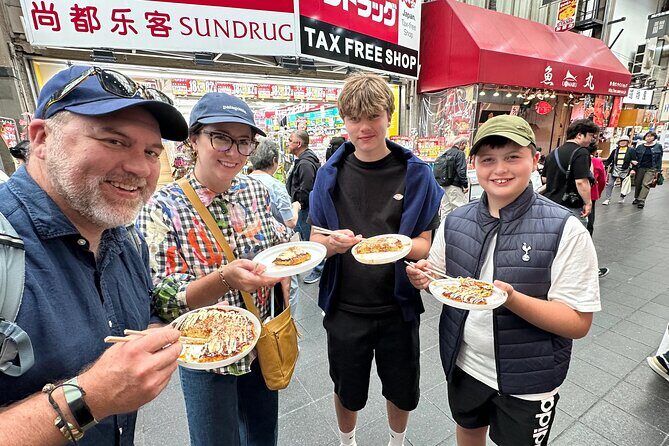
You’ll head straight to the guide’s favorite okonomiyaki spot, where you’ll taste a savory pancake-style dish. And you’ll also get takoyaki as part of the included snacks. Together, they’re a smart pair: takoyaki is fast street comfort, while okonomiyaki is thicker and more filling—perfect mid-tour fuel.
Why I think this stop is a good value: markets can become overwhelming if you’re choosing blindly. With a guide, you avoid the guesswork and you get food that fits what you’ve been seeing outside.
Consideration: Kuromon is active. If you need a very slow, quiet experience, this part may feel intense for a few minutes. You’re there for about an hour, so it’s manageable.
DenDen Town plus Tower Knives: anime culture meets real-life kitchen tools
A lot of Osaka tours miss this angle, but the tour includes DenDen Town, Osaka’s area for anime, gaming, and quirky gadgets. This is the kind of place where browsing is the activity. You’ll pass colorful shops and energetic street scenes where you can actually compare product styles and shop specialties.
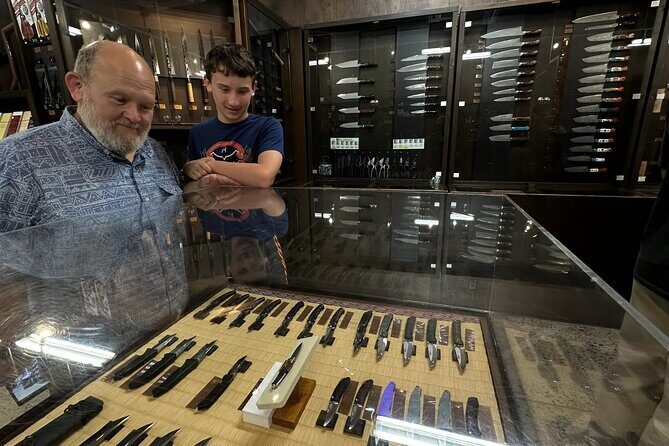
Then there’s a stop near Tsutenkaku Tower at Tower Knives, a small knife shop known for high-quality Japanese kitchen knives. The staff are described as friendly and knowledgeable, and you can often see a live demonstration. Even if you’re not planning to buy a knife, it’s a fun cultural contrast: same neighborhood energy, but the focus is craftsmanship and practical tools.
Why this works: it makes the day feel more like Osaka. One moment you’re surrounded by anime merchandise, the next you’re learning how Japanese cooks think about sharpness and precision. It’s variety without feeling random.
You can also read our reviews of more food & drink experiences in Namba

Shinsekai: retro neon, Tsutenkaku views, and the feeling of old Osaka
From DenDen Town and knife country, the tour heads into Shinsekai, a district that brings back retro Osaka vibes. The tour time here is around 30 minutes, and the highlight is the area’s neon-lit streets, nostalgic eateries, and the iconic Tsutenkaku Tower presence.
I like Shinsekai because it’s a different kind of “photo moment.” Dotonbori sells spectacle; Shinsekai sells character. The streets feel like they’re trying to remember their own past while still serving current locals and late-night visitors.
Quick tip: if you’re hungry (which you might be after all that walking), Shinsekai is where you can keep exploring after the tour ends.
Nishinari street life: the real Osaka edge (only if your group wants it)
The tour may include Nishinari (near Nishinari Dobutsuen-mae Station) for about 30 minutes, especially if the group wants to go deeper. This area is described as real, edgy, and unapologetic—locals even call it the city’s underworld.
This stop is valuable for perspective. It shows you Osaka beyond the most tour-friendly lighting and signage. But it’s also a reminder that travel is about context, not just aesthetics. Keep things respectful, stay aware, and don’t treat neighborhoods as theme parks.
Who should consider skipping: if your ideal day is mostly polished sightseeing, you might prefer staying with the earlier neighborhoods and saving Nishinari for later, on your own terms.
Private-tour add-ons: Osaka Castle, ukiyo-e prints, Abeno Harukas, and Edo street recreations
If you choose a private tour, you can add more major sights that aren’t listed for the standard group version. This is where the tour can stretch into a 5- or 6-hour day, depending on what you pick.
Here are the private options:
- Osaka Castle: A major landmark tied to Toyotomi Hideyoshi’s ambition to unify Japan. You’ll spend about 30 minutes seeing the castle above its massive stone walls.
- A small museum with ukiyo-e woodblock prints from the Edo period, including an authentic print of The Great Wave off Kanagawa.
- Abeno Harukas: the tallest skyscraper in Japan (300 meters high), with observation deck views over Osaka. On clear days, you can even see far away landmarks from the top.
- An Edo-era street recreation museum where you can walk through life-size Osaka street scenes, showing how people lived, shopped, and dressed centuries ago.
Why private add-ons can be worth it: you’re not forced to choose between food-focused Osaka and classic sights. A private guide can adjust the mix around your interests—especially if you want both street culture and big viewpoints without feeling rushed.
Price and value: what $78.38 buys you in the real world
At $78.38 per person, this isn’t a “cheap and cheerful” option, but it also isn’t overpriced for what you actually get.
Here’s the value math that matters:
- You get a small-group guide (max 9) for about 4 hours.
- You receive snacks: takoyaki and okonomiyaki.
- You also get drinks: 1 alcoholic (sake) plus 1 non-alcoholic, with the choice belonging to you.
- You get lifetime access to the guide’s personal Google Map links and handpicked itineraries for Tokyo, Kyoto, Osaka and beyond.
You’re also saving time. Picking food in Osaka without help can turn into “which shop is the right shop?” The tour reduces decision fatigue and gets you to food stops that match what the city is known for.
What’s not included: transportation costs. It’s a walking tour, though train or taxi rides can be arranged upon request at your own expense. So if you’re planning a day with lots of transfers anyway, budget a little for transit.
Logistics that actually help: Namba start, red-line finish, and shoes-first planning
You meet at Swissotel Nankai Osaka (Namba) at 10:00 am. For the standard group tour, hotel pick-up isn’t included, so you’ll want to arrive at the meeting point on time and meet the guide there.
The tour ends near Dobutsuen-mae Station, close to Shinsekai, and the area is convenient for getting back onto the Midosuji Line (red line). That matters because it turns the end of the tour into an easy launchpad for the rest of your Osaka day.
And since this is a walking plan, treat comfortable footwear like a non-negotiable. You’ll cover several neighborhoods in a half-day window, and street life moves at human speed.
Who should book Discover Real Osaka (and who might not)
This is a strong fit if:
- You’re a first-time visitor who wants a fast, street-level orientation.
- You care about Osaka food (takoyaki, okonomiyaki, and sake option).
- You like mixing mainstream icons (Dotonbori, Tsutenkaku area) with smaller lanes (Hozenji Yokocho).
- You’re curious about anime shopping culture in DenDen Town and craftsmanship at Tower Knives.
- You like getting a personalized map for after the tour, not just a one-day experience.
It might be less ideal if:
- You want mostly indoor sights with minimal walking.
- You dislike the idea of possibly adding Nishinari depending on the group’s preference.
- You’re traveling with limited flexibility for moving between neighborhoods.
Should you book this tour?
I’d book it if you want the best “use your time well” version of Osaka: multiple neighborhoods, real street food, and a guide who explains how all those streets connect. The small group size and the included snacks make it easier to relax and keep walking instead of constantly searching for the next meal.
I’d skip it if you already have a solid Osaka food plan and you’d rather build your own route without any guide. This tour is at its best when you want help choosing and a local eye turning the city into an enjoyable story.
FAQ
How long is Discover Real Osaka?
The tour runs about 4 hours on average. There are also flexible duration options listed as 4, 5, or 6 hours.
What’s the group size limit?
This experience has a maximum of 9 travelers.
Where does the tour start and end?
You start at Swissotel Nankai Osaka, Namba and finish near Dobutsuen-mae Station (close to Shinsekai).
What food and drink are included?
You get snacks including takoyaki and okonomiyaki. You also get 1 alcoholic drink (sake) and 1 non-alcoholic drink, and the choice is yours.
Is pickup included?
Pickup is offered, but hotel pick-up is not included for group tours. For group tours, you meet your guide at the set meeting point.
Is transportation included?
It’s a walking tour, and transportation costs are not included. Train or taxi rides can be arranged upon request, but at your own expense.
Do the stops require paid admission?
The listed stops in the experience include free admission.
Can I cancel for a full refund?
Yes. You can cancel for free up to 24 hours before the experience start time for a full refund.