REVIEW · NARA
Nara Private Tour: Flexible Pickup from Kyoto, Osaka, or Nara
Book on Viator →Operated by Japan Wonder Travel · Bookable on Viator
Nara has a way of slowing you down. This private tour pairs professional local guidance with an easy, flexible flow through Nara’s biggest hits, from the deer-filled park to major temples. I really like that the guide plans the most efficient route for the stops you choose, so you spend less time figuring things out and more time looking closely.
Two things I’m especially happy about: first, the local storytelling. In different guides’ styles (Toshi, Kiyoto, and Chiko came up in real experiences), the common thread is clarity and flexibility, plus genuine pride in the city. Second, the big-ticket sights feel efficient, not rushed, especially Todai-ji and Kasuga Grand Shrine. Even when you’re not a temple expert, you get a sense of why each place matters.
One possible consideration: entrance fees are mixed. Some stops list admission as free, while others are not included, so the final total can climb depending on which temples you pick. Also, you’ll do a moderate amount of walking, so comfortable shoes matter.
In This Review
- Quick hits: what makes this Nara private tour work
- Why Nara feels worth a private day, not a quick stop
- Pickup options and the JR Nara Station meeting point (how your day starts)
- Choosing 3 to 4 sites: the smart way to see Nara without burning out
- Naramachi old town stroll: machiya lanes, shops, and an easy start
- Nara Park and deer time: the famous experience, with a real payoff
- Todai-ji and the Great Buddha: why this hall is a must
- Shōsōin: a short museum-style stop with imperial Nara-period artifacts
- Kasuga Grand Shrine: lanterns, deer, and an outdoorsy mood
- Heijō Palace site: reconstructions that help you picture court life
- Yakushi-ji and Hōryū-ji: pagodas, architecture, and the UNESCO wood story
- Yakushi-ji
- Hōryū-ji
- Guide quality matters: Toshi, Kiyoto, and Chiko’s impact on the day
- Price and value: $131.38 can be a bargain or a math problem
- Practical tips so your Nara day runs smoothly
- Should you book this Nara private tour?
- FAQ
- Where is the meeting point for this tour?
- Is this tour private or shared?
- How long does the Nara private tour take?
- Can I choose which sites to visit?
- Are entrance fees included?
- Is pickup offered from Kyoto or Osaka?
- What kind of walking should I expect?
- Will the tour run in bad weather?
- Is there free cancellation?
Quick hits: what makes this Nara private tour work
- Flexible stop selection: you choose 3 to 4 must-see spots, so the day fits your interests
- Local guide focus: guides are described as friendly, patient, knowledgeable, and good at adjusting on the fly
- Deer and temples in one loop: Nara Park plus major temple stops are grouped in a practical way
- Craft and imperial history: Shosoin is a short stop with serious Nara-period artifacts
- Choice-based UNESCO time: you can include Hōryū-ji to see the world’s oldest wooden buildings
- Rain-or-shine planning: the route keeps moving even when weather shifts
Why Nara feels worth a private day, not a quick stop
Nara is Japan, but calmer. You get temples, shrines, and old streets without the sense that you’re constantly sprinting between crowds. The big draw here is that Nara tells a clear story: the early capital era, the religious heart of the region, and everyday city life in between.
In a group tour, you can end up following a script. Here, you’re steering. I like that you’re not locked into every single site. Instead, you pick several must-sees, and the guide shapes the route around them. That choice matters in Nara because some places are outdoors (think deer and shrine grounds), while others are more time-sensitive (you’ll want to plan your museum-style viewing and temple hall time well).
This is also a great match if you’re staying in Kyoto or Osaka. The tour highlights are close enough that you can do a full day, and far enough that you’ll feel you actually left your hotel bubble behind.
You can also read our reviews of more private tours in Nara
Pickup options and the JR Nara Station meeting point (how your day starts)
This is set up as a private tour, meaning it’s only your group. That changes everything about pacing. You can ask for small course corrections without feeling like you’re slowing down a bus full of people.
The tour offers pickup from Kyoto, Osaka, or Nara, and it begins at JR Nara Station (Sanjohonmachi area). Your experience ends back at the meeting point, which is practical because JR Nara Station is one of the easiest bases for transport later on.
If you’re value-minded, this start point helps. You’re not hunting down remote meeting locations after a long day of walking. You also have an easy exit strategy if you want to tack on dinner nearby or take a train back with zero stress.
Choosing 3 to 4 sites: the smart way to see Nara without burning out
The tour is built around your choices. You pick 3 to 4 must-see spots from the available list, which gives you control over how intense the day feels.
That matters because Nara can go long fast. Todai-ji alone can eat up time if you linger on details. Kasuga Grand Shrine has a lot to look at, and the grounds are outdoors. If you add multiple temple areas without a plan, you can end up doing the exact thing this tour tries to prevent: standing in line, then walking hard, then running out of daylight.
With the guide shaping the order and pacing, you can mix “big monuments” with “short but meaningful” stops. For example, Todai-ji is a major anchor, while Shosoin offers a concentrated dose of historical artifacts in a shorter window.
A practical approach I’d use: pick one major wow-factor temple (Todai-ji or Hōryū-ji), one shrine stop (Kasuga), and one cultural/history add-on (Shosoin or Heijō Palace). Then decide if you want the day to lean more nature (deer park) or more architecture (pagodas and halls).
Naramachi old town stroll: machiya lanes, shops, and an easy start
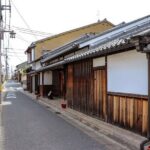
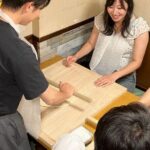
Before the major religious sites, you get a stroll through a well-preserved old town area full of traditional machiya townhouses. This kind of stop is underrated on temple-heavy days because it gives you a rhythm break.
What I like about starting here is that it sets the tone for Nara as a living place, not only a museum. You’ll see boutique shops and cozy cafés, which makes it a good place to grab a drink or snack if you need energy before you hit the walking.
You should also treat this as your “recovery portion.” If your legs feel fine, linger. If you’re tired from travel, you can keep it lighter and save your stamina for the bigger sites.
Nara Park and deer time: the famous experience, with a real payoff
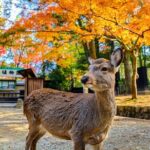
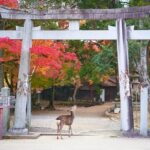
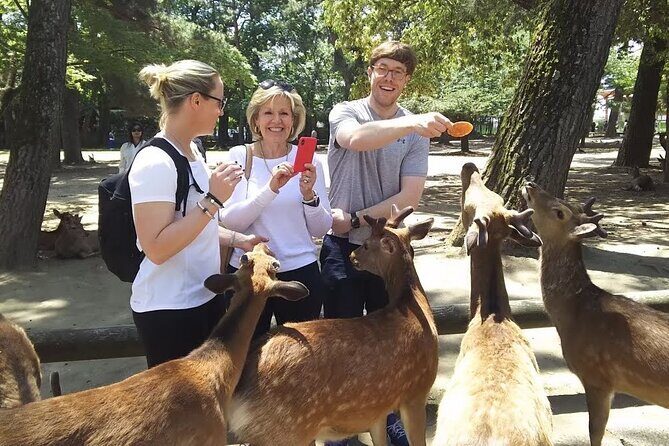
Nara Park is where the deer steal the show. It’s also where you get a natural hub for the bigger sights nearby, since Todai-ji and Kasuga Taisha sit within the same sightseeing orbit.
This stop is short on the clock (about 15 minutes listed), but it’s long on atmosphere. Even if you think you’ve seen deer photos before, being there changes things. They move with ease, and the park has that “you’re in the middle of daily life” vibe.
If you want a tip that actually helps: bring patience. Deer are not museum exhibits. If one wanders into your path, you’re not stuck. You just wait for the moment and keep your walking pace steady.
And yes, you’ll likely feel relaxed seeing them close up. People mention how tame the deer are and how playful they can get, which is exactly why this stop works for families and first-timers.

Todai-ji and the Great Buddha: why this hall is a must
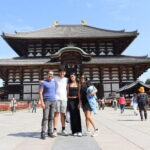
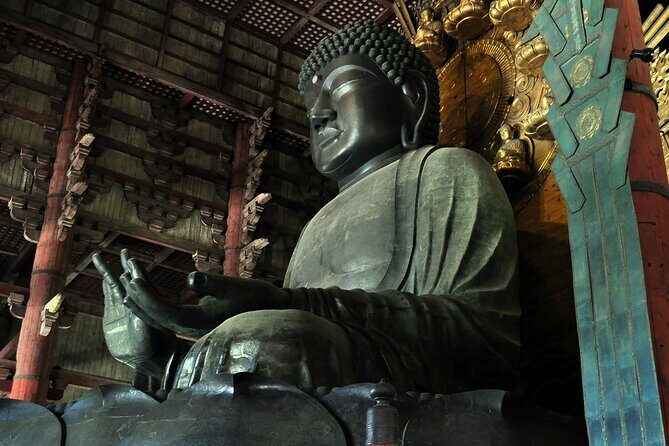
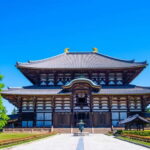
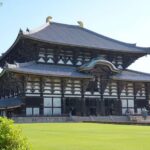
Todai-ji is the headliner. It’s home to the Great Buddha (Daibutsu), and the hall that houses it, the Daibutsuden, is known as one of the largest wooden buildings in the world.
This is the kind of place where your brain needs a minute. The scale hits fast, and then you start noticing the details. I like that the guide can help you focus on what to see inside the hall rather than letting you wander without a plan.
Time-wise, you’re looking at about 1 hour 30 minutes, and that’s a good length. It gives you room for the first shock factor, then a second pass where you actually take in the structure and setting.
Admission is listed as free for you and the guide at this stop, which is another small value win. You’ll still want to budget time and attention, because Todai-ji is the kind of place where rushing ruins the effect.
Shōsōin: a short museum-style stop with imperial Nara-period artifacts
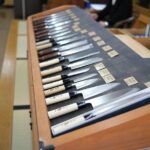
Shōsōin is a treasure house for imperial artifacts from the Nara period, including items connected to Silk Road influence. The key here is that it’s not a long detour. It’s listed at about 15 minutes, which makes it easy to fit without exhausting the day.
What I find useful about adding Shōsōin is that it gives context. Without it, a temple day can feel like you only saw buildings. With it, you start to understand the human world behind the religious setting: textiles, musical instruments, and preserved objects tied to an earlier era of power and culture.
If you’re choosing your 3–4 stops and you’re the type who likes understanding the “why,” Shōsōin is a smart pick. It’s short, but it adds meaning.
Kasuga Grand Shrine: lanterns, deer, and an outdoorsy mood
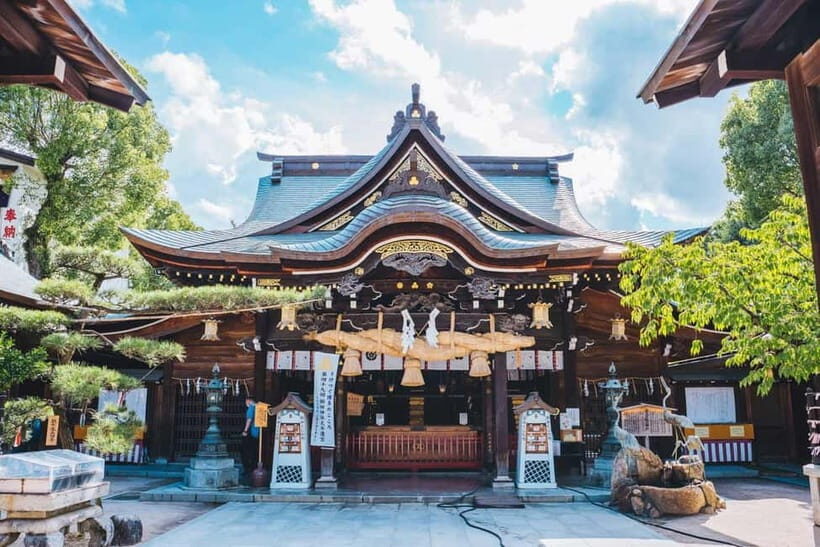
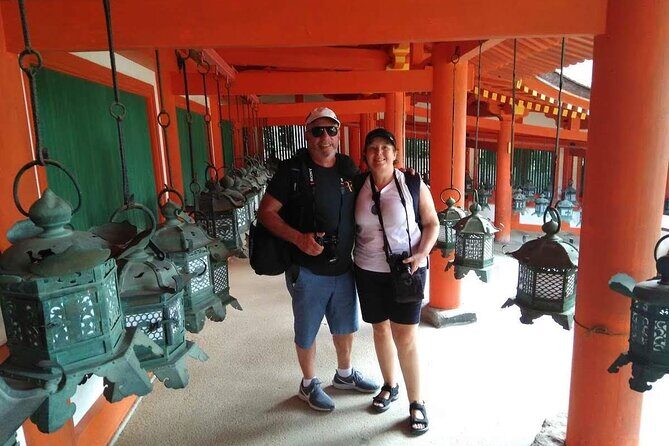
Kasuga Grand Shrine is famous for its thousands of lanterns. You can see stone and bronze lanterns, and the area is tied to deer as messengers of the gods. The setting also includes an ancient forest feel, so this stop has that calm, walkable mood.
The time listed is about 1 hour 30 minutes, but this is the kind of place where time can stretch naturally. The lanterns give you a reason to look up and around. Even if you’re not a shrine person, the sheer visual rhythm of it can do the job.
One important value detail: admission at this stop is listed as not included. That doesn’t make it a bad choice. It just means your budget needs flexibility based on which non-free sites you include.
Heijō Palace site: reconstructions that help you picture court life
Heijō Palace Site Historical Park gives you a different angle on Nara. Instead of focusing only on religious buildings, you step into the former imperial palace grounds and see reconstructions such as the Audience Hall.
This is about imagination aided by structure. Even if you know nothing about early Japanese court life, seeing reconstructions helps you place what you’ve been looking at into a broader historical timeline.
The time listed is about 1 hour 30 minutes, and the admission is not included. Still, if you want a change of pace from the temple rhythm, this is a good counterweight.
Yakushi-ji and Hōryū-ji: pagodas, architecture, and the UNESCO wood story
If your “must-see” list leans architecture and long-term history, you’ll likely enjoy these.
Yakushi-ji
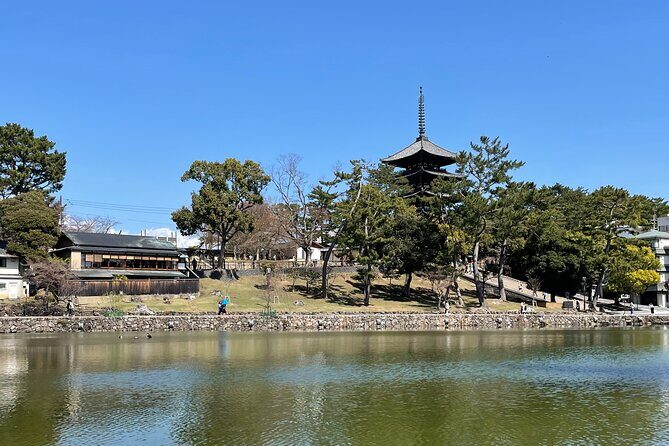
Yakushi-ji is known for twin pagodas and its architectural beauty. It’s associated with Yakushi Nyorai, the Buddha of healing, and the atmosphere is described as serene and spiritual. The stop listed is about 30 minutes, and admission is not included.
This one works well as a mid-day or late-day stop because it’s shorter. You get a meaningful temple without turning your day into a temple marathon.
Hōryū-ji
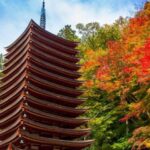
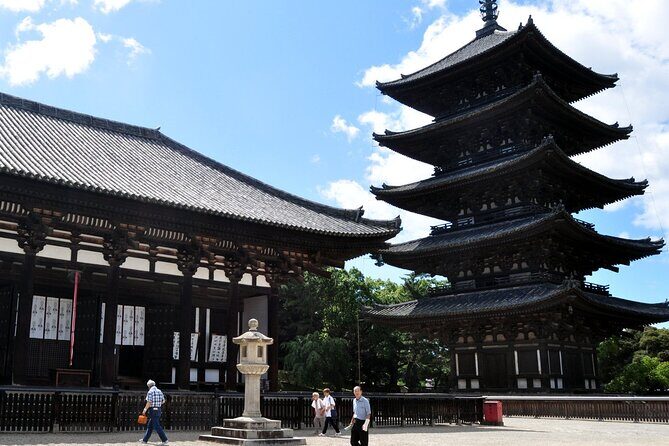
Hōryū-ji is UNESCO-listed and famous for the world’s oldest wooden buildings. The complex includes a striking five-story pagoda and a Main Hall, and it’s associated with Prince Shotoku.
You get about 2 hours here, and it’s also a non-free admission stop. It’s the kind of visit where you’ll want that time. The difference between “seeing” and actually appreciating older wooden architecture comes from looking slowly, not speed-walking.
If you only choose one UNESCO stop, Hōryū-ji is a strong candidate. It adds a global-level historical angle to a day that’s already deep in Japanese early capital history.
Guide quality matters: Toshi, Kiyoto, and Chiko’s impact on the day
A private tour rises or falls on the guide. The strongest common thread from real experiences is that these guides are practical, friendly, and good at adjusting.
I noticed a pattern in the way guides were praised:
- Toshi brought detailed cultural context and even a personal touch around holiday time, making the day feel special rather than scripted.
- Kiyoto was flexible and able to adapt to needs on the fly, which is exactly what you want when someone in your group has different energy levels.
- Chiko was described as friendly and patient, with a knack for packing in a lot efficiently.
Even if you don’t get the same guides, the key is what they represent: someone who knows how to structure the day so you don’t just “check boxes.” Instead, you understand how the stops connect, and you get help with what to focus on during the limited time you have.
Also, because you have a private group, you can ask questions without feeling rushed. If you’re curious about why deer show up where they do, or how Nara became the first permanent capital, you’re more likely to get real answers here than in a quick hit tour.
Price and value: $131.38 can be a bargain or a math problem
The listed price is $131.38 per person for a private experience, with tours often booked about 98 days in advance. There’s also mention of group discounts and a mobile ticket.
Here’s the honest value breakdown:
- You’re paying for route planning, guided interpretation, and time efficiency.
- You’re not paying for every entrance automatically. Some stops list admission as free (Nara Park, Todai-ji, Shōsōin), while others list admission as not included (Kasuga Grand Shrine, Heijō Palace site, Yakushi-ji, Hōryū-ji).
- Meals and drinks for you and the guide aren’t included.
- Public transportation fares for you and the guide also aren’t included, and private transportation is optional with an extra fee.
So the value is best if you use the guide for exactly what they’re good at: selecting the right mix of sites and moving efficiently between them. If you already plan to buy tickets and navigate temples solo, you might not feel the benefit as much.
But if you want a smoother day with cultural explanations and a practical itinerary built around your interests, the price starts to make sense. Especially because Nara’s top sights are grouped in a way that rewards good sequencing.
Practical tips so your Nara day runs smoothly
- Wear comfortable walking shoes. The tour includes a moderate amount of walking, and many highlights are outdoors.
- Expect the tour to run rain or shine. Have a compact rain layer ready.
- Use the stop choice wisely. If you love nature, lean toward Nara Park and shrine grounds. If you love history, consider Heijō Palace and Shōsōin. If you love architecture, prioritize Hōryū-ji and Yakushi-ji.
- Be ready for mixed admission. Some stops are free, others are not included, so don’t assume the tour price covers everything.
- If you want to reduce stress, treat Nara Park and shrine areas as your slower portions. You’ll naturally pause more when deer and lanterns are involved.
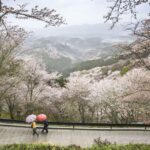
One extra note from real experiences: some versions of days have added nature viewpoints and garden time beyond the core temple list, like spots such as Mt. Wakakusa and Isuien Garden. If those are on your wishlist, ask whether they can fit into your chosen 3–4 stops.
Should you book this Nara private tour?
Book it if you want a guided, choice-based Nara day with high-impact sights. It’s especially worth it for first-timers who want Todai-ji and Kasuga without feeling lost, and for anyone who likes a guide who can adjust pacing and keep the day efficient.
Skip or reconsider if you’re trying to minimize extra costs from entrances, since not all stops are free. Also, if you hate walking, the moderate walking requirement could feel like a lot once you add multiple temple grounds.
If your goal is a thoughtful Nara visit that blends major monuments with context, this private format is a strong match. You’ll spend less time figuring out logistics, and more time actually seeing what makes Nara different.
FAQ
Where is the meeting point for this tour?
The tour starts near JR Nara Station at Sanjohonmachi, Nara, and it ends back at the same meeting point.
Is this tour private or shared?
This is a private tour/activity, so only your group participates.
How long does the Nara private tour take?
It runs about 4 to 8 hours (approx.), depending on which stops you choose.
Can I choose which sites to visit?
Yes. You choose 3 to 4 must-see spots from the listed options.
Are entrance fees included?
Some stops list admission as free (Nara Park, Todai-ji, Shōsōin). Other stops list admission as not included (such as Kasuga Grand Shrine, Heijō Palace site, Yakushi-ji, and Hōryū-ji). The tour also notes entrance fees are not included for you and the guide.
Is pickup offered from Kyoto or Osaka?
Pickup is offered with flexible pickup options from Kyoto, Osaka, or Nara.
What kind of walking should I expect?
The tour includes a moderate amount of walking, so wear comfortable walking shoes.
Will the tour run in bad weather?
Yes. The tour takes place rain or shine.
Is there free cancellation?
Yes. You can cancel up to 24 hours in advance for a full refund.