REVIEW · NAMBA
Osaka 8hr Private Tour with Government-Licensed Guide
Book on Viator →Operated by Japan Guide Agency · Bookable on Viator
Osaka is more fun when someone maps your day. This private 8-hour walking tour pairs a government-licensed English guide with a flexible plan of 3–4 stops, so you can focus on what you actually want. I especially like the built-in local-food stops near Dotonbori and the way your guide helps you move through big sightseeing areas without wasting time. The one thing to keep in mind is that it’s still a walking day, and several major sights charge admission that isn’t included.
In the reviews, I noticed how much the guide matters. One standout experience was led by Nori (Norifumi Kamon), who was described as friendly, energetic, and well-prepared with an itinerary that helped people see places they would probably miss on their own. On the flip side, a family tour note mentioned that the guide could feel a bit uncertain around certain points, and that some visitors wanted a bit more depth on the background story at each stop. That’s a useful reminder: if history is your thing, ask for it early.
In This Review
- Key highlights worth planning around
- How the private format keeps your Osaka day on track
- Picking 3–4 stops: the best way to avoid a rushed day
- Dotonbori District: your easiest win for Osaka street food
- Osaka Castle: the landmark stop that benefits from a guide
- Sumiyoshi Taisha: a calmer spiritual contrast in the middle of the day
- Shitennoji Temple: one of the oldest temple experiences you can place on a walking route
- Shinsekai: nostalgia streets and Tsutenkaku Tower vibes
- Umeda Sky Building: when you want city views, not just street walking
- Kuromon Market: a practical, low-stress food shopping stop
- Shopping streets: Doguyasuji tools and Shinsaibashi-suji style
- Sennichimae Doguyasuji Shopping Street (kitchen tools)
- Shinsaibashi-suji Shopping Street (the big arcade)
- National Museum of Art, Osaka (NMAO): a short stop for art and architecture
- Keitakuen Garden: the tiny nature break near Tennoji Park
- Price and value: what you’re really paying for
- Who this Osaka private walking tour suits best
- Should you book this Osaka private tour?
- FAQ
- How long is the Osaka private walking tour?
- Is this tour private or shared with other groups?
- How many stops can I choose?
- Are entrance fees included for the sights?
- Will there be pickup, and how does meeting work?
- What language is the guide?
- Can I cancel for a full refund?
Key highlights worth planning around
- Government-licensed English guide: you get someone trained to guide with real local context
- Choose 3–4 sites: your day stays focused instead of turning into a rushed checklist
- Dotonbori + Kuromon options: easy access to Osaka-style street food and market shopping
- Iconic landmarks: Osaka Castle, plus major temple and shrine choices
- Shopping streets on the route: Doguyasuji tools and Shinsaibashi-suji shopping arcade time
How the private format keeps your Osaka day on track
This tour is private, meaning it’s only your group and your guide. That matters in Osaka because you’ll move through dense areas where a calm walking pace and good timing make a huge difference.
You’ll also choose what “Osaka” means for you. After you book, the guide contacts you to build a personalized itinerary from the list of experiences. If you’re not sure where to go, you can ask for a recommended plan based on your interests, and you’ll get a focused set of stops rather than every option piled onto one day.
It’s listed as “pickup offered,” but the tour runs as a walking experience with the meeting happening on foot within a designated area. Translation: expect to walk. This works best when you pack comfortable shoes and don’t plan big naps between stops.
At $198.72 per person for an 8-hour private guide, you’re paying for time, direction, and local decision-making. Since transportation and entrances are not included, your total cost can rise depending on which paid sights you pick. The value shows up when you want guidance, not just a map.
One more practical note: the tour is often booked well ahead (125 days on average). If your dates are firm, I’d treat that as a sign to plan early.
You can also read our reviews of more guided tours in Namba
Picking 3–4 stops: the best way to avoid a rushed day
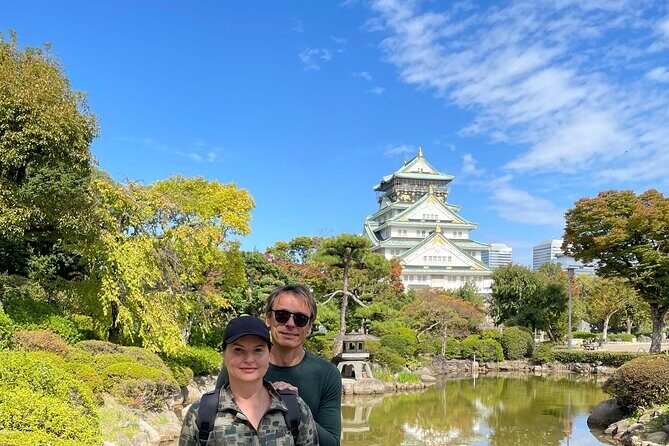
The heart of this tour is simple: you select 3–4 spots from the menu of locations. That structure is what keeps the day from feeling like a sprint.
Here’s how I’d think about your choices:
- If this is your first time in Osaka, pick at least one “big landmark” plus one “food or market” stop.
- If you love temples and shrines, add Sumiyoshi Taisha or Shitennoji, and keep one shopping or food area as your lighter break.
- If shopping and street vibes are your priority, choose Kuromon Market and one of the arcade streets like Shinsaibashi-suji.
Your guide can also suggest a route that fits your pace. In one review, people specifically praised the itinerary planning as a reason they saw places they wouldn’t have found alone. That’s the advantage of having someone stitch the day together for you, especially when the city has so many neighborhoods that look close on a map but feel far on foot.
Dotonbori District: your easiest win for Osaka street food
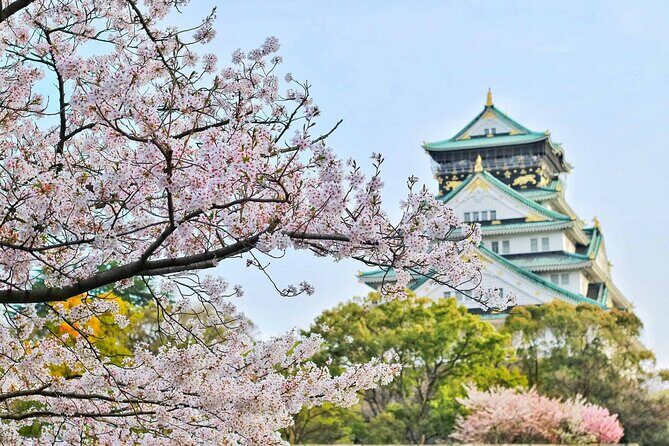
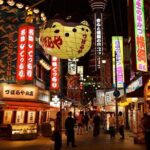
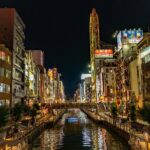
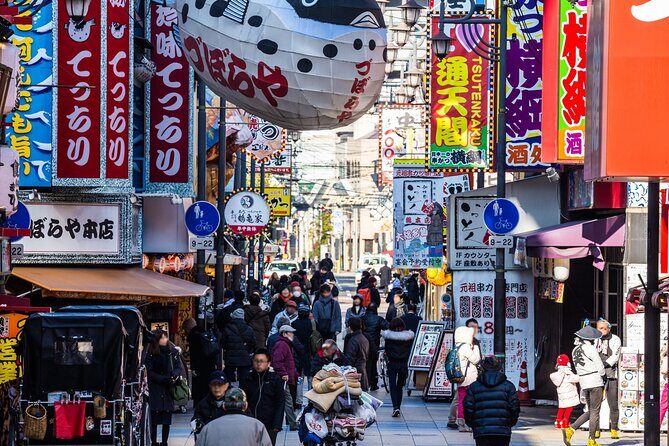
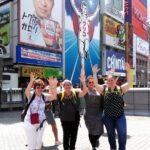
Dotonbori is the kind of area where you don’t need an introduction. The sidewalks feel like the city’s main stage: huge billboards, lots of restaurants, and food stalls competing for your attention.
If you’re a first-timer, I’d choose it because it gives you an Osaka flavor fast. You’ll spend about an hour walking the district and connecting with the food culture that’s famous for Takoyaki (octopus fritters) and Okonomiyaki (savory pancakes). Even if you don’t eat everything, seeing how the stalls work and what looks busy at the moment helps you make better choices once you’re hungry.
A practical caution: because Dotonbori is designed for crowds, it can feel loud and tight in peak hours. The private guide helps here by controlling pacing and picking calmer moments to walk through the busiest stretches.
Osaka Castle: the landmark stop that benefits from a guide
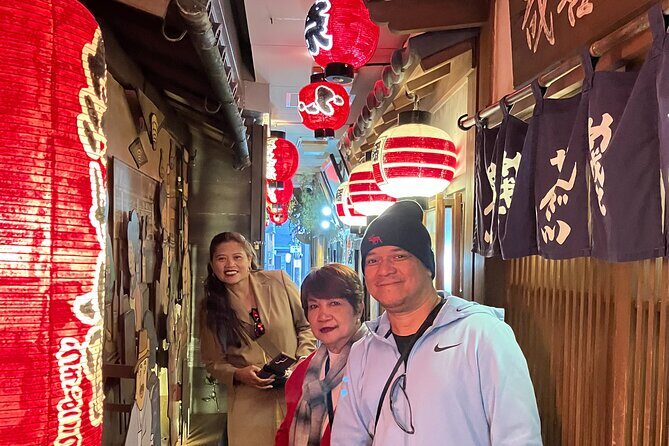
Osaka Castle is one of Japan’s most recognizable castles, and it’s also a place that can be confusing if you’re trying to time everything yourself. This tour gives you about an hour at the site, but the admission is not included, so you should expect a paid entry depending on what you want to access.
Even with just an hour, a guide can help you focus on what’s worth your time. For example, you’ll likely want to prioritize the most impressive exterior views and the areas that make the castle feel like a real place instead of a distant photo spot.
The drawback is also clear: since admission isn’t included, your day cost depends on whether you pick this paid stop. If you’re trying to keep costs down, you can replace it with one of the free options and still get plenty of Osaka texture.
Sumiyoshi Taisha: a calmer spiritual contrast in the middle of the day
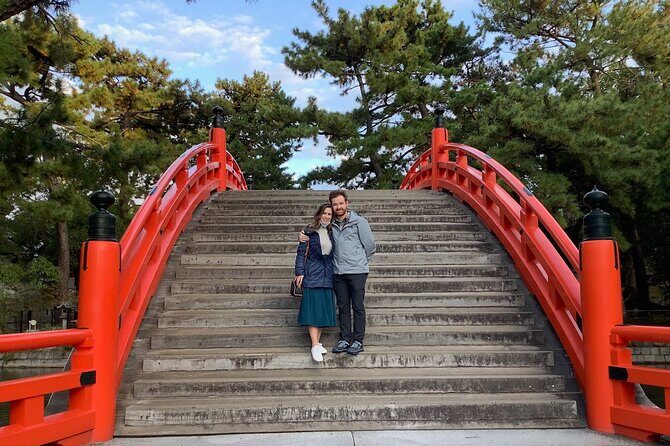
Sumiyoshi Taisha is one of the oldest shrines on the Osaka side, with roots stretching back centuries before Buddhism arrived in Japan. This stop is a good counterweight if your day starts with bright street energy.
You’ll typically spend about an hour here, and the admission is free. That makes it a nice “reset” without adding extra tickets and time pressure.
What I like about including a shrine like this is that it changes your rhythm. After Dotonbori, walking into a more formal, quieter space helps you see the city as more than just food and shopping. And because the guide is English-speaking, you can ask what to notice while you’re there instead of just taking photos and moving on.
You can also read our reviews of more private tours in Namba


Shitennoji Temple: one of the oldest temple experiences you can place on a walking route
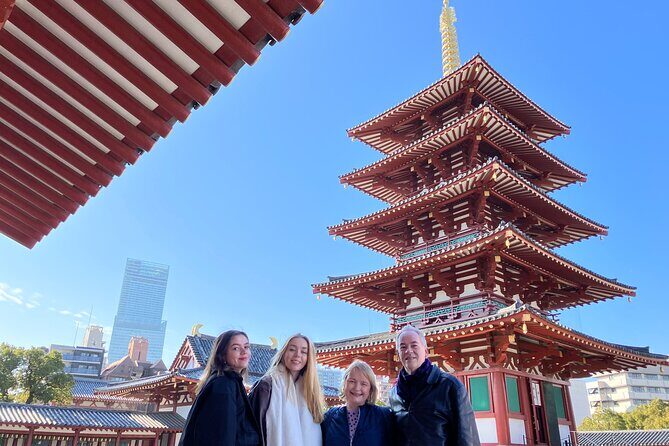
Shitennoji is another early-starter on the Osaka timeline. It’s described as one of Japan’s oldest temples and the first ever built by the state, founded in the late 6th century by Prince Shotoku.
This is a paid admission stop (not included), and you’ll also spend around an hour. If you pick it, plan to use that time actively. A guide can point you toward the elements that make Shitennoji feel different, instead of you wandering and hoping it all connects in your mind.
One review note suggested that some visitors wanted more in-depth history. If that’s you, this is the best place to request it. Ask your guide what story you should remember before you move deeper into the site.
Shinsekai: nostalgia streets and Tsutenkaku Tower vibes
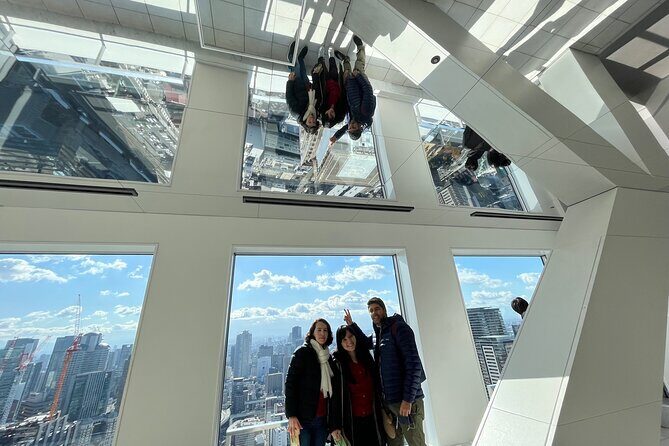
Shinsekai is a district that leans into old Osaka energy—developed before the war and then left to fade for decades before returning in attention. At its center is Tsutenkaku Tower, and the area has a recognizable “retro” feel that contrasts nicely with newer city zones.
You’d typically spend about 30 minutes here, and admission is free. That short time makes Shinsekai a perfect “small hit” stop if you don’t want the day to slow down too much.
My advice: use Shinsekai for atmosphere and photos, not for trying to absorb everything. If your guide brings you through quickly, that can still be a win because the goal is to understand the neighborhood vibe, not to turn it into a full-day museum.
Umeda Sky Building: when you want city views, not just street walking
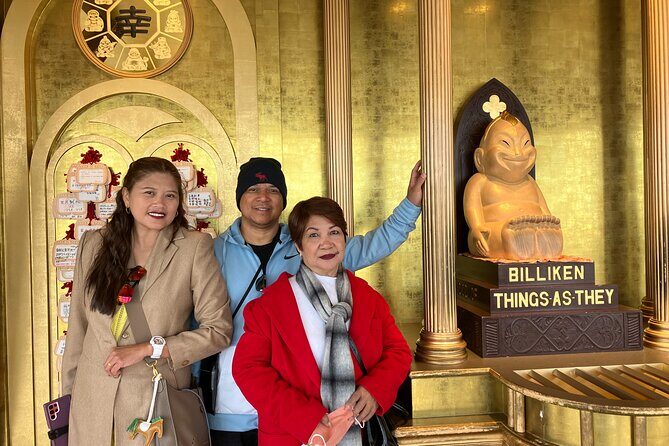
If you like seeing cities from above, the Umeda Sky Building is one of the clearest choices. It’s about 30 minutes on this plan, and admission is not included.
This stop can be valuable even for non-view people because it helps you “connect” Osaka’s shape. Streets and neighborhoods start to make more sense when you see how they relate. And since the tour is private, you can tailor your time here—short if you just want the view, longer if you want time to look around.
The consideration is, again, cost. This is a paid admission option, so your ticket budget depends on how many paid sights you stack into your 3–4 picks.
Kuromon Market: a practical, low-stress food shopping stop
Kuromon Market is a covered public market that runs about 600 meters along Sakaisujidori Street, with around 150 shops. You’ll typically spend about 30 minutes here, and admission is free.
I like this stop because it works for different travel styles. If you want to eat, it’s easy to sample and compare options. If you want to shop, you can browse without committing to a full meal somewhere else first. Even if you don’t buy anything, the market gives you a real Osaka snapshot in a short window.
As with Dotonbori, it can get crowded. Your guide can help you avoid dead ends and keep the walk moving so you don’t lose your time to congestion.
Shopping streets: Doguyasuji tools and Shinsaibashi-suji style
If you’re the type who likes to browse, Osaka has some great street lanes for it—and this tour includes a couple of different styles.
Sennichimae Doguyasuji Shopping Street (kitchen tools)
Doguyasuji is a short shopping street focused on specialty stores for cooking tools and kitchen items. It’s about 150 meters, and you’ll spend about 30 minutes. Admission is free.
This one is fun if you like practical souvenirs. Instead of generic gifts, you get items tied directly to daily Japanese cooking. It’s also a good choice if your group has mixed interests—someone can shop for tools while others take quick snack breaks nearby.
Shinsaibashi-suji Shopping Street (the big arcade)
Shinsaibashi-suji is described as a large shopping arcade with cosmetics, apparel, and restaurants stretching around 600 meters. Time is about 30 minutes, and admission is free.
This is the place I’d choose if you want a classic Osaka shopping feel in one walk. It also pairs well with a food stop earlier, since shopping areas are easier when you’re already in “snack mode.”
The only drawback: shopping streets move fast, and you can end up walking past what you want if you’re not paying attention. In a private tour, you can ask your guide to slow down where your interest is highest.
National Museum of Art, Osaka (NMAO): a short stop for art and architecture
The National Museum of Art, Osaka is an underground museum on Nakanoshima island. It’s a different kind of pause in the day because you step away from the street noise and into a quieter space.
You’d spend about 30 minutes, and admission is not included. If you’re art-curious but not trying to do a full museum day, this short format can make sense.
In a route designed around 3–4 stops, I’d only pick NMAO if it’s truly in your interests. Otherwise, you might feel like the schedule squeezed you out before you could settle in.
Keitakuen Garden: the tiny nature break near Tennoji Park
Keitakuen Garden is a traditional Japanese landscape garden in Tennoji Park. On this tour it’s a short stop—about 10 minutes—and admission is not included.
This is a “glance and breathe” option. It won’t replace a full garden visit, but in a day with food, shopping, and landmarks, it can give you a calmer visual reset. If you tend to get tired from city walking, this kind of short stop can be a lifesaver.
Price and value: what you’re really paying for
Let’s be honest about the math. At $198.72 per person for an 8-hour private guide, you’re paying for:
- a government-licensed English-speaking guide
- a personalized itinerary built around your 3–4 selected sites
- help navigating the day efficiently on foot
You are not paying for:
- transportation fees
- entrance fees (some listed stops are free, others are not included)
- lunch or personal expenses
So the value depends on your choices. If you pick mostly free stops, the guide fee becomes the bigger share of the cost, which can still be worth it if you want direction and smooth pacing. If you pick several paid sights like Osaka Castle or Umeda Sky Building, your total spend rises—but the day may also feel more complete.
I’d treat this tour as best when you want someone to make the day smarter, not just translated. In the best experiences from the reviews, the guide’s energy and planning helped visitors see places they wouldn’t have found without guidance. That’s where the price starts to feel fair.
Who this Osaka private walking tour suits best
This tour is a strong fit if you:
- want an English-speaking guide who can tailor your day
- enjoy mixing famous landmarks with local neighborhoods
- like food stops that are easy to plug into an itinerary
- prefer a focused 3–4 stop plan over a long list of random sights
It might be a weaker fit if you:
- hate walking and want a fully transit-based day
- only want museums or only want deep temple study (because the itinerary is limited by design)
- are extremely cost-sensitive, since paid admissions can add up depending on what you select
For families, it can work well, but I’d use the review lesson: if you want deeper historical context, say so upfront and ask your guide to slow down at the sites that matter to you.
Should you book this Osaka private tour?
I’d book it if you’re traveling with specific “must-see” priorities and you want them stitched into a day that runs smoothly. The private, government-licensed guide setup is what makes the experience feel efficient, and choosing your own 3–4 stops keeps it from turning into a chaotic sprint.
If you’re more of a wander-only traveler, you could build a similar day on your own using guidebooks and maps. But if you’d rather spend your energy eating, looking, and taking photos instead of figuring out logistics, this is the kind of tour that removes friction.
My best advice for getting maximum value: decide your 3–4 picks before the guide calls. Then ask the guide to explain how those stops connect so you feel like you’re moving through a story, not just hopping between locations.
FAQ
How long is the Osaka private walking tour?
It runs for about 8 hours.
Is this tour private or shared with other groups?
It’s private. Only your group participates.
How many stops can I choose?
Your guide will help you plan a personalized itinerary with 3 to 4 spots you choose.
Are entrance fees included for the sights?
Entrance fees are not included. Some stops have free admission, while others are listed as not included.
Will there be pickup, and how does meeting work?
Pickup is offered, but the tour is a walking experience. You meet your guide on foot within a designated area of Osaka.
What language is the guide?
The guide is a local English-speaking guide, and the guide is government-licensed.
Can I cancel for a full refund?
Yes. You can cancel up to 24 hours in advance for a full refund.