REVIEW · KAGOSHIMA
Sakurajima Off Limits Trail Journey with E-bike
Book on Viator →Operated by Volcano Life Journey · Bookable on Viator
Sakurajima is one of Japan’s big, living landmarks—and this tour gets you near the active crater without needing special permissions of your own. You’ll hill-climb on an e-bike from the Sakurajima Visitor Center, with a guide leading you into an area that’s normally off-limits, so you can see the volcano’s power up close.
What I really like is the combination of easy biking and big views. The route is about 16 km round trip with a 360m elevation gain, and the e-bike keeps it enjoyable instead of a slog.
One consideration: you must be comfortable riding a bicycle and able to handle a steady climb. Also, because the volcano is active, your reservation can be declined depending on conditions, so it’s smart to be flexible.
In This Review
- Key highlights at a glance
- Sakurajima Close-Up Without the Usual No-Entry Sign
- E-Bike Climb Math: What Your Body Should Be Ready For
- The Route Begins at Sakurajima Visitor Center
- Why the No-Entry Zone Matters (and What You Learn There)
- Climbing the Nojiri River: Disaster-Prevention Roads Up Close
- Views From the Edge: Steam, Scale, and the Feeling of Activity
- The Guide Experience: Rento’s Local Touch
- How Long It Takes and What the Pacing Feels Like
- Price and Value: Why $156.20 Can Be Worth It
- What to Expect After the Ride
- Who Should Book This (and Who Might Skip It)
- Should You Book the Sakurajima Off Limits Trail on an E-Bike?
- FAQ
- How close do you get to the Sakurajima crater?
- How long is the Sakurajima Off Limits Trail e-bike tour?
- What level of fitness or biking ability do I need?
- Where is the meeting point?
- Is it guaranteed you’ll enter the restricted area?
- What’s the group size?
Key highlights at a glance
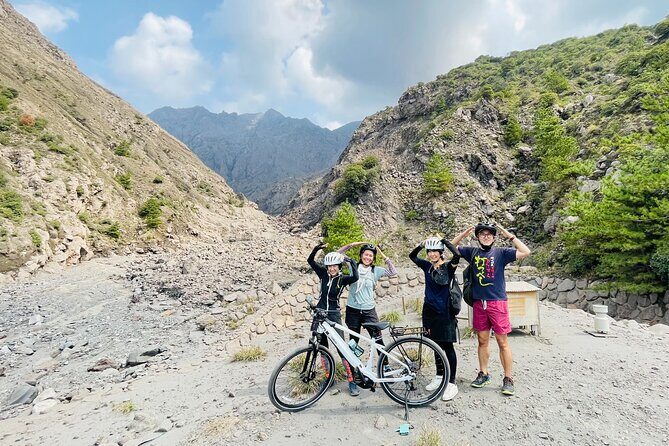
- Official access to the off-limits zone within about 2 km of the crater, led by a guide with special permission
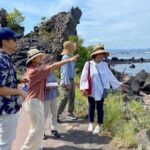
- Small group size (maximum 4 travelers), which usually means more time for questions and pacing
- E-bike helps on a real hill: ~8 km one-way, ~360m elevation gain
- Nojiri River route using disaster-prevention roads, built for safe movement near sensitive terrain
- Local context on living with Sakurajima, including how humans and an active volcano coexist
Sakurajima Close-Up Without the Usual No-Entry Sign
If you’re picturing Sakurajima as a distant, postcard volcano, this tour changes the angle fast. The whole point is getting into a restricted area that’s generally off-limits, then safely approaching the crater with a guide who has authorization.
Kagoshima’s setting helps sell the idea: you’re not looking at a volcano tucked away in the countryside. You’re near a city—around 600,000 people nearby—so Sakurajima isn’t just a natural landmark. It’s part of daily life, with frequent eruptions shaping how the community plans, protects itself, and moves around the island.
You’ll feel that “real world” aspect in your body, not just your eyes. The ride climbs. The roads are practical. The guide is focused on safety while still giving you a front-row view of the volcano’s wild behavior.
You can also read our reviews of more cycling tours in Kagoshima
E-Bike Climb Math: What Your Body Should Be Ready For
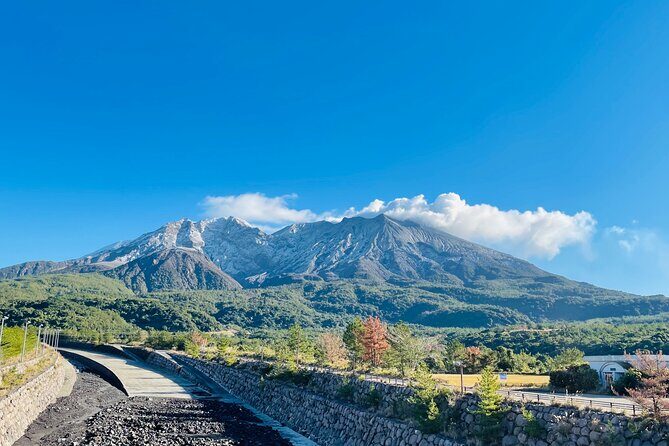
This is billed as having a moderate fitness level, but the details matter. The ride totals about 8 km one-way (16 km round trip). You’re also looking at about 360m of elevation gain between the start and destination.
On an e-bike, the climb becomes doable for more people than a normal bike—but you still have to pedal and stay steady on a hill. If you haven’t ridden a bike in a while, do yourself a favor: practice a bit before your day in Kagoshima. You’ll be glad when your legs warm up instead of guessing at balance.
The other reality check is weather. The experience requires good weather, and if conditions are poor you’ll be offered a different date or a full refund. Even if you’re comfortable cycling, wind, rain, or reduced visibility can make the day less pleasant.
The Route Begins at Sakurajima Visitor Center
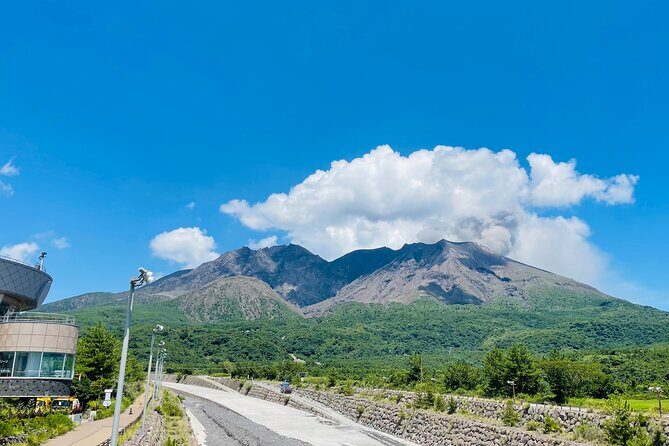
Your meeting point is the Sakurajima Visitor Center (1722-29 Sakurajimayokoyamachō, Kagoshima). This is a practical start: you’re already in the right area for Sakurajima access, and it’s described as being near public transportation, so you can plan without stress if you’re using local transit.
From there, you follow the guide’s lead and get moving on the e-bikes. Expect a clear focus on what’s ahead: the tour isn’t just “bike around.” It’s a controlled approach to sensitive ground near the crater, so you’ll want to listen during the briefing and stay with the group when the roads get more specialized.
Because the group is limited to up to 4 travelers, it’s easier to maintain a calm pace. That matters when you’re riding close to areas that require careful movement.
Why the No-Entry Zone Matters (and What You Learn There)
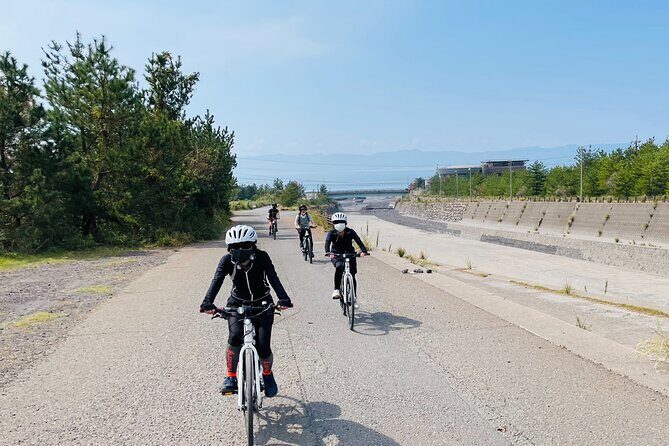
The area within about 2 km of the crater is normally off-limits. On this tour, you can approach safely because the guide has special permission.
That doesn’t just mean better photos. It changes what you understand about Sakurajima.
In the no-entry zone, the focus is on the volcano’s liveliness—how it behaves, how it shapes the Earth around it, and how humans adapt. You’re not just observing nature from a distance. You’re learning the practical side of coexistence: what it takes to live with an active volcano that erupts regularly.
If you like explanations that connect geography to real decisions—roads, routes, timing, and safety—this is where it clicks. The guide also uses the ride itself as a classroom, so you’re constantly turning what you see into what it means.
Climbing the Nojiri River: Disaster-Prevention Roads Up Close
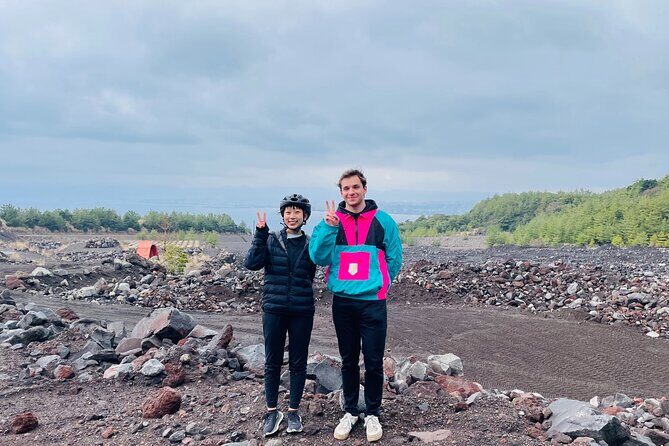
One of the most interesting parts is the route design. You’ll climb up using the Nojiri River, and the tour mentions doing this with disaster prevention techniques.
In plain terms, this is why the access is special and why a guide is essential. Near active volcanic terrain, movement can’t be improvised. You follow roads built for safe passage and emergency planning, so you get close without stepping into chaos.
You’ll likely notice the change in the riding feel as you move onto these access roads—less casual touring, more deliberate travel. That’s part of the value. You’re seeing Sakurajima the way local safety plans would want you to see it: controlled, prepared, and purposeful.
A few more Kagoshima tours and experiences worth a look
Views From the Edge: Steam, Scale, and the Feeling of Activity
This is the payoff. The volcano’s behavior becomes visible in a way that’s hard to match from far-away viewpoints. One review highlights steam spewing views, and that lines up with what you’ll be watching for once you’re close enough for the details to matter.
Even if conditions are cloudy or rainy, the tour can still deliver something memorable—one experience note mentions riding through rain and still getting in the access that most people can’t reach. The atmosphere near active ground tends to feel different. The air, the sound, the sense that the Earth is still moving—these are the kinds of impressions that don’t come from looking at Sakurajima on a screen.
And because you have a guide, you’re not stuck guessing what you’re seeing. You can ask questions and connect the visuals to explanations on the fly.
The Guide Experience: Rento’s Local Touch
A standout theme in the feedback is the guide quality. One guide name shows up clearly: Rento. People describe him as friendly, welcoming, and well prepared, with the ability to improvise the route when required.
That improvisation skill matters in volcano country. Conditions can shift, and a good guide can adjust without turning the day into a scramble. The fact that routes can change also ties back to the tour’s reality: volcano access isn’t simply scheduled like a museum visit.
Rento also gets praised for giving information that feels local and useful, not just generic facts. If you care about how Kagoshima works as a city shaped by Sakurajima, this is a big part of what you’re paying for.
How Long It Takes and What the Pacing Feels Like
The tour runs about 3 hours 30 minutes. That’s a smart length for this kind of active approach. You’re not stuck for half a day, but you still get enough time to ride out, reach the restricted-access area, and return with time for questions and viewpoints.
Because it’s a climb and a return ride, you’ll want to treat it like a “ride with a mission,” not a casual bike stroll. The pacing is influenced by safety and terrain, but the small group size helps keep things smooth.
If you’re deciding where to place this in your Kagoshima day, pick a time with buffer space after. Volcano conditions and weather can affect the day, and even when everything goes well, you’ll likely be tired in the legs—in a satisfying way.
Price and Value: Why $156.20 Can Be Worth It
At $156.20 per person, this isn’t a low-cost activity. But the value math is different from a typical bike tour.
You’re paying for two rare things:
- Access to a restricted area near the crater that’s normally off-limits
- A guide with special permission plus route management on disaster-prevention terrain
If you just want a viewpoint, Kagoshima has other options. But if you specifically want the experience of approaching the volcano edge—close enough to understand its intensity—this is exactly the kind of tour that justifies the price.
Also, the group max is 4 travelers, which can make the whole experience feel less like a bus trip and more like a guided day with real attention. For the cost, that one-on-one feel (or close to it) can make a big difference.
What to Expect After the Ride
The tour ends back at the meeting point at the Sakurajima Visitor Center. Some days also include time to unwind afterward—one account describes enjoying Japanese green tea and a small snack in the sun after the ride.
Even when that specific detail isn’t on every day, you can expect a relaxed finish. You’ve just spent a few hours cycling close to an active volcano, so having a calm cooldown matters.
Who Should Book This (and Who Might Skip It)
This tour is a great match if you want:
- a close-up Sakurajima experience that most visitors can’t reach
- the combo of cycling + explanations about volcano-human coexistence
- a small-group guided approach
You should think twice if:
- you’re not confident riding a bicycle
- the idea of a 360m hill climb makes you nervous
- you can’t handle the possibility that volcanic conditions might cause access changes or a refusal of the reservation
It also fits well for people who like practical travel—getting to the right place, seeing something real, and learning how it works instead of just collecting scenery.
Should You Book the Sakurajima Off Limits Trail on an E-Bike?
I’d book it if you’re excited by the idea of getting close to Sakurajima in a way that’s safe and guided. This is the kind of tour where the cost pays for permission, pacing, and access—not just transportation.
If you’re the type who wants guaranteed access no matter what, keep expectations flexible. Volcano conditions can affect whether the approach is possible, and the tour requires good weather. But if you can work with that—and you can ride a bike—this is one of those experiences that turns Sakurajima from a landmark into a living place you can feel.
FAQ
How close do you get to the Sakurajima crater?
The tour approaches the area within about 2 km of the crater, which is normally off-limits. You can access it only with a guide who has special permission.
How long is the Sakurajima Off Limits Trail e-bike tour?
The experience is about 3 hours 30 minutes.
What level of fitness or biking ability do I need?
You must be able to ride a bicycle and handle a hill climb on an e-bike. The route involves about 8 km one-way and about 360m of elevation gain.
Where is the meeting point?
You meet at the Sakurajima Visitor Center at 1722-29 Sakurimayokoyamachō, Kagoshima, 891-1419, Japan. The tour ends back at the meeting point.
Is it guaranteed you’ll enter the restricted area?
Not always. The tour notes that your reservation may be declined due to the volcano’s situation, so conditions can affect access.
What’s the group size?
The tour has a maximum of 4 travelers.