REVIEW · KAGOSHIMA
Rickshaw Tour of Kagoshima’s Historical and Cultural Sites
Book on Viator →Operated by KAGOWA Kagoshima Tours & Activities · Bookable on Viator
A rickshaw ride turns Kagoshima streets into a story. In about 30 minutes, you’ll glide past key historical and cultural stops—Reimeikan, Tsurumaru Castle ruins, Terukuni Shrine, and the Saigo Takamori statue—while your guide builds the connections between Meiji-era change and Satsuma Domain pride.
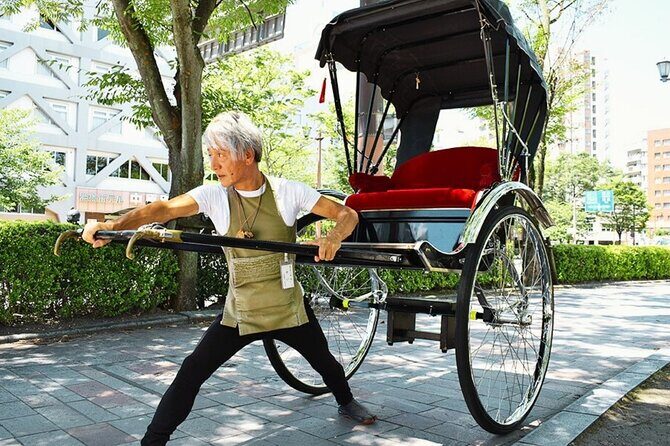
I especially like the photo-friendly pace. Each stop is short, but it’s long enough to frame the view and get the shot you came for. I also like that this tour is delivered by a real person with personality—Kyoichi (also written Koichi) shows up with humor and a running commentary that keeps the ride from feeling like a checklist.
One thing to plan for: admission fees aren’t included, and many stops are just a few minutes. If you’re hoping for deep museum time, you’ll need to build in extra time on your own after the rickshaw drops you back near your meeting point.
In This Review
- Quick hits for your Kagoshima rickshaw plan
- Why a 30-minute rickshaw tour is smart in Kagoshima
- Your route: Reimeikan, castle ruins, Terukuni Shrine, Saigo Takamori
- Stop 1: Reimeikan (Kagoshima History Museum and Fine Arts Center)
- Stop 2: Tsurumaru Castle ruins and Goromon
- Stop 3: Terukuni Shrine
- Stop 4: Saigo Takamori statue (Central Park)
- The guide experience: Kyoichi’s humor and real conversation
- Timing, meeting point, luggage, and photo breaks
- Price and value: is $71.53 worth 30 minutes?
- Who should book this rickshaw tour (and who might skip it)
- Weather and expectations: keep your plan flexible
- Should you book this Kagoshima rickshaw tour?
- FAQ
- FAQ
- How long is the rickshaw tour?
- What does the tour cost?
- Is this tour private?
- Where do I meet the guide?
- What are the main stops during the tour?
- Are admission fees included?
- Can I leave luggage during the tour?
- What should I do on arrival time?
- Is the tour suitable for children?
- What happens if the weather is bad?
Quick hits for your Kagoshima rickshaw plan
- Short, efficient route (about 30 minutes) that still hits major landmarks
- Multiple photo stops timed for quick sightseeing and decent framing
- Kyoichi’s energy—jokes, conversation, and a guide who clearly enjoys sharing Kagoshima
- Private-by-default feel since it’s a private activity for your group
- Admission not included, so you’ll decide on museum entry separately
- Goodweather focus—this experience depends on the day cooperating
Why a 30-minute rickshaw tour is smart in Kagoshima
Kagoshima has a lot going on, and it’s easy to get stuck in “big transit time, little sightseeing time” mode. This rickshaw format solves that problem. You’re not spending the day in a bus queue. You’re moving through the city at a human pace, with just enough time at each highlight to get oriented and feel the place.
The best part is the way the tour is structured. It’s compact, so you don’t feel lost when you arrive with limited time. Instead of rushing through one single attraction, you get a mini “greatest hits” circuit: museum area, castle ruins, shrine grounds, then straight to a statue tied to one of Japan’s most famous political shifts.
And yes, it’s traditional. You’ll feel the difference the moment you settle in. A rickshaw ride isn’t about speed—it’s about perspective. Streets that look ordinary from a sidewalk can become meaningful when you’re guided past the exact corners and viewpoints that shaped the city.
You can also read our reviews of more historical tours in Kagoshima
Your route: Reimeikan, castle ruins, Terukuni Shrine, Saigo Takamori
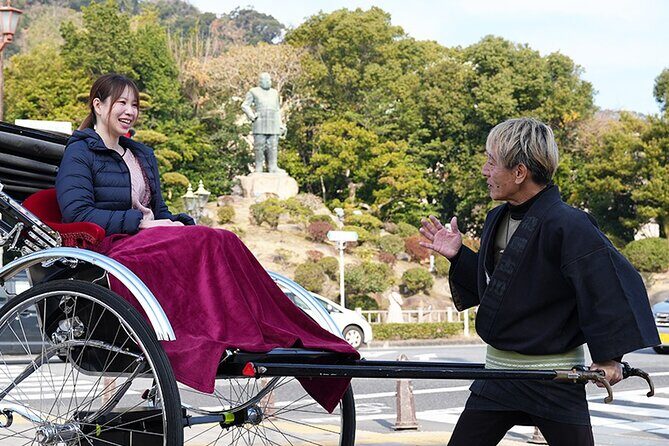
This tour is built around four main stops, each timed for quick sightseeing and photo opportunities. Admission isn’t included, so you should treat the stops as “see and decide,” not “see and pay for everything.”
Stop 1: Reimeikan (Kagoshima History Museum and Fine Arts Center)
Reimeikan is one of those places that helps you understand Kagoshima in context. The museum spot links you to two major periods: the Meiji Restoration era and the Satsuma Rebellion. In plain terms, it frames how the region went from feudal power through modernization to open conflict and change.
Even if you don’t go inside, seeing the museum area sets the mood. It tells you that Kagoshima isn’t only about scenery—it’s about turning points. If you do enter, you’ll likely appreciate the way it connects art and historical interpretation into one place.
Practical tip: because admission isn’t included, I suggest you decide in advance whether you want museum time. If you’re pressed, just use the rickshaw stop for orientation and photos, then come back later under your own schedule.
Stop 2: Tsurumaru Castle ruins and Goromon
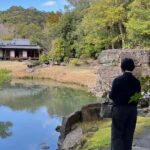
Next comes the castle story—specifically Tsurumaru Castle, built between 1602 and 1606. You’re not walking through a full reconstruction experience. You’re seeing what remains: original stone walls and a moat, with Shiroyama Hill’s forests in the background.
That “ruins with a view” feeling matters. When you’re standing near old defenses and looking toward surrounding hills, the landscape makes historical sense in a way photos can’t fully copy. Short as the stop is, it still gives you that mental picture: how geography and power were tied together.
What to watch for: take your time with angles. Stonework and moat lines look better when you step slightly to find the cleanest outline—your guide’s photo breaks make it easier to do that without rushing everyone else.
Stop 3: Terukuni Shrine
Terukuni Shrine adds the spiritual and political connection. The shrine honors Shimazu Nariakira, the 28th feudal lord of Satsuma Domain and a major figure linked to modernization in the late Edo period.
This is where the tour’s theme becomes clearer. Kagoshima wasn’t only reacting to events later; it was tied to reforms and leadership during the Edo period too. Terukuni is a reminder that modernization didn’t appear out of nowhere—it had local roots and influential people behind it.
If you’re the kind of visitor who likes to connect dots, this stop is helpful. It gives meaning to the other landmarks so the day doesn’t feel like separate sightseeing snapshots.



Stop 4: Saigo Takamori statue (Central Park)
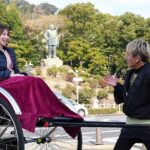
Finally, you reach the Saigo Takamori monument in Central Park. Saigo is one of those names you’ll run into repeatedly when you study Meiji-era Japan—and also when you look at the later rebellion against the Meiji government.
The statue stop works well at the end of the route because it ties the day together. You’ve seen modernization-era links (Reimeikan), feudal power and defense (Tsurumaru), and a key reforming leader (Terukuni). The statue then becomes a symbol that you can quickly recognize and remember.
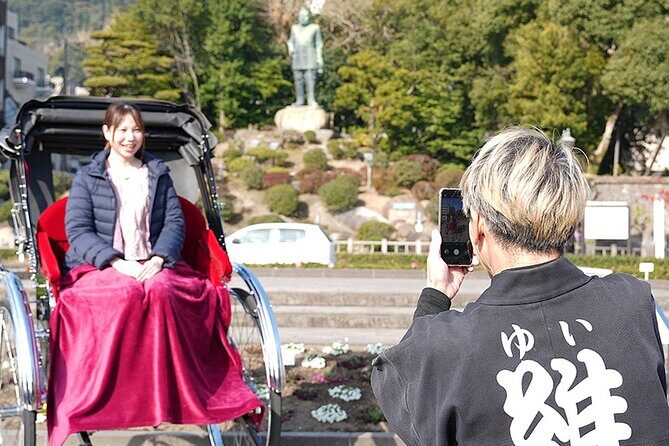
Photo tip: Central Park is a good place to get a clean portrait shot. If you want your photo to look natural, aim for the moment your guide tells you is best for background and light—this tour is set up for that kind of pacing.
The guide experience: Kyoichi’s humor and real conversation
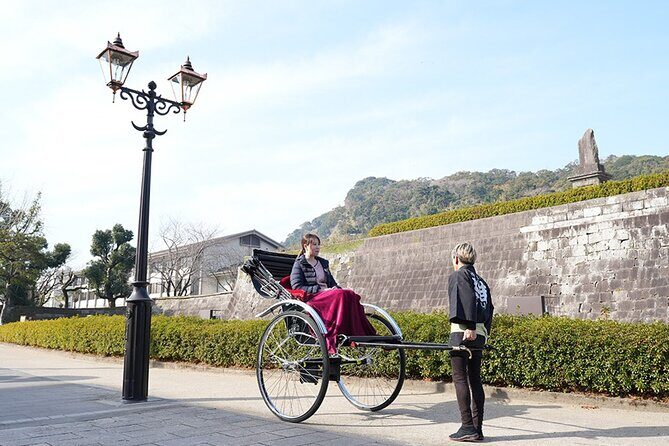
This is where the tour feels less like sightseeing and more like a friendly city walk—just with wheels.
Kyoichi (often written Koichi-San) has a knack for keeping things moving without turning the ride into chatter only. He offers a running commentary at each stop, explaining what you’re seeing in a way that makes the landmarks easier to remember later. And his personality shows up in the details: jokes, playful conversation, and a willingness to connect the dots to what you might already know.
One memorable element from real bookings: conversation can turn personal fast. In one case, the guide’s favorite heavy metal song and a guest’s obscure pick became a shared topic—he knew the artist. That small moment is a good indicator of the overall vibe: the guide is engaged, not robotic.
If you want a tour where you can ask questions and get answers instead of “read this sign,” you’ll likely enjoy this format. It also helps that the ride stays short. With 30 minutes, there’s room for warmth without drifting into long explanations you can’t absorb on a tight schedule.
Timing, meeting point, luggage, and photo breaks
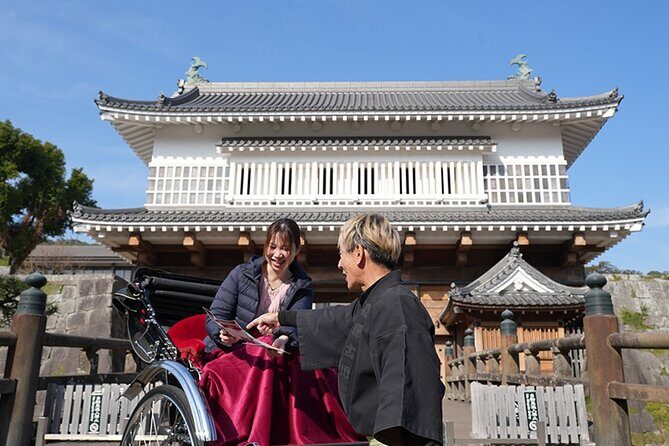
Here’s how I’d plan this day so it stays stress-free.
You meet at Hotel & Residence Nanshukan, 19-17 Higashisengokuchō, Kagoshima. The tour ends back at the meeting point. Opening hours are listed as 10:00 AM–6:00 PM, Monday through Sunday.
Plan to arrive 10 minutes early. This matters because rickshaws move on human schedules. If you’re late, the tour can’t comfortably wait.
Luggage is a helpful detail: you can leave it at the hotel pickup point during the tour. That’s one of those “small” benefits that becomes a big one when you don’t want to drag a bag around Central Park or museum grounds.
Photo breaks are built in, and your guide actively supports getting them. In practice, that means you’re not standing there awkwardly trying to coordinate your own shots while everyone else waits. You’ll get positioned, then moved on when it’s time.
A note on pacing: each stop is roughly five minutes. That’s perfect for quick sightseeing, photos, and a short explanation. It’s not perfect for long museum reading or slow shrine wandering. If you want longer time at one location, I’d plan to add that on after the rickshaw ride.
Price and value: is $71.53 worth 30 minutes?
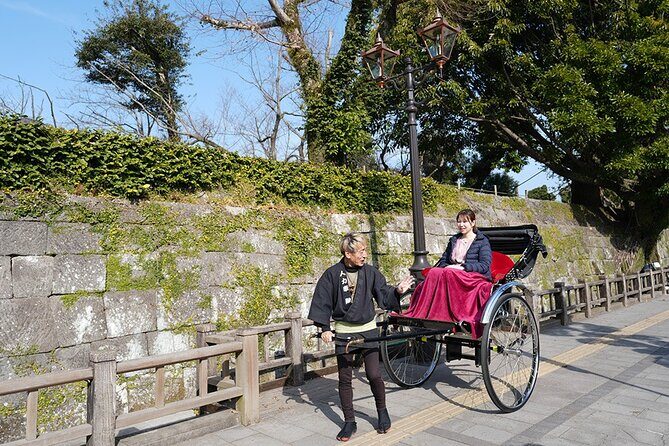
At $71.53 per person for about 30 minutes, the price isn’t “cheap,” but it can be good value if you’re optimizing time and want guided context without the hassle of figuring out routes, stops, and timing yourself.
What you’re paying for:
- A private-group experience feel (not just a shared group shuffle)
- A traditional rickshaw ride that changes how you experience the city
- A guide who explains each location and helps with photos
- A tight route that hits multiple major landmarks without spending your day commuting between them
Where value can wobble:
- Admission fees aren’t included. If you decide to enter Reimeikan or other sites, you’ll pay separately.
- The tour is intentionally short. If you love museums and want 60–90 minutes inside, you’ll probably still want additional time on your own.
My take: this is best as a “first orientation” tour. Do it early in your Kagoshima visit, get the names in your head, then return later for the one place you want to spend more time on.
Who should book this rickshaw tour (and who might skip it)
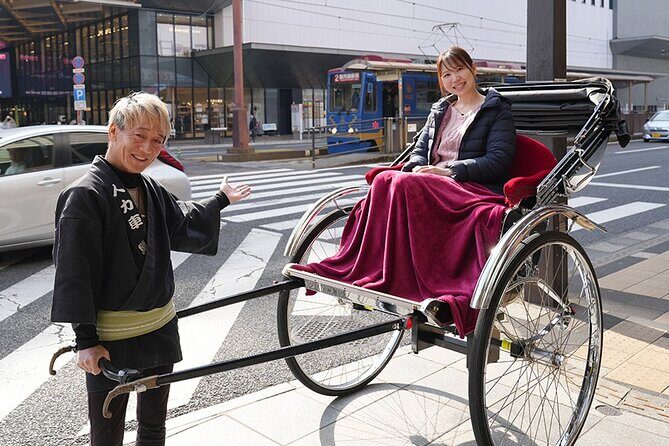
This tour fits best when you:
- Have limited time in Kagoshima and want the main landmarks efficiently
- Like guided commentary and prefer a small, personal feel
- Want an easy outing that works for all ages, with kids under 6 free
- Enjoy photo stops and want help getting them without logistics stress
- Like history, but don’t want the whole day to be a museum marathon
You might skip it if you:
- Want long indoor museum time during the ticketed experience
- Plan to enter several places deeply and expect the rickshaw stop to cover it all
- Are traveling on a day when weather may be questionable (the experience requires good weather)
Weather and expectations: keep your plan flexible
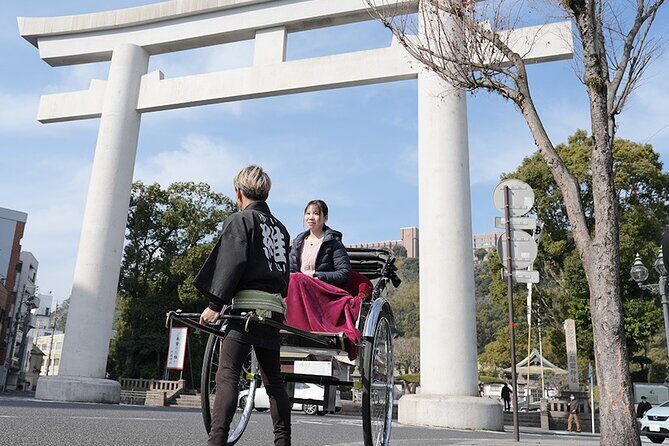
This tour requires good weather. That doesn’t mean you need perfection, but it does mean you should expect that rain or bad conditions could affect operations. If it’s canceled due to poor weather, you’ll be offered a different date or a full refund.
Also, remember that the experience is short. If you arrive rushed, you’ll feel it more. If you arrive calm and ready to walk from stop to stop, you’ll get the best version of the route.
Should you book this Kagoshima rickshaw tour?
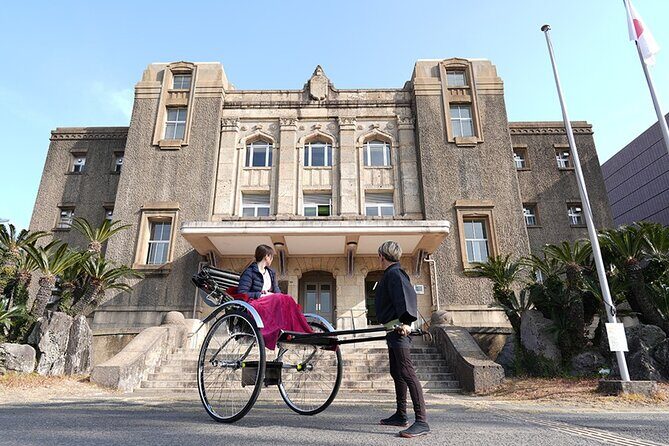
Book it if you want a fun, guided introduction to Kagoshima’s landmarks in a time window that won’t eat your whole day. The route hits the big names—Reimeikan, Tsurumaru Castle ruins, Terukuni Shrine, and Saigo Takamori—with a pace that supports photos and understanding.
Skip or supplement it if you’re aiming for deep museum time. Treat the rickshaw as your orientation layer. Then plan a longer visit where your curiosity pulls you next—especially if you feel drawn to what Reimeikan is showing about modernization and regional conflict.
FAQ
FAQ
How long is the rickshaw tour?
The tour lasts about 30 minutes.
What does the tour cost?
The price is $71.53 per person.
Is this tour private?
Yes. It’s a private activity, and only your group participates.
Where do I meet the guide?
The meeting point is Hotel & Residence Nanshukan, 19-17 Higashisengokuchō, Kagoshima, 892-0842, Japan. The tour ends back at the meeting point.
What are the main stops during the tour?
The tour includes stops at Reimeikan, Tsurumaru Castle Ruins & Goromon, Terukuni Shrine, and the Saigo Takamori Statue in Central Park.
Are admission fees included?
No. Admission fees are not included and aren’t required as part of this activity.
Can I leave luggage during the tour?
Yes. Luggage can be left at the hotel pickup point during the tour.
What should I do on arrival time?
Arrive 10 minutes before the pick-up time.
Is the tour suitable for children?
Yes, it’s suitable for all ages. Kids under 6 are free.
What happens if the weather is bad?
This experience requires good weather. If it’s canceled due to poor weather, you’ll be offered a different date or a full refund.