REVIEW · KAGOSHIMA
Exploring Sakurajima’s History Half Day Walking Tour in Kagoshima
Book on Viator →Operated by Kagoshima Wonderful Walk · Bookable on Viator
Lava has a sense of theater. This half-day Sakurajima walk turns a scary volcano into a clear, human story—geology, daily life, and viewpoints that make the island feel very real. You’ll start at the Sakurajima Visitor Center, then work your way through Nagisa and up to observatories for sweeping views over Kagoshima Bay.
I love how the tour explains what you’re looking at: lava fields, eruption history (including the 1914 Taisho eruption), and how people still live here with volcano rhythms in the background. I also like the way the narration is practical—this tour has the feel of being shown around by someone who truly connects the dots, and one guide example that stands out is Shinju, praised for his geology-focused, friendly style and for giving time to explore.
One consideration: this is a short, timed route (about 3 hours total), so you’ll spend plenty of time at viewpoints and stops rather than doing long stretches of walking. If you’re hoping for a totally flexible, wander-anywhere day, you may want to plan extra free time on your own after the tour ends.
In This Review
- Key highlights you’ll actually notice
- Why Sakurajima’s volcano story clicks on a guided walk
- Getting to the start: the ferry-side meeting point matters
- Stop 1: Sakurajima Visitor Center video and exhibits (15 minutes)
- Stop 2: Nagisa Foot Bath Park hot foot soaking and views (10 minutes)
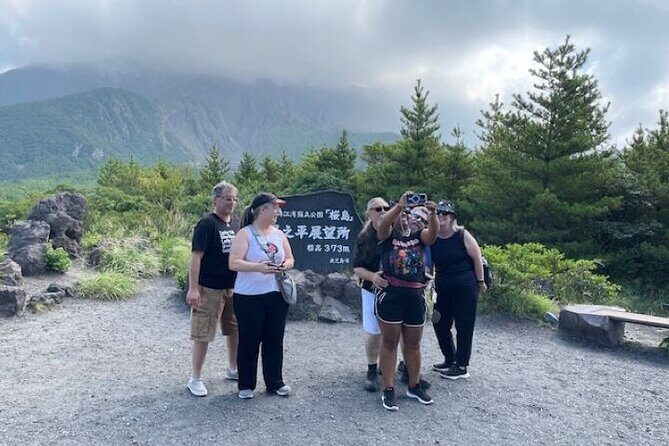
- Stop 3: Yunohira Lookout, North Peak sightlines (5 minutes)
- Stop 4: Karasujima Observatory and the 1914 Taisho eruption story (15 minutes)
- The bus ride up for crater-closest views: why it’s worth your energy
- Price and value: $39.14 for context, pacing, and free admissions
- What kind of traveler should book this one
- Practical tips for the best Sakurajima experience
- Quick facts that help you plan your half-day
- Should you book Sakurajima’s History Half Day Walking Tour?
- FAQ
- How long is the Sakurajima walking tour?
- Where does the tour start?
- Where does the tour end?
- Is the tour private?
- What’s included in the price?
- Are admission tickets included at the stops?
- Do I need private transportation?
- Are service animals allowed?
- What if I need to cancel?
Key highlights you’ll actually notice
- 15-minute visitor center video that sets the eruption-and-landscape timeline before you go outside
- Nagisa Foot Bath Park hot foot soaking near the visitor area, with volcano heat in the mix
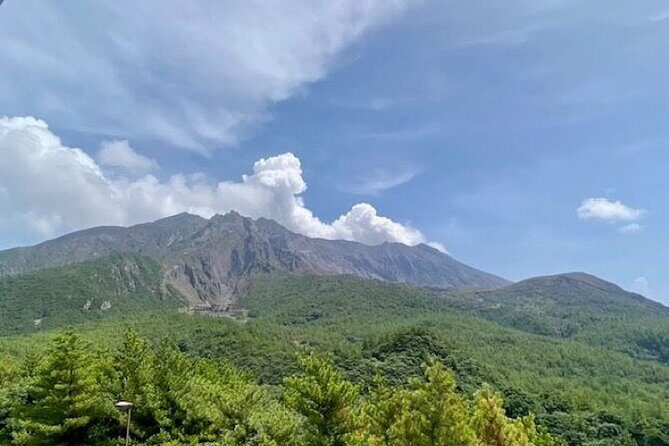
- Yunohira Lookout for a high spot where you can see the North Peak and volcanic shape from a distance
- Karasujima Observatory with panoramic views plus the dramatic story of Karasujima island buried by lava
- Bus ride up to the crater-closest viewing area to swap uphill effort for better sightlines
- Private, just-your-group format so the guide can pace the day for your questions
Why Sakurajima’s volcano story clicks on a guided walk
Sakurajima is one of those rare places where nature doesn’t stay in the background. The eruptions reshape the ground, and that ground shapes how people live, work, and even plan daily routines. A walking tour here matters because you can’t fully read the island from photos alone—you need a guide to translate the terrain into a timeline.
This tour is built around that translation. You’ll start indoors with a short video and exhibits, then you’ll move straight into outdoor viewpoints where the guide can point out what’s new, what’s old, and why certain spots look the way they do. The result is that the volcano stops feeling abstract and starts feeling like a place with systems—geology plus people.
And you’ll get more than one kind of view. You’re not just staring at a mountain; you’re comparing angles, ridges, and bays, and connecting them to eruption history. That’s how it becomes memorable rather than merely scenic.
You can also read our reviews of more walking tours in Kagoshima
Getting to the start: the ferry-side meeting point matters
The tour starts at 9:00 am at the ferry boarding area for Sakurajima—specifically Sakurajima Ferry (桜島フェリー) on the 2nd floor at Kagoshima Port. This is smart. Kagoshima’s ferry connection is the easiest way to reach Sakurajima, and the meeting point keeps you from wasting time hunting for instructions once you’re already near the water.
If you’re traveling on your own that morning, I’d treat this like a time-critical leg. Arrive early enough to get oriented, find the right floor, and still have breathing room before boarding. Once you’re on Sakurajima, the tour rhythm is already set.
You’ll also end at Yunohira Observation Deck, which is useful for planning. From there, buses run every 30 minutes back to the port, so you’re not trapped waiting around with no plan.
Stop 1: Sakurajima Visitor Center video and exhibits (15 minutes)
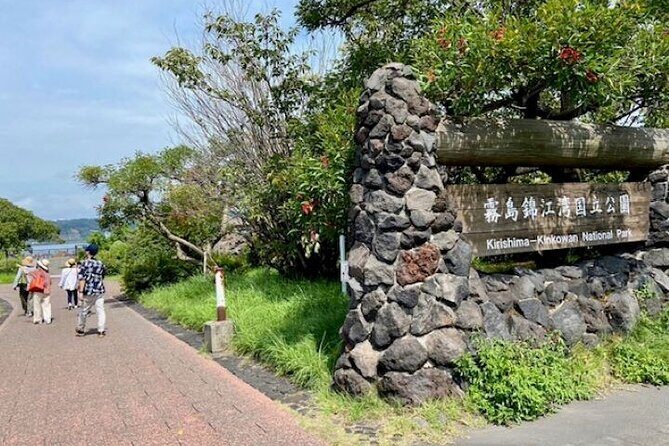
Your first stop is the Sakurajima Visitor Center, and the tour begins with a 15-minute video. That short film does a lot of work for you: it gives you baseline context on Sakurajima’s eruption history and how the island’s shape relates to what you’ll see afterward.
After the video, the guide delivers a brief overview with exhibits in the center. This is where I’d expect the most “aha” moments. Even if you’ve seen volcano footage before, this kind of intro helps you understand what you’re about to walk into—lava flow patterns, eruption impact, and why Sakurajima isn’t a museum subject. It’s active land.
Practical note: since this is early in the tour, it’s a good moment to be mentally ready. If you rush through the video, you’ll likely feel a step behind when you reach the observatories.
Stop 2: Nagisa Foot Bath Park hot foot soaking and views (10 minutes)
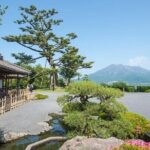
Next you head to Nagisa Foot Bath Park, right adjacent to the Visitor Center. This is a small stop, but it’s one of those “why this works” moments. The foot bath uses hot spring heat blessed by the volcano, so it’s not just a cute photo stop—it’s a literal connection to geothermal energy.
You’ll also get a view angle over the area nearby, which helps with orientation. After the indoor explanations, this is your first outdoor reset: a chance to slow down, feel the heat, and let the geography settle in your brain.
Time is tight here (about 10 minutes), so don’t plan on lingering with a full spa session. Think of it as a quick reset before the higher lookouts.
Stop 3: Yunohira Lookout, North Peak sightlines (5 minutes)
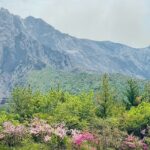
At Yunohira Lookout, the tour gives you a high vantage point with focused viewing. The route notes that people can climb up to this spot by Sakurajima-island view bus, and your guide takes you to the highest point area where the North Peak and the rough mountain surface are visible.
This stop is short—about 5 minutes—but it’s strategically placed. Early on, you need the “big picture” first: the mountain’s overall shape and how the peaks relate. This is where you start understanding the island as an active system rather than a single cone.
If clouds roll in or visibility is poor, you’ll want to pay extra attention quickly. Even a brief clear moment can be the difference between a view that’s just okay and one that makes the island feel tangible.
You can also read our reviews of more historical tours in Kagoshima
Stop 4: Karasujima Observatory and the 1914 Taisho eruption story (15 minutes)
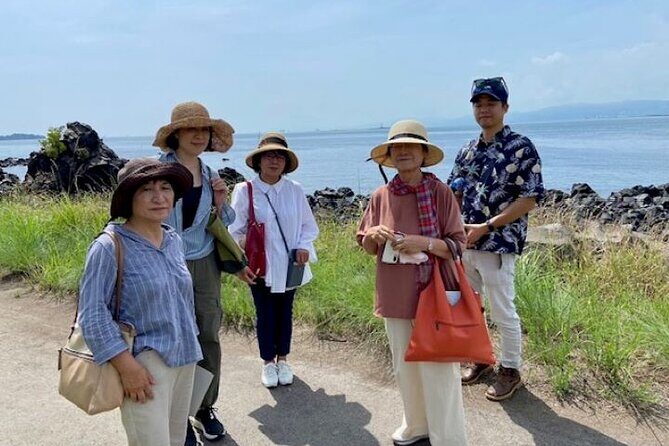
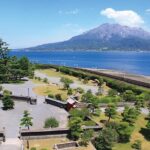
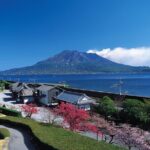
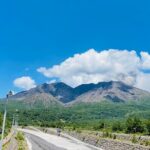
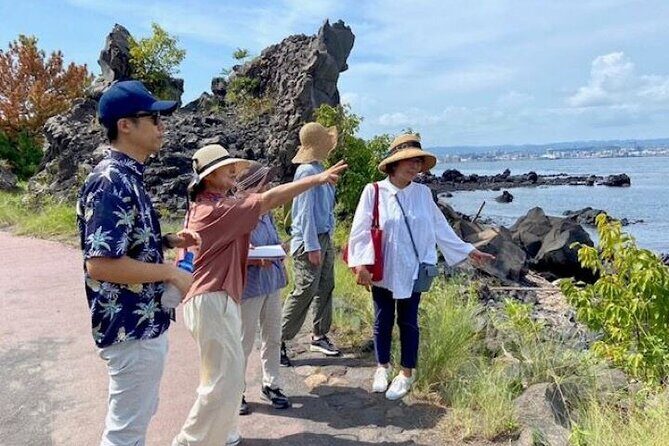
The highlight for many people is Karasujima Observatory, where you get panoramic views of Mt. Sakurajima and Kinko Bay. The viewpoint is also paired with a chilling piece of history: Karasujima was once a small offshore island about 500 meters from Sakurajima, but it was buried by lava from the 1914 Taisho eruption. Now that area is part of Sakurajima.
This is the kind of explanation that transforms what you’re seeing. When the guide points out how the lava field spreads, it stops being a random rocky texture. It becomes a physical record of an eruption that changed the coastline and erased distance.
The time here is about 15 minutes, and that’s enough to take in the full panorama without turning it into a slog. If you like taking photos, this is where you should slow down. Try a couple different angles rather than just one quick click—you’ll see the volcano and bay relationships shift with perspective.
The bus ride up for crater-closest views: why it’s worth your energy
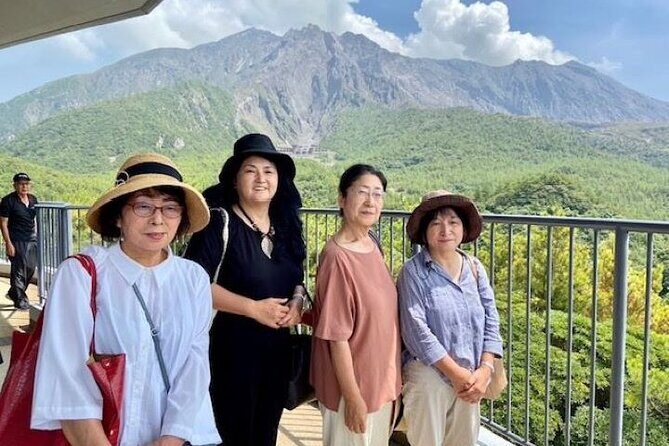
In the overview, the tour includes a bus ride up to the observatory closest to the crater. That choice is practical: it reduces how much climbing you need to do and increases the chance that you actually reach the most impressive viewing angles within the tour’s half-day time window.
For me, the value is simple. Volcanoes are steep and sightlines are often uphill. A bus connection keeps the day moving while still rewarding you with elevated views that you might not reach comfortably on your own—especially if you’re trying to keep the overall visit time tight.
If you’re the type who likes walking, you’ll still get it, but you won’t be paying for it with exhaustion that steals your attention at the best moments.
Price and value: $39.14 for context, pacing, and free admissions
The tour costs $39.14 per person, lasts about 3 hours, and includes all fees and taxes. On top of that, the listed stop admissions are free: visitor center entry, Nagisa Foot Bath Park, and the observatory stops.
That matters because it turns the price into mostly-guide value and coordination value. You’re not paying for museum tickets or extra attractions; you’re paying for a guided explanation plus the route timing and the bus element to the higher viewpoints.
Is it possible to do a similar day on your own? Maybe. But the point of this tour is that Sakurajima’s features are easy to misread. A guide gives you the eruption timeline, the “why this looks like that” explanation, and the human-angle context—how people live on an active volcano and how local specialties tie into that volcanic identity (including the claim of a Guinness World Record for a local specialty).
So for a first visit, especially if you want the story without doing your own studying beforehand, I think it’s a solid deal. And because it’s private—just your group—it’s also a good way to avoid the feel of being rushed or stuck with a pace that doesn’t fit your questions.
What kind of traveler should book this one
This tour is a good match if you:
- want volcano context without spending hours researching first
- like viewpoints but don’t want a whole day of logistical guesswork
- enjoy walking mixed with quick stops, rather than long hiking
It may be less satisfying if you:
- want a long, slow, no-time-pressure exploration day
- dislike guided storytelling and prefer total freedom
The private format (only your group participates) helps. It can feel more like having a local interpreter than joining a big generic group.
Practical tips for the best Sakurajima experience
A few details can make your day smoother:
- Wear comfortable shoes. Even with short stops, you’ll be walking between fixed points.
- Bring a light layer. Coastal areas and higher viewpoints can feel cooler even when Kagoshima is warm.
- Have your camera ready for Karasujima Observatory, but also take a minute to look without the lens. The lava-and-bay scale is part of the lesson.
- Plan your ferry timing so you don’t feel rushed at the 9:00 am start point.
If the day is clear, you’ll see more from the observatories. If it’s misty or rainy, the tour’s strength is that the guide can still help you read the island even when visibility is limited.
Quick facts that help you plan your half-day
The tour runs about 3 hours and starts at 9:00 am. It includes a stop at the Visitor Center, Nagisa Foot Bath Park, Yunohira Lookout, and Karasujima Observatory, with free access listed for each stop. It’s designed around a mix of walking and viewpoint time, capped by a bus ride to the crater-closest viewing area.
When it ends, you’re placed at Yunohira Observation Deck, where buses run every 30 minutes back toward the port.
Should you book Sakurajima’s History Half Day Walking Tour?
Yes, if you want your Sakurajima visit to feel meaningful, not just scenic. This is a well-paced intro that connects what you see—lava flow patterns, peaks, and bay views—with what it means: an active volcano that people call home.
I’d skip it only if you already know the geology story and you prefer to travel without a planned route. Otherwise, the mix of free admissions, the bus to key viewpoints, and a guide who turns terrain into a timeline makes the $39.14 price feel fair.
FAQ
How long is the Sakurajima walking tour?
It lasts about 3 hours.
Where does the tour start?
It starts at ferry boarding for Sakurajima at Kagoshima Port, specifically Sakurajima Ferry (桜島フェリー) on the 2nd floor.
Where does the tour end?
It ends at Yunohira Observation Deck. Buses run every 30 minutes from there to the port.
Is the tour private?
Yes. Only your group participates.
What’s included in the price?
All fees and taxes are included.
Are admission tickets included at the stops?
Yes. Admission tickets are listed as free for the Visitor Center, Nagisa Foot Bath Park, and the observatory stops.
Do I need private transportation?
Private transportation is not included.
Are service animals allowed?
Yes, service animals are allowed.
What if I need to cancel?
You can cancel up to 24 hours in advance for a full refund.