REVIEW · KAGOSHIMA
Kagoshima: Matcha Making Experience
Book on GetYourGuide →Operated by Satsuma Craftworks · Bookable on GetYourGuide
Matcha starts with a simple whisking rhythm. This Kagoshima matcha-making experience is interesting because you learn by doing, in a casual room with table and chairs, not a formal tatami tea room. I love that you use locally produced matcha and sweets from Kagoshima, and I also like the chance to ask lots of questions with the instructors and translators. One thing to consider: the venue is upstairs with no lift, so it is not the easiest stop for anyone with mobility limits.
In practice, the session flows fast. You start with a bowl whisked for you, then you make your own bowl to practice, all in about an hour. There’s optional English or German support, and it can work well as a private or small-group class.
In This Review
- Key highlights that make this workshop worth your time
- A casual matcha lesson that still feels genuinely Japanese
- Where it happens: Kagoshima-Chuo Station convenience, plus a no-lift reality
- The 60-minute flow: sample first, then make your own bowl
- Utensils and technique: what you’ll learn to repeat at home
- Kagoshima flavor matters: matcha plus local sweets
- Language support that actually helps you understand what you’re tasting
- Private or small-group comfort, including a true no-rush vibe
- Price and value: what you’re paying for in skills, not souvenirs
- Who should book this matcha-making experience (and who shouldn’t)
- Should you book Kagoshima Matcha Making with Satsuma Craftworks?
- FAQ
- Is this workshop a traditional tea ceremony in a tatami tea room?
- How long does the matcha making experience take?
- What languages are available during the workshop?
- What comes included in the price?
- Are there dietary concerns I should be aware of?
- Where is the venue, and is it accessible by elevator?
- Are pets, smoking, or strong fragrances allowed?
Key highlights that make this workshop worth your time
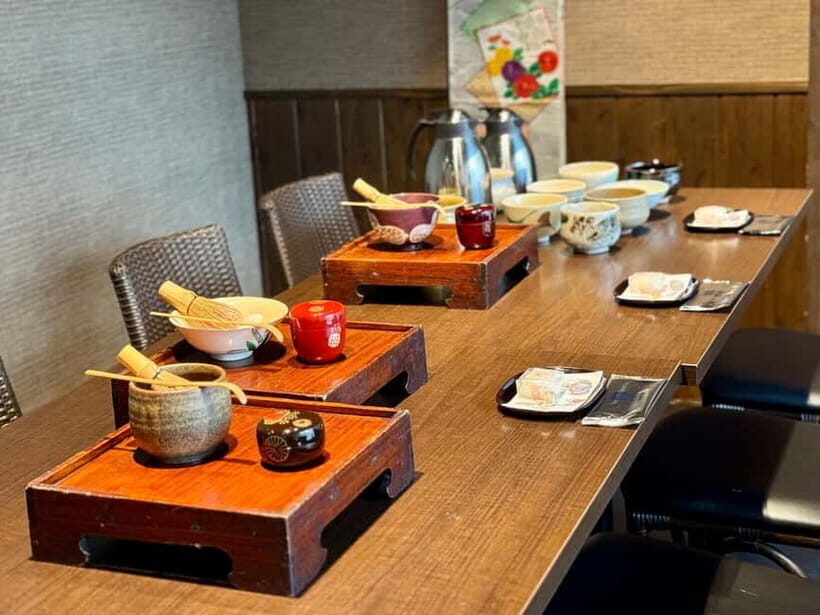
- Table-and-chair setting: relaxed learning instead of strict ceremony rules
- Kagoshima-sourced matcha and sweets: a local flavor story you can taste
- You choose your own bowl: a small detail that makes the experience feel personal
- Practice bowl included: you do the whisking yourself, not just watch
- English or German assistant support: helpful for questions about tea culture and method
- Upstairs venue near Kagoshima-Chuo Station: easy to fit into a day, but no elevator
A casual matcha lesson that still feels genuinely Japanese
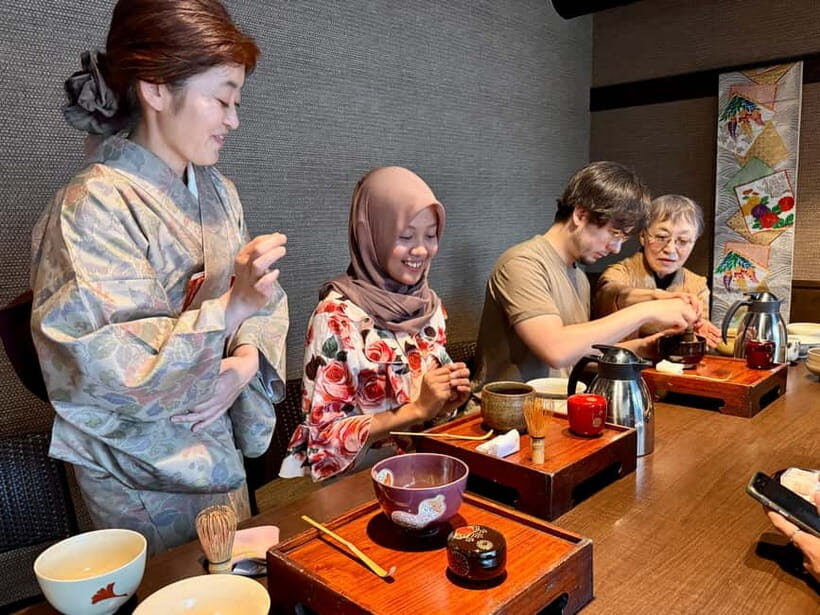
If you are expecting a full traditional tea ceremony in a tatami room, this is not that. The experience takes place in a private room in a Japanese restaurant, with table and chairs. That makes it a great match for real travel life: you can learn the basics, ask questions, and actually get comfortable with the motions.
At the start, you are not thrown into performance mode. The instructor demonstrates the process first, then invites you to try. I like this approach because it lowers the pressure—matcha is one of those things where timing and technique matter, but you learn faster when someone breaks it down calmly.
Even though it is casual, you still get a taste of etiquette. The instructor covers basic hospitality manners around serving and receiving tea. It is not stuffy, but it is respectful, and that’s what makes it feel more than just a cooking class.
You can also read our reviews of more tours and experiences in Kagoshima.


Where it happens: Kagoshima-Chuo Station convenience, plus a no-lift reality
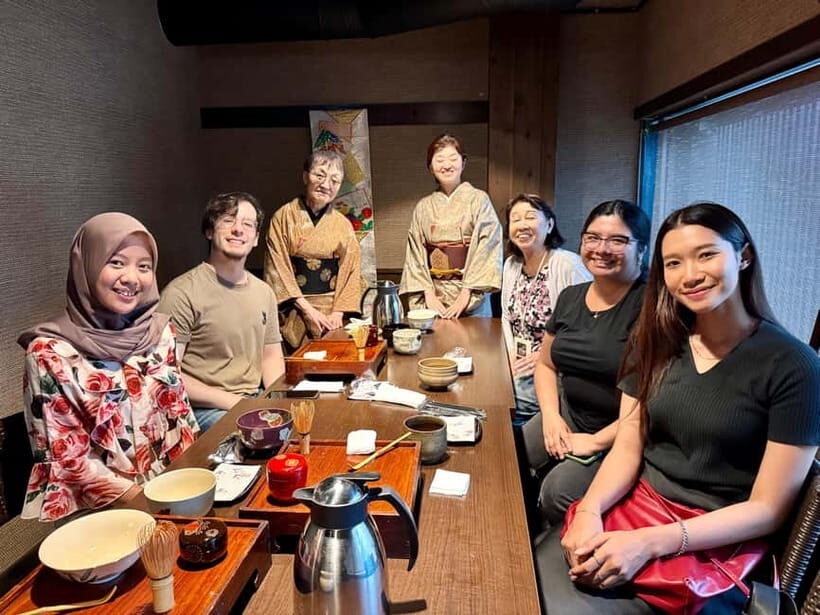
The meeting area is a private room inside a Japanese restaurant, and it is about a 5-minute walk from Kagoshima-Chuo Station. That is a big deal if you are doing rail connections, hopping between neighborhoods, or trying to keep your day unhurried.
The venue sits on the second floor, and there is no lift. So if stairs are a challenge for you, this is the one factor I would not gloss over. Also, the workshop does not allow pets and it is no-smoking, which is normal but worth knowing if you are traveling with an animal or coming from a long day outdoors.
One more practical note: you will enjoy the matcha aroma more if you avoid strong fragrances or perfumes. That is not about rules for their own sake; it is simply about not competing with the scent of the tea.
And yes, matcha does contain caffeine. The sweets may include sugar, eggs, yam, rice flour, and nuts, so check your own dietary needs in advance rather than hoping for substitutions.
The 60-minute flow: sample first, then make your own bowl
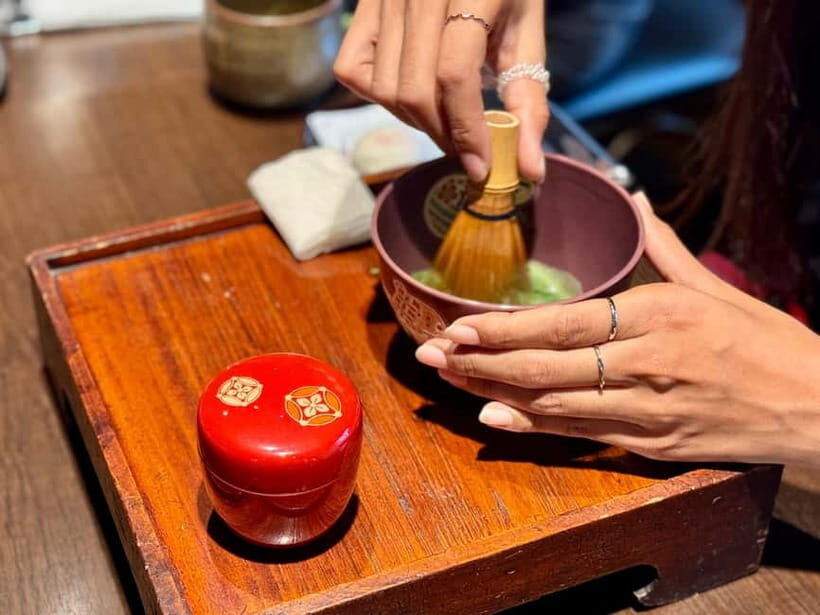
The session is scheduled for 1 hour, and that pacing feels right. You get time for a proper start, the demonstration, your practice, and a moment to ask questions without the class dragging.
Here is the order you can expect in everyday terms:
First, you receive a bowl of matcha whisked by the instructor. This is your baseline. You taste and observe what you are trying to reproduce—especially the foam and the overall balance between bitterness, vegetal notes, and sweetness from the pairing confection.
Then you move into the hands-on part. You get a second bowl to practice making matcha yourself. I like that the workshop doesn’t treat learning as passive. Once you whisk, you understand why technique matters, and you can remember the feel of the motion later when you try again at home.
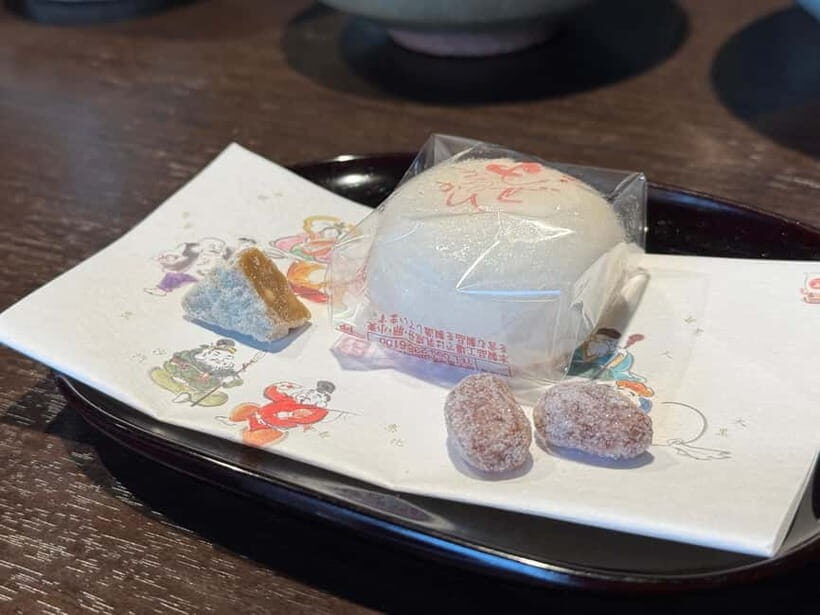
Along the way, you also get traditional sweets from Kagoshima. The pairing matters. Matcha is rarely about pure flavor alone; it is also about contrast—something lightly sweet alongside a slightly bitter, grassy cup. Even if you think you already know matcha, a local confection can surprise you.
Finally, you do not just leave with a lesson. If you have questions about culture or tea history, there is room for answers at the end. That kind of wrap-up conversation is often where small details click into place.
Utensils and technique: what you’ll learn to repeat at home
One of the most useful parts is that you learn the different utensils and what each one is for. Instead of memorizing steps like a checklist, you learn the purpose behind the actions. That makes it easier to adapt later if you do not have the exact same tools.
The class teaches the process through guided demonstration and then your own attempt at whisking. You will see how the whisking motion affects the cup, and then you try to match that result with your own hands. It is the kind of skill that is hard to learn from a video alone, but easier in person with feedback and explanation.
You also pick your own bowl or tea vessel as part of the experience. That detail sounds small, but it helps you pay attention. When you choose the bowl, you are more invested in the act of making, tasting, and noticing differences.
If you are the type who likes to cook at home, this workshop hits the sweet spot. You leave understanding not only how to make matcha, but why the steps exist in the first place.
Kagoshima flavor matters: matcha plus local sweets
I love workshops that connect the technique to place. Here, all matcha powder and confectionery are produced locally in Kagoshima. That means you taste a version of matcha that belongs to this region, not a generic product imported for convenience.
The sweets are also traditional and locally sourced. Your pairing may include ingredients like eggs, yam, rice flour, and nuts, depending on what is served that day. The point is that you get a full sensory picture: the tea plus the regional sweetness profile.
If you are curious about why different matcha can taste different, this is a helpful starting point. You are not just learning a method; you are tasting the outcome of local production choices. That makes it easier to decide what kind of matcha you want to buy later in Kagoshima.


Language support that actually helps you understand what you’re tasting
The instruction is conducted in Japanese, but an English- or German-speaking assistant can be provided. In other words, you can focus on the practical steps without feeling lost when culture or background comes up.
The workshop also lists instructors who speak German, Japanese, and English. In real terms, that matters because you will likely have questions once you start whisking and tasting. I find it easier to learn when I can ask, get an answer, and then immediately apply it.
From what I’ve heard, the translation support is solid enough that people can also ask culture and history questions. You end up with more than a cup of tea—you leave understanding the why behind parts of the ritual.
Private or small-group comfort, including a true no-rush vibe
This is offered as private or small groups, and that is a major quality factor. In a one-hour workshop, group size affects everything: how much you can ask, how much time you spend on your own bowl, and how quickly you get feedback.
Some sessions can run with just you and the instructor team, which makes the workshop feel calm and personal. Even in a small group, the setting is casual—table and chairs, comfortable pace, and a focus on hands-on learning.
That vibe helps if you are traveling alone. You are not stuck in a crowd waiting for your turn; you are guided.
Price and value: what you’re paying for in skills, not souvenirs
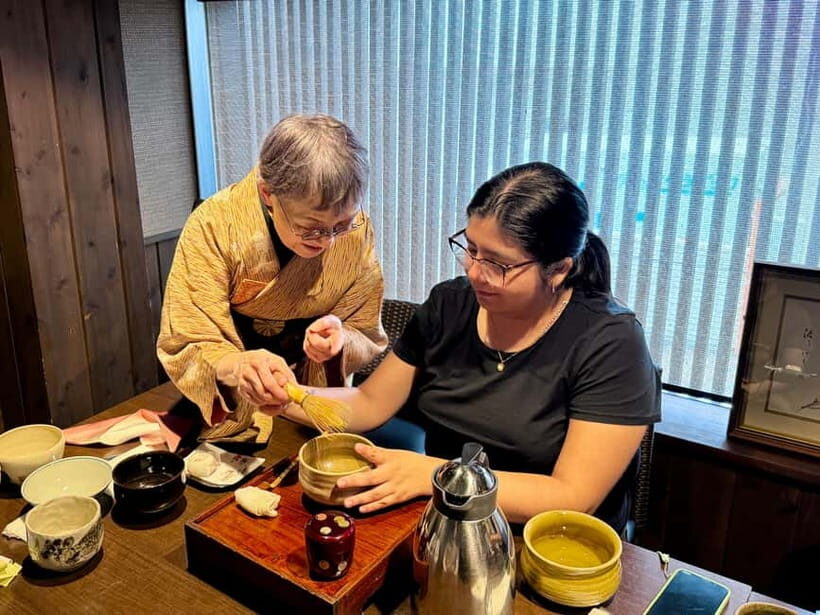
At $35 per person for about 1 hour, it is priced like a focused skill workshop, not a big-ticket tour. The value comes from what you actually get during that hour:
- A bowl of matcha whisked for you
- A practice bowl so you whisk yourself
- Traditional Kagoshima sweets to taste alongside the tea
- Instruction plus an assistant who can support English or German
- Learning about utensils and basic hospitality etiquette
So you are not paying just for tasting. You are paying for an experience that gives you repeatable technique. And because the matcha and sweets are local to Kagoshima, you also taste regional products in context.
If you like hands-on learning and you want a souvenir that is not just a photo, this kind of workshop is a good use of time and money.
Who should book this matcha-making experience (and who shouldn’t)
This workshop is a strong fit if you:
- Want to learn matcha with a real practice bowl, not just a demonstration
- Prefer a casual, approachable setting over a strict traditional ceremony
- Like asking questions about food culture and technique
- Are traveling near Kagoshima-Chuo Station and want a compact activity
You might skip it if you:
- Need step-free access, because the venue is upstairs with no lift
- Are traveling with kids under 7, since it is not suitable for them
- Have fragrance sensitivity or strong allergies, since you are asked to avoid strong scents and the sweets may contain multiple allergenic ingredients
- Expect a full formal tea ceremony in a tatami room
Should you book Kagoshima Matcha Making with Satsuma Craftworks?
Yes, if your goal is practical learning and a genuinely local taste. I’d book it for the practice bowl, the Kagoshima-sourced matcha and sweets, and the comfortable table-and-chair format that keeps the experience from feeling intimidating.
If stairs are an issue, plan carefully because the location is on the second floor with no elevator. Also, if you have allergy concerns or you are sensitive to caffeine or specific ingredients in the sweets, check your needs before you go.
Overall, it is the kind of short workshop that can change how you make matcha later at home. And that’s the best souvenir I can think of.
FAQ
Is this workshop a traditional tea ceremony in a tatami tea room?
No. It is not held in a tatami tea room. It takes place in a private room at a table with chairs, in a more casual, relaxed style.
How long does the matcha making experience take?
The duration is 1 hour.
What languages are available during the workshop?
The workshop is conducted in Japanese, and English- or German-speaking assistant support can be provided. Instructors are listed as speaking German, Japanese, and English.
What comes included in the price?
You get matcha tea preparation experience, 1 bowl of matcha tea, 1 bowl to practice making matcha, traditional sweets of Kagoshima, and an English or German speaking assistant.
Are there dietary concerns I should be aware of?
Matcha contains caffeine. The sweets may contain sugar, eggs, yam, rice flour, and nuts, so it is important to check in advance if you have allergies or specific health conditions.
Where is the venue, and is it accessible by elevator?
The venue is upstairs on the second floor and there is no lift. It is about a 5-minute walk from Kagoshima-Chuo Station.
Are pets, smoking, or strong fragrances allowed?
Pets are not allowed, smoking is not allowed, and strong fragrances or perfumes are discouraged so you can enjoy the matcha aroma.
![[Sapporo] Go by private car! Takino Cemetery, Hokkaido Shrine, Shiroi Koibito Park - Getting Oriented: Timing, Pickup, and How the Day Flows](https://images.thejapantraveler.com/wp-content/uploads/sapporo-go-by-private-car-takino-cemetery-hokkaido-shrine-shiroi-koibito-park.jpg)