REVIEW · TOKYO
Make a temple stamp book with artist
Book on GetYourGuide →Operated by Chikako Oshiro · Bookable on GetYourGuide
Goshuin starts with one page. In this hands-on workshop near Shibuya, you’ll make a personal goshuin notebook from over 100 kimono fabric choices, then use it right away at a local shrine. I love the creative part—picking fabrics that feel like you and turning them into something you’ll actually carry.
The other thing I like a lot is the cultural training: you learn how to visit formally and what to do when you collect your first stamp. One consideration: the workshop price covers the making part, but you should expect an extra stamp fee at the shrine.
In This Review
- Key points before you go
- Making A Goshuin Notebook Near Shibuya: What This Workshop Is Really About
- Picking From 100+ Kimono Fabrics: Your Notebook’s Personality
- How the Goshuin Notebook Comes Together: Folding and Gluing That You Can Copy Later
- The Shrine Lesson Part: Learning Formally Before You Collect Your First Stamp
- What’s Included (and What’s Not) so You Don’t Get Surprised
- Timing, Pace, and the Small-Group Advantage
- English Instruction With a Real Craft Focus (Chikako Oshiro)
- Where You Meet in Shibuya Area (So You Start Stress-Free)
- Who This Workshop Is Best For
- Price and Value: Is $38 Worth It?
- Should You Book This Goshuin Workshop?
- FAQ
- How long does the workshop last?
- Is the instructor able to teach in English?
- What is included in the price?
- Do I need to pay an extra fee for the stamp?
- How large is the group?
- Does it run in bad weather?
- Where do I meet the instructor?
Key points before you go
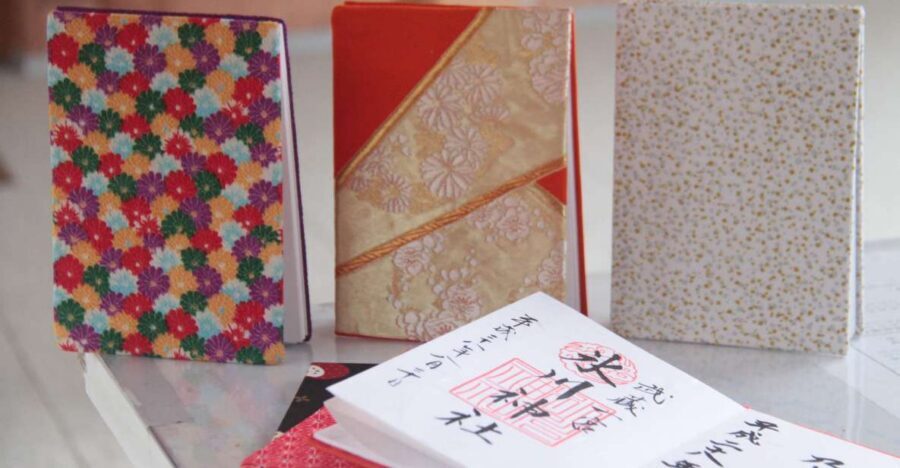
- Choose from 100+ kimono fabrics to design a goshuin notebook that’s uniquely yours
- Learn shrine formality so your first stamp feels respectful, not confusing
- Make it in a small group (up to 8) for more personal help and slower pacing
- English-speaking instructor, Chikako Oshiro, focused on clear guidance
- Rain or shine with a short walk that includes about 10 steps
Making A Goshuin Notebook Near Shibuya: What This Workshop Is Really About
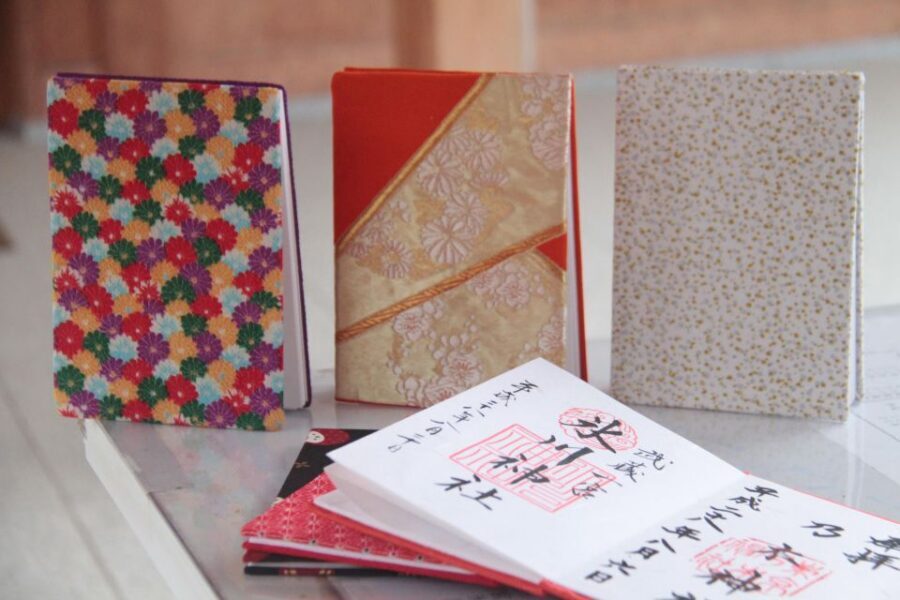
If you’re the type who wants more than a photo, this is a strong choice. You’re not just watching craft work—you’re creating a notebook designed for stamps, then stepping into the shrine world with guidance.
The location is especially convenient if you’re already in Honshu’s busy sightseeing rhythm. Shibuya is nearby, so this can slot in nicely as a morning activity before you head out for the rest of your day.
And because it’s a small group limited to 8, you’re not lost in a crowd. You’ll have time to ask questions, get your folding right, and figure out what to do when the time comes to collect your first stamp.
You can also read our reviews of more tours and experiences in Tokyo.



Picking From 100+ Kimono Fabrics: Your Notebook’s Personality
The workshop starts with fabric selection, and that part matters more than you might expect. You’ll see a wide range of kimono fabrics—over 100 options—and you choose your favorites to build the look of your goshuin notebook.
This is where the experience becomes personal fast. Instead of picking a generic souvenir, you’re selecting patterns and colors you actually like, then seeing how the design comes together as a functional book.
Your instructor also explains the fabrics’ significance while you choose. That extra bit of context is what turns the craft from just pretty paper into something with meaning.
What to do with that choice moment:
Go with two instincts: first, what you’d want to keep looking at later; second, what feels calm and readable when it’s finished. Goshuin notebooks get used, handled, and revisited—so you want a design that still feels good months from now.
How the Goshuin Notebook Comes Together: Folding and Gluing That You Can Copy Later
Once you’ve picked fabrics, you’ll learn how to make the goshuin notebook properly. The process is hands-on and method-based: you fold and glue papers together to create the notebook structure.
That “step-by-step build” is one reason this feels like a real skill experience. Even if you never plan to make another one, you’ll understand how the book is constructed for the stamp size and layout.
Materials are provided, and the instruction is clear enough that you don’t need crafting experience. One helpful detail from the experience style here is that the instructor provides extra supplies when needed. In real life, glue can run out or a corner can misbehave—so having that safety net reduces stress.
The outcome: You’ll leave with a notebook that’s ready for goshuin stamps, not just a decorative craft. And because you’ll use it immediately at a shrine, it doesn’t feel like a project that only exists on the table.
The Shrine Lesson Part: Learning Formally Before You Collect Your First Stamp
After the notebook is made, you head to a local shrine. This is not a random stop for sightseeing. It’s built around one goal: collecting your very first stamp properly.
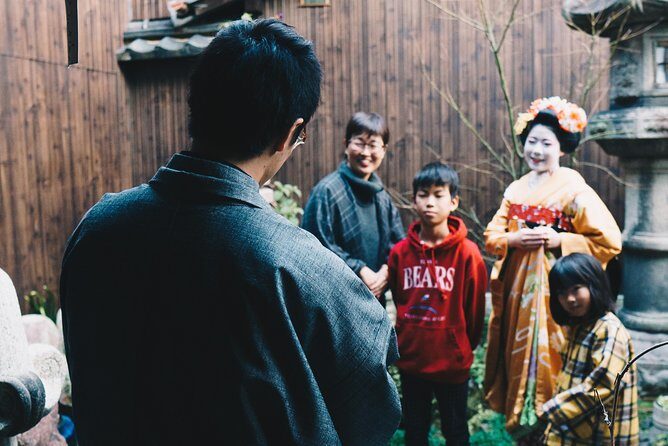
Your instructor teaches you how to visit formally. That matters because shrine etiquette is less about rules you memorize and more about doing the right actions at the right time. When you follow a guide’s cues, you’re more likely to feel confident—and less likely to accidentally do something awkward.
Then you’ll use your goshuin notebook for your first stamp. This is one of the most satisfying parts of the whole experience because it turns your craft into a travel keepsake with a story.
A stamp is small, but it’s also intimate. You’re recording a specific place in a format that’s meaningful locally. That makes the notebook feel personal in a way that mass-produced souvenirs can’t match.
What’s Included (and What’s Not) so You Don’t Get Surprised
The workshop includes the workshop fee. That covers your class time and the materials for making the goshuin notebook.
What’s not included is the stamp fee at the shrine. In other words: budget a little extra for the stamping itself, even though the creative instruction and notebook-making are covered.
This separation is actually pretty fair. You’re paying for the skill, guidance, and supplies to create the notebook. Then you pay the shrine directly for the stamp service.
If you’re the kind of traveler who hates adding last-minute costs, just plan for that extra shrine fee so your experience stays smooth.






Timing, Pace, and the Small-Group Advantage
The duration is 2 hours, which is a sweet spot. Long enough to create something real, short enough that you won’t feel like your whole day disappears.
Your group is small—limited to 8 participants—so you’re not stuck waiting for your turn. In a class like this, slow help can be the difference between a notebook that feels satisfying and one you wish you’d redone. The smaller size keeps things moving while still giving you attention.
The workshop runs rain or shine. That’s important in Japan because weather can change fast. You’ll still do the crafting and you’ll still make it to the shrine.
One practical note: there will be about 10 steps to reach the classroom and shrine. If stairs are a factor for you, consider whether that short walk is comfortable.
English Instruction With a Real Craft Focus (Chikako Oshiro)
This activity is instructed in English, led by Chikako Oshiro. That’s a big deal because goshuin etiquette isn’t just “be polite”—it’s about knowing what to do and when.
Clear language makes the shrine visit feel teachable instead of intimidating. You’ll get guidance that lets you participate, not just stand nearby and guess.
You’ll also benefit from the instructor’s craft teaching style: choosing fabrics, constructing the notebook, and then connecting it to the shrine visit. That thread is what makes the experience feel coherent rather than like three separate things pasted together.
Where You Meet in Shibuya Area (So You Start Stress-Free)
Meet in front of the entrance located between a drug store and Cozy Corner (cake shop). It’s a simple landmark setup, but it helps to arrive a few minutes early so you don’t waste your first minutes hunting.
If you’re bouncing around Shibuya later, try to keep this one as a calm anchor point. A 2-hour workshop goes best when you’re not rushing in from another timed commitment.
Who This Workshop Is Best For
This is ideal if you want a hands-on cultural activity that has a built-in payoff.
You’ll enjoy it most if you:
- Like crafts but also want practical instruction you can follow
- Want something more meaningful than a standard souvenir
- Are curious about goshuin stamps and want your first one done correctly
- Plan to spend time around Shibuya and want a nearby, skill-based morning
It may not fit as well if you:
- Need accessibility support for mobility impairments (the activity isn’t suitable for people with mobility impairments)
- Are traveling with children under 3 (not suitable)
Price and Value: Is $38 Worth It?
At $38 per person, you’re paying for guided construction of the goshuin notebook plus the shrine-visit coaching. In many craft experiences, the “value” is the materials and time. Here, you also get the etiquette education, and you use the notebook immediately.
The key cost nuance is that the stamp fee at the shrine is not included. But that’s also part of how goshuin works in Japan—your final souvenir has a service cost at the shrine itself.
So the value equation looks like this:
- You get a guided build of a functional notebook (materials + instruction)
- You get your first formal shrine visit with your notebook
- You pay the shrine separately for the stamp
If you want a single activity that mixes creativity, learning, and an instant memory in a compact 2-hour window, this is a strong value.
Should You Book This Goshuin Workshop?
I’d book it if you want more than a passive cultural stop. This is one of those experiences where the object you make becomes the centerpiece of the moment you collect the stamp. You leave with a notebook that’s ready for future goshuin, plus a better understanding of how to visit shrines in a more formal way.
I’d skip it only if:
- You’re strongly price-sensitive and don’t want any extra shrine fees
- Stairs and short walking segments are hard for you
- You dislike structured activities and prefer free-form sightseeing only
If you fall in the middle—curious, open-minded, and ready to try something hands-on—this is a very satisfying choice near Shibuya.
FAQ
How long does the workshop last?
The workshop lasts about 2 hours.
Is the instructor able to teach in English?
Yes, the instructor teaches in English.
What is included in the price?
The workshop fee is included, including materials and instruction for making your goshuin notebook.
Do I need to pay an extra fee for the stamp?
Yes. The stamp fee at the shrine is not included.
How large is the group?
The group is small, limited to 8 participants.
Does it run in bad weather?
Yes, it takes place rain or shine.
Where do I meet the instructor?
Meet in front of the entrance located between a drug store and Cozy Corner (cake shop).