REVIEW · KYOTO
Kyoto Geisha Show Cultural Hour with an apprentice geisha, Maiko
Book on Viator →Operated by Ken's Tours Kyoto · Bookable on Viator
A maiko on stage is Kyoto magic.
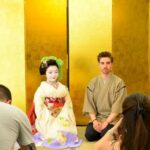
This small-group Geisha Show Cultural Hour brings you face-to-face with an apprentice geisha (a maiko) plus a Q&A you can actually follow. You skip the long-shot street sightings and get a set performance with guided context, right in Kyoto.
I especially like two things: the small-group size (up to 14) keeps the mood respectful and questions manageable, and the English-speaking guide handles translation so you’re not stuck guessing what’s happening. It also helps that the format is designed for conversation, not just watching from the back.
One consideration: the experience depends on good weather, so if conditions aren’t right, the operator may reschedule or refund instead of running the show as planned.
In This Review
- Key points worth knowing before you go
- Kyoto maiko show: why this feels different than just hoping to spot someone
- Meeting in Honmachi: what to expect before the show starts
- The 90-minute format: performance plus Q&A (not a fast in-and-out)
- Watching a maiko: what you’ll notice during the dance
- The translation matters more than you think
- Tea time and photo moments: how the experience usually closes
- Price and value: what you’re paying for in Kyoto
- How to make the most of your hour (without getting in the way)
- Who this Kyoto maiko cultural hour is best for
- Should you book this Kyoto Geisha Show Cultural Hour with a maiko?
- FAQ
- How long is the Kyoto Geisha Show Cultural Hour?
- Where does the experience meet?
- Is there an English-speaking guide?
- Will I understand the Q&A if I don’t speak Japanese?
- How big is the group?
- What performance will I see?
- Is coffee or tea included?
- What if the weather is bad?
- Can I change or cancel my booking for a refund?
Key points worth knowing before you go
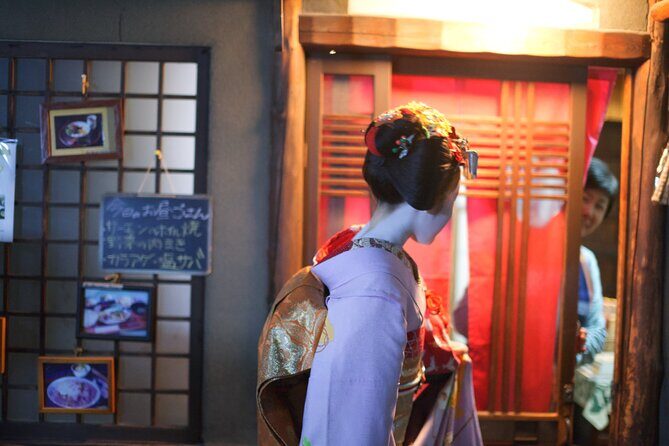
- A guaranteed on-stage maiko experience in a city where sightings are getting harder to catch
- English translation for the Q&A, so you can ask real questions without a language wall
- Small group limit (max 14 travelers) for better attention and a calmer setting
- Honmachi meeting area that sets context before the performance
- An hour-and-a-half format with performance plus Q&A (one or two songs)
- Tea may be part of the experience, but coffee/tea isn’t listed as included—plan accordingly
Kyoto maiko show: why this feels different than just hoping to spot someone
Street spotting geiko and maiko in Kyoto has become harder. That’s exactly why this kind of cultural hour matters. You’re not relying on luck or timing; you’re getting a scheduled performance with a real apprentice geisha, plus explanation you can understand.
I like that the structure is built around “learn and watch.” The performance is only part of it. The Q&A is where most people come alive—because you can ask about training, customs, and daily life rather than just admiring costumes and choreography.
Also, this isn’t a giant production. With a maximum of 14 people, it tends to feel more like a guided introduction to a private world rather than a loud tourist show where everyone’s trying to film at once.
A few more Kyoto tours and experiences worth a look

Meeting in Honmachi: what to expect before the show starts
You meet at 5-chōme-182 Honmachi. The setting is in the Kyoto districts where geisha culture is historically tied to entertainment houses, and the start is more meaningful than “check in and sit down.”
In practice, the flow usually begins with an orientation walk—often around the geiko areas—where your guide shares the basics: what geiko and maiko are, how houses and agencies fit into the system, and how entertainment districts have functioned over time. This is the part that helps you stop treating the show like a standalone performance and start seeing it as a living tradition with rules and roles.
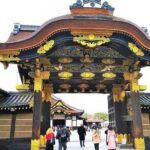
Some versions of the tour begin near a shrine and then move on toward the location where the maiko will perform. It’s a short walk, but it helps you build context so the performance doesn’t feel random.
The 90-minute format: performance plus Q&A (not a fast in-and-out)
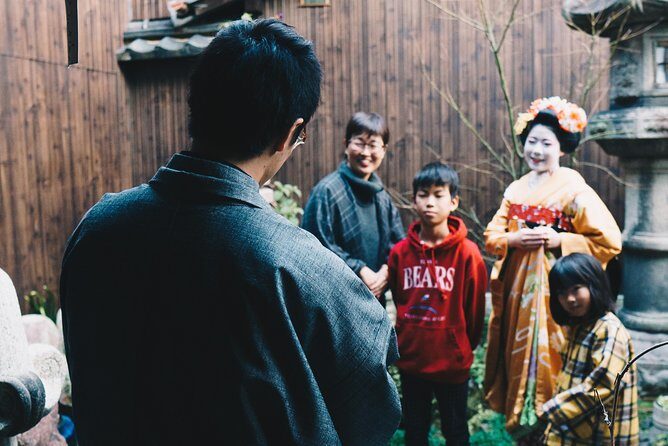
This is about 1 hour 30 minutes, and the time is used intentionally. The session includes:
- A Q&A portion, moderated by your English-speaking guide
- A geisha performance by the maiko, typically one or two songs
That Q&A piece is the heart of the experience. Instead of you staring at someone and hoping you guessed the meaning correctly, the guide translates what’s being asked and answered. You’re able to focus on questions that make sense: training routines, customs, and what daily work really looks like.
In some sessions, there may also be extra interaction—like time for a party game or more conversation—before the performance. The official structure stays the same, but the human moments can make it feel warmer and less “scripted.”
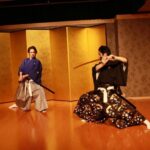
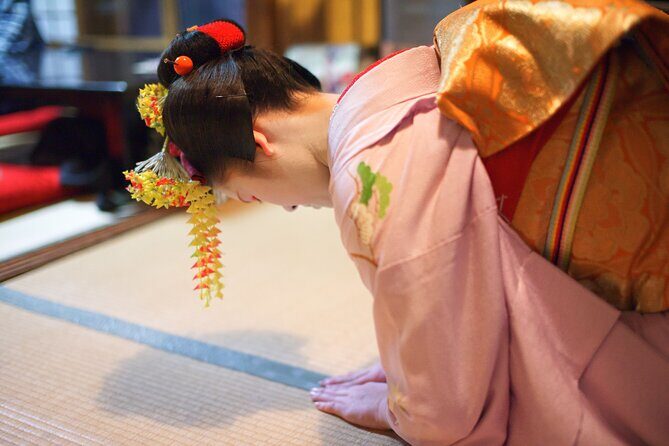
And yes, there’s a stage element: you’ll see traditional dance as part of the show. The goal is not background ambiance. It’s a real performance, delivered up close enough to notice details like poise and timing.
Watching a maiko: what you’ll notice during the dance
A maiko performance isn’t only about the moves. It’s about the discipline behind them—posture, rhythm, and the ability to perform with calm precision even while answering questions earlier in the hour.
When you get time to speak first, the dance often lands differently. It’s not just pretty motion; it’s something you understand as trained work. That’s the value of having the Q&A before (or alongside) the performance.
The show is listed as one or two songs, so don’t expect a full-length festival program. What you should expect is quality and attention from the maiko herself, plus guided framing so you know what you’re seeing.
The translation matters more than you think
This tour explicitly avoids a “language barrier” problem. Your guide translates, and that changes how you experience the hour.
Here’s how: you don’t waste your time trying to translate on your phone while everyone else is speaking. You can ask follow-up questions. You can also pick up vocabulary—things like the difference between terms used for geiko and maiko—because the guide can explain what matters in context.
Guides named Ken and Saya are mentioned in guest experiences. Having a guide who can keep the tone formal for the maiko while also making you comfortable is a huge deal. It prevents that awkward mismatch where tourists want casual conversation but the culture needs respectful structure.
If you want a “learn while you watch” experience, this translation support is one of the biggest reasons it earns such strong recommendations.




Tea time and photo moments: how the experience usually closes
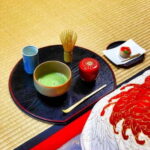
Even though coffee and/or tea isn’t listed as included, people report that you may have time for tea during the session. That tea moment isn’t just a break—it’s usually the social bridge between you and the maiko, making the conversation feel less like an interview and more like a cultural exchange.
Photo time may happen at the end of the show depending on the flow. In some accounts, guests were able to take photos with the maiko after the performance. If photos matter to you, consider being ready right at the end and following the guide’s cues.
The overall finish is usually a farewell after you’ve had conversation and watched the dance. It’s a neat way to end: you leave with both visuals and answers.
Price and value: what you’re paying for in Kyoto

At $105.42 per person, this isn’t a bargain. But it’s also not trying to be one. You’re paying for:
- A guaranteed live performance by an apprentice geisha
- A structured Q&A (with translation)
- A small-group environment (max 14)
- A guide who sets context for how the culture works
If you’ve looked at other Kyoto “cultural performances,” many feel like you buy a ticket to watch. Here, the real product is access plus explanation. That makes it feel closer to “a guided meeting with training and tradition” than “a show in a hall.”
The tour also uses a mobile ticket and is often booked about 44 days in advance on average, which hints it has steady demand. If you’re traveling in peak season, waiting can cost you options.
One more thing: the session needs good weather. If you book late, you may lose flexibility if it has to shift or be refunded due to weather. Build that buffer into your Kyoto plan.
How to make the most of your hour (without getting in the way)

You don’t need special preparation, but you should go in with the right mindset. This is a respectful meeting with a working performer, not a meet-and-greet at a concert.
A few practical tips that will help:
- Bring a couple of questions you genuinely care about (training, customs, daily routine).
- Listen during the Q&A—translation is doing real work, and rushing for turns can throw off the flow.
- If you want photos, wait for the guide’s cue and follow instructions closely.
- Keep your phone use low during the dance unless your guide explicitly signals it’s okay.
The best moments come when you treat the hour like a conversation plus performance. If you show curiosity and patience, you’ll get more back than you expected.
Who this Kyoto maiko cultural hour is best for
This is ideal if you:
- Want a guaranteed maiko performance rather than hoping to spot one on the streets
- Like guided cultural context, not just watching from a distance
- Prefer a quieter, smaller group (up to 14) over crowded shows
- Want real Q&A time, not a one-way lecture
It may be less ideal if you’re looking for a high-energy entertainment event with a long show. This is short, respectful, and structured. It’s built for understanding how the tradition works.
If you’re on a first-time Kyoto trip and want one experience that actually connects you to the people and training behind the appearance, this fits well.
Should you book this Kyoto Geisha Show Cultural Hour with a maiko?
I’d book it if you want the most direct path to seeing a maiko perform and hearing about the work behind it. The value comes from the combo: live performance in a controlled setting plus a Q&A you can understand thanks to translation.
Skip it if you only care about photo ops or you don’t want a structured cultural talk. Also, if your schedule is extremely tight, remember it depends on good weather, and cancellation isn’t refundable in every scenario.
In most cases, this is the kind of Kyoto experience that rewards curiosity and good manners. You’ll leave with more than a memory—you’ll leave with actual answers.
FAQ
How long is the Kyoto Geisha Show Cultural Hour?
It runs for about 1 hour 30 minutes.
Where does the experience meet?
The meeting location is listed at 5-chōme-182 Honmachi, Kyoto.
Is there an English-speaking guide?
Yes. An English-speaking guide is included, and they translate during the Q&A.
Will I understand the Q&A if I don’t speak Japanese?
Yes. The guide translates for you, so there are meant to be no language barriers.
How big is the group?
The tour has a maximum of 14 travelers.
What performance will I see?
You’ll see a geisha performance by a maiko, with one or two songs, along with a Q&A session.
Is coffee or tea included?
Coffee and/or tea is not listed as included.
What if the weather is bad?
The experience requires good weather. If it’s canceled due to poor weather, you’ll be offered a different date or a full refund.
Can I change or cancel my booking for a refund?
No. The experience is non-refundable and cannot be changed for any reason.