REVIEW · KAGOSHIMA
Samurai Spirit Half Day Walking Tour in Kagoshima
Book on Viator →Operated by Kagoshima Wonderful Walk · Bookable on Viator
Saigo’s last stand is uphill—and unforgettable. I like the big hill views from Shiroyama and I like how the guide (often including Kuni or Karin) brings Saigo Takamori’s choices to life with clear, question-friendly explanations. One catch: you’ll do a steady walk on uneven ground, so plan on moderate fitness, comfy shoes, and bring water since it isn’t provided.
This is a true private half-day that runs about 2 to 3 hours starting at Mount Shiroyama at 9:00am, then works its way down toward downtown. You’ll hit major story-linked sites—observatory, Buddhist stones, Saigo’s hideout cave, a restored castle gate, and finally the Saigo Takamori statue in the city center—without wasting time on a bus shuffle.
In This Review
- Key highlights you’ll feel right away
- Why Saigo Takamori’s Kagoshima story starts on Shiroyama hill
- The walk plan: 2–3 hours, private group, and what to expect underfoot
- Stop 1: Shiroyama Observatory—views, camphor trees, and the Seinan War setting
- Stop 2: Thirteen Stone Buddhas—why Kagoshima mirrors Shikoku’s pilgrimage route
- Stop 3: Saigo Takamori’s hideout cave—last five days, guided storytelling, and real atmosphere
- Stop 4: Tsurumaru Castle’s main gate (Goromon) and how hometown systems shaped samurai
- Stop 5: The bronze Saigo statue—how honor was restored after the conflict
- Price and value: what you’re paying for at $32.09
- Weather, timing, and comfort: the small stuff that matters
- Who should book this tour (and who might not)
- Should you book Samurai Spirit in Kagoshima?
- FAQ
- How long is the Samurai Spirit Half Day Walking Tour?
- What is the meeting point and start time?
- Where does the tour end?
- Is this a private tour?
- How many people are needed for the tour to run?
- What is the price per person?
- Is a mobile ticket provided?
- What’s included in the price?
- What is not included?
- Is the tour suitable for people with limited mobility?
- Does the tour allow service animals?
- What if the weather is bad or I need to cancel?
Key highlights you’ll feel right away
- Hilltop-to-city descent that matches the ending of Saigo Takamori’s story
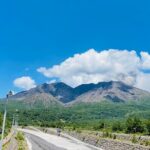
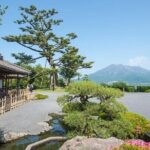
- Sakurajima views from Shiroyama Observatory on a natural, green hillside
- Thirteen Stone Buddhas that connect Kagoshima to the Shikoku 88-pilgrimage tradition
- Saigo Takamori’s hideout cave with guided context about the last days of the conflict
- Goromon (Tsurumaru Castle main gate) rebuilt in 2020, plus how samurai training was shaped locally
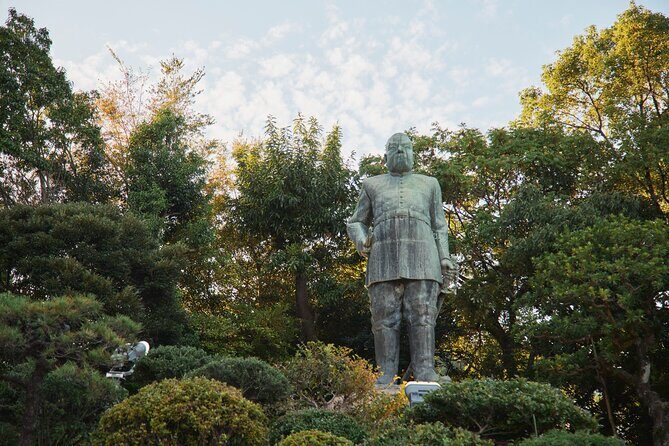
- The bronze Saigo Takamori statue tied to the movie image of The Last Samurai
Why Saigo Takamori’s Kagoshima story starts on Shiroyama hill
Kagoshima doesn’t treat Saigo Takamori like a distant textbook figure. The town ties him to place—hilltops, caves, gates, and statues—so you get the feeling that history happened right here, not somewhere else. That’s exactly why this walk begins up on Mount Shiroyama. You start with altitude, then you move down into the city, which helps your brain follow the timeline of his last stand.
You’ll also get the extra movie-layer without needing to be a film fan. Katsumoto, the character from The Last Samurai, is based on Saigo Takamori, a Kagoshima native. The tour keeps that connection practical: you see the real sites, then you learn why the story mattered so much after the Civil War.
You can also read our reviews of more walking tours in Kagoshima
The walk plan: 2–3 hours, private group, and what to expect underfoot
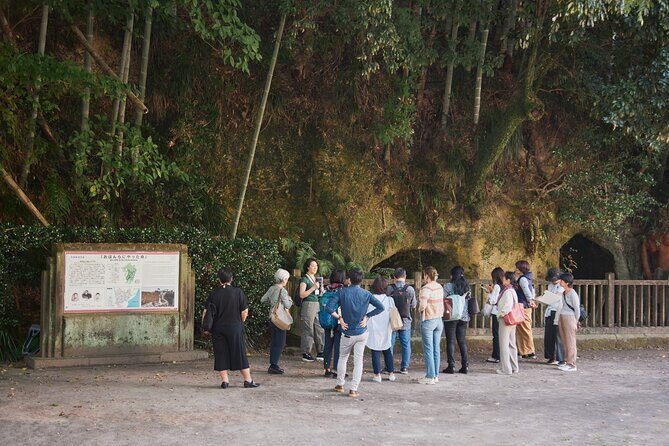
This experience is scheduled for about 2 to 3 hours, and it’s built as a half-day walking route. It’s private, so only your group participates. There’s also a minimum of two participants, which matters if you’re traveling solo—you’ll want to check that the tour can run with your booking.
The pace is best described as “visit, listen, walk a bit, repeat.” Several stops are short—think 5 to 15 minutes each—so you’re not stuck for long stretches in one spot. Still, you’re on a hillside. Paths can be uneven, and you’ll be moving between viewpoints, temple stones, and a cave site. If you have any knee issues or you hate slippery ground, plan on going slow and wearing shoes with good grip.
Also, the tour does not include bottled water, so bring your own. It’s a small detail, but it makes the difference between a comfortable walk and a forced stop at a convenience store.
Stop 1: Shiroyama Observatory—views, camphor trees, and the Seinan War setting
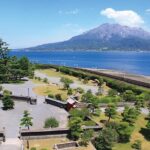
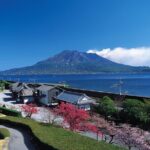
Shiroyama Observatory is the first big “wow” moment. It’s a 107-meter-high observatory in the center of Kagoshima, which means you get an immediate sense of geography. On clear days, you look out over Sakurajima, the active volcano, and you see the city layout below. Even if you’ve visited Kagoshima before, a hilltop view helps you understand how the city relates to the people who lived and fought there.
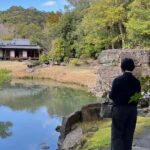
What I also like about starting here is that it’s not just concrete and viewpoints. Shiroyama is tied to nature too—large camphor trees and ferns are part of what you encounter along the way. That matters because the tour is about spirit and final days. The contrast between a quiet, wooded hillside and the violence tied to the same area makes the story land harder.
Then there’s the historical anchor. Shiroyama was tied to the Seinan War, described as the last civil war in Japan. From this starting point, you walk toward the cave of Takamori Saigo, so the setting shifts from wide, open views to the more personal, enclosed space of the last stand.
Practical note: since Shiroyama is elevated, mornings can feel cooler and windy. If you get chilly easily, pack a light layer.
Stop 2: Thirteen Stone Buddhas—why Kagoshima mirrors Shikoku’s pilgrimage route
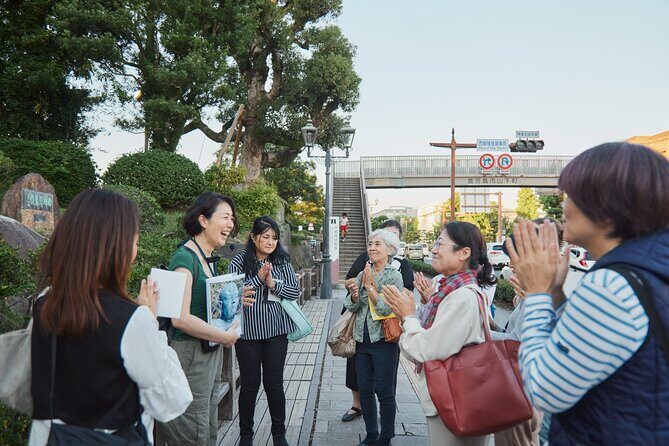
Next up is a quiet stop that feels thoughtful rather than showy: Thirteen Stone Buddhas. The name sounds simple, but the meaning is the interesting part. In 1928, thirteen statues were erected in Kagoshima so visitors could experience a piece of the 88-pilgrimage tradition associated with Kobo Daishi, a major Buddhist monk credited with founding Shingon Buddhism.
This stop helps you understand how Japan blends memory, spirituality, and local identity. You’re not just learning about samurai battles. You’re seeing how later generations built spiritual pathways so travelers could feel connected to something bigger.
On the stones themselves, you’ll be able to see Buddhist statues, plus Jizo statues. Jizo is often associated with protection and care in the Buddhist world, so the mood here can feel gentler than the battlefield-cave scenes you’ll see soon.
Time is short—about 5 minutes—so it works well as a mental reset between the larger historical moments.
Stop 3: Saigo Takamori’s hideout cave—last five days, guided storytelling, and real atmosphere
This is the stop that turns the tour from sightseeing into story. The cave is described as the place where Saigo Takamori and his comrades spent the last five days of the Civil War. Standing at a site like this changes your sense of scale. Five days doesn’t sound long—until you imagine being trapped in one place with high stakes, dwindling options, and a mindset that has to hold steady.
Here, the guide does the heavy lifting: you’ll get explanations of Saigo’s thoughts and how his spirit is reflected through the way his soldiers endured those final days. The tour aims for understanding, not theater. Based on how guides like Kuni and Karin handle questions, you can expect the vibe to be calm and conversational rather than lecture-heavy.
Admission is free for this stop, so you’re paying for the interpretation and pacing, not for entry gates.
Practical tip: caves can be cooler or have different airflow. If you’ve got a small battery-powered device you care about, keep it close to your body in colder conditions.
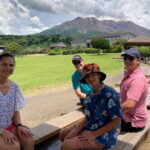



Stop 4: Tsurumaru Castle’s main gate (Goromon) and how hometown systems shaped samurai
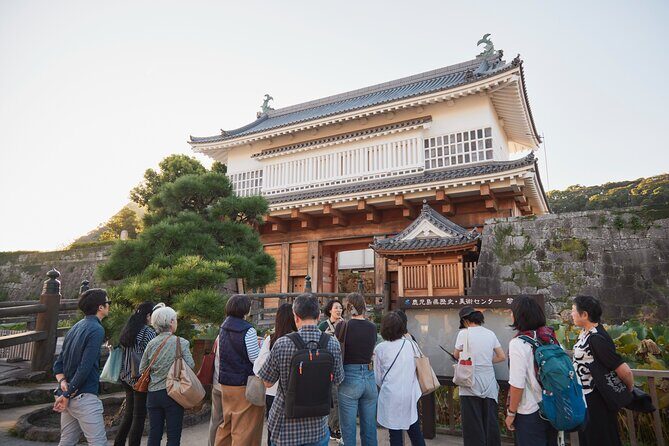
After the cave, you step into something more structural: Tsurumaru Castle’s main gate, Goromon. The tour points out that the original gate was destroyed by fire in 1873, but it was rebuilt in 2020. That detail matters because it shows how the past keeps getting repaired and reinterpreted—not locked behind glass.
At this stop, you also get context on what helped produce samurai in Kagoshima. The guide explains a hometown education system that nurtured Kagoshima’s samurai, plus the structure of the Goromon and aspects of samurai society from the time.
This is one of the best places to ask questions, because it connects personal heroism (Saigo) to the social systems that supported the role. It’s the difference between learning what happened and understanding why the same kind of person kept appearing in that region.
Another practical bonus: this stop is about 15 minutes, long enough to absorb the story but not so long that you feel stuck in place.
Stop 5: The bronze Saigo statue—how honor was restored after the conflict
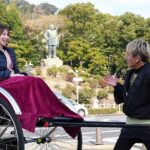
You finish in the city center at the statue of Saigo Takamori. The tour notes it’s a bronze statue and that it’s the model for The Last Samurai. Even if you’ve never seen the movie, you’ll likely recognize how this public monument turns a complex life into a single image people can point to.
The guide also explains why Saigo earned respect over time—especially through the restoration of his honor after the Civil War—and why this statue exists. That last piece is key. Monuments aren’t only about celebrating. They’re also about deciding what the public should remember.
The timing is short here—around 10 minutes—but the location makes the ending feel complete. You started on the hill, then worked down into the main urban area. Ending at a visible public statue gives your brain a place to “land” the story.
Price and value: what you’re paying for at $32.09
At $32.09 per person, this tour isn’t trying to compete with budget bus rides. You’re paying for a guided walking route that bundles multiple meaningful stops, with all fees and taxes included.
Here’s why the value can feel solid:
- Several stops list free admission, so you’re not paying separate entry costs for each location.
- The tour includes interpretation across different types of sites: observatory, religious stones, cave, castle gate, and public monument.
- It’s structured as a private tour for your group, so you’re not sharing the learning time with strangers.
The main “cost” beyond the ticket is what you bring yourself: bottled water and getting yourself to the meeting point via public transportation. Since private transportation isn’t included, you’ll want to plan your commute into Kagoshima ahead of time.
If you like history that you can physically walk through—hilltop to cave to gate to statue—this price is easier to justify.
Weather, timing, and comfort: the small stuff that matters
The tour needs good weather. Kagoshima can include rain and humidity, and hillside walking gets more annoying when the ground is slick. If your schedule is tight, watch the forecast close to your start time.
Start time is 9:00am, and the meeting point is Mount Shiroyama at 22 Shiroyamacho, Kagoshima. The end point is the Saigo Takamori statue at 4-36 Shiroyamachō, Kagoshima. That means you don’t have to worry about backtracking to the hill at the end—though you’ll still want to have your next plan lined up for downtown.
Comfort-wise: the route is moderate and guided, but it’s still outdoors and partly on natural ground. If you can handle a few small climbs and uneven surfaces, you’ll likely enjoy it more. If you prefer totally flat walking, this route might feel like work.
Who should book this tour (and who might not)
This fits you best if:
- You want a tight half-day with several meaningful stops instead of a long day of transit
- You like story-led walking tours, especially ones tied to a single historical figure
- You enjoy city views and want to understand Kagoshima’s geography through the route
- You value a guide who answers questions and keeps the tone relaxed (that style shows up clearly in how Kuni and Karin are described)
You might skip it if:
- You’re not comfortable with moderate physical fitness walking
- You strongly prefer major museums over outdoor sites and caves
- You’re hoping for a fully indoor experience in any conditions
Should you book Samurai Spirit in Kagoshima?
If you’re in Kagoshima for a short stay, I’d book this. It’s compact, purposeful, and tied to place: Shiroyama’s lookout, Buddhist stones that connect pilgrimage traditions, Saigo’s hideout cave for the last five days, then Goromon and a public statue that ties the movie image back to reality.
The main decision point is your comfort level with hillside walking. If you can handle uneven ground and you’ll wear good shoes, you’ll get a satisfying sense that you walked through the last chapter of Saigo Takamori’s life—while also seeing why Kagoshima’s spiritual and cultural identity shaped how the story was remembered.
FAQ
How long is the Samurai Spirit Half Day Walking Tour?
The tour lasts about 2 to 3 hours.
What is the meeting point and start time?
It starts at Mount Shiroyama (22 Shiroyamacho, Kagoshima, 892-0853, Japan) at 9:00am.
Where does the tour end?
It ends at the Statue of Saigo Takamori (4-36 Shiroyamachō, Kagoshima, 892-0853, Japan).
Is this a private tour?
Yes. It’s a private tour/activity, and only your group will participate.
How many people are needed for the tour to run?
The minimum participants is two.
What is the price per person?
The price is $32.09 per person.
Is a mobile ticket provided?
Yes. The tour uses a mobile ticket.
What’s included in the price?
The tour includes all fees and taxes.
What is not included?
Bottled water and private transportation are not included.
Is the tour suitable for people with limited mobility?
It requires moderate physical fitness.
Does the tour allow service animals?
Yes, service animals are allowed.
What if the weather is bad or I need to cancel?
The experience requires good weather. If you cancel up to 24 hours in advance, you get a full refund; canceling less than 24 hours before the start time is not refunded.