One neighborhood at a time, Shinjuku makes sense. This 2-hour small-group walk strings together Shinjuku’s big sights and lesser-known lanes, with your guide explaining what you’re looking at and how locals move through it. I like that it’s built for getting your bearings fast: you’ll put the map away and follow someone who knows where to go.
Two parts of this tour really win me over. First, the guide commentary turns scary-looking streets into readable stories, from postwar nightlife to today’s bar culture. Second, the stop selection is smart: you see major nightlife areas like Kabukicho and Golden Gai, then you switch gears to the calmer ritual space of Hanazono Shrine.
The only real drawback is that the evening routing includes areas tied to adult nightlife, so it may feel uncomfortable if you prefer a strictly family-friendly vibe. Also, this is a walking tour, and food and drinks aren’t included, so plan accordingly.
In This Review
- Key points to know before you go
- Shinjuku at 5:00 pm: why this evening start works
- Going off the tourist trail without getting lost
- Kabukicho: a red-light district intro that stays readable
- Omoide Yokocho: the postwar alley bar culture moment
- Hanazono Shrine: Shinjuku’s older spiritual contrast
- Shinjuku Golden Gai: tiny bars and old Tokyo atmosphere
- How the guide turns a walk into understanding
- Price and value: $24 for a guided evening with paid stops
- Who this tour is best for (and who might want a different plan)
- Practical tips so you get the most from the walk
- Should you book this Shinjuku Hidden Alleys walking tour?
- FAQ
- How long is the Tokyo Shinjuku: History, Culture & Hidden Alleys Walking Tour?
- What time does the tour start?
- Where is the meeting point?
- What areas does the tour include?
- Is food or drinks included?
- Is there a ticket for the tour?
- How big is the group?
Key points to know before you go
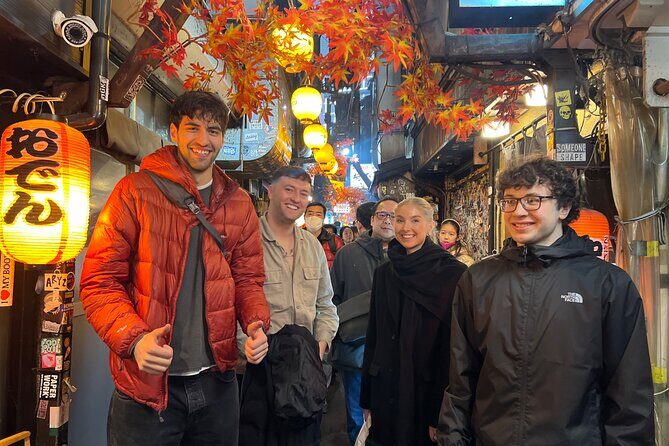
- Small group up to 15 keeps the pace human and questions actually get answered
- A 5:00 pm start hits that sweet spot between commuter flow and night lights
- Four distinct stops cover red-light streets, alley bar culture, a major shrine, and Golden Gai
- Several stops include admission tickets so you’re not doing paperwork mid-walk
- Guide navigation matters in a station-spaghetti city like Shinjuku
Shinjuku at 5:00 pm: why this evening start works
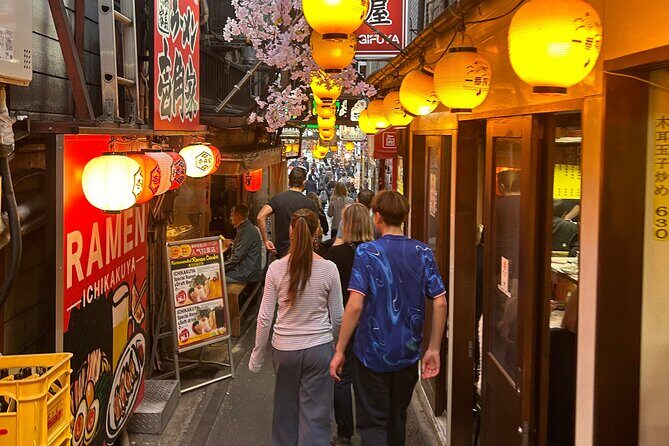
Shinjuku can feel like a maze even if you’ve mapped it at home. Around late afternoon, the city starts to shift from daytime transit mode into evening social mode. That’s when the neighborhood’s energy becomes visible, not just theoretical.
This tour starts at 5:00 pm, which is timed well for walking. You’ll catch streets coming alive, especially around the nightlife zones. And because you’re moving in a group with a guide, you’re less likely to waste time circling wrong exits or getting turned around in crowds.
You also end up seeing Shinjuku as a lived-in place, not an Instagram checklist. The guide’s job is to point out patterns: where locals go after work, how alley spaces differ from main streets, and why certain streets developed the way they did.
You can also read our reviews of more walking tours in Tokyo

Going off the tourist trail without getting lost
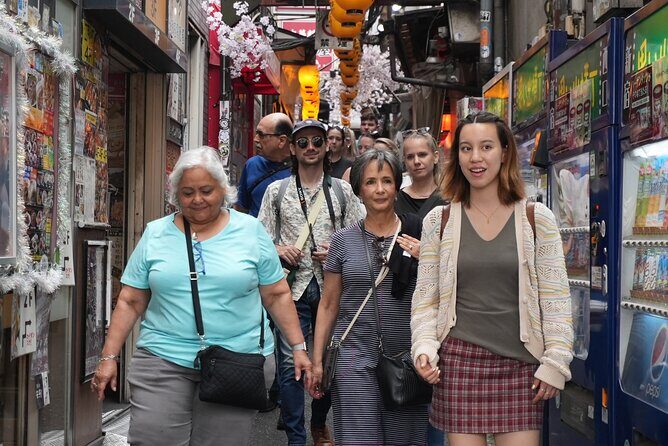
The promise here is simple: you’ll go beyond the obvious streets and into the narrow lanes that don’t show up cleanly on first-time plans. Shinjuku is vast, and the “just follow the signs” approach can burn serious time. With this tour, you’re basically outsourcing that confusion.
What you’ll notice is that the guide route does the thinking for you. Instead of you trying to connect dots between neighborhoods, your guide connects the dots for you—literally and historically. You also get a rhythm to the walk: short stop, a little context, then forward.
The tour uses a mobile ticket, which makes it easier on the day. You won’t be stuck hunting for paper or re-downloading details while everyone else is gathering. (And it’s near public transportation, which helps if you’re arriving from elsewhere in Tokyo.)
One more practical win: the group stays small, capped at 15 travelers, so it doesn’t turn into a long line of earbuds. That matters because alleyways and shrines don’t work well with large crowds trying to funnel through.
Kabukicho: a red-light district intro that stays readable
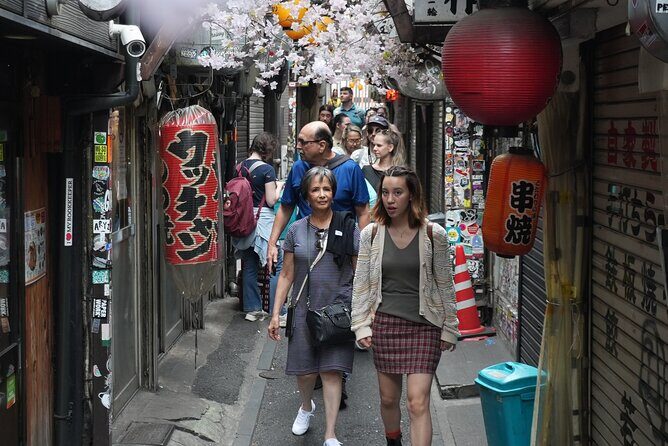
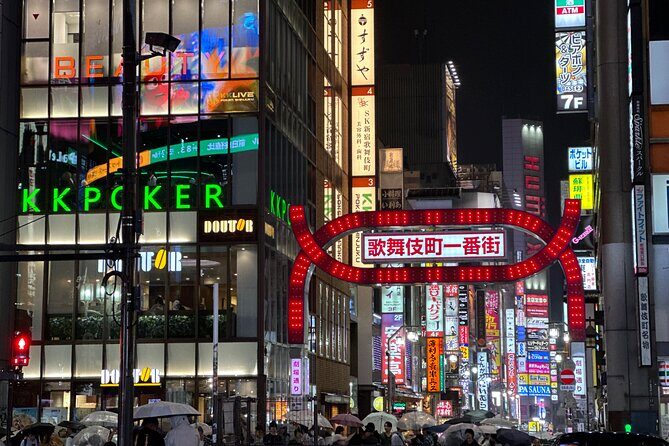
Your first stop is Kabukicho, Shinjuku’s well-known red-light district. The area can look intimidating at a glance, especially at night, but the value of starting here is that it becomes an orientation point. You’re not dropped in the deep end with zero context.
Kabukicho is also a useful contrast to the rest of the walk. It sets the tone for what you’ll see later in other nightlife pockets, so when the tour moves on, you understand the “why” behind the vibes rather than just taking photos.
At this stop, plan for street-level observation. Your guide will frame the area, and you’ll pick up the kind of details that don’t show up in a headline. Even if you don’t have interest in nightlife specifically, you’ll understand how Shinjuku’s entertainment economy shaped its streets.
Timing here is around 30 minutes, so it’s enough to settle your bearings without dragging you through the same scenes too long. Admission at this stop is free, which also helps keep the tour moving smoothly.
Omoide Yokocho: the postwar alley bar culture moment
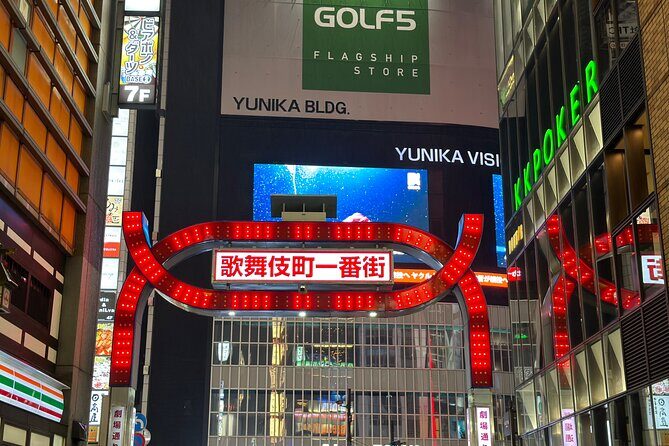
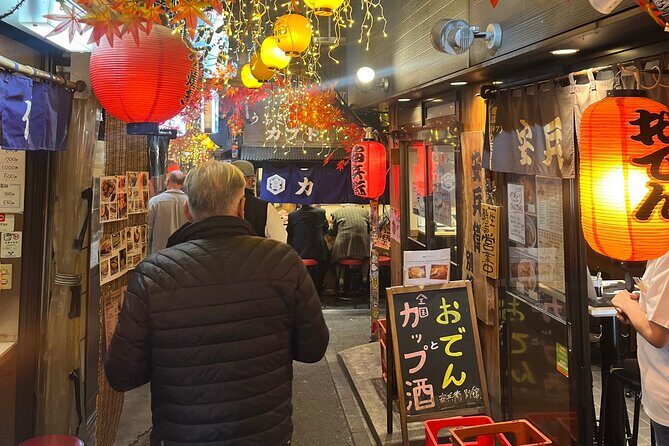
Next up is Omoide Yokocho, often called a bar alley from the postwar period. The tour notes it was built in the 1950s post-war period, and it’s presented as an alley lined with bars.
This is where the tour earns its off-the-tourist-trail promise. Omoide Yokocho is not the kind of place you’ll always find just by wandering from a major station. The lanes are tight and the vibe is different from the wider streets around it.
The name you may see associated with it can sound odd, and the best way to handle it is with your guide’s context. Instead of focusing on slang or shock value, look at the space itself: narrow pathways, dense barfronts, and the sense that the street was designed for small-scale social life rather than passing traffic.
This stop lasts about 30 minutes, and it includes admission. That’s a nice practical touch because it reduces the chance you’ll get stuck waiting for a ticket you weren’t expecting. It also tells you the tour expects you to take the alley seriously, not just glance and move on.
Hanazono Shrine: Shinjuku’s older spiritual contrast
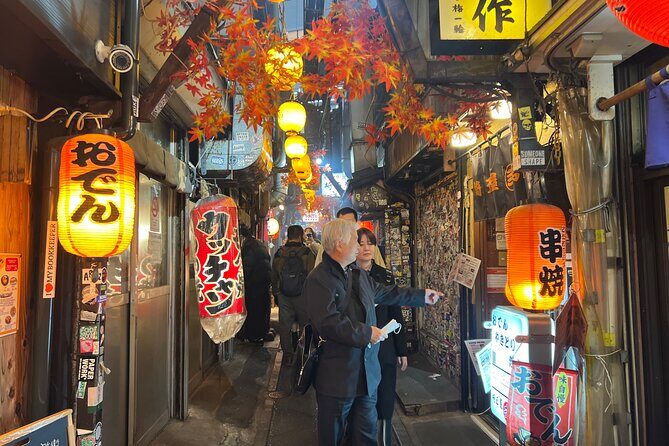
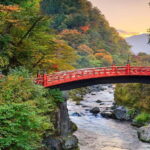
Then the walk changes pace with Hanazono Shrine. The tour describes it as one of the oldest shrines in Shinjuku and a solid introduction to shrines in Japan.
This stop matters because Shinjuku is often treated as pure city-night energy. Hanazono Shrine brings balance back in. You’ll get a calmer space, and you’ll likely learn what to look for as a first-timer: how shrines function as more than scenery, and how they fit into modern neighborhoods.
Your guide’s job here is important. Without context, many shrine visits become “photo + move on.” With a guide, you can slow down and understand the purpose of the site you’re walking through, especially as you’re switching from neon streets to a ritual space.
Time at the shrine is around 30 minutes, and admission is included. That’s convenient, because you can focus on listening rather than checking ticket windows in the middle of your walk.
You can also read our reviews of more historical tours in Tokyo
Shinjuku Golden Gai: tiny bars and old Tokyo atmosphere
The final nightlife hit is Shinjuku Golden Gai. This is described as a street full of small bars, including some of the oldest bars in Tokyo.
Golden Gai is the kind of place where the details are the whole point. It’s made of tiny entrances and narrow lanes, so you experience it like you’re walking inside a web of rooms. Even if you don’t go into any bars, you’ll understand why people talk about Golden Gai as a specific kind of Tokyo: compact, long-lasting, and built on the identity of small places rather than big venues.
This stop runs around 20 minutes, which is smart. Golden Gai’s streets are best seen in short bursts, and a guided time limit helps you keep moving without losing the thread of the tour. Admission is included here too, which again keeps logistics from stepping on the experience.
If you like architecture in the sense of “how people live and socialize,” this is a great stop. You’ll see how the city’s entertainment footprint adapted over time and why it remains distinct.
How the guide turns a walk into understanding
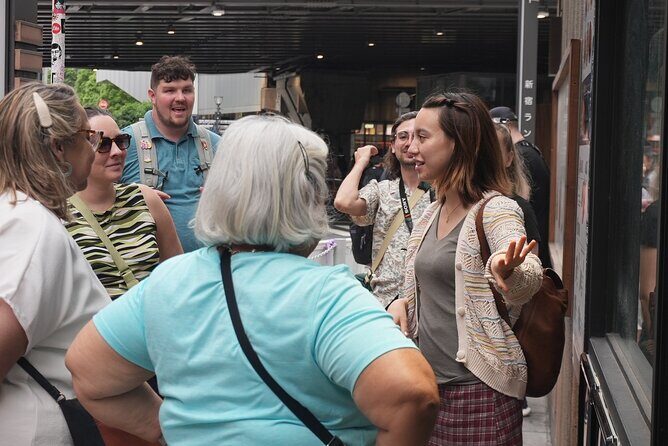
What makes this tour more useful than a solo wander is the way your guide frames each stop. The tour is built around guide commentary about local history and culture, and that’s where you’ll feel the time savings most.
In the past, guides such as Haydn and Kane have been specifically mentioned for being social and for having lots of general info, plus the confidence to answer questions on the spot. That kind of back-and-forth makes a real difference in Shinjuku, where signage and street names don’t always explain what’s going on.
Another subtle win: guides tend to talk beyond the immediate stop. A big part of the value is learning how the neighborhood works so you can continue independently afterward. The feedback on the tour highlights that guides give good advice for where to go next, which is exactly what you want after two hours in one of Tokyo’s trickiest areas.
If you’re new to Japan, this kind of explanation also helps you avoid treating every street as a mystery box. You’ll walk away with language for what you saw: alley bar culture, shrine visiting as a ritual practice, and the role nightlife districts play in a modern city.
Price and value: $24 for a guided evening with paid stops
At $24 per person for about 2 hours, this is priced like a budget-friendly “local orientation” tour rather than an all-day event. The value comes from three places.
First, you’re paying for navigation help in a district that can easily steal an hour of your time. In Tokyo, time is money, and getting lost in Shinjuku is one of the most common ways people burn a day.
Second, you’re not just walking past free sights. Some stops include admission tickets—Omoide Yokocho, Hanazono Shrine, and Shinjuku Golden Gai are all listed as ticket-included stops. Kabukicho is free, so the overall cost stays controlled, but the paid parts make it feel more complete.
Third, you’re getting a small-group guide who can answer questions and suggest what to do next. When you compare the cost to the price of getting a private guide or spending that two hours trying to self-navigate, the $24 starts to feel like a smart trade.
One note for value: food and drinks aren’t included. That’s totally normal for many walking tours, but it changes how you should plan your evening. You’ll want to eat before or after, so your stops stay about sites and stories, not meal logistics.
Who this tour is best for (and who might want a different plan)
This tour is ideal if you want an honest snapshot of Shinjuku with walkable structure. You’ll like it if you’re the type who enjoys streets as cultural artifacts: why a place is built the way it is, what people do there, and how old traditions and modern city life coexist within a few blocks.
It also suits people who want a break from planning. If Shinjuku’s size makes you hesitate, this takes that pressure away. And with a maximum group size of 15, it should feel interactive instead of like you’re trapped in a big crowd.
You might consider another option if you dislike adult-nightlife areas in general. Since the route starts with Kabukicho and includes nightlife alley zones, the vibe isn’t neutral. Also, if you’re hoping for a food-focused tour with tastings, you’ll be better off booking something explicitly built around meals.
Practical tips so you get the most from the walk
You’ll do best if you treat this as a guided evening stroll with context, not a sprint between landmarks.
- Wear comfortable shoes. The tour is short, but Shinjuku’s streets aren’t designed for long, casual footwear on uneven sidewalks.
- Keep your questions for the guide. This tour is set up for commentary and Q&A, so ask about what you see as you see it.
- Bring a flexible mindset for the alley stops. Narrow lanes and busy streets can feel cramped. That’s part of the experience, especially for spaces like Omoide Yokocho and Golden Gai.
- Have a plan for food. Since drinks and meals aren’t included, I’d eat earlier or plan a specific stop afterward so the tour doesn’t leave you hungry and stuck deciding in the moment.
Should you book this Shinjuku Hidden Alleys walking tour?
Yes, if you want an efficient, guided way to understand Shinjuku’s different sides in one evening. For $24, you’re buying something practical: someone to lead you through a confusing neighborhood, explain the culture behind what you’re seeing, and reduce the guesswork that can turn Shinjuku into a frustrating loop.
Skip it only if you’re strongly uncomfortable with adult-nightlife-adjacent streets or if you’re specifically looking for food experiences. Otherwise, this is a strong choice for first-timers and returning visitors who want a guide’s context rather than another self-guided route.
If you’re planning your Tokyo days like a puzzle, think of this tour as the piece that helps the rest fit together. You come away with better bearings and a clearer sense of what to seek out next.
FAQ
How long is the Tokyo Shinjuku: History, Culture & Hidden Alleys Walking Tour?
The tour lasts about 2 hours.
What time does the tour start?
It starts at 5:00 pm.
Where is the meeting point?
The meeting point is the Happy Lemon Keio Shinjuku Shop, 1-chōme-1-4 Nishishinjuku, Shinjuku City, Tokyo 160-0023, Japan.
What areas does the tour include?
It visits Kabukicho, Omoide Yokocho, Hanazono Shrine, and Shinjuku Golden Gai.
Is food or drinks included?
No. Food and drinks are not included.
Is there a ticket for the tour?
You get a mobile ticket. Some stops include admission tickets, and Kabukicho is listed as free.
How big is the group?
The tour has a maximum of 15 travelers.