REVIEW · TOKYO
Sumo Training Watching Experience in Tokyo
Book on Viator →Operated by NicoTour Japan · Bookable on Viator
Sumo practice feels ritual close. This is a real sumo stable training session led by active wrestlers, not a staged comedy show, and you get to watch the work up close—sound, heat, and all. It’s a sacred national sport, so you’ll also follow the stable’s rules as part of the experience.
What I like most is that you don’t just sit and stare. You get live commentary that uses the guide’s original documents, plus you receive clear explanations (even with simple diagrams mentioned in feedback from NicoTour Japan’s Alisa). I also love the small group size (max 8) and the fact that you’re very close to the training area, so the details feel real instead of far away.
One thing to consider: this tour is strict. You won’t be eating or drinking inside, the group stays quiet, and you sit on floor cushions instead of chairs—so if you have bad knees or back or you can’t manage long stillness, plan carefully.
In This Review
- Key highlights at a glance
- What Makes Sumo Stable Training Different From Match Day
- Meeting at Ryogoku: Finding the Right Place (and the 10-Min Walk)
- How the Practice Runs: Stretching, Basics, Match-Style Training, Photos
- If you arrive at 7:45
- If you arrive at 8:20
- What “match-style” means in practice
- Photos after training
- Close-Up Etiquette: Silent Phones, No Food, and Floor Cushions
- You can’t eat or drink in the stable
- The tour stays quiet
- Phone rules are strict
- Seating is on cushions, not chairs
- Clothing and guest conduct
- Health matters
- Small Group Access and Live Explanations: The Real Value at $84.70
- Who Should Book This Sumo Training Watching Tour (and Who Might Skip)
- You’ll likely love it if:
- You should think twice if:
- Should You Book This Sumo Training Watching Experience?
- FAQ
- FAQ
- How long is the sumo training watching experience?
- Where do I meet for the tour in Tokyo?
- How far is the stable from the meeting point?
- Are the wrestlers real or is this a staged show?
- Can I eat or drink while watching training in the stable?
- What ages can participate?
Key highlights at a glance
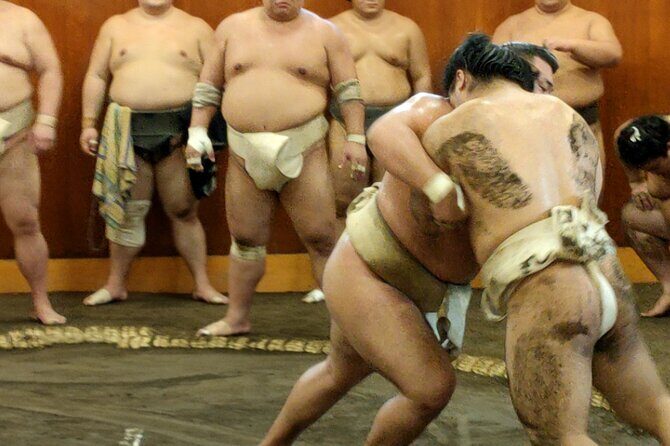
- Real stable practice with active wrestlers (not a performance)
- Live commentary using original documents to make what you’re seeing click
- Small groups of up to 8 for a closer, less crowded view
- Clear practice flow: stretching and strength, basics, match-style training, then photos
- Floor seating on cushions (no chairs), so comfort matters
- Smart phone etiquette: silent mode and silent-photo setup during the session
What Makes Sumo Stable Training Different From Match Day
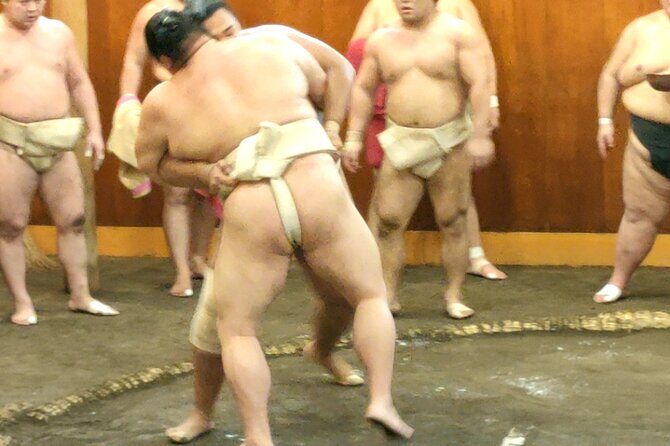
Match day is exciting, but stable day is different. Here, you’re watching the work that happens before the public ever sees wrestlers in full spotlight. You’ll see training that feels more serious because it’s the real process—stretching, technique-building, and the kind of practice that builds muscle memory.
This also helps you understand what you’re looking at. The tour isn’t framed as a “just watch” experience. The guide provides live commentary with original documents, so you can connect the movements to the bigger picture of sumo discipline and training structure. It’s also why many people find this more meaningful than catching a big event.
And because it’s inside an actual stable environment, you’ll experience it with your senses in a way stadium seating can’t match. The tour description specifically calls out the closeness—breath and heat right there. That’s the difference between watching from far away and standing close enough to feel the intensity in the room.
If you’re a sumo fan, or even just curious and respectful, this kind of access is hard to replace. The experience is also described as something not easy to visit—even for Japanese people—so you’re benefiting from access that isn’t common.
You can also read our reviews of more tours and experiences in Tokyo.



Meeting at Ryogoku: Finding the Right Place (and the 10-Min Walk)
The meeting point is at Ryogoku Station 1-chōme-4-29, Yokoami, Sumida City, Tokyo 130-0015. The start and finish are the same: the tour returns back to the meeting point.
Here’s the practical detail that matters: the stable is not right beside the JR station entrance most people picture. One review pointed out that the meeting place is not the JR station and that the stable is not near the Kokugikan. Expect a walk of about 10–15 minutes on foot from the meeting station to the stable.
That’s easy if you give yourself buffer time. It’s not fun if you cut it close. Since the tour says they leave on time and can’t wait for late guests, arrive early and take your time finding the exact spot.
Also note the timing options. You’ll be able to experience different portions depending on when you arrive (described as 7:45 vs 8:20 arrival). If you want the fullest program, show up for the earlier arrival window. If you arrive later, the tour generally starts with the basic part of the training instead of running the entire sequence.
How the Practice Runs: Stretching, Basics, Match-Style Training, Photos
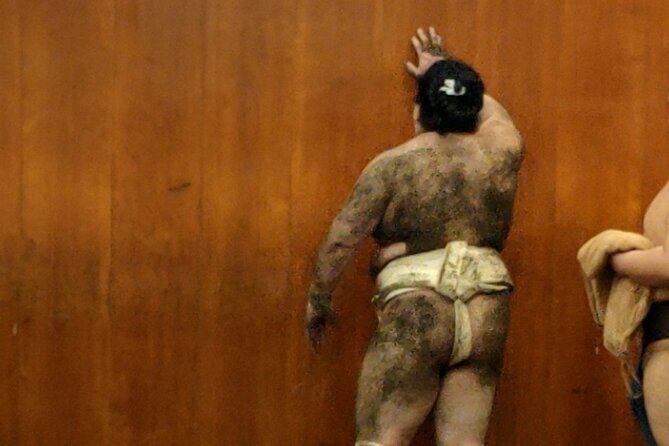
The day is organized like a training session you can follow step-by-step. The tour breaks it into four parts:
1) Stretching and strength training
2) Basic training
3) Match-style training
4) Take photos with wrestlers
The practice viewing time is described as about 1 hour 30 minutes to 2 hours once you arrive at the stable. The overall tour time is listed as about 2 hours 20 minutes (approx.), but the program length depends on your arrival time.
If you arrive at 7:45
You’ll experience the entire program. The tour states that this typically means about 60–120 minutes total for the portion described by the program flow (the exact length can vary, but you’re getting the full sequence: stretching/strength, basics, match-style, then photos).
If you arrive at 8:20
You generally start with ② basic training. For this later arrival, the time is described as 30–90 minutes. In other words, you’ll still get the important training view, but you’ll miss the earlier stretch-and-strength segment.






What “match-style” means in practice
The tour doesn’t promise a full competition. It’s training that looks closer to how bouts are structured—so you can see technique applied under pressure-like conditions. That’s exactly why it’s worth doing if you already know you want more than just “watch wrestling moves.” This segment is where the session starts to feel like sumo training is becoming sumo action.
Photos after training
After the practice, there’s a photo moment. The tour notes that you might be able to take a photo with the wrestlers after the event. One review also hinted that end times may not include extra photo time, so if photos are a priority, don’t plan anything tightly right after.
In short: plan on a real session with a real ending, not a quick fly-in performance. The final photo step is built into the program, but the exact pacing can vary.
Close-Up Etiquette: Silent Phones, No Food, and Floor Cushions
This is where the experience becomes more “Japan-stable” than “tour.” There are clear rules, and they’re not there to be annoying. They protect the training environment.
You can’t eat or drink in the stable
The tour explicitly says no eating or drinking inside. That means bring water planning for before or after, not during. If you’re the type who likes to snack while watching, you’ll need to adjust.
The tour stays quiet
They basically don’t talk during the tour. So if you’re hoping for a lively back-and-forth Q&A, you may find this more structured and less chatty.
Phone rules are strict
You’re asked to set your cell phone to silent mode, and the tour suggests using a silent camera setup on your smartphone. Translation: don’t let your phone make sounds, shutters, or notifications at the wrong time. It’s part of respecting the space.
Seating is on cushions, not chairs
This is huge. The tour says it’s the Japanese style where you sit directly on cushions on the floor. It also warns that this can be an issue if you have bad knees or back, or if you’re pregnant.
So here’s the straightforward advice: if you struggle sitting on the floor for long stretches, pick your day carefully. The viewing window is a substantial chunk of time once you’re inside, and you’ll be asked to stay in place.
Clothing and guest conduct
The tour asks you to avoid revealing clothing. If rules aren’t followed, you may be temporarily asked to go outside. It’s not a “maybe,” it’s a “they will.” This is a real training setting, and you should treat it like one.
Health matters
If you have a cold or infectious disease on the day, the tour requests you cancel your participation. This is one of those rules that’s easy to ignore until it affects everyone else. Here, it’s clearly part of the expectation.
Overall, the etiquette is part of the value. It’s not just sightseeing. You’re being allowed to watch a sacred national sport from inside the real world, which requires you to behave like a respectful visitor.
Small Group Access and Live Explanations: The Real Value at $84.70
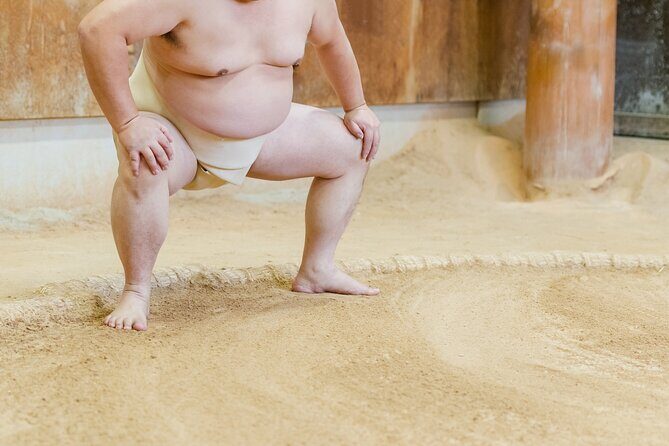
Price for this experience is $84.70 per person. That’s not cheap for a “walking tour,” but it’s also not priced like a stadium ticket. You’re paying for something specific: stable-level access, a small group, live guidance, and the structured training flow.
The tour is capped at 8 travelers, which is a big deal in a small space. In practice, this means less crowding and more ability for the guide to explain what’s happening. One review specifically called out that the group was small and that the viewing was very near the training area.
You also get commentary with original documents rather than only general explanations. In feedback from NicoTour Japan’s Alisa, a guest appreciated the explanations including easy-to-follow diagrams. That’s exactly what you want when you’re watching a sport with techniques and rituals that don’t automatically make sense on first glance.
Timing matters too. If you arrive at the right window, you’ll see the full sequence rather than just the later basic segment. You’ll generally spend closer to the longer range when you catch the whole program.
And there’s another practical value point: you receive a mobile ticket, which makes the day simpler in Tokyo. You won’t be hunting for printed vouchers when you’re trying to keep pace with a strict departure time.
Is $84.70 worth it? For me, it is if you care about seeing the how of sumo, not only the what of match day. If you want a flexible, snack-friendly, casual hangout, this isn’t that kind of experience.
Who Should Book This Sumo Training Watching Tour (and Who Might Skip)
This tour fits best if you want authentic, up-close access and you’re willing to follow rules.
You’ll likely love it if:
- You want to see real, active wrestlers training, not staged entertainment
- You prefer quiet, respectful experiences
- You’d benefit from explanations while you watch (especially with diagrams and structured commentary)
- You’re okay sitting on the floor for the session
You should think twice if:
- You need frequent breaks, because the guide notes they leave on time and the tour runs like a session
- You have mobility issues that make floor seating hard (bad knees/back, or pregnancy)
- You want food or drink during the activity
- You don’t want to deal with silent-phone rules
It also matters for families. Children must be 6 years old or older to participate. There’s an additional rule that even children over 8 who cannot sit still are not allowed. So this is family-friendly only if your child can handle quiet, stable behavior.
Should You Book This Sumo Training Watching Experience?
If your idea of a great Tokyo day is respectful access to something hard to see, I think you should book it—especially if you’re a sumo fan or you’re the type who likes learning by watching how people train.
Do it if you can handle:
- quiet rules (no on-the-fly chatter)
- no food or drink
- floor seating on cushions
- phone silence and quiet photo behavior
Skip it if you want a casual, flexible event with food, lots of discussion, and chair seating. This tour is about letting you watch serious training up close, and that only works if everyone follows the stable’s rhythm.
FAQ
FAQ
How long is the sumo training watching experience?
The experience is about 2 hours 20 minutes approximately, but the program length varies based on your arrival time. The tour notes that if you arrive at 7:45 you can experience the entire program (about 60–120 minutes), and if you arrive at 8:20 you generally start with basic training (about 30–90 minutes).
Where do I meet for the tour in Tokyo?
You meet at Ryogoku Sta. 1-chōme-4-29 Yokoami, Sumida City, Tokyo 130-0015, Japan. The tour ends back at the meeting point.
How far is the stable from the meeting point?
You’ll arrive at the sumo stable about 10 minutes on foot from the meeting station. Some feedback notes it can be closer to 10–15 minutes walking.
Are the wrestlers real or is this a staged show?
This is a training session by real, active sumo wrestlers, not a comedy show with fake wrestlers.
Can I eat or drink while watching training in the stable?
No. You cannot eat or drink in the stable.
What ages can participate?
Children must be 6 years old or older. The tour also states that children over 8 who cannot sit still are not allowed to participate.