REVIEW · TOKYO
Tokyo Private Tour: One Day Highlights and Optional Shibuya Sky
Book on Viator →Operated by Trip Designer Inc. · Bookable on Viator
Tokyo’s big sights, stitched together sensibly. This one-day private tour strings together Asakusa, Shibuya Sky, and Harajuku in a way that feels organized, not rushed. I like that you get a true private-group setup (up to 10) with an English-speaking guide who can adapt the day, and I also like that Shibuya Sky tickets are included so you’re not hunting plans and lines.
One possible consideration: expect a lot of walking plus train time, and the tour does require moderate physical fitness. Also, Shibuya Sky’s outdoor area can close in bad wind conditions, which can shrink the view time even with tickets—something I’d plan for on your schedule.
In This Review
- Key things I’d focus on before you go
- How the day flows: Asakusa first, Shibuya last
- Getting your bearings at Asakusa’s Kengo Kuma tourist center
- Nakamise Shopping Street and Kaminarimon: the gateway to Senso-ji
- Senso-ji Temple: big energy, clear context
- Asakusa Jinja Shrine and Sumida Park: a short reset
- Shibuya Sky observatory: the included wow-factor
- Shibuya Crossing and Hachiko: seeing it once is enough
- Meiji Jingu: a calm shrine break inside Harajuku energy
- Takeshita Street: trend shopping after the shrine
- Price and value: what $178.38 buys you in Tokyo time
- Guide quality is the secret sauce on a day like this
- Practical tips: how to make this day feel easy
- Who should book this Tokyo private tour?
- Should you book this Tokyo private tour with Shibuya Sky?
- FAQ
- What’s the duration of the Tokyo private highlights tour?
- What time does the tour start?
- Is pickup and drop-off included, and where?
- Does the tour include tickets to Shibuya Sky?
- What transportation does the tour use?
- Are meals or drinks included in the price?
- How big is the group for this private tour?
- Is it truly private, or could other groups join?
- What’s the cancellation policy?
Key things I’d focus on before you go
- Private-group pacing: small group size (up to 10) makes it easier to move as a unit and ask questions.
- Asakusa starts with an architect-designed intro: the Kengo Kuma tourist center is an easy way to orient yourself fast.
- Two “people-watching” zones: Shibuya Crossing and Hachiko are built into the route with guided context.
- Shibuya Sky is the crown jewel: included observatory tickets add payoff time high above the streets.
- Harajuku isn’t just shopping: Meiji Jingu adds a calm, traditional counterpoint before Takeshita Street.
How the day flows: Asakusa first, Shibuya last
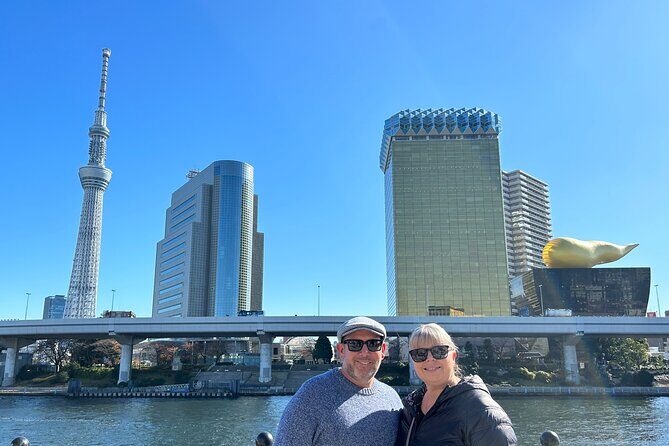
This tour runs about 7 hours with a 9:30am start, and it’s built like a classic Tokyo first-day sampler: temple-and-market energy in the morning, then modern Tokyo icons in the afternoon. You’ll be using public transportation most of the day, which is good news if you want to learn the rhythm of trains without figuring it all out alone.
I like the logic of ending around Shibuya, because it’s where you get both the electric street scene and the skyline payoff. If you’re trying to see Tokyo’s extremes in one day—old faith spaces and high-rise city views—this route does that.
You can also read our reviews of more private tours in Tokyo

Getting your bearings at Asakusa’s Kengo Kuma tourist center
Your first real stop is the Asakusa Culture Tourist Information Center, a standout building designed by architect Kengo Kuma. It’s free and only takes about 15 minutes, but it’s a smart early move because it helps you understand where you are before you plunge into crowds near Senso-ji.
If this is your first time in Tokyo, this kind of “orientation stop” matters. Tokyo is easy to get lost in, especially in busy stations and dense neighborhoods.
Nakamise Shopping Street and Kaminarimon: the gateway to Senso-ji
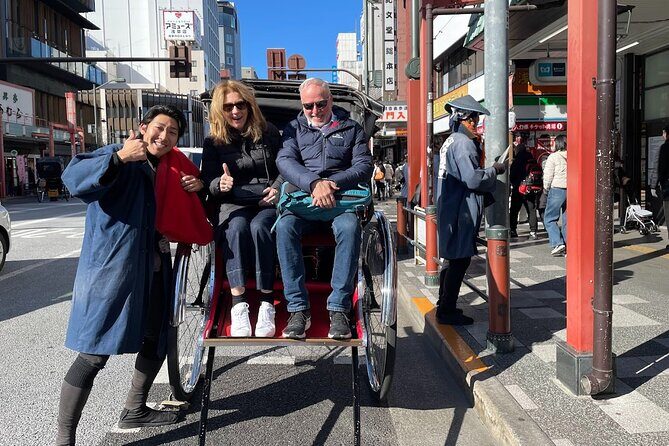
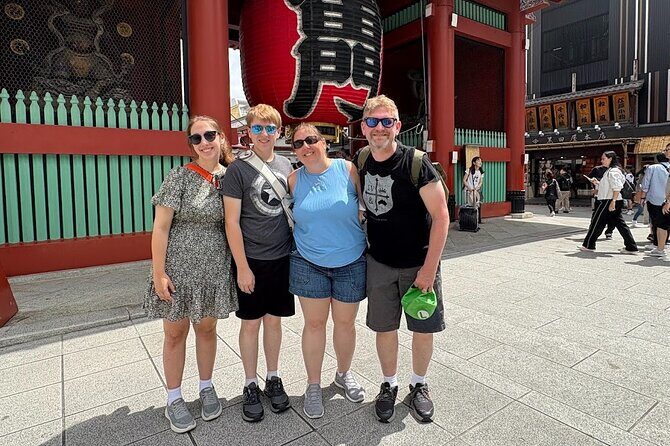
From there, you walk into Nakamise Shopping Street, heading toward Kaminarimon (Thunder Gate), the iconic outer gate that basically signals Asakusa. This stretch is short, but it’s where the neighborhood’s rhythm shows up—snacks, souvenirs, and the slow funnel of people toward the temple.
This is one of those stops where a guide adds value even if you don’t shop. They help you time the walk and understand what you’re looking at instead of treating it like random storefronts.
Senso-ji Temple: big energy, clear context
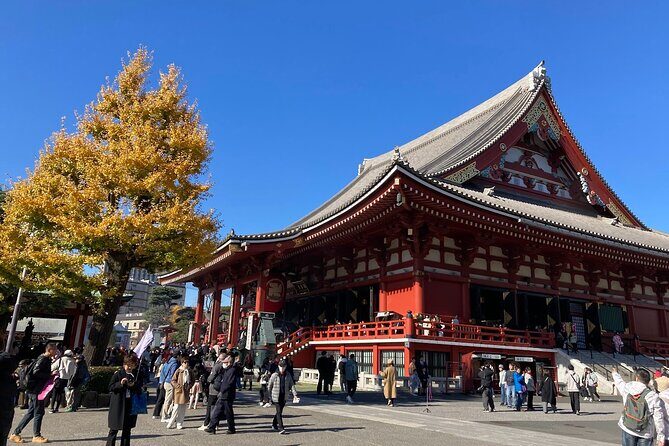
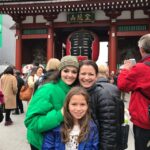
Senso-ji Temple (Asakusa Kannon Temple) is the main event in Asakusa, and you’ll spend about 30 minutes here. It’s widely loved because it’s both historic and visually chaotic in a good way—lanterns, incense atmosphere, and throngs of visitors.
You’ll also get a cultural explanation along the way, including the temple’s long legend (dating back to the 600s) tied to the story of the temple’s origins. That context turns the visit from photo-op mode into something you’ll actually remember.
Asakusa Jinja Shrine and Sumida Park: a short reset
Right next to Senso-ji is Asakusa Jinja Shrine, a Shinto shrine with a smaller feel than the Buddhist powerhouse beside it. You’ll spend about 10 minutes, which is about right: it’s enough to notice the differences without turning the day into a temple marathon.
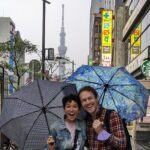
Then you get a breather at Sumida Park along the Sumida River, about 10 minutes. This is where you can relax a bit and enjoy unobstructed views of Tokyo Skytree from near Asakusa Station—plus a bit of river air to clear your head before Shibuya.
A few more Tokyo tours and experiences worth a look




Shibuya Sky observatory: the included wow-factor
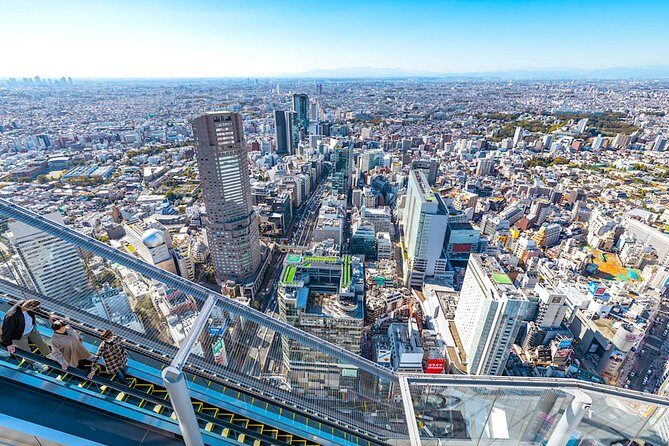
Next up is Shibuya Sky, and yes—the tickets are included. You’ll have about 30 minutes, and the tour takes you to the height where Shibuya starts looking like a model city instead of a real place full of pedestrians.
Shibuya Sky is about 230 meters above ground, and it’s known for the Sky Edge corner where you can look down at the cityscape below. In real life, that outdoor experience can be weather-dependent. One important note from actual guest experiences: the outdoor area can close when wind is reported as too strong, which can be disappointing if that’s the feature you were most excited about.
My practical take: build flexibility into your day. Even if the outdoor edge is limited, the observatory visit is still part of the value. And because this is a guided day, your timing will still be handled.
Shibuya Crossing and Hachiko: seeing it once is enough
After the skyline stop, you’ll visit Shibuya Crossing and spend about 15 minutes. The scale is the whole point: you’re looking at pedestrian flow numbers that can reach huge daily totals, and at peak moments several thousand people cross on a single green signal.
You’ll also hit Hachiko, the bronze statue in front of Shibuya Crossing, usually a quick stop (about 5 minutes). It’s a meeting point for locals, so you’ll get that real-world feeling of Tokyo living around the famous icon.
The key benefit here is not just the sight—it’s knowing where to stand and how to time the crossing to get photos without getting swallowed. A guide makes this simpler.
Meiji Jingu: a calm shrine break inside Harajuku energy
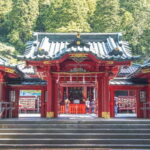
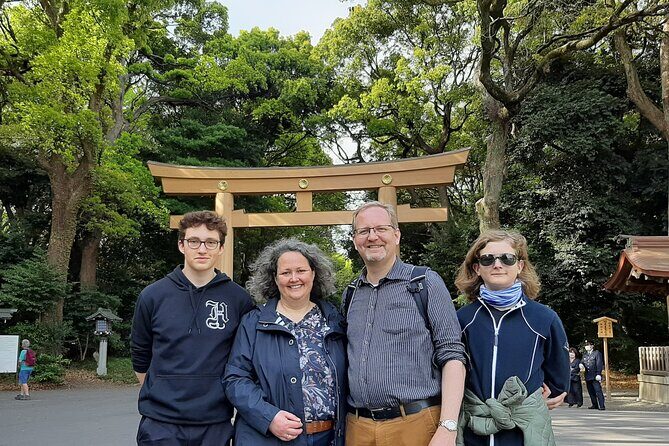
Then comes a big mood shift: Meiji Jingu Shrine. You’ll spend around 45 minutes, which is generous for a city shrine stop tucked inside a day that also includes Shibuya and Harajuku. Meiji Jingu is dedicated to Emperor Meiji and his consort, Empress Shoken, and it’s located right by busy Harajuku/JR lines.
What I like about including Meiji Jingu is that it counterbalances the urban intensity. In an itinerary full of crowds, you get a real change of pace—space, trees, and a different kind of Tokyo attention.
Takeshita Street: trend shopping after the shrine
Finally, you’ll stroll Takeshita Street in Harajuku, about 30 minutes. This is the 350-meter stretch geared toward Tokyo’s fashion-and-trend set, and it’s where the neighborhood energy spikes back up again.
This is a good place to grab a quick snack or souvenir while your legs are still willing. If you’re shopping, keep it light. You’re finishing a long day, and you’ll want energy left for getting back to your hotel.
Price and value: what $178.38 buys you in Tokyo time
At $178.38 per person, this tour isn’t the cheapest way to see Tokyo. But it’s priced like a “reduce your friction” day.
Here’s what your money typically covers:
- Hotel pickup and drop-off within Tokyo’s 23 wards
- English-speaking guide
- Public transportation included
- All fees and taxes
- Shibuya Sky ticket included
- Photos of tour participants
- Mobile ticket format
The biggest value is time and hassle. Tokyo’s transit is great, but it’s also easy to waste time if you don’t know which trains to take. A private guide who handles routing lets you spend your time seeing places instead of solving transit puzzles.
Not included: food and drinks, plus you won’t be using a private taxi/vehicle. If you want a sit-down lunch with specific dietary needs, you’ll plan that yourself or ask your guide to suggest options during the day (and that’s often where guides really earn their keep).
Guide quality is the secret sauce on a day like this
This is a high-activity route: gates, temples, crossings, a major observatory, and a shrine forest, all wrapped into about 7 hours. In that kind of schedule, the guide’s skill matters.
From the kinds of guest feedback tied to this experience, guides such as Rie, Emiko, Keita, Eriko, Yoko, and Shizuko come up for doing two key things well: explaining meaning and handling logistics. People also note that some guides adapt the plan to interests—so if you care more about street scenes than markets, or vice versa, you’re more likely to get a day that fits.
You’re not just buying a checklist. You’re buying someone to translate Tokyo’s visible culture into something you actually understand while you walk.
Practical tips: how to make this day feel easy
Wear shoes you can walk in all day. This is not a museum-paced route—it’s Asakusa streets, Shibuya crossings, shrine grounds, and Harajuku lanes.
Bring a small budget for snacks and drinks since meals aren’t included. Even a short stop can turn into an expensive impulse if you’re unprepared.
If Shibuya Sky’s outdoor feature is your top priority, keep expectations flexible. Wind can affect access, and that can happen on the day of your visit.
Also, with public transportation included, you’ll want to travel light. Tokyo days feel better when you’re not dragging bags around every transfer.
Who should book this Tokyo private tour?
This tour is a strong match if:
- You want a first-time Tokyo highlights day that covers both classic and modern icons.
- You prefer a small private-group experience over large group bus tours.
- You value Shibuya Sky but don’t want the planning hassle.
- You like learning context while you walk, not just snapping photos.
It’s probably not ideal if you want a super slow day, or if your energy is limited for walking plus trains. The tour does require moderate physical fitness, and the schedule is packed enough that you’ll feel it if you’re expecting long sit-down breaks.
Should you book this Tokyo private tour with Shibuya Sky?
If you’re spending limited time in Tokyo and want one day that connects the city’s most recognizable scenes—Asakusa temples, Shibuya Crossing, Meiji Jingu, and the skyline—this is a smart use of your schedule. The included Shibuya Sky ticket is a major value anchor, and the guide-handled public transit keeps the day from turning into logistics.
I’d book it if you can handle a brisk, walking-forward itinerary and you’re excited by the idea of switching neighborhoods and moods all in one day. If you want a calmer, slower Tokyo experience with lots of optional detours, you might prefer a more flexible neighborhood-by-neighborhood plan.
FAQ
What’s the duration of the Tokyo private highlights tour?
It runs for about 7 hours.
What time does the tour start?
The start time is 9:30am.
Is pickup and drop-off included, and where?
Yes. Hotel pickup and drop-off is included in Tokyo’s 23 wards.
Does the tour include tickets to Shibuya Sky?
Yes. Shibuya Sky observatory tickets are included, with about 30 minutes at the site.
What transportation does the tour use?
The tour includes public transportation with your English-speaking guide.
Are meals or drinks included in the price?
No. Food and drinks are not included.
How big is the group for this private tour?
It’s limited to a maximum of 10 people per booking, and it’s private for your group.
Is it truly private, or could other groups join?
It’s private: only your group participates.
What’s the cancellation policy?
You can cancel for free up to 24 hours in advance for a full refund.