Sumo wrestling, up close, is a different kind of loud. This experience puts you face-to-face with retired wrestlers, explains the sport’s rules and training rituals, and then gives you a chance to try a friendly bout. You also get a traditional meal cooked for you on-site—tonkatsu and chanko soup—so it’s not just a performance, it’s a mini day-into-Japan moment.
I especially love two things: the retired wrestlers as your hosts (they’re the ones who explain and participate), and how the show mixes education with real interaction, including photo time and ring challenges. It’s the kind of activity that works even if you’re starting from zero sumo knowledge.
One thing to consider: seating can vary. Some people end up farther from the dohyo (ring), so standing to see better may be part of the plan.
In This Review
- Key Highlights You’ll Feel Immediately
- Tokyo Sumo Show With Lunch: What You Actually Get
- Meeting At Yokozuna Tonkatsu And Settling In
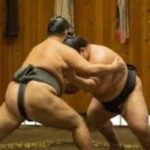
- The Show: Moves, Rules, and a Friendly Bout With Retired Pros
- Sparring Demonstration Timing: How the 90 Minutes Flows
- Eat Like a Sumo: Tonkatsu and Chanko Nabe Lunch
- Photo Time and the Traditional Sumo Costume
- Price and Logistics: Is $89.54 Good Value?
- Who This Fits Best (And Who Might Want Another Plan)
- Practical Tips So You Don’t Waste Your Seat or Your Appetite
- Should You Book The SUMO Show?
- FAQ
- How long is the SUMO show experience?
- Where does the experience start and end?
- What’s included in the ticket price?
- Are drinks included with the meal?
- Can I participate in the wrestling portion?
- Is there a vegetarian option?
- Is the venue near public transportation?
- What group size should I expect?
Key Highlights You’ll Feel Immediately
- Retired sumo wrestlers lead the whole experience, so you get firsthand sport talk, not just stage patter.
- Interactive sparring and friendly bouts: you can watch, learn, and try your luck if you want.
- Tonkatsu + chanko soup lunch is included, and it’s central to the timing, not an afterthought.
- Photo time in a traditional sumo costume gives you a real souvenir moment.
- Small-group feel (with a maximum of 60 travelers), so it stays more human than mass-event style.
- Dietary accommodations are available by request, with vegetarian options mentioned.
Tokyo Sumo Show With Lunch: What You Actually Get
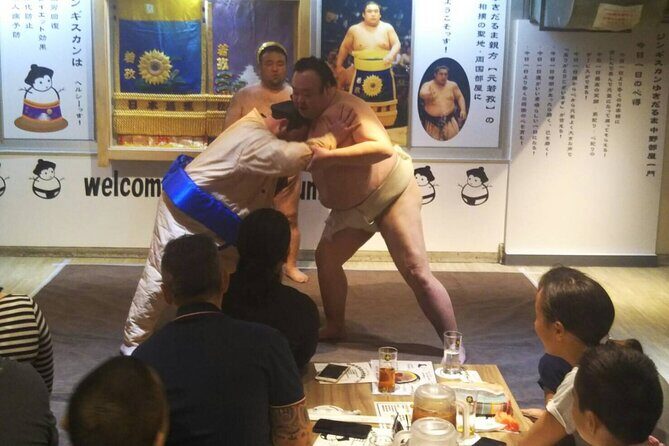
This is a Tokyo sumo show with lunch, designed as one tight 90-minute block. You’re meeting at a dedicated spot called Yokozuna Tonkatsu / Sumo lunch, then spending the rest of your time with a retired-sumo crew: learning basics, watching demonstration sparring, and getting opportunities to join in.
The structure is simple and effective. You start with an introduction—history and rules, plus training rituals—then you watch technique and sparring. After that, it shifts to audience participation, including the chance to challenge a wrestler to a bout. The meal happens as part of the flow, so you’re not hunting for lunch separately.
The biggest practical win: you leave with more than photos. You understand what you just watched. The show aims to make the sport feel approachable, even when the rules are described as convoluted.
A few more Tokyo tours and experiences worth a look
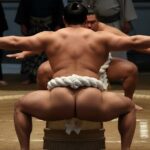
Meeting At Yokozuna Tonkatsu And Settling In
Your start point is Yokozuna Tonkatsu / Sumo lunch, at 3-chōme-1-11 Tatekawa, Sumida City, Tokyo. The experience ends back at the same meeting point, so you’re not dealing with a confusing second location after lunch.
Expect a short walk-in feel rather than a theater vibe. You meet your host and your small group, then the retired wrestlers take over as the center of attention. The experience is near public transportation, which matters because sumo shows aren’t exactly “quick in and out” if you’re arriving late.
Also note the practical reality: this is a group setting, and you might share a table with another group to fit everyone in. Seating order is decided by when reservations come in, and arriving early doesn’t automatically mean better seats. If you care most about having a clear view of the ring, that’s worth factoring in.
The Show: Moves, Rules, and a Friendly Bout With Retired Pros
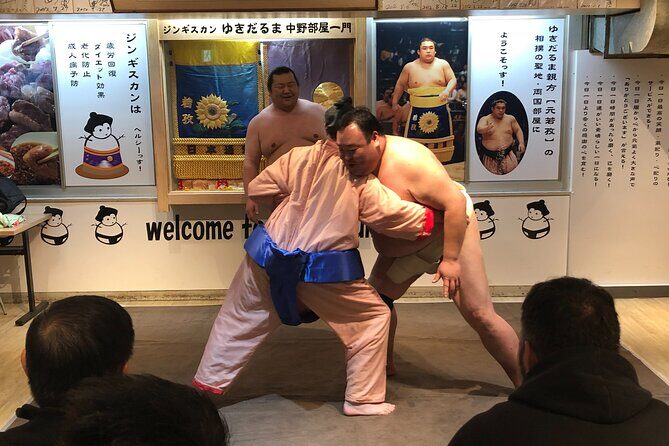
The show begins with a demonstration of sumo moves and techniques. Right after that, you get an introduction to sumo history and its rules, plus the training rituals behind the sport. This is one of the best parts of the experience for first-timers: you’re not expected to already know what all the gestures and match situations mean.
Then comes the moment most people actually remember. You can challenge a wrestler to a friendly bout if you’re feeling brave. This isn’t about strength or winning. It’s about learning how it feels to go up against someone who lived this every day.
A big reason this works for families and casual visitors: the wrestlers and staff keep things light. Even when they’re explaining serious sport routines, the vibe stays playful and human. People are taught enough to participate safely and confidently—then you’re encouraged to jump in if you want.
There’s also a built-in photo window before you say goodbye. That means you don’t have to scramble at the end, and you’ll likely get your best souvenir moment without the classic “last-call chaos.”
Sparring Demonstration Timing: How the 90 Minutes Flows
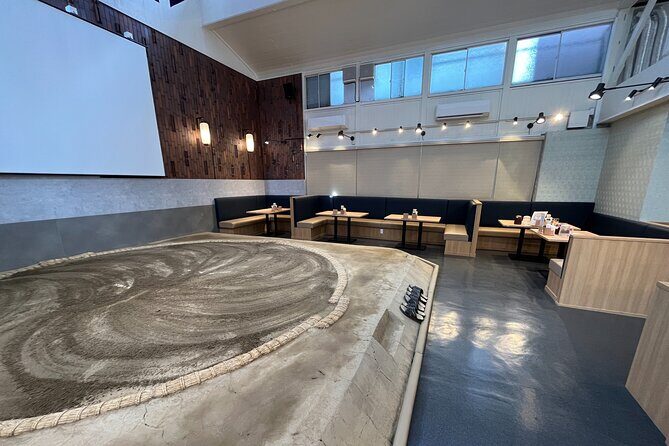
You’re looking at about 1 hour 30 minutes total for the sumo demo plan including the meal. The show is designed to avoid dead time. Education happens early, then action and participation keeps energy high.
Here’s how to think about the timing:
- Watch the technique and learning segments first, because that’s what makes the bout time make sense.
- Plan to be present during the interaction portion. If you watch from the sidelines, you’ll still enjoy it, but you’ll get more out of it if you engage.
- Leave breathing room for photos before the session ends. The event builds that in, but it still helps to stay focused rather than wandering around.
If you’re the type who hates structured activities, this still has a “fun festival” feel—just with a schedule. If you like clear steps and guided experiences, it’ll feel well controlled.
Eat Like a Sumo: Tonkatsu and Chanko Nabe Lunch
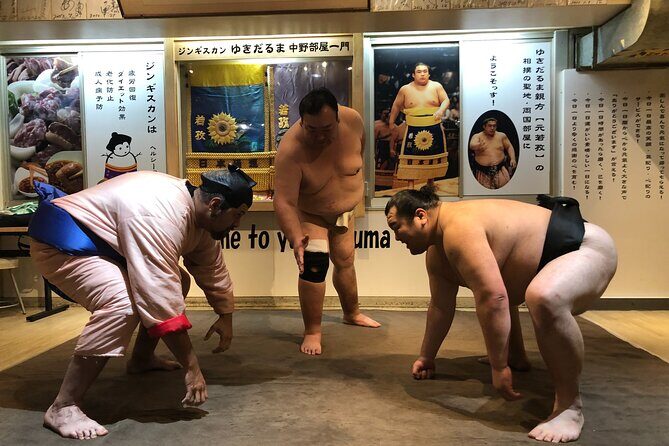
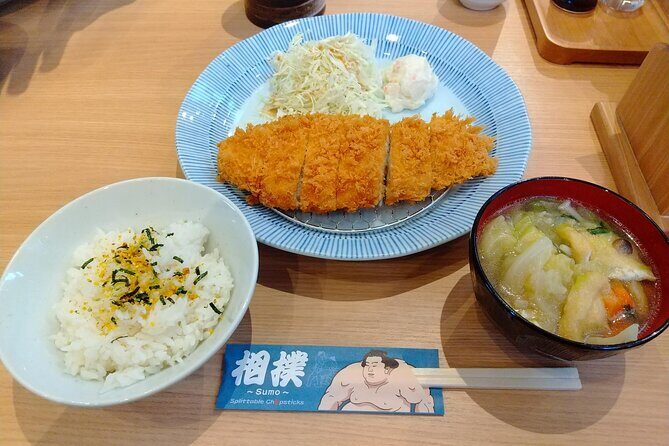
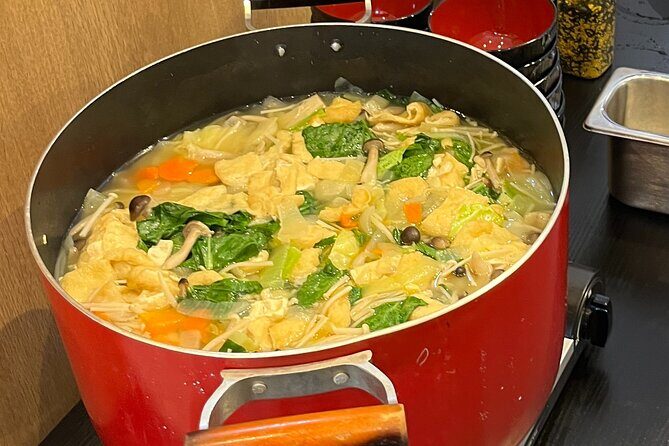
The meal is a real part of the experience, and that’s not a throwaway line. Tonkatsu and chanko soup are included. The wrestlers prepare the meal, which is a neat detail because it reinforces the theme: sumo isn’t only the ring, it’s also diet and daily routine.
On the plate you’re getting:
- Tonkatsu
- Chanko soup (chanko nabe style)
Drinks aren’t included, so plan to purchase beverages separately if you want them with lunch. This is one of the few “you should know this ahead of time” items that affects comfort, especially if you tend to want something with your meal.
Dietary accommodations are available on request, including vegetarian options. That’s a strong plus for mixed groups. If you have allergies or dietary needs, put them in the special notes when you book—requests sent too late may not be handled, based on the event’s rules.
One small heads-up from the vibe of feedback: while the food is consistently praised, a few people have felt the meal might be lighter than expected. If you’re very hungry, you may want to plan a snack before or after, depending on your day.






Photo Time and the Traditional Sumo Costume
Yes, you’ll get photos. And no, it’s not just a quick snap while you’re half-looking away.
This experience includes time for photos with the sumo wrestlers and the chance to wear a traditional sumo costume. It’s exactly the kind of souvenir that makes sense here, because you’re not just watching big personalities—you’re interacting with them.
My advice: treat the photo segment like a mini appointment. Be ready when they call people forward. If you’re in a family group, get everyone aligned early so you don’t waste the best moment.
Price and Logistics: Is $89.54 Good Value?
At $89.54 per person, the value comes down to what you’re actually buying. You’re not paying just for “a show.” You’re paying for:
- An interactive sumo session led by retired wrestlers
- Time to participate in a friendly bout
- Tonkatsu and chanko soup lunch included
- Photo time with wrestlers and a sumo costume
When you compare that to Tokyo’s typical paid attractions—where you might get a guided activity without food, or food without real interaction—this pricing can feel fair. It’s priced like an experience package, and the meal is integrated into the event.
Is it perfect value for everyone? No. If you’re only interested in spectating from a distance, you might prefer a cheaper viewing option elsewhere. But if you like being involved—asking questions, stepping into the costume, trying a challenge—you’re using most of what you paid for.
Also keep in mind the cap: there’s a maximum of 60 travelers. That ceiling helps keep the room from feeling like a warehouse crowd, and it supports the friendly “big guys teaching you” energy that people love here.
Who This Fits Best (And Who Might Want Another Plan)
This is a great fit if you:
- Want a Tokyo activity that’s fun and structured, with minimal planning stress
- Are curious about Japanese culture through sport, not just shopping stops
- Have kids or teens who will enjoy interaction over museum-style learning
- Like hands-on experiences where you can participate instead of only watch
It’s also a strong option for couples who want something different from the usual shrine-and-food routine. Sumo is one of those cultural themes that feels instantly memorable, especially when it includes food.
It may be less ideal if:
- You strongly prefer quiet, reserved tours and hate audience interaction
- You’re very seat-sensitive about sightlines (some tables can be farther from the ring)
- You want a long, deep, technical breakdown of every rule and historical era (this is education plus showtime, not a multi-hour lecture)
Practical Tips So You Don’t Waste Your Seat or Your Appetite
A few small choices can make a big difference in how satisfying the experience feels.
1) Show up ready to join.
If you want the “try it” moment, don’t sit back with zero intention. You’ll enjoy it more if you’re mentally ready to step forward when your turn comes.
2) Bring comfortable shoes and keep an eye on visibility.
Some seats are farther from the dohyo, and standing to see better may be necessary. If you’re tall, you’ll likely be fine. If you’re not, plan to stand when the action starts.
3) Plan for lunch timing.
This is built as the meal portion of the experience. If your day is tight and you’re starving by 12:30, you’ll feel better if you eat something small beforehand.
4) If you have diet restrictions, say it early.
Vegetarian and accommodations are possible, but you’ll want your request submitted with the reservation notes as instructed.
5) Drink strategy.
Since drinks aren’t included, decide whether you’ll buy something on-site or just stick with water.
Should You Book The SUMO Show?
Yes, I think you should book this if you want an authentic Tokyo cultural experience that’s genuinely interactive and includes a real meal. The standout strengths are simple: retired wrestlers running the show, a friendly participation option, and tonkatsu plus chanko soup served as part of the experience.
Skip it only if you know you’ll be unhappy with a lively group setting, uneven sightlines, or a light-moderate lunch portion. If you’re on the fence about sumo itself, this is one of the few activities that turns curiosity into a hands-on memory.
If your trip needs one “only-in-Tokyo” day, this is a strong candidate. You’ll leave fed, amused, and a lot more confident explaining what you just saw.
FAQ
How long is the SUMO show experience?
The sumo demo plans including the meal are about 1.5 hours (approximately).
Where does the experience start and end?
It starts at Yokozuna Tonkatsu / Sumo lunch, 3-chōme-1-11 Tatekawa, Sumida City, Tokyo 130-0023, Japan, and it ends back at the meeting point.
What’s included in the ticket price?
You meet retired sumo wrestlers, and lunch is included: tonkatsu and chanko soup.
Are drinks included with the meal?
No. Drinks are not included.
Can I participate in the wrestling portion?
Yes. The experience can include challenging a wrestler to a bout, and most travelers can participate.
Is there a vegetarian option?
Vegetarian and dietary accommodations are available upon request.
Is the venue near public transportation?
Yes, it is near public transportation.
What group size should I expect?
It’s a small group experience, and the maximum is 60 travelers.