REVIEW · SAPPORO
Calligraph Name in Japanese and Dress in Kimono
Book on Viator →Operated by Calligrash name in Japanese and dress in kimono · Bookable on Viator
Kimono dressing in Sapporo is a fast culture hit. In a tatami room, you wear a kimono and learn Japanese calligraphy the same way a lot of beginners start: posture, brush grip, then your first controlled lines. It is a hands-on calligraphy experience that actually gives you something to take home.
I especially like the calm, guided approach. Erika helps you get your posture right, then works with your hand and brush together so the movement clicks. One thing to consider: it is a focused 2-hour practice session, so if you want a multi-stop sightseeing day, this may feel short and centered on doing rather than wandering.
In This Review
- Key highlights you’ll care about
- Sapporo calligraphy and kimono: what the 2-hour experience really is
- Getting into a kimono in Japan (including children’s sizes)
- The calligraphy lesson: posture, brush grip, and the first strokes
- Learning how to form the character (without feeling rushed)
- What you take home: your calligraphy souvenir (plus photos)
- Price and value: why $42.82 can be worth it
- Where the tour starts in Sapporo (and how pickup helps)
- Who should book this, and who might pass
- Should you book the calligraphy and kimono session?
- FAQ
- How long is the calligraphy and kimono experience in Sapporo?
- Where does the experience start and end?
- Is pickup available?
- Is this a private experience?
- Do I need to bring calligraphy tools?
- Are snacks included?
- Is there kimono for children?
- What is the cancellation policy?
Key highlights you’ll care about
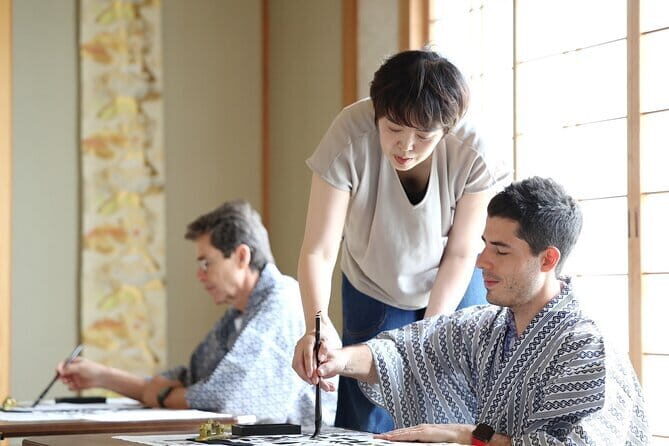
- Tatami-room instruction for calligraphy fundamentals in a traditional setting
- Guided posture and brush control, including hand-and-brush coaching
- Kimono for kids ages 0 to 7 alongside adult lessons
- You can take home your calligraphy souvenir
- Snacks included, plus photos on request
- Private group format with pickup offered and mobile ticketing
Sapporo calligraphy and kimono: what the 2-hour experience really is
This is a compact, no-fuss cultural lesson in Sapporo. The total time is about 2 hours, which means you can fit it into a travel schedule without sacrificing a full day. The structure is simple: you get dressed, you learn a few core skills, you practice, and you leave with your own calligraphy work.
The value here is not just the costume. Plenty of places rent kimonos for photos. What makes this different is that you learn how to make the brush do what you want. Calligraphy depends on small physical details: how you hold the brush, how you control pressure, and how you guide the stroke. You spend time on those basics, not just posing.
Also, the tour is private for your group. That matters because it keeps the pace comfortable for kids, beginners, and anyone who prefers fewer people watching them try something new.
You can also read our reviews of more tours and experiences in Sapporo.



Getting into a kimono in Japan (including children’s sizes)
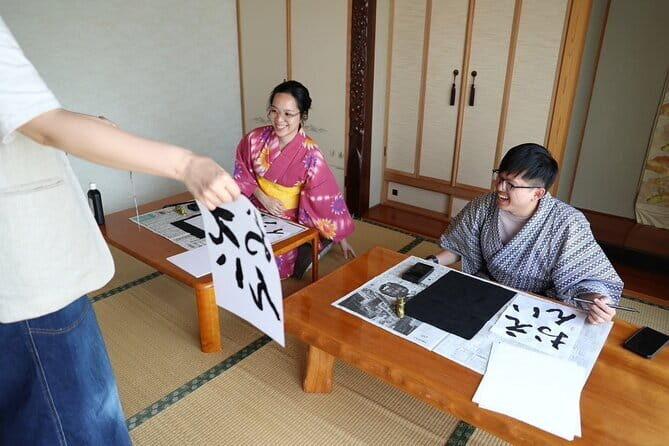
You’ll start with kimono dressing, and the experience is designed to be family-friendly. Erika can bring out kimonos for children ages 0 to 7, so younger travelers are not left out of the fun. If you are traveling with kids and calligraphy practice is not the priority, you can still wear the kimono—just contact the provider with the child’s age and gender.
That detail is worth planning around. Younger children can have shorter attention spans, so having the option to split the experience helps you avoid the common problem of getting through a lesson you cannot really enjoy. If your group includes kids, you’ll likely appreciate that flexibility.
For adults, the lesson style still helps you feel at ease. Traditional clothing plus a calm step-by-step coach is a better combo than a rushed photo window. You get time to get comfortable, and you are guided through what to do next.
The calligraphy lesson: posture, brush grip, and the first strokes
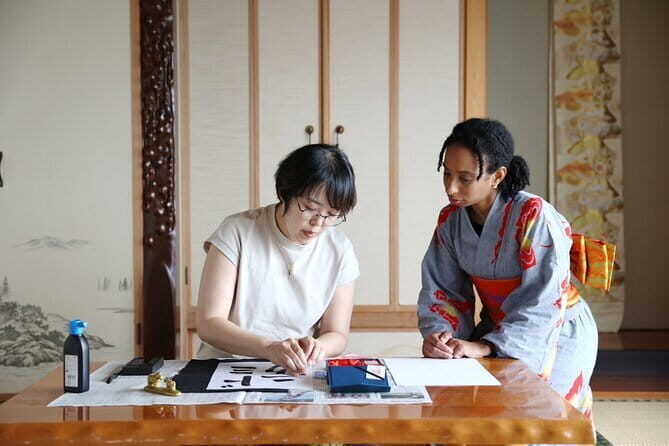
The heart of the experience is the calligraphy instruction inside a traditional tatami room. The lesson starts with fundamentals. Erika guides your posture with calm attention. Then you learn how to hold the brush and the basic way to draw a line.
This is the part I like most. Calligraphy tutorials online often jump straight to characters. Here, you build the foundation first. That means when you later form a character, you already understand how the brush should move and what a controlled stroke feels like.
You also practice using a model that Erika prepares. After you try on your own a bit, the coaching becomes more hands-on. When needed, Erika moves your hand and brush together with you. That kind of physical guidance can make a huge difference, especially if your first attempts look shaky. Instead of guessing, you get the correct motion pattern right away.
If you want photos, you can ask. Having a visual record matters because calligraphy is one of those skills where the process can be hard to remember later. A photo helps you look back and see what you were practicing.
Learning how to form the character (without feeling rushed)

After you get comfortable with posture and line control, you move into character formation. Erika also instructs the form of the character, so you are not left with a vague outline and a hope for the best.
This matters because Japanese calligraphy has structure. Strokes are not interchangeable. Even small changes in direction and timing change the character’s feel. The lesson format helps you follow that structure step by step.
You practice in accordance with what Erika prepares as a role model. That approach keeps your work consistent. It is also easier for you to focus because you are not switching between five different skills at once. You’re repeating the same stroke patterns in a guided way, which makes progress feel faster.
And because the experience is private, you can go at a pace that matches your group. That is especially helpful if your kimono-wearing experience includes kids or if someone in your party is learning slowly.
What you take home: your calligraphy souvenir (plus photos)
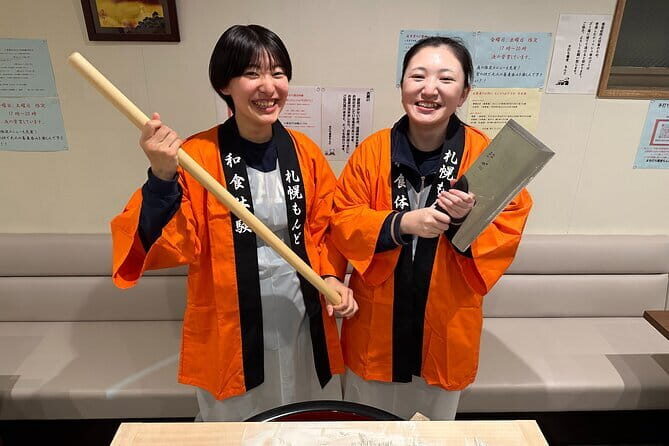
The best part is that your work becomes a souvenir. You can take your calligraphy home, which turns the whole session from a temporary activity into something you can display. In a place like Sapporo, that kind of keepsake feels more personal than a standard postcard.
If you ask for photos, Erika will take them. That’s a practical perk because kimono is mostly about how it looks in motion and in details. You’ll get images of your dressing moment and your writing moment, so you do not have to worry about finding the right angle while you’re also trying to focus on writing.
Snacks are included too. That sounds small, but it matters in a short lesson. It keeps energy stable, especially for families. When kids are involved, having something light can reduce the stress of timing.




Price and value: why $42.82 can be worth it
At $42.82 per person, you’re paying for more than a craft. You’re paying for instruction, tools, and the kimono experience in a dedicated space.
Here’s what you actually get based on what’s included:
- Calligraphy tools loaned for the session
- Snacks during the experience
- Kimono dressing as part of the experience
- A private format for your group
- Pickup offered (private transportation is not included)
That package can be good value if you want something authentic and active. You are not just watching someone perform. You’re learning the process and leaving with your own character.
The price also feels more reasonable when you compare it to the cost of doing the parts separately—dressing, hiring a teacher, and finding a space to practice. Even for travelers who are only mildly interested in calligraphy at first, the guided “get your posture right, then try a stroke” approach can quickly turn curiosity into a real skill moment.
Where the tour starts in Sapporo (and how pickup helps)
The meeting point is at 16 Chome-1 Kita 34 Johigashi, Higashi Ward, Sapporo, Hokkaido 007-0834, Japan. The activity ends back at the meeting point.
You’ll also have the convenience of being near public transportation. That’s helpful if you are staying around central Sapporo and don’t want to add complicated logistics. Pickup is offered, which can make a big difference for families, travelers with limited walking time, or anyone who does not want to manage trains and short taxi rides before the lesson.
Also, confirmation is provided within 48 hours of booking, subject to availability. If you’re traveling during a busy period, booking earlier helps you lock in your slot.
Who should book this, and who might pass
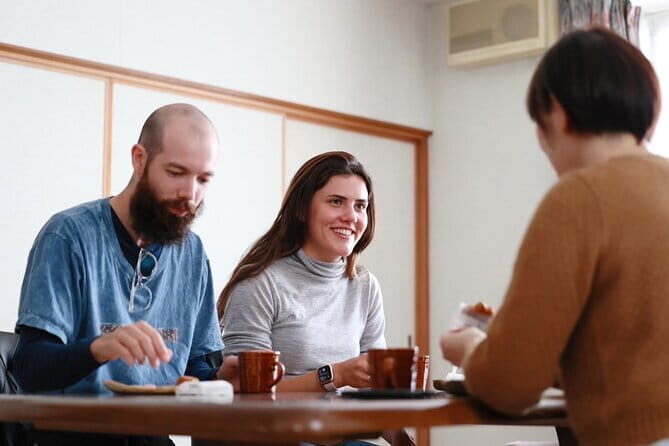
This is a great fit for people who like doing something with their hands and who want a traditional cultural moment that is more than a photo op. If your group includes kids, the kimono option for ages 0 to 7 makes it easier for families to participate fully.
It also suits travelers who want an organized experience with a calm guide. Erika’s style emphasizes posture and step-by-step coaching, including hand guidance when needed. That can help anyone who worries about being “bad at art.”
Who might consider passing?
- If you only want sightseeing and are not interested in practice time, the session will feel like too much work for too short a window.
- If your schedule is packed and you hate structured activities, you may find 2 hours of guided practice tighter than you prefer.
- If your group needs private transportation, note that private transport is not included.
Should you book the calligraphy and kimono session?
Yes—if you want a memorable Sapporo cultural experience with real participation. The best reason to book is the mix of kimono dressing and hands-on calligraphy coaching that ends with a keepsake. It is short enough to fit most itineraries, but structured enough that you actually learn something.
I’d book this sooner rather than later if you’re traveling with a family. The kid kimono option and the private format make it easier to match the experience to real attention spans. And if you like photos, ask for them. The experience is designed to capture the moment you look like you belong in a traditional room and the moment your brush finally makes a line you recognize as yours.
FAQ
How long is the calligraphy and kimono experience in Sapporo?
It lasts about 2 hours.
Where does the experience start and end?
It starts at 16 Chome-1 Kita 34 Johigashi, Higashi Ward, Sapporo, Hokkaido 007-0834, Japan, and ends back at the meeting point.
Is pickup available?
Pickup is offered, but private transportation is not included.
Is this a private experience?
Yes. It is private, and only your group participates.
Do I need to bring calligraphy tools?
No. Calligraphy tools are provided for you to use.
Are snacks included?
Yes, snacks are included.
Is there kimono for children?
Yes. There are kimonos for children ages 0 to 7. If you want your child to wear a kimono even without a calligraphy trial lesson, you can contact the provider with the child’s age and gender.
What is the cancellation policy?
You can cancel for free up to 24 hours before the experience start time for a full refund.