REVIEW · TOKYO
Cherry Blossom Highlights, Asakusa, Ueno, Imperial Palace Garden
Book on Viator →Operated by Xperience Japan · Bookable on Viator
Cherry blossom season in Tokyo has its own logic, and this tour follows it. You’ll get Imperial Palace East Gardens calm, then a full-on Ueno Park flower walk, with a guide who also helps you use public transport and time the crowds. One possible drawback: since it is a private experience, the clarity of explanations can vary a bit from guide to guide, so it helps to ask questions early.
You’ll also be mixing two big Tokyo themes in one go: temples and food. Stops like Senso-ji, Tsukiji, and Ameyoko give you the culture plus the stomach-filling side of Japan, and the guide can tailor your pace to what you’re curious about. Plan on moderate walking over a 6 to 7 hour morning block starting at 9:00 am.
Key things that make this tour worth your time
- Imperial Palace East Gardens: free access in a huge green setting built on the old Edo Castle grounds
- Ueno Park cherry viewing: more than a thousand blossoms plus nearby Tokugawa-era sites and Shinobazu pond
- Tsukiji market breakfast-style energy: grilled items and a line-friendly food circuit, not just a quick look
- Senso-ji + Nakamise Street: one of Tokyo’s oldest temples with souvenir shopping built into the walk
- Ameyoko arcade atmosphere: fish and snack culture in the middle of downtown life
- A flexible guide: itinerary choices can shift if blossoms are earlier or later than expected
In This Review
- Imperial Palace East Gardens: Edo Castle grounds and that calm start
- Ueno Park’s cherry scene: more than flowers, it is a whole neighborhood walk
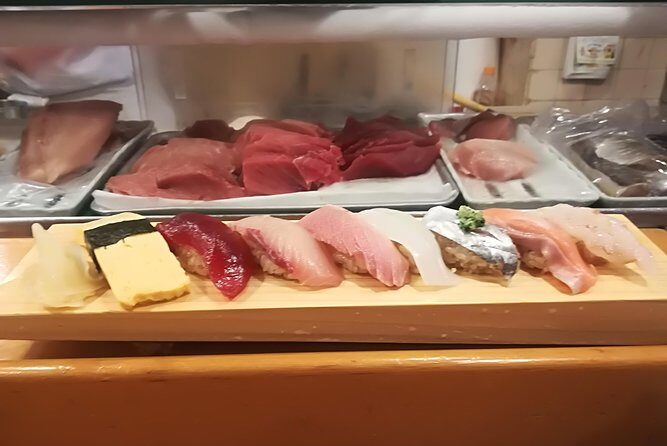
- Tsukiji Fish Market: sushi hunting with market smells and real choices
- Senso-ji Temple and Nakamise Street: blossoms over Tokyo’s oldest temple
- Ameyoko Shopping Street: street food and everyday Tokyo energy
- Price and value: what $221.12 buys you in real terms
- Getting around Tokyo: a guide that helps you learn, not just get moved
- When blossoms are early (or late): how flexibility saves your photos
- How much you’ll walk, and what to wear
- Who should book this cherry blossom + Tsukiji combo
- FAQ
- FAQ
- What time does the tour start?
- How long does the tour take?
- Is this a private tour?
- What is included in the price?
- What is not included?
- Are admission tickets needed for the stops?
- Does the tour use a mobile ticket?
- What happens if weather is poor?
- Should you book it?
Imperial Palace East Gardens: Edo Castle grounds and that calm start
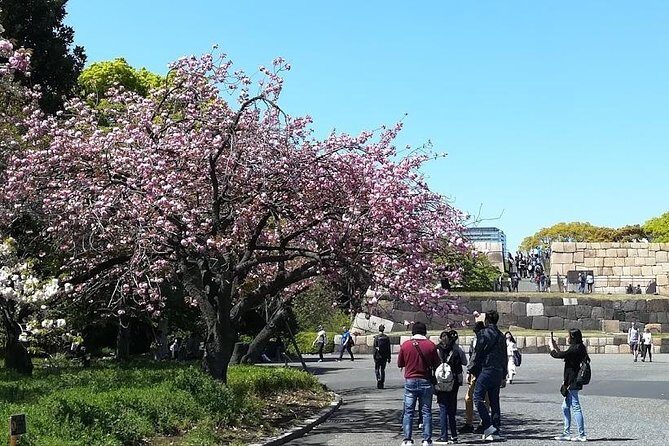
The day kicks off at the Imperial Palace East Gardens, on the site of the old Edo Castle. You’re surrounded by moats and stone walls, which makes the whole area feel like a slice of Tokyo history you can actually walk through, not just read about. And because the palace complex includes big forested areas, you get that cool, shady reset before the day gets busy.
I like that this start is practical: you’re not sprinting from one crowded sight to the next. You get space to look at the blossoms properly, take photos without elbow warfare, and get bearings for the rest of the route.
The one thing to watch is seasonal timing. Cherry blossoms can be surprisingly early some years, and if the early gardens are already past peak, the guide may adjust the plan toward later-bloom areas (one example is Hama-rikyu, chosen when other spots were fading). That flexibility matters if your trip dates are a little late.
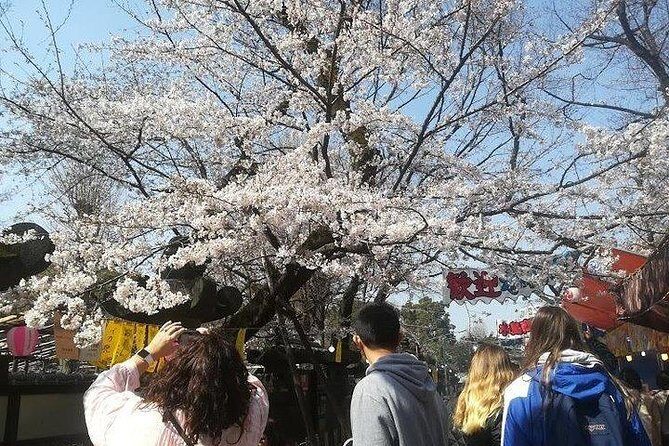
Ueno Park’s cherry scene: more than flowers, it is a whole neighborhood walk
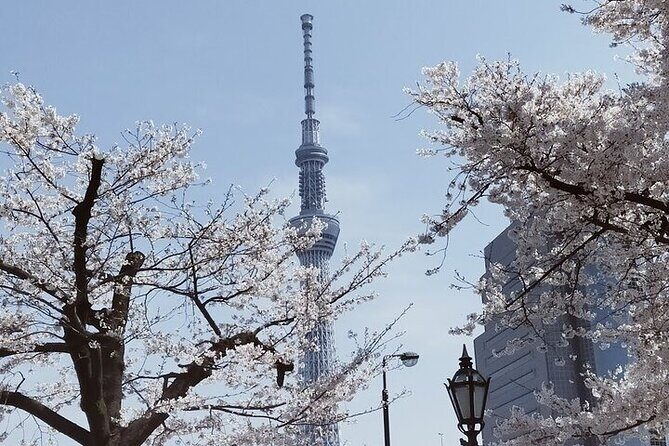
Next you move to Ueno Park, where the cherry blossom setup is almost too good to be true. The park is lined with more than a thousand blossoms, and it’s not just pink scenery—there are also classic sites clustered nearby. You’ll pass remains tied to the Tokugawa family, including places like Ueno Toshogu and Kiyomizu Kannnon, plus Shinobazu pond in the mix.
This is one reason I like this tour for cherry blossom season: it’s not only viewing petals. You get context for why these areas became so important, and you can connect the blossoms to real places rather than treating them like a pretty backdrop.
A practical consideration: Ueno Park can get crowded fast. Your guide’s job is to help you move efficiently, choose good viewing lanes, and keep the pacing comfortable so you’re enjoying the flowers instead of waiting in lines all morning.
You can also read our reviews of more tours and experiences in Tokyo.



Tsukiji Fish Market: sushi hunting with market smells and real choices
Tsukiji is where the tour becomes more than a sightseeing loop. It’s described as a lively food area, and that tracks with how it feels when you’re walking the narrow market streets. At around noon, the lanes are filled with food aromas—grilled chicken, tuna, whale, scallops—and you’ll also notice the classic pattern of lines forming for specific snack items.
You also get the chance to do the best kind of food tourism: choosing what you want to eat on the ground. The tour format connects the market walk to a sushi meal, but lunch is not included in the price. That means you can spend only what you feel like spending, from a quick bite to a more satisfying sit-down option depending on your budget.
One small caution: Tsukiji can be visually overwhelming. You might feel pulled toward the first stall you see. Having a guide here helps because they can point out practical ways to navigate, so you’re not just wandering while your friends are already eating.
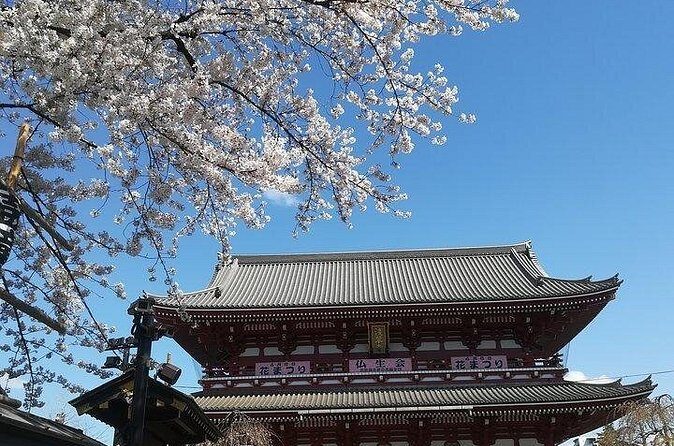
Senso-ji Temple and Nakamise Street: blossoms over Tokyo’s oldest temple
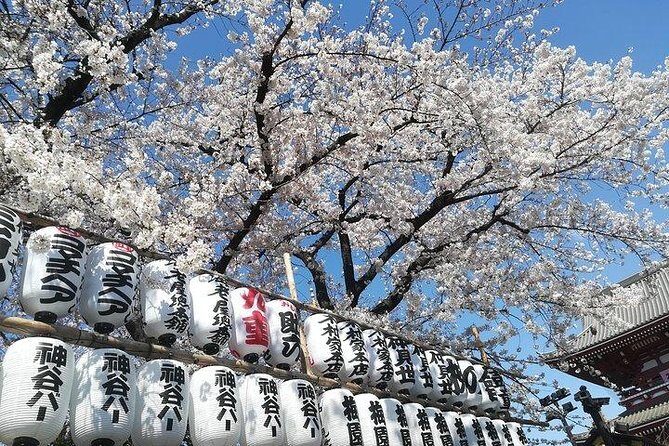
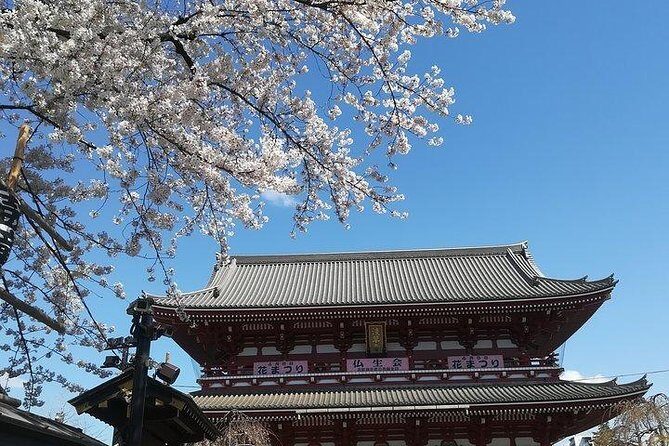
Senso-ji is one of Tokyo’s oldest temples, and it has a very specific vibe when cherry blossoms are in the air. You’ll stroll through the temple approach and take in blossom views, then hit Nakamise Street, the famous shopping lane that runs from the Thunder Gate.
What I like about this stop is the built-in “slow down” factor. Two hours is enough to see the temple area, take photos, browse the stalls, and not feel like you’re rushing through a checklist. Nakamise Street makes it easy to pick up traditional souvenirs without needing a separate side trip.
Drawback to consider: if your main goal is maximum cherry photos, Senso-ji can sometimes feel more like a temple + shopping corridor than a quiet garden moment. That is still part of the fun, but it helps to go in knowing you’ll be mixing culture with commerce.
Ameyoko Shopping Street: street food and everyday Tokyo energy
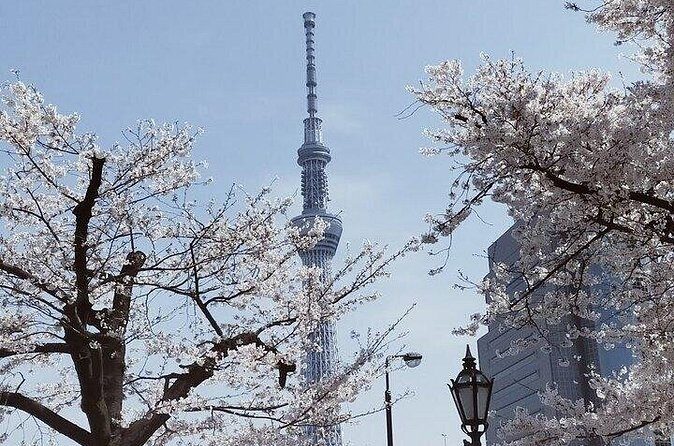
After temples and markets, Ameyoko Shopping Street brings you back to a more local, downtown mood. This arcade is lined with shops selling fresh fish, food, daily goods, and souvenirs. It’s the kind of place where you’ll see people eating and drinking at food stands right in the middle of the street, so it feels less like a museum area and more like Tokyo at full volume.
I like this stop because it balances the day. If your morning has been heavy on formal landmarks, Ameyoko gives you street-level Tokyo—snack decisions, casual atmosphere, and that feeling of being in the flow.
One practical note: Ameyoko can be lively enough that it’s easy to get separated in crowds. Your guide helps you keep the group together, and they can nudge you toward reasonable food choices if you want to avoid the most chaotic lines.
Price and value: what $221.12 buys you in real terms
At $221.12 per person for a 6 to 7 hour experience, you’re paying for more than sightseeing. You’re buying a licensed guide’s time, plus help with public transportation, plus a private setup where the experience can be customized to your interests. That’s the core value.
Admission tickets are free at the stops listed here, so your cost mostly covers the guide, your time, and the structure that keeps you moving. Lunch is not included, so you still control food spending at Tsukiji and Ameyoko based on how hungry you are and what you want to eat.
If you’re traveling as a couple or small group, a private format can actually be great value. You’re not paying for separate planning headaches, and you’re not guessing your way through station transfers while trying to also remember cherry blossom timing.
The one thing to factor in: language experience. One past guest flagged that English can be difficult to understand with a particular guide. Others had very smooth experiences, including guides named Hiroko and Nobuko Akimoto—so if language clarity is crucial for you, it’s smart to communicate your needs up front.




Getting around Tokyo: a guide that helps you learn, not just get moved
One of the most useful parts of this tour is that you learn how to use public transportation with your guide. That matters because Tokyo trains and stations can be intimidating at first, especially if you’re trying to read signs while also tracking where the group is headed.
In a good tour format, the guide does two jobs at once. They point you toward the right lines, but they also teach you how to think about the route so you can do the rest of Tokyo later on your own. It’s the difference between being transported and actually getting your bearings.
Pickup is offered, which reduces the stress of starting the day. And since it’s a mobile ticket experience, you can keep things simple day-of instead of hunting paper vouchers.
When blossoms are early (or late): how flexibility saves your photos
Cherry blossom planning in Tokyo is tricky because the flowers don’t care about your calendar. One guide handled this problem well by noticing that Imperial Palace blossoms were already almost over on a specific date, then choosing Hama-rikyu as a later-bloom option.
That flexibility is a real value. If you’ve paid for a cherry blossom tour and the flowers are fading at one spot, you don’t want the day to feel like a letdown. A guide who adjusts the day based on what is actually blooming helps you keep your expectations aligned with reality.
Your best move as a traveler: treat dates as guidance, not guarantees. Bring a patient mindset, and plan to enjoy the walk even if you are not seeing maximum peak everywhere.
How much you’ll walk, and what to wear
This tour is rated for travelers with moderate physical fitness. That doesn’t mean a fitness challenge, but it does mean you should wear shoes you can stand and walk in comfortably for a morning.
Expect a steady flow of short walks between landmarks, plus time spent on shopping streets and inside busy market lanes. If you’re carrying a camera or a small day bag, keep it light. Tokyo in spring can be warm, and you’ll appreciate not hauling weight.
If you get motion-sensitive or you’re traveling with limited stamina, it can help to set the tone early with your guide. Guides like Nobuko Akimoto, based on past feedback, are known for adjusting the tour to match curiosity and pace, rather than running a rigid script.
Who should book this cherry blossom + Tsukiji combo
This is a strong fit if you want a single morning that covers several Tokyo “must-do” moods: classical landmarks, a major flower park, and iconic food streets. It’s also ideal if you want to learn practical transport habits while still getting a guide’s eyes on the best routes through crowds.
It’s less ideal if you only care about quiet garden vibes. This day includes markets and shopping arcades, which means noise, smells, and lots of people. You’ll still see cherry blossoms, but you won’t get a purely serene, off-the-beaten-path floral experience.
If you’re the type who asks lots of questions, you’ll likely enjoy it. One past guest praised Nobuko Akimoto for taking cultural questions in stride and using them to explain what you’re actually looking at.
FAQ
FAQ
What time does the tour start?
The tour starts at 9:00 am.
How long does the tour take?
It runs about 6 to 7 hours.
Is this a private tour?
Yes. It is private, and only your group participates.
What is included in the price?
A licensed tour guide is included.
What is not included?
Private transportation and lunch are not included.
Are admission tickets needed for the stops?
The stops listed in the schedule show admission tickets as free.
Does the tour use a mobile ticket?
Yes, the experience includes a mobile ticket.
What happens if weather is poor?
The experience requires good weather. If it’s canceled due to poor weather, you’ll be offered a different date or a full refund.
Should you book it?
If you want cherry blossoms plus Tokyo food culture in one guided morning, this is a smart way to spend your time. The private format and public transit coaching are the real reason to book, not just the list of sights.
Book it if you like variety and you’re okay mixing temples, markets, and shopping streets. Skip it if you’re chasing a quiet, low-crowd flower-only day—this route is built for seeing and eating as well as admiring petals.