REVIEW · FUJIYOSHIDA
From Tokyo: Mount Fuji One Day Private And Customized Tour
Book on GetYourGuide →Operated by Best tourism services in tokyo · Bookable on GetYourGuide
Fuji in one long, well-planned day can feel like magic. This private trip is built around classic viewpoints and a smooth ride from Tokyo, so you spend less time figuring out transit and more time looking up.
Two things I really like: the chance to hunt for the best views around Lake Kawaguchiko, and the way the route stacks postcard spots like Chureito Pagoda and Arakurayama Sengen Park into one efficient loop. The one caution: if you want lots of in-depth talk at every stop, the experience may feel more like a driver-led schedule than a constantly narrated tour, so come prepared with questions.
If visibility matters to you, you’ll also appreciate how the day can flex with weather and timing, including a possible swing at Mount Fuji 5th Station when roads and conditions allow.
In This Review
- Key highlights worth planning around
- From your Tokyo hotel to Fuji without the transit headaches
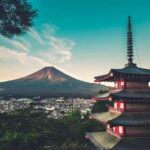
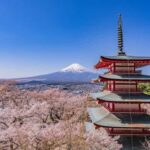
- Arakurayama Sengen Park and Chureito Pagoda: the classic Fuji frame
- Lake Kawaguchiko and Oishi Park: where the views get calmer
- Oshino Hakkai ponds and Saiko Iyashi-no-Sato Nenba: Fuji culture beyond postcards
- Oshino Hakkai: spring ponds fed by Fuji meltwater
- Saiko Iyashi-no-Sato Nenba: thatched-roof village reconstruction
- Lake Yamanaka: a bigger pause and a quieter Fuji angle
- Mount Fuji 5th Station: worth the attempt, only if conditions allow
- Gotemba Premium Outlets: a practical final stop if time stays on track
- Price and logistics: is $308 per group up to five actually good value?
- Who this private Fuji day trip suits best
- Should you book this Mount Fuji one-day private tour?
- FAQ
- How long is the Mount Fuji day trip?
- What’s the price for this private tour?
- Where does pickup happen?
- Is this a private group tour?
- What languages are spoken on the tour?
- What’s included in the day besides transportation?
- Are activities on the lakes included, like boats or cable car?
- Is wheelchair accessibility available?
- What should I bring?
- What should I know about luggage and items?
Key highlights worth planning around
- Private hotel pickup and drop-off across Tokyo, handled by a dedicated vehicle and English-speaking driver/guide
- Arakurayama Sengen Park + Chureito Pagoda for that iconic Fuji framing from an elevated viewpoint
- Oishi Park and Kawaguchiko lakeside photo stops timed for calmer sightlines and classic panoramas
- Oshino Hakkai ponds plus local shopping time for an old-school Fuji-side break
- Saiko Iyashi-no-Sato Nenba for restored thatched-roof homes and a quieter rural feel
- Optional adds like boat cruise/cable car/duck boat rides, depending on your interests and the clock
From your Tokyo hotel to Fuji without the transit headaches
This tour is designed around one big convenience: you get picked up from your hotel or Airbnb and taken out to the Fuji area in a private vehicle. The drive is long enough that doing it by public transport would mean more planning stress than you need, especially if you’re trying to squeeze a full day of sights into one trip.
The private mini van also matters for comfort. You’re not stuck waiting for multiple group pickups, and you can adjust the day when the weather shifts. In the best-case scenario, that flexibility helps you aim for better visibility rather than just racing through fixed photo stops.
One practical detail: the driver contacts you the evening before via WhatsApp to confirm pickup time, vehicle details, and where to meet. That’s useful in Tokyo, where hotel entrances and street access can be tricky. If you struggle to find the car, you can message in real time for guidance. Also note the rule about luggage: no large bags/luggage in the vehicle, so travel light.
You can also read our reviews of more private tours in Fujiyoshida

Arakurayama Sengen Park and Chureito Pagoda: the classic Fuji frame
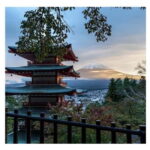
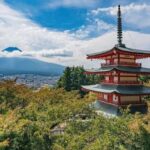
Your day starts with Arakurayama Sengen Park, a viewpoint area where you begin seeing Fuji from a higher angle. You take a short walk and then move into the park’s most famous photo moment: Chureito Pagoda.
This pair works because it gives you two different ways to appreciate Fuji. Arakurayama sets the stage with elevation and wider sightlines, while Chureito delivers that instantly recognizable composition—traditional architecture paired with the mountain in the background.
Timing is the real secret here. Even when Fuji is partially obscured, you’ll often get a clearer window when you’re positioned early and walking at a steady pace. A short walk also means you’re not burning the whole day just to reach one viewpoint. It’s an efficient start that lets you “get your bearings fast,” then settle into the slower Fuji-lake portion of the trip.
Photo tip that fits this route: plan to arrive at Chureito ready to shoot quickly. The stop includes a photo moment plus time to walk around, so bring your settings or do a quick autofocus check before you step into the busiest angles.
Lake Kawaguchiko and Oishi Park: where the views get calmer
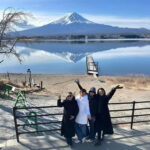
After the pagoda stop, you head toward Lake Kawaguchiko, one of the Fuji Five Lakes—and the area most people picture when they imagine Fuji from a peaceful lakeside setting. Here, the tour leans into scenic time: breaks, viewpoints, and optional lake activities, depending on weather and your timing.
Next up is Oishi Park on the northern shore. This is a strong stop for panoramas because it’s more open and gives you room to spread out while you look for the mountain shape against the lake. The weather you get will matter, but Oishi’s layout makes it easier to find a usable angle even when conditions are mixed.
What makes Kawaguchiko especially worth your attention is the variety within a single stop. You can do the slower scenic part (walking, photos, break time), but you can also add optional rides if you want motion and a different view:
- a lakeside lunch (included by the lake)
- a boat cruise option
- a cable car ride option
- even a duck boat ride option
A quick note on that last part: some activities are listed as part of the planned time, but optional activities cost extra. So treat this as flexible choices rather than guaranteed inclusions.
If you’re the type who wants one “big Fuji moment,” aim to spend a little extra time around the lake after lunch. The tour gives you about two hours at this stage, which is enough to do one main activity and still keep time for photos. You’ll likely get better results by pacing yourself than by trying to check every ride.
Oshino Hakkai ponds and Saiko Iyashi-no-Sato Nenba: Fuji culture beyond postcards
Two of the most interesting stops on this day are the more village-style sites, and they balance the lake views nicely.
Oshino Hakkai: spring ponds fed by Fuji meltwater
Oshino Hakkai is known for its ponds formed from spring water connected to Mount Fuji’s natural meltwater. The vibe here is slow and walkable: you’ll have time to browse preserved surroundings, visit shops, and take in the pond scenery at an easy pace.
This stop also includes guided time, plus shopping and sightseeing time. That combination matters because you can focus on what you’re looking at rather than just drifting around. If you like small details—like how the water features shape the village layout—this is one of the stops where it pays to pay attention during the walk.
If you’re sensitive to crowds, go in with a mindset of short, calm wandering. The ponds are the star, and the goal is to enjoy them without rushing.
A few more Fujiyoshida tours and experiences worth a look
Saiko Iyashi-no-Sato Nenba: thatched-roof village reconstruction
Then the route moves to Saiko Iyashi-no-Sato Nenba, a restored traditional village with thatched-roof houses. It’s more about the rural atmosphere and historical feel than about a single dramatic view line.
The time here is shorter than Kawaguchiko but still meaningful: you get a photo stop plus guided time and free time. This works well if you want a break from the constant Fuji-on-the-horizon framing. The village setting gives your eyes a different kind of “visual satisfaction,” especially if Fuji is partially hidden that day.
One practical thought: this is a good stop for slower photos and resting your feet. Wear comfortable shoes and you’ll be fine; you’re walking, but it’s not an all-day hike.
Lake Yamanaka: a bigger pause and a quieter Fuji angle
The tour also includes Lake Yamanaka, which is the largest of the Fuji Five Lakes. If Kawaguchiko is the busy, classic lakeside, Yamanaka can feel more spacious and calm—more room to breathe and reposition your viewpoint.
The schedule gives you a photo stop and time to explore, along with time for a duck boat ride option. Even if you skip the ride, Yamanaka is still valuable for changing your perspective. You’re seeing Fuji again, but from a different shoreline rhythm and with a wider sense of open water.
Since your day is long, this is also a smart mental reset. By the time you reach Yamanaka, you’ve already done pagoda photos and village ponds. The lake moment helps break the day into clear sections instead of feeling like one long sprint.
Mount Fuji 5th Station: worth the attempt, only if conditions allow
One of the optional upsides of this tour is the possible visit to Mount Fuji’s 5th Station. It’s not guaranteed, because the tour notes that weather and road accessibility affect whether you can go.
That uncertainty is important. If visibility is strong, 5th Station can make Fuji feel closer and more dramatic. But if clouds or road access aren’t friendly, you may only get lower-altitude viewpoints and the rest of the day’s scenery.
I like this approach because it’s realistic. Rather than locking you into a high-altitude plan that can collapse, the day keeps the main viewpoints stable and treats the 5th Station as a bonus when it’s actually possible.
If you care about the 5th Station specifically, ask your driver/guide early how they’re monitoring the conditions. In a tour like this, that communication can help you avoid chasing a plan that won’t work that day.
Gotemba Premium Outlets: a practical final stop if time stays on track
On the way back to Tokyo, there’s an optional stop at Gotemba Premium Outlets. This is a simple choice: if you want a chance to shop, stretch, and break up the ride back, it’s there.
If you’d rather maximize Fuji scenery or keep your energy for the ride home, you can think of this as optional padding. The tour’s timing is built for flexibility, so it won’t necessarily replace the most important sightseeing stops unless you choose to add it.
Price and logistics: is $308 per group up to five actually good value?
At $308 per group up to five, this isn’t a budget bargain, but it also isn’t just paying for a car. You’re paying for the hard part: a private day trip with hotel pickup and drop-off across Tokyo, plus dedicated vehicle time for a long ride into the Fuji region.
Here’s how I judge value for this kind of tour:
- Private transport for a full day is expensive when priced fairly in Tokyo terms.
- The itinerary stacks multiple Fuji icons into one day without you needing to coordinate trains/buses between distant lakes and villages.
- You also get guided time at several key stops (Arakurayama Sengen Park, Oshino Hakkai, Saiko Iyashi-no-Sato Nenba), which can make the day feel more complete than a self-drive route.
If you’re traveling with up to four people, the per-person cost drops fast compared to buying separate tickets for taxis or renting a car while also dealing with parking and navigation.
So the real question isn’t only price. It’s whether you want the convenience of a one-day Fuji itinerary without transport planning. If yes, this price usually feels fair.
Who this private Fuji day trip suits best
This is a strong match if you:
- want a private day trip with hotel pickup and no group constraints
- care about hitting several high-impact Fuji viewpoints in one go
- like the mix of scenic lakes and small cultural stops like Oshino Hakkai and a restored thatched village
- travel as a small group (up to five), so the private-vehicle value makes sense
It may feel less ideal if you:
- want a deep, constantly narrated explanation at every stop
- don’t handle long car time well (it’s a full day, roughly 10–11 hours)
Also note who it’s not suitable for: it lists restrictions for pregnant women and people over 95 years.
Should you book this Mount Fuji one-day private tour?
Book it if you want a Fuji day that feels structured, flexible, and efficient—especially if you’re staying in Tokyo and don’t want to wrestle with logistics. The combination of Chureito Pagoda, Lake Kawaguchiko/Oishi Park, Oshino Hakkai, and the rural stop at Saiko Iyashi-no-Sato Nenba gives you variety, not just one single viewpoint.
Skip it (or at least adjust expectations) if your main goal is a nonstop, super chatty guide experience. This tour includes a live guide, but the day is clearly built around timing, transport, and viewpoint access. If you want extra context, ask questions early and throughout.
If your priority is maximizing your chance of seeing Fuji clearly, also pay attention to the flexible parts of the day. A tour that can adjust based on weather and timing gives you a better shot than a rigid checklist.
FAQ
How long is the Mount Fuji day trip?
It runs about 10 to 11 hours total.
What’s the price for this private tour?
It’s $308 per group for up to 5 people.
Where does pickup happen?
Pickup is available from many Tokyo locations, and the tour includes hotel pickup and drop-off from anywhere in Tokyo. You meet the driver at the hotel or at the address you entered during booking.
Is this a private group tour?
Yes, it’s a private day trip with a dedicated vehicle for your group.
What languages are spoken on the tour?
The guide/host is listed as English and Hindi.
What’s included in the day besides transportation?
Included stops cover Arakurayama Sengen Park and Chureito Pagoda, Lake Kawaguchiko (including lunch by the lake), Oshino Hakkai, and Saiko Iyashi-no-Sato Nenba, plus a customizable itinerary with optional stops.
Are activities on the lakes included, like boats or cable car?
The schedule shows options such as boat cruise, cable car ride, and duck boat rides at different lakes, but optional activities cost extra (lunch is included by the lake).
Is wheelchair accessibility available?
The tour is listed as wheelchair accessible. Non-folding wheelchairs are not allowed.
What should I bring?
Bring comfortable shoes and cash. Travel insurance is also recommended.
What should I know about luggage and items?
Luggage or large bags are not allowed in the vehicle, and smoking in the vehicle is not allowed.