REVIEW · FUJIYOSHIDA
Mount Fuji Passes (optional)
Book on Viator →Operated by Royal Smart Tourism · Bookable on Viator
A day around Mount Fuji can feel scattered. This pass helps you connect the dots with unlimited rides and included attractions in one go. It’s a smart way to build a flexible itinerary around Kawaguchiko, Fujiyoshida, and the Fuji area without checking bus schedules every 10 minutes.
I especially like how it bundles both sightseeing time and transit time. You get unlimited hop-on hop-off buses (red/blue/green line sightseeing buses) and climbers’ buses, plus JR access from major hubs like Narita, Haneda, Shinjuku, and Yokohama. The second thing I like: the “do fun stuff” list is real, not just window dressing—think Mt. Fuji Panoramic Ropeway, Lake Kawaguchiko excursion boat, Wind Cave, Ice Cave, and Fuji-Q Highland.
One drawback to consider: the pass is aimed at foreign visitors only, and you’ll need a valid photo ID/passport. Also, it’s weather-sensitive—rain/extreme weather can affect what you can enjoy, and policies around refunds/rescheduling are strict.
In This Review
- Key things you’ll love about the Mount Fuji Pass
- How this pass changes your Mount Fuji day (and your stress level)
- First stop: Fuji-Q Highland Tourist Information Center (getting your day rolling)
- Unlimited buses: why the red/blue/green lines are a big deal
- The JR train side: getting in and out without friction
- Included free rides that make the route feel like a greatest-hits tour
- Mt. Fuji Panoramic Ropeway (free ride)
- Lake Kawaguchiko excursion boat (free ride)
- Yamanakako “Swan Lake” excursion ship (free ride)
- Wind Cave and Ice Cave: the non-obvious included attractions
- Grinpa and Fuji-Q Highland: thrills with built-in freebies
- Grinpa (included admission)
- Fuji-Q Highland (one free ride)
- The Mt. Fuji 5th station and Oshino stops (discounts that help)
- How to plan your day using the pass (without overbooking)
- 1-day plan: best hits without burnout
- 2-day plan: mix views + attractions
- 3-day plan: for the “let’s really do it” travelers
- Price and value: when $73 makes sense
- Practical tips that make your pass day smoother
- Should you book the Mount Fuji Pass?
- FAQ
- What’s included in the Mount Fuji Pass?
- How long is the pass valid?
- Can I use it for trains from airports and major city stations?
- Is this pass only for foreign visitors?
- Do I need to bring my passport or ID?
- Will I receive an e-ticket?
- What if it rains or there’s extreme weather?
- Can I cancel and get my money back?
Key things you’ll love about the Mount Fuji Pass
- Unlimited hop-on hop-off buses across the Mt. Fuji sightseeing network (red/blue/green lines, plus local routes)
- JR train access from Narita, Haneda, Shinjuku, and Yokohama, plus the Limited Express Fuji Excursion
- Free scenic rides like the Mt. Fuji Panoramic Ropeway, Lake Kawaguchiko excursion boat, and Yamanakako Swan Lake ship
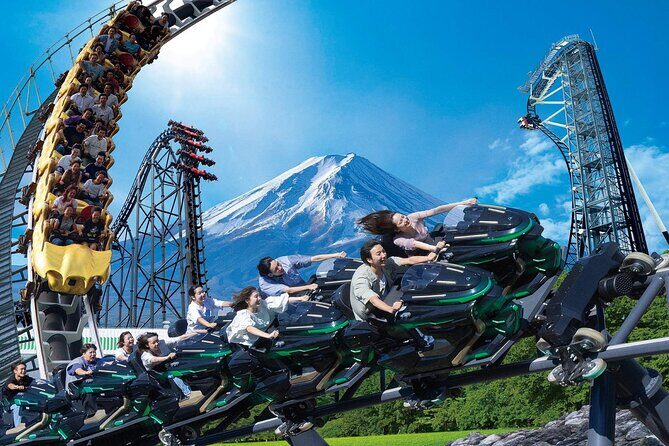
- Included attractions such as Wind Cave, Ice Cave, and Grinpa (amusement park)
- A little extra value with discounts at select stations, eateries, and spots like Oshino Shinobi no Sato
- Fast, practical setup starting at the Fuji-Q Highland Tourist Information Center
How this pass changes your Mount Fuji day (and your stress level)
Mount Fuji planning usually has two enemies: time and logistics. Time, because most of the fun is spread out. Logistics, because you can easily waste half a day zigzagging between bus stops and train platforms.
This pass is built to solve both. It’s designed to give you unlimited transportation within the Fuji area, so your day becomes a choose-your-own-adventure: ropeway when the sky looks promising, then boats, then caves, then an amusement park. No frantic “will this bus still come?” math.
It’s also set up for an easy start. You redeem/use it at the Tourist Information Center near Fuji-Q Highland, which is handy because Fuji-Q is a great anchor point. From there, you can branch out to lakes, caves, and the Oshino area using the pass network.
You can also read our reviews of more tours and experiences in Fujiyoshida.


First stop: Fuji-Q Highland Tourist Information Center (getting your day rolling)
Your practical starting point is the Tourist Information Center at Fuji-Q Highland. That matters because it’s the place where you get the pass experience moving in the real world—rather than just imagining it in an itinerary.
From this hub, you can aim for multiple directions:
- Stay focused on Fuji-Q Highland for thrills and views
- Hop over to Kawaguchiko sights like the ropeway and the excursion boat
- Use the bus network to reach other spots around the Mt. Fuji region
And the reviews vibe for Fuji-Q Highland is clear: when the weather cooperates, the views are a highlight, and the park feels well run. One person specifically called out zip-through entry and being able to ride almost everything without long waits. Another praised how clean the park and bathrooms were, plus how good the food options were.
Tip: bring comfy shoes. You’ll likely be walking more than you expect, especially if you hop between transport and different attractions in the same day.
Unlimited buses: why the red/blue/green lines are a big deal
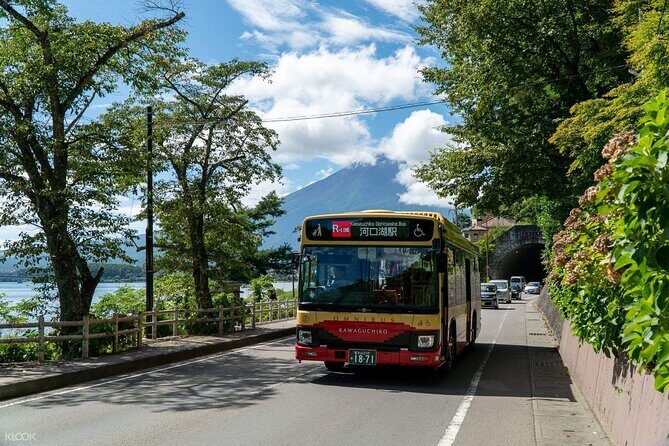
The pass includes unlimited bus rides on red, blue, and green line sightseeing buses, plus climbers’ buses and all local routes in the area covered. That’s the core convenience: you can treat buses like time-saving shuttles instead of fixed appointments.
Here’s what that practically means for you:
- You can bounce between viewpoints and lakes without locking yourself into one tight route
- If one stop is too crowded or the timing doesn’t work, you can shift gears
- You can build a plan around weather windows (especially important for clear Mount Fuji views)
If you’re the type who hates rigid schedules, this is where the pass earns its keep. Instead of planning your entire day minute-by-minute, you plan it by neighborhoods and “best next stop.”
The JR train side: getting in and out without friction
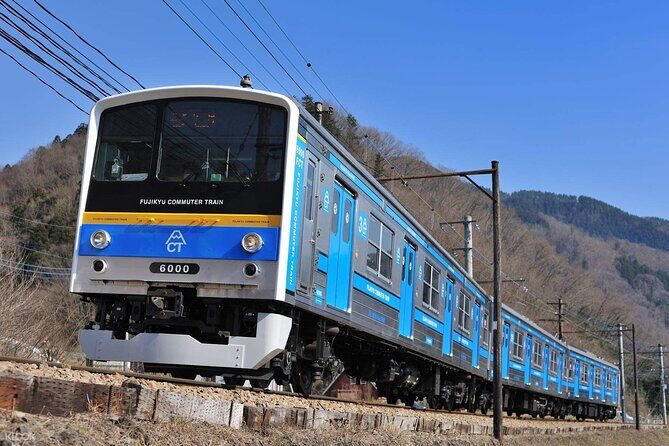
Beyond local buses, you also get unlimited train rides on JR lines from major airports and city stations:
- Narita Airport
- Haneda Airport
- Shinjuku
- Yokohama
Plus, you get access to the Limited Express Fuji Excursion train.
For many people, this is the biggest “hidden value” of the pass. If you’re already traveling through Tokyo and then heading toward the Fuji region, the transit portion can add up fast when booked separately. Having a pass that covers JR movement from key hubs reduces decision fatigue, and it also helps you stay flexible about timing.
Practical thought: if your plan includes more than one trip into the Fuji area (or you’re coming in from a non-Tokyo airport route), the train coverage becomes even more useful.
Included free rides that make the route feel like a greatest-hits tour
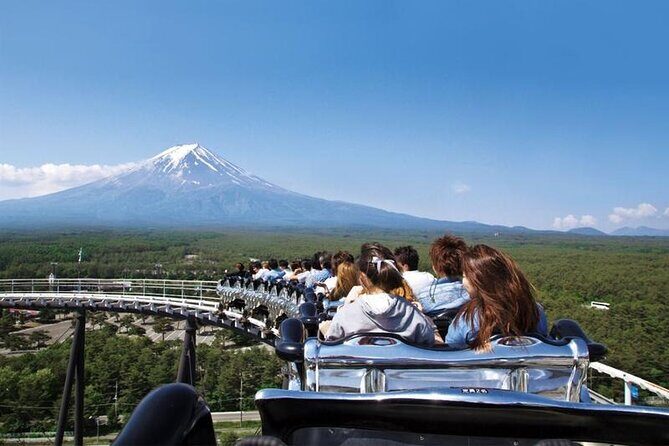
This pass isn’t just transport. It includes several “this is why people come here” experiences.
Mt. Fuji Panoramic Ropeway (free ride)
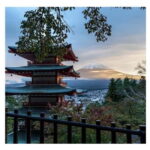
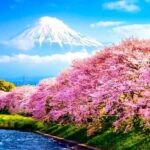
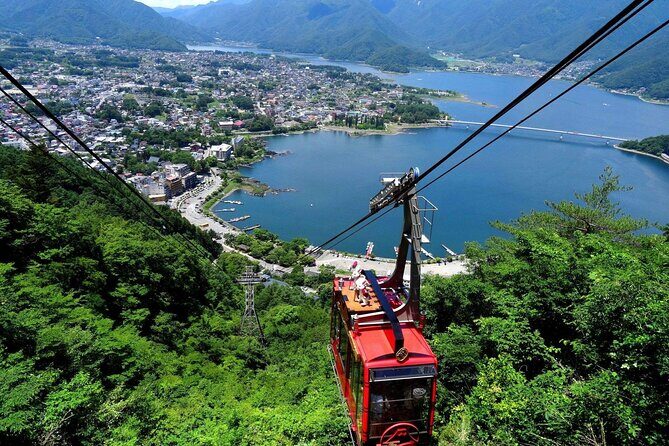
You get a free ride on the Mt. Fuji Panoramic Ropeway. If visibility is good, this is the kind of stop that can instantly reward your effort. Ropeways are also a quick way to change your perspective without spending a long day hiking.
Lake Kawaguchiko excursion boat (free ride)
You also get a free ride on the Lake Kawaguchiko sightseeing boat called “Tenharu.” Boats are a great match for the way this pass works: you can plan your boat time based on daylight and weather, then use the bus network to connect to other nearby sights.
Yamanakako “Swan Lake” excursion ship (free ride)
On top of that, there’s a free ride on the Yamanakako Swan Lake Excursion Ship. That gives you a second lake experience without needing separate ticket purchases.
One review flagged the “clear weather” effect, and it makes sense: the passes include multiple viewpoints and water routes, so your payoff rises fast when the sky clears.
Wind Cave and Ice Cave: the non-obvious included attractions
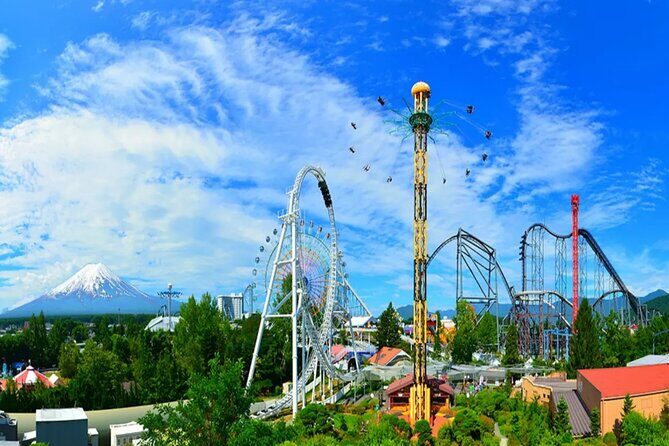
Not all Mount Fuji area stops are about looking up at a mountain. This pass includes free admission to Wind Cave and Ice Cave.
These are a nice contrast if your day already includes ropeway views and lakeside walking. Caves give you:
- A different kind of experience (underground, temperature-controlled feeling)
- A break from the sun
- A way to keep moving even when the weather isn’t ideal for outdoor viewpoints
If you like variety—and you don’t want your entire day to be one continuous “look at Fuji” loop—this is a strong value add.
Grinpa and Fuji-Q Highland: thrills with built-in freebies
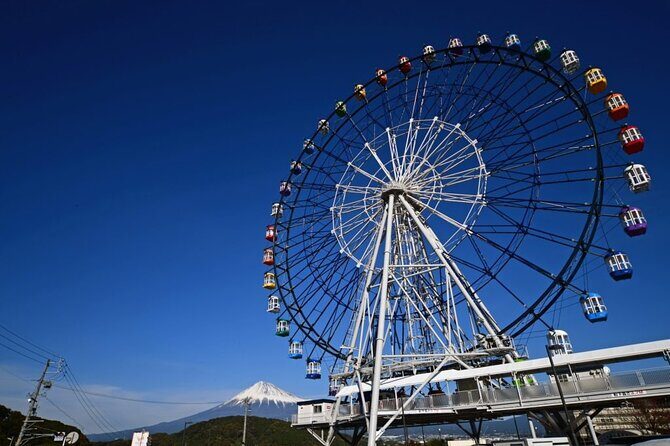
Grinpa (included admission)
The pass includes free admission to Grinpa (amusement park). It’s an included stop that can work well as your flexible “free time absorber.” If you’re traveling as a mixed group—adults who want views plus anyone who wants rides—this gives options.
Fuji-Q Highland (one free ride)
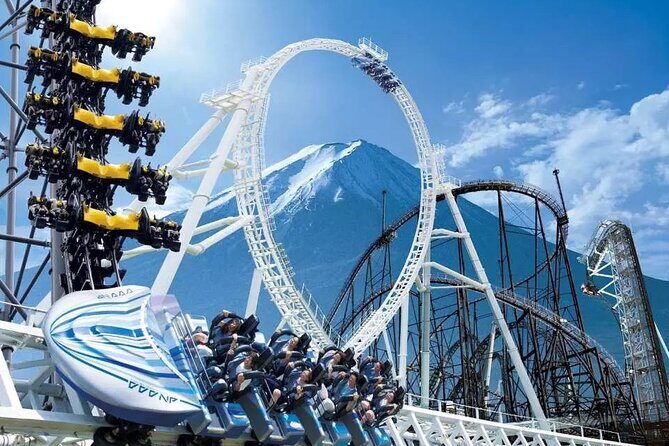
You also receive 1 free ride at Fuji-Q Highland.
This is important for value: even one free ride can offset a meaningful chunk of your day at an amusement park. And the vibe from the reviews is upbeat. People described the park as well managed, with a sense that entry is smooth and rides are reachable without major waiting—especially on working days.
So if your schedule allows a weekday, your odds of a smoother park day generally improve.
Tip: decide which ride you want most before you start. With only one free ride, it pays to pick your priority early.
The Mt. Fuji 5th station and Oshino stops (discounts that help)
Not everything here is free, but there are discounts that can make a difference if you plan the right add-ons.
- 10% off at Fujikyu Unjo-kaku (Mt. Fuji 5th station)
- 100 yen off admission at Oshino Shinobi no Sato (a ninja-themed amusement park/restaurant)
- 5% off at station eateries:
- Gateway Fujiyama (Kawaguchiko station)
- Fujimaya (Mt Fuji station)
- 5% off at Fuji-Q Highland Bus Terminal souvenir shop
These aren’t show-stoppers by themselves, but they help if you’re the type who naturally ends up buying snacks, drinks, small meals, or souvenirs anyway.
Oshino Shinobi no Sato also works as a light, unusual stop if you want something more playful in the Oshino area without committing to a full-day detour.
How to plan your day using the pass (without overbooking)
Since you can choose 1-day, 2-day, or 3-day tickets, you’ll want a plan that matches your stamina and how much riding you want to do.
1-day plan: best hits without burnout
If you only have a day, I’d aim for a tight loop:
- Ropeway or one lake boat experience (pick based on timing/weather)
- One cave option (Wind or Ice)
- Either Grinpa or Fuji-Q Highland (use the included admission/free ride smartly)
This keeps you from sprinting between too many separate zones.
2-day plan: mix views + attractions
With two days, you can do:
- Day 1: scenic transport and one lake/ropeway
- Day 2: caves + the amusement park side (Grinpa and/or Fuji-Q)
You also get more flexibility for weather. If Fuji shows up, you lean into the scenic spots. If it doesn’t, you still have indoor-ish variety with the caves and parks.
3-day plan: for the “let’s really do it” travelers
Three days is for travelers who want:
- More than one lake experience
- Enough time to repeat a viewpoint if visibility improves
- A more relaxed pace so you’re not rushing between every bus
One more practical point: the pass says you should have moderate physical fitness. That doesn’t mean “hardcore hiking,” but it does mean comfortable walking and standing time.
Price and value: when $73 makes sense
At $73 per person, the question isn’t just “is it cheap.” It’s whether your plan uses enough of what’s included.
This pass can be a strong value if you plan to:
- Use the pass repeatedly over a couple of hours (or more than one day)
- Take at least one or two of the included free rides (ropeway, boat, or ship)
- Include at least one included attraction (Wind Cave, Ice Cave, and/or Grinpa)
- Use the JR coverage from a major hub
If you’re only interested in one small area and you won’t ride much bus/train, then it might feel overpriced compared with buying only the tickets you need. But if you’re building a “best-of Fuji area” day, the included freebies and unlimited transit start to add up quickly.
The strongest value tends to show up when you actually use the pass multiple times in a day—hopping between lakes, caves, and the amusement park zone.
Practical tips that make your pass day smoother
A few small things will save you time and frustration:
- Bring a valid photo ID/passport. It’s required for entry/redemption.
- Plan around weather. The pass is weather-sensitive, and rain/extreme conditions can ruin outdoor expectations.
- Use your smart phone for the e-ticket. You don’t need to print.
- Wear comfortable shoes. You’ll walk and transfer, even with unlimited rides.
- If you want clear views of Mount Fuji, give yourself flexibility. More movement through the day means more chances to catch good light.
Also, the pass is specifically targeted for foreign visitors to Japan. Domestic residents can’t purchase or use it, and there’s a risk they won’t be able to enter if they try.
Should you book the Mount Fuji Pass?
Book it if you want an easy, flexible way to cover the Fuji area’s highlights without fighting transit schedules. The combination of unlimited buses, JR coverage from major hubs, and multiple included attractions/free rides makes it a good match for first-timers and anyone who hates rigid planning.
Skip it or think twice if your schedule is extremely tight, you’re only aiming for one single stop, or you know you’ll mostly stay in one neighborhood with minimal transit use.
If you can travel with a moderate pace, bring your passport, and keep your plan realistic for weather, this pass can turn your Mount Fuji day into something that feels efficient and fun—caves and boat rides included.
FAQ
What’s included in the Mount Fuji Pass?
It includes unlimited bus rides on red, blue, and green sightseeing lines (plus climbers’ buses and local routes), unlimited JR train rides on JR lines from Narita Airport, Haneda Airport, Shinjuku, and Yokohama, and access to the Limited Express Fuji Excursion. It also includes free admission to Wind Cave, Ice Cave, and Grinpa, plus one free ride at Fuji-Q Highland. You also get free rides on the Mt. Fuji Panoramic Ropeway, the Lake Kawaguchiko excursion boat Tenharu, and the Yamanakako Swan Lake excursion ship.
How long is the pass valid?
The pass is offered as a 1-day, 2-day, or 3-day ticket, and validity is for the date and time selected.
Can I use it for trains from airports and major city stations?
Yes. It includes unlimited train rides on JR lines from Narita Airport, Haneda Airport, Shinjuku, and Yokohama, plus access to the Limited Express Fuji Excursion.
Is this pass only for foreign visitors?
Yes. It is specially targeted for foreign visitors to Japan, and domestic residents cannot purchase or use it.
Do I need to bring my passport or ID?
Yes. A valid photo ID/passport is required to be displayed at the entrance.
Will I receive an e-ticket?
Yes. E-tickets are forwarded via email one day before the tour date, and you don’t need to print—show it from your smartphone.
What if it rains or there’s extreme weather?
The policies state that in case of rain/extreme weather, no refund will be granted. You can reschedule from the counter or from team available on duty before redeeming.
Can I cancel and get my money back?
This experience is non-refundable and cannot be changed for any reason. A separate weather-related note says that if it’s canceled due to poor weather, you’ll be offered a different date or a full refund.