REVIEW · TOKYO
Historic Kamakura: Temples, Shrines and Street Food Private Walking Tour
Book on Viator →Operated by Tokyo Memories · Bookable on Viator
Kamakura feels like a time machine. This private 6-hour walk stacks major sights with a tea stop and guided street-food sampling, so you get more than just photos. I especially like the Engaku-ji climb for temple views and tengu statues, and I like that Komachi-dori lunch is handled for you with a tastings-style approach. One watch-out: it’s a walking tour with slopes, so comfortable shoes really matter.
The guide experience seems to be the whole point. In reviews, Simon gets praised for being personable and professional, including for families, while Chuck is noted for keeping a good pace and timing your moves so you don’t feel rushed.
You’ll also like the value structure. Entrance fees, lunch, snacks, bottled water, and soda/pop are included, along with alcoholic beverages, plus a guided day that runs from Kita-Kamakura Station to Kamakura Station. The main tradeoff is the price is per person (and transportation to Kamakura isn’t included), so you’ll want to be sure this schedule fits how you like to travel.
In This Review
- Key highlights worth planning for
- Kamakura, guided: what this private day really gives you
- The route starts at Kita-Kamakura, ends at Kamakura Station
- Engaku-ji: Busudan hall, tengu statues, and a real view break
- Tsurugaoka Hachimangu: the main hall, torii gates, and a tiny treasures museum
- Komachi-dori street food lunch: sampling without wasting time
- Hokoku-ji (the bamboo temple) and green tea in a peaceful grove
- Daibutsukiritoshi: the Great Buddha stop in a focused 30 minutes
- Drinks, snacks, and the point of including food
- Price and value: what $220.22 buys you (and what it doesn’t)
- Guides Simon and Chuck: the human ingredient that shows up repeatedly
- Who should book this Kamakura private walking tour
- Should you book it?
- FAQ
- FAQ
- How long is the Historic Kamakura private walking tour?
- Is this a private tour?
- Where is the meeting point and where does the tour end?
- What time does the tour start?
- What is included for food and drinks?
- Are entrance fees included?
- Is transportation to Kamakura included?
- What if the weather is bad?
- Can I cancel for a refund?
Key highlights worth planning for
- Engaku-ji’s Busudan hall: a wooden Buddha statue plus a climb to see tengu statues and get great views
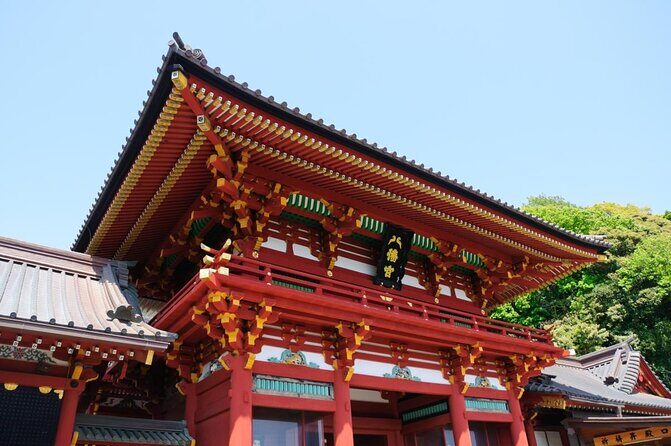
- Tsurugaoka Hachimangu’s big-name status: Kamakura’s most important Shinto shrine, with torii gates and a small treasure museum
- Komachi-dori lunch that’s more than grazing: guided sampling along Kamakura’s famous shopping street
- Hokoku-ji bamboo grove + tea: a cool bamboo temple visit and a traditional cup of green tea at a tea house
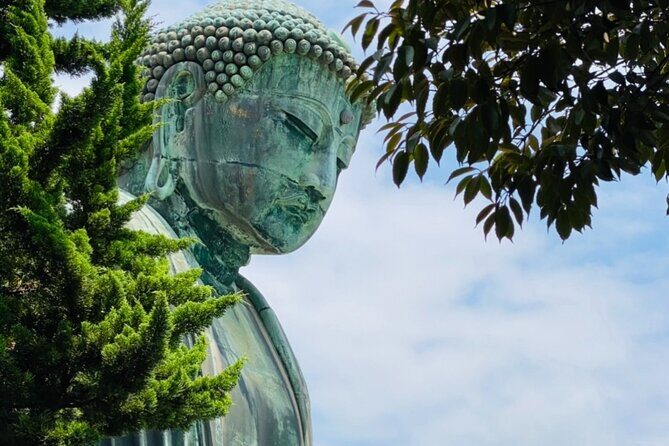
- Daibutsukiritoshi and the Great Buddha: see Japan’s second largest bronze Buddha in a focused stop
Kamakura, guided: what this private day really gives you
If you like your sightseeing with structure, this tour works. It’s built around five specific stops, each with a clear time window, so you can move through Kamakura without the usual indecision about what to see next. And because it’s private, you’re not stuck following a slow group around—your guide can adjust to your pace.
What makes it feel relaxing (not just “running between temples”) is the mix. You start with major temple and shrine sites, then you shift to street food and a bamboo grove tea break, then you finish with the Great Buddha. That order matters. Early on you’re fresh, and later you’ve already earned the slower, calmer moments.
Also, I like that the plan includes food on purpose. Street food is part of Komachi-dori, but it’s easy to waste time there if you don’t know what to try. This kind of guided sampling helps you spend your stomach’s attention, not your mental energy.
Finally, the tour ends at Kamakura Station, which is convenient if you’re planning your return. You won’t be scrambling to figure out how to get out after the last stop.
You can also read our reviews of more walking tours in Tokyo
The route starts at Kita-Kamakura, ends at Kamakura Station
The meeting point is Kita-Kamakura Station (9:00 am start). The drop-off is Kamakura Station, so you get a clean start-to-finish day flow. That’s useful because Kamakura is spread out, and walking between the ends on your own would be time-consuming.
The tour is designed as a walking day with moderate fitness needed. The clue is the temple climb—at Engaku-ji, you go up slopes behind the temple for views. If you’re comfortable with uphill walking for short stretches, you should be fine.
One practical note: transportation costs aren’t included. So you’ll want to handle your Tokyo-to-Kamakura logistics on your own, then use the tour as your on-the-ground plan once you arrive.
Engaku-ji: Busudan hall, tengu statues, and a real view break
Your first stop is Engaku-ji, and it’s a strong opener. You’ll explore the temple complex, including the Busudan hall, which houses a wooden statue of Buddha. This is the kind of detail that’s easy to miss if you’re just drifting through on your own.
Then comes the part that often turns into the best photos of the day: you climb the slopes behind the temple. The reward is twofold. You get fantastic views, and you also see many tengu statues.
Why I like this stop as a start: it gives you a sense of scale quickly. The temple complex isn’t just one building you look at once. You move through it, learn what you’re seeing, then earn the views with a climb. It’s a good way to hit Kamakura’s “historic” tone right away.
Potential drawback: because you’re moving upward, this is the stop where pace matters most. If you’re the type who hates any uphill walking, you might want to bring a slow-and-steady approach or wear supportive shoes.
Tsurugaoka Hachimangu: the main hall, torii gates, and a tiny treasures museum
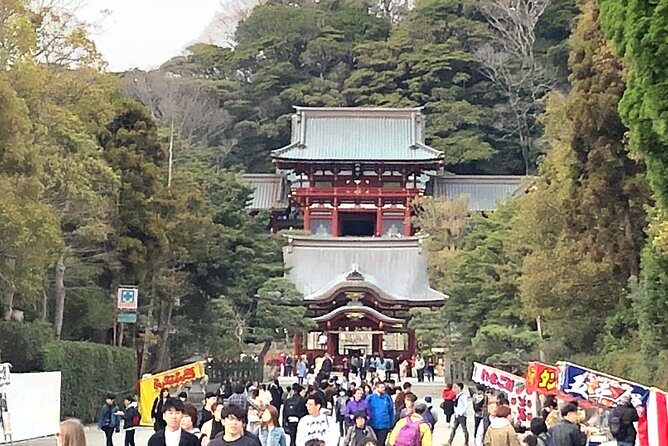
Next you’ll visit Tsurugaoka Hachimangu Shrine, described as Kamakura’s most important Shinto shrine. This stop is shorter (about 30 minutes), but it’s packed with recognizable structures: the main hall and torii gates, plus a small museum of treasures.
Even with the shorter time, it feels purposeful because shrines like this are about more than one photo. The torii gates act like scene-setters, and the museum adds a behind-the-scenes look at what’s protected and valued there.
The best way to get value here is to slow down for a minute and watch how the spaces connect—gate to approach, approach to hall. With a guide, you don’t have to guess what each area means.
If you’re someone who likes to linger, you might feel a little “time-wand” pressure because the stop is brief. Still, the tour’s overall pacing seems built to protect quality across all stops, not just one.
Komachi-dori street food lunch: sampling without wasting time
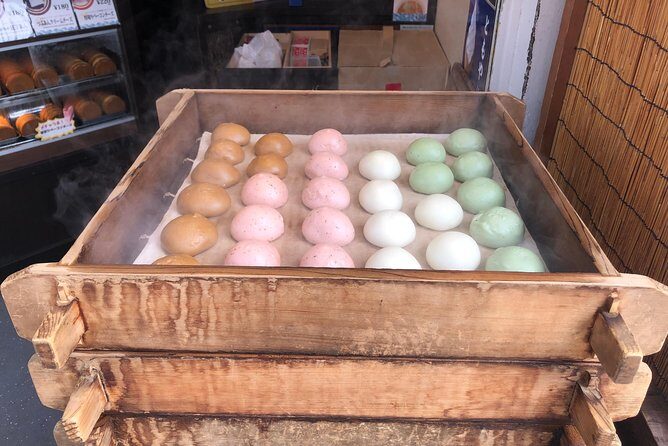
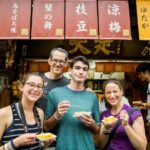
Then you hit Kamakura Komachidori, the famous street filled with eateries and stalls. This is the tour’s “you’re here to live a little” section, and it’s where the guide’s role really shows.
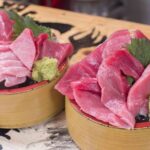
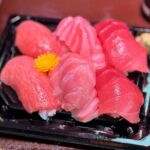
Lunch is handled as sampling a variety of delicious street food. You’ll try sweet and savory options, and you’re not left standing there wondering what to order. This matters because street food can be intimidating—menus vary, stalls move fast, and it’s easy to end up with snacks that are fun but not representative.
The included lunch time is about 1 hour. That feels like a sweet spot: long enough for a real tasting experience, short enough that you don’t lose the rest of the day.
One more detail I’d take seriously: reviews praise the guide for helping you feel like locals and for pointing out food you might not choose on your own. That local-feeling element is a big part of why this tour can be more satisfying than a DIY walk where you mainly “see things.”
You can also read our reviews of more food & drink experiences in Tokyo



Hokoku-ji (the bamboo temple) and green tea in a peaceful grove
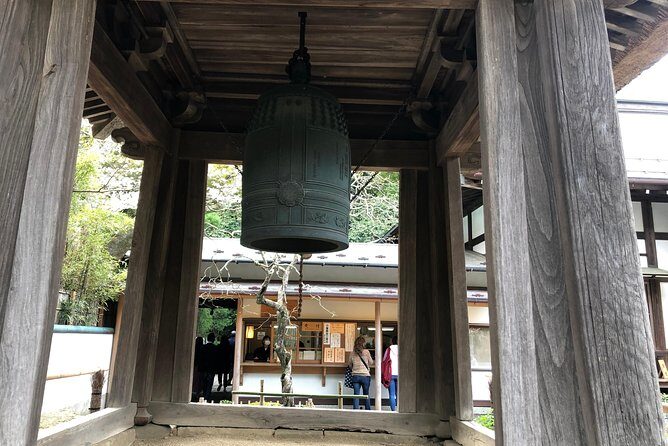
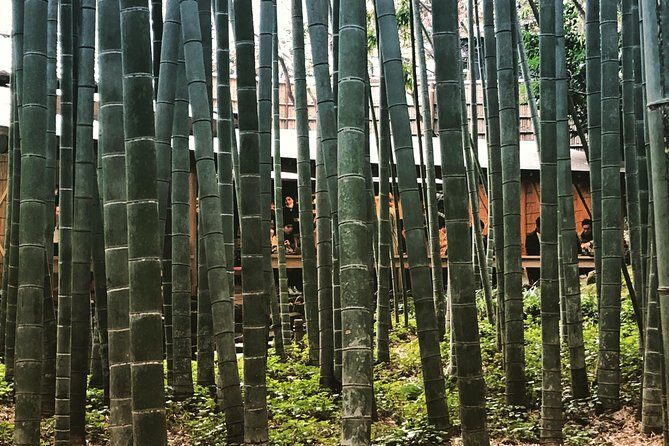
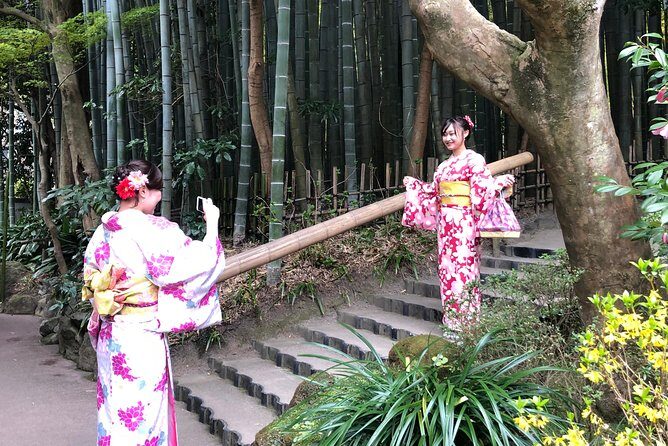
After Komachi-dori, you switch gears to Hokoku-ji, known as the bamboo temple. You’ll relax in the cool bamboo grove (about an hour), which is a nice contrast after the street energy.
The highlight is the tea house stop. You’ll enjoy a traditional cup of green tea at the tea house among the bamboo. It’s one of those moments where the day makes sense: you’ve done concentrated sightseeing, you’ve eaten, and now you get a calmer reset.
Why it’s good value: the tea part isn’t just included as a token. The tour gives you enough time to actually enjoy it inside the atmosphere it’s meant for, not as a quick stop squeezed between photos.
Practical tip: bamboo-grove areas can feel cooler than the street. A light layer can help if you run hot at the start of the day.
Daibutsukiritoshi: the Great Buddha stop in a focused 30 minutes
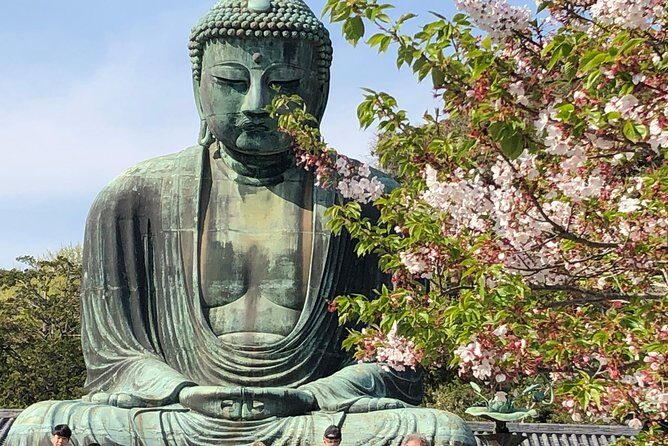
The last major landmark is Daibutsukiritoshi, where you’ll see the Great Buddha of Kamakura. It’s described as Japan’s second largest bronze Buddha, and the stop is about 30 minutes.
This is a classic example of “quality over time.” Thirty minutes might sound short, but it works here because the Great Buddha is the point. You don’t need an hour of wandering to get the impact.
If you like to take a lot of time reading signage and absorbing details, ask your guide a question and then take a little extra time while staying aware of your schedule. In general, the pacing on this tour is designed to give you breathing space without running the entire day.
Drinks, snacks, and the point of including food
This tour includes lunch, snacks, bottled water, soda/pop, and alcoholic beverages, plus entrance fees and guided tour service. That package matters because it reduces decision fatigue. You don’t have to budget food on the fly or search for a place that fits your schedule.
The “booze” angle comes up in reviews, where one person called the day a perfect balance of culture, history, and booze. The key takeaway for you: this isn’t a dry, stiff history march. It feels like a fun day, and the included drinks support that mood.
If you don’t drink alcohol, you still get bottled water and soda/pop. Either way, it helps you stay comfortable and focused on the sights rather than logistics.
Price and value: what $220.22 buys you (and what it doesn’t)
At $220.22 per person, this is not a cheap impulse buy. It’s priced like an organized private day with a guided approach and multiple paid entries.
What justifies the cost is the full package:
- guided tour service for the whole route
- entrance fees included
- lunch, snacks, and drinks included
- a route that’s hard to stitch together efficiently if you’re moving independently
It’s also private, meaning your group is the only group participating. In practical terms, that often translates into less waiting, better pace control, and more direct answers to your questions.
What’s not included is transportation costs. So your total trip cost depends on how you’re getting to Kamakura from Tokyo. If you’re already planning to be in Kamakura early, this tour can be the easiest way to turn that time into a smooth, structured day.
Booking timing is another value clue. The tour is often booked around 95 days in advance on average, which suggests it’s in demand. If you have firm travel dates, plan early.
Guides Simon and Chuck: the human ingredient that shows up repeatedly
Two guide names come through in reviews: Simon and Chuck. Both are described with the same theme: they make the day feel under control without turning it into a sprint.
Simon is praised as personable and professional, and in one review he’s specifically mentioned as considerate toward parents and helpful with a little one. Chuck is praised as good fun and for understanding the best times to move on without rushing.
That timing piece is more important than it sounds. Temples, shrines, and street food areas can get crowded, and being pushed forward by a clock doesn’t always feel enjoyable. When your guide times your movement well, you get more “seeing,” less “surviving.”
One more review theme: guides help you find places where Japanese people go, so you avoid the feeling of being stuck only in the most touristy zones. Even if you don’t care about that label, it usually means a more relaxed atmosphere and better food choices.
Who should book this Kamakura private walking tour
Book it if you:
- want a guided day with a plan across multiple sites
- like a mix of temples, shrines, and street food instead of only monuments
- prefer private pacing so you can ask questions and move at a comfortable speed
- want food and drinks handled for you, including a tea stop in the bamboo grove
You might hesitate if:
- you strongly dislike walking slopes (Engaku-ji involves climbing)
- you’re trying to keep costs ultra-low, since this is priced as a private tour
- you want total freedom to build your own route and linger as long as you want at every stop
In most cases, this tour fits people who want Kamakura to feel like a complete day, not a pick-and-choose checklist.
Should you book it?
I think you should book if you value organization plus atmosphere. This isn’t just a map-and-museum day. It’s designed to connect temple sights to street food to a bamboo tea reset, and it includes the entrances and lunch pieces that often eat up time on your own.
If your travel style is casual and you’d rather spend effort on enjoying snacks and views than planning the next step, this private Kamakura walk is a solid choice. The guides Simon and Chuck sound like the kind of people who keep the day fun and moving at the right speed, not the wrong one.
FAQ
FAQ
How long is the Historic Kamakura private walking tour?
It runs for about 6 hours.
Is this a private tour?
Yes. Only your group will participate.
Where is the meeting point and where does the tour end?
You meet at Kita-Kamakura Station in Kamakura and the drop-off is at Kamakura Station.
What time does the tour start?
The start time is 9:00 am.
What is included for food and drinks?
Lunch, snacks, alcoholic beverages, bottled water, and soda/pop are included.
Are entrance fees included?
Yes. Entrance fees are included.
Is transportation to Kamakura included?
No. Transportation costs are not included.
What if the weather is bad?
This experience requires good weather. If it’s canceled due to poor weather, you’ll be offered a different date or a full refund.
Can I cancel for a refund?
Yes, you can cancel for a full refund up to 24 hours before the experience’s start time. If you cancel less than 24 hours before, the amount paid is not refunded.