REVIEW · KYOTO
Full-Day Sightseeing to Kyoto Highlights
Book on Viator →Operated by Mandala Japan Experience · Bookable on Viator
One day in Kyoto, without the chaos. This full-day highlight walk is built for a max 7-person group and covers the big-name sights with real context on local life, not just sightseeing. I especially like the local guide’s practical recommendations (and the small cultural oddities, like why you rarely see trash cans), and I like that the route keeps you moving with less guesswork. One consideration: it’s a walking-heavy day, and you’ll have extra costs for Kinkaku-ji and public transport.
Guides matter here. I’ve seen guides such as Indra and Maureen lead the day, and the common thread is friendly English, good pacing, and lots of photo help when you want it. If you want a guided overview that still feels personal, this one has the right setup.
You’ll start at Kyoto Tower’s area and finish back near the same spot, using trains along the way. The tour runs about 7.5 hours, has a mobile ticket, and works best with solid walking shoes and a flexible attitude about crowd levels.
In This Review
- Key highlights at a glance
- Small-group Kyoto highlights that actually feel personal
- Starting at Kyoto Tower: fast orientation, fewer wrong turns
- Arashiyama Bamboo Forest: yes, it’s famous, but here’s what to notice
- From bamboo to Kinkaku-ji: the shortcut value of guided transit
- Kinkaku-ji Golden Pavilion: the moment you understand why it matters
- Shijo-Kawaramachi lunch stop and Shijo Bridge walk
- Gion Shirakawa: seeing the geisha district without acting like a tourist
- Fushimi Inari-taisha: thousands of torii and a clear Shinto frame
- Kyoto Station finale: end where you started, with energy left
- Price and extra fees: what you’re really paying for
- Who should book this Kyoto highlights tour (and who should skip)
- The little culture lessons that make the day stick
- Should you book this Kyoto highlights tour?
- FAQ
- How long is the Kyoto highlights tour?
- What’s the group size limit?
- Where is the meeting point and what time does it start?
- Is Kinkaku-ji admission included in the price?
- What about public transportation costs?
- Is this tour mostly walking?
- Do I get a mobile ticket?
Key highlights at a glance
- Maximum 7 travelers for easier conversation and better photo spots
- Arashiyama Bamboo Forest to Kinkaku-ji in a single efficient flow
- Gion Shirakawa quiet lanes with etiquette and what to notice
- Fushimi Inari torii rhythm plus a clear Shinto primer
- Culture talk beyond landmarks, including everyday Japan observations
- Trains + buses built in, so you’re not charting the whole day alone
Small-group Kyoto highlights that actually feel personal
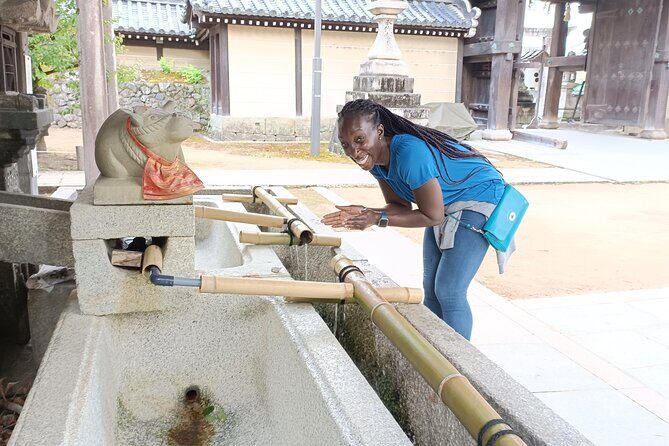
Kyoto can feel like a choose-your-own-adventure, and that’s fun—until you’re standing in lines with a half-planned route. This tour’s big advantage is the small group size. When you’re with up to seven people, it’s easier to ask questions without the guide rushing you. It’s also easier to keep the day moving, which matters because Kyoto’s main stops can get crowded fast.
I also like the “story” approach. You’re not only getting dates and facts. You’re getting a sense of how people think and live. The best moments are usually the quick, practical explanations—like cultural habits you’ll notice right away once you know what to look for.
A small note on expectations: this is an overview day. You’ll see the famous places, but you’re also moving. If your ideal Kyoto day is slow, long temple garden time with zero foot traffic, you might want fewer stops. If your ideal day is seeing a lot and understanding it, this fits.
A few more Kyoto tours and experiences worth a look


Starting at Kyoto Tower: fast orientation, fewer wrong turns
The meet-up point is Starbucks Coffee at Kyoto Tower Sando (with the street address listed for that building complex). The start time is 8:30 a.m. From there, you’ll get a short intro and then head out by train toward Saga Arashiyama.
This matters more than you’d think. Kyoto’s transit is excellent, but it’s not always intuitive for first-timers. Starting with a guide means you’re learning the rhythm of trains and station navigation early, when your brain is still fresh and your legs aren’t tired.
You’ll also spend a good chunk of time outside after this. So if you can, I’d treat the morning like the hardest part: arrive on time, hydrate, and keep your bag light.
Arashiyama Bamboo Forest: yes, it’s famous, but here’s what to notice
Arashiyama Bamboo Forest is the kind of place people talk about after one glance. The tour gives you about an hour here, which is enough time to walk through the main areas, pause for photos, and take in the sound-and-light feel of the bamboo corridor.
What makes this stop better than a quick “walk-through selfie” is the cultural framing. Your guide talks about Japanese language and culture, and you’ll also get commentary tied to how people experience places like this day to day—not just what tourists do.
One practical thought: Arashiyama bamboo can be visually loud (crowds, angles, and camera work). If you want cleaner photos, you’ll benefit from moving with the group and listening for when your guide nudges you toward quieter pockets.
From bamboo to Kinkaku-ji: the shortcut value of guided transit
After Arashiyama, you’ll hop by bus or train toward Kinkaku-ji. This transition is where guided logistics save you stress. Kyoto is not a city where you want to waste time figuring out which bus to catch between two landmarks you already paid to see.
You’ll have a long enough window to reach Kinkaku-ji comfortably, then get into the Golden Pavilion area with explanation time built in. Expect roughly 40 minutes on the temple stop itself in the schedule.
Kinkaku-ji Golden Pavilion: the moment you understand why it matters
Kinkaku-ji is the second most visited tourist spot in Japan, and it earns the hype. The Golden Pavilion isn’t just shiny—it’s a carefully composed scene that changes with your angle and the way light hits the building.
This tour uses that “look time” for more than photos. You’ll get context about Buddhism in Japan and a history sketch of what you’re seeing as you move through the grounds. That’s especially useful for first-timers who might otherwise just read a sign and move on.
A key practical point: Kinkaku-ji entry isn’t included in the tour price. The tour lists Kinkaku-ji admission as an extra fee (500 yen per person). So if you book, plan on paying that on the day. It’s common for this kind of highlight route, but it’s worth knowing up front so it doesn’t surprise you.
Photo note: the tour includes guided attention to picture moments. In past departures, the guide will take photos for you when you ask—helpful if you’re traveling solo or with a partner and want shots without trading phones.




Shijo-Kawaramachi lunch stop and Shijo Bridge walk
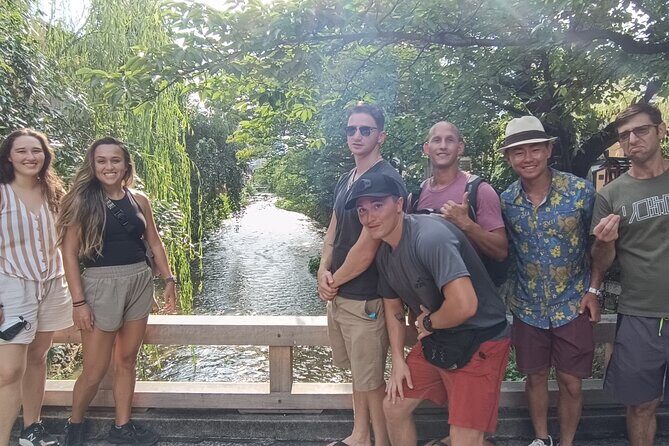
Next you’ll reach Shijo Kawaramachi, a major shopping street area. The schedule gives you about 75 minutes here, including time for lunch and window-shopping.
Even if you don’t plan to buy much, the value is in the contrast. After temple-heavy sightseeing, you get a more everyday Kyoto moment—shops, sidewalks, and the feel of a neighborhood commercial street. Your guide also points out what to notice about the Japanese shopping arcade view.
Lunch is part of the plan, but the tour doesn’t list lunch as a separate included item. So you should expect to pay for what you order. The upside is you’re not stuck hunting for food with your day already running late.
Then there’s a short on-foot stretch across Shijo Bridge, with time to enjoy the view as you walk. It’s a good reset for your legs and a chance to see Kyoto from a more street-level perspective.
Gion Shirakawa: seeing the geisha district without acting like a tourist
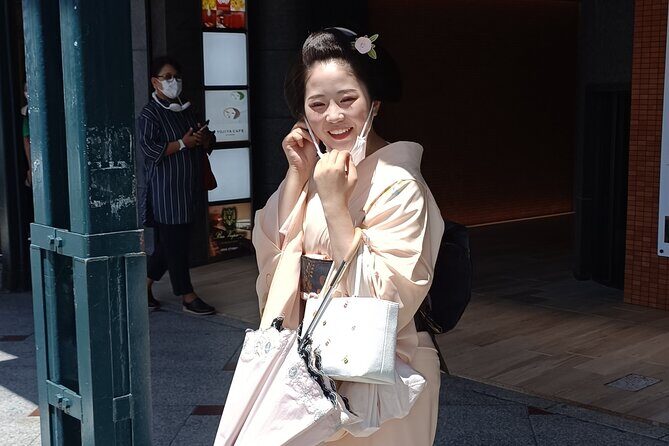
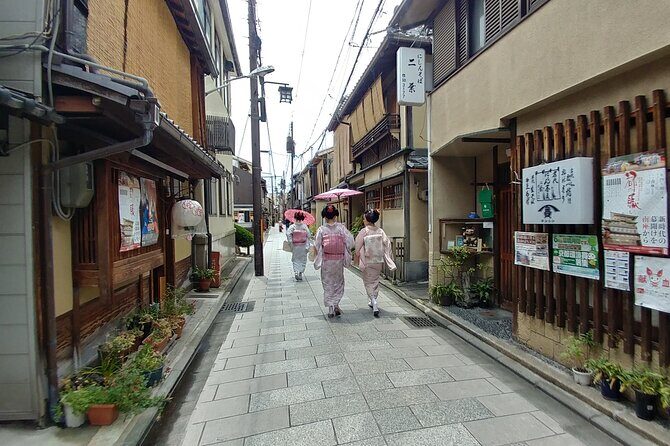
Gion Shirakawa is one of those places where the details matter. The tour schedules about 60 minutes here, focusing on the quieter side of Gion—an entertainment district area where geiko and maiko work.
If you’ve only seen Gion from a distance, this stop is where you learn what to do with that. Your guide explains the world of geiko and maiko and gives etiquette context, so you’re not just wandering and hoping you’re doing it right.
Another plus: this is still part of a guided route, so you’re less likely to end up in the most chaotic corners at the wrong time. You’ll get the chance to observe, take photos responsibly, and move on before your energy crashes.
Fushimi Inari-taisha: thousands of torii and a clear Shinto frame
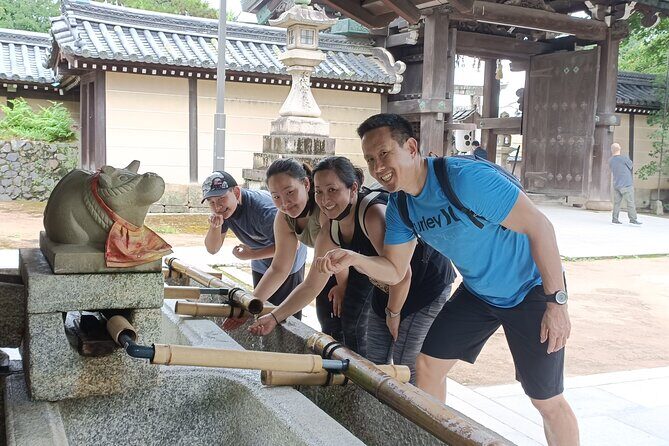
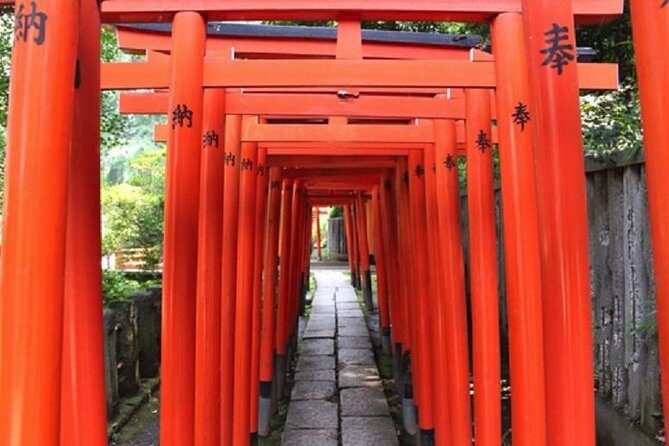
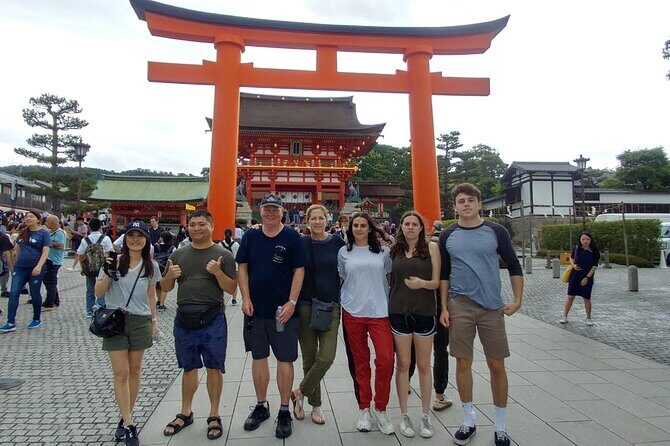
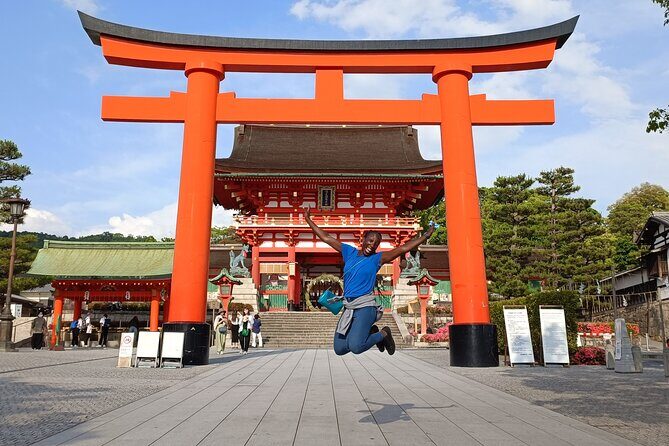
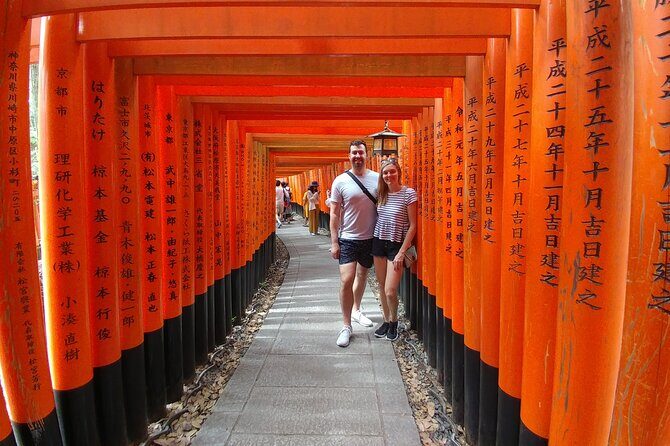
By the time you get to Fushimi Inari-taisha, your brain is primed to look for patterns. The shrine’s signature is the long run of vermilion torii gates, and the tour gives you about 50 minutes here.
What I like is the quick Shinto primer built into the walk. You’re not only walking through gates—you’re learning what Shinto is, why this site is what it is, and the history tied to the place. That turns a famous photo spot into something you can actually interpret as you go.
Fushimi Inari can also become a sensory puzzle: lines, steps, and changing perspectives. With a guide, you get a smoother route through it, plus suggestions on where to slow down and where to keep moving.
This is also where your pace matters most. You’ll walk, and it’s not flat. If your legs are already sore, take short breaks instead of trying to “power through.”
Kyoto Station finale: end where you started, with energy left
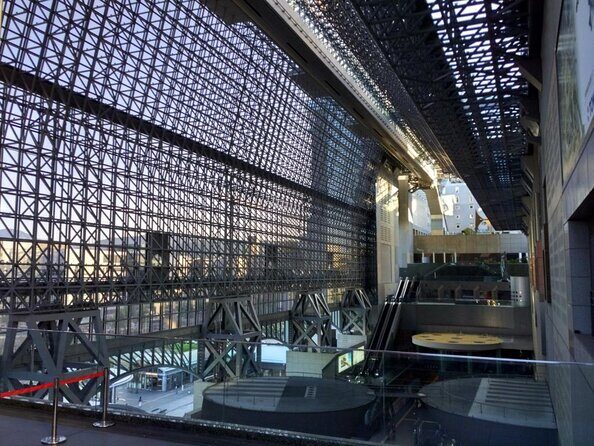
The tour ends by returning to Kyoto Station Building and wrapping up near the meeting point. The schedule includes a final short train segment and a farewell.
I love that this kind of tour doesn’t strand you far away. You finish near transit, so you can head to dinner or your next plan without extra stress.
Also, finishing at Kyoto Station helps you mentally connect the day. You can look back at the route—Saga Arashiyama to Kinkaku-ji, then into Shijo and Gion, then Fushimi Inari—and realize how well the day was stitched together.
Price and extra fees: what you’re really paying for
The tour price is $165.17 per person. On paper, that can look high for a walking tour. But here’s the value math I see:
You’re paying for an experienced local guide, a carefully planned sequence of major Kyoto stops, and the ability to move between them using train and bus without doing all the route work yourself. You’re also paying for small-group dynamics, which is where the experience becomes more than just transport.
Then there are the add-ons you should expect:
- Kinkaku-ji admission: 500 yen per person (not included)
- Public transportation: listed separately at 1,510 yen per person
So your total day cost is the base price plus those extras. Still, the structure is what you’re buying: a guided “Kyoto highlight circuit” with cultural explanations and photo help.
One more thing: the tour includes mobile ticketing. That sounds small, but it reduces friction on check-in day. If you hate wasting time with paper tickets and confusion at the start, that’s a real quality-of-life upgrade.
Who should book this Kyoto highlights tour (and who should skip)
This tour is best for you if:
- You want a fast overview of Kyoto in one day
- You enjoy learning cultural context alongside the landmarks
- You’re traveling solo or as a couple and want photo help
- You like a guide who can answer questions and adjust pacing
It’s also a strong pick for first-timers who want the city to make sense quickly. Several guide styles show up in past departures—Indra, Maureen, Naomi, Toshi, and Adella have all led groups—so you’ll likely get a friendly, conversational day.
You should reconsider if:
- You have trouble walking long distances. The tour notes moderate physical fitness and specifically says it’s not recommended for people with bad leg.
- You’re pregnant beyond the first trimester. The tour says it’s not recommended in that case.
- You’re the type who wants long, slow temple time without moving between stops.
In short: it’s a great “hit the highlights” day. It’s not built for slow wandering.
The little culture lessons that make the day stick
The most memorable parts often aren’t the biggest monuments. They’re the quick explanations that help you interpret what you’re seeing outside the guide’s script.
This tour focuses on local life and cultural philosophies. You’ll hear about why Japan has different habits around everyday items, including why you rarely see trash cans. You’ll also get guidance that helps you navigate social norms in places like Gion.
You may even pick up a few Japanese phrases along the way. In past experiences, guides taught simple language that makes basic interactions easier, even when you’re tired and hungry.
Think of it as a tool kit. You’re leaving with facts, yes. But more importantly, you’re leaving with mental shortcuts for reading the city like a local.
Should you book this Kyoto highlights tour?
Yes, if you want a structured, efficient day that still feels personal. The combination of major sights—Arashiyama Bamboo Forest, Kinkaku-ji, Shijo-Kawaramachi, Gion Shirakawa, and Fushimi Inari-taisha—plus cultural context is exactly what makes this itinerary worth your time.
I’d book it especially if:
- You have limited time in Kyoto (just one day)
- You want fewer logistics headaches
- You value explanations and photo help, not only checkmarks
I wouldn’t book it if you’re looking for a slow, relaxed Kyoto day with minimal walking, or if you know you need accessible pacing options.
If you choose this route, bring comfortable shoes, plan for the extra admission and transit fees, and go in ready to learn while you move. That’s when it really pays off.
FAQ
How long is the Kyoto highlights tour?
It runs about 7 hours 30 minutes.
What’s the group size limit?
The tour has a maximum of 7 travelers.
Where is the meeting point and what time does it start?
You meet at Starbucks Coffee – Kyoto Tower Sando, Kyoto Tower area (address listed in Kyoto, Shimogyo Ward). The start time is 8:30 am.
Is Kinkaku-ji admission included in the price?
No. Kinkaku-ji Golden Pavilion admission is listed as 500 yen per person and is not included.
What about public transportation costs?
Public transportation is listed separately at 1,510 yen per person and is not included.
Is this tour mostly walking?
Yes. It’s described as a walking tour, and it’s noted as not recommended for people with bad leg. Travelers should have a moderate physical fitness level.
Do I get a mobile ticket?
Yes. The tour provides a mobile ticket.