REVIEW · TOKYO
Hand-carved stamps made with craftsmen in Asakusa, Tokyo
Book on Viator →Operated by Attractive JAPAN · Bookable on Viator
Carving your own hanko feels weirdly empowering. This private workshop in Asakusa (Taito) lets you carve a wooden name stamp from twigs like sakura or sansho, with one-on-one guidance and an English interpreter so you’re actually making something meaningful, not just watching.
I especially love that the result is a real keepable souvenir: your own stamp, made with the tools and materials the craft uses, plus a vermilion inkpad. The main consideration is value vs. time: the session is listed around 90 to 120 minutes, and it can run shorter depending on how your carving goes, so the price may feel steep if you expected a long, talk-heavy experience.
In This Review
- Key Highlights You’ll Care About
- Asakusa Hanko Workshop: What You’re Really Making
- The Craft Process: Turning Wood Twigs into a Working Seal
- Tools, Guidance, and Your Pace (90 to 120 Minutes)
- Stop 1 in Taito: Showing Up and Getting Started
- Your Take-Home Hanko: Ink, Testing, and Finishing Expectations
- Price and Value at $93.33: When This Workshop Makes Sense
- What You Learn Beyond the Carving (and What to Expect Instead)
- Who This Private Hanko Workshop Is For
- Quick Practical Tips Before You Go
- Should You Book This Hanko Carving Workshop?
- FAQ
- What is included in the workshop fee?
- How long does the experience take?
- Do I need to know how to carve beforehand?
- What wood will I carve?
- Can I make my own name stamp or a custom pattern?
- Are complex designs possible?
- Is there an inkpad to test the stamp?
- Where is the meeting point?
- Is there a restroom nearby?
- What is the minimum age to participate?
Key Highlights You’ll Care About
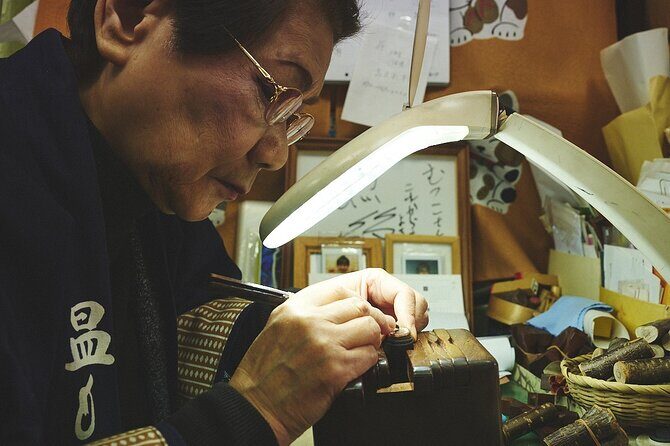
- Private workshop format: only your group, paced to your questions
- Real carving practice: you cut into natural wood to create your own seal
- English interpreter support: guidance that makes the craft feel doable
- Custom pattern options: you can design your own name or a pattern, with help
- Vermilion inkpad included: you can test your stamp right away
- Take-home keepsake: your carved hanko is made from Japan-only materials
Asakusa Hanko Workshop: What You’re Really Making
A Japanese hanko is more than a cute souvenir. It’s a functional name seal used for identity in daily life and paperwork, and that practical purpose is part of the appeal when you learn how it’s made. In this workshop, you’ll carve directly into a small block of natural wood so your stamp has a physical “you made this” quality that store-bought crafts don’t.
The experience is built around hands-on learning. You choose (with guidance) what you want your seal to look like, then you carve it using hand tools while your guide helps you shape clean lines. By the end, you’re holding a stamp that’s genuinely personal—something you can keep, try out, and show without needing to explain what it is.
You can also read our reviews of more tours and experiences in Tokyo.



The Craft Process: Turning Wood Twigs into a Working Seal
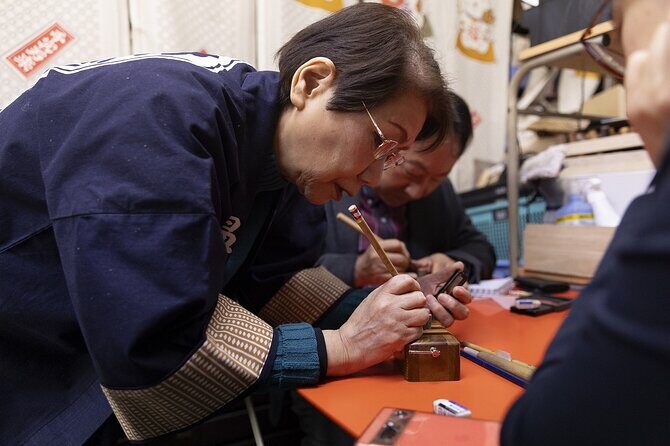
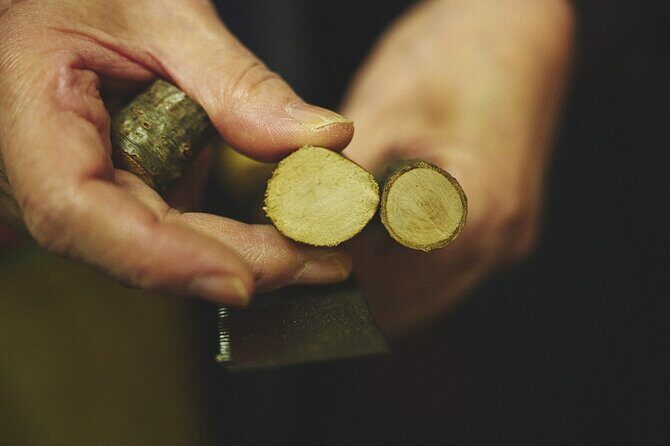
You’ll start with the raw material: small twigs of natural wood, commonly sakura or sansho. They’re cut down into a workable size—about 10 centimeters long—so you’re not fighting a giant block. The wood choice matters because it affects how the carving feels under the tool and how fine your finished lines can be.
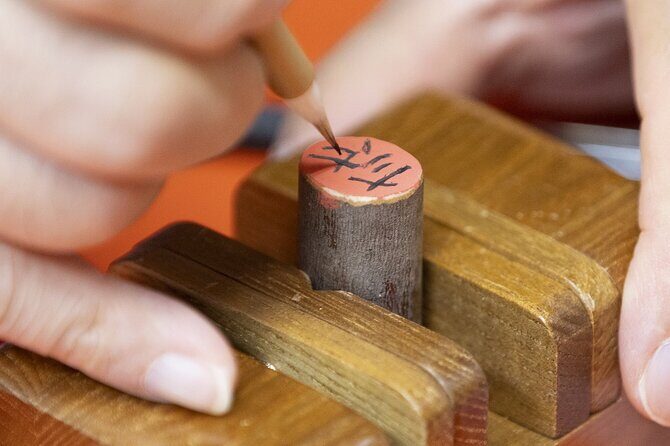
Your goal is to create a pattern that can be inked and stamped clearly. That usually means carving away parts you don’t want to show, while leaving raised surfaces that catch the vermilion ink. If you’ve never carved by hand, don’t stress—this is exactly the kind of task where careful instruction helps.
One practical note: complex designs take more time and may not fit comfortably in the allotted session. If you’re aiming for a very detailed kanji or a dense pattern, plan to simplify. You can still end up with a seal you’re proud of—you just want it readable and stampable within a short workshop window.
Tools, Guidance, and Your Pace (90 to 120 Minutes)
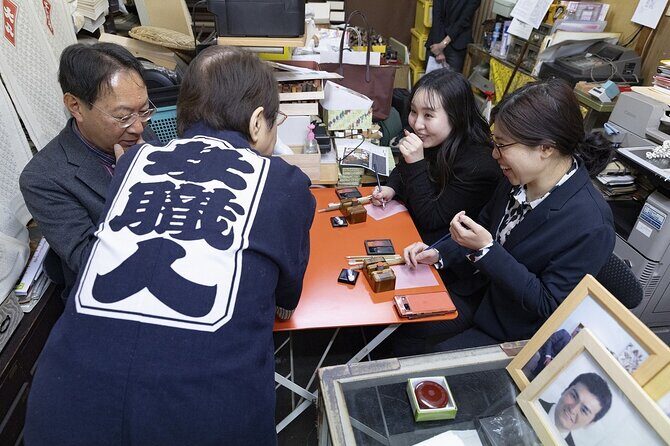
This is described as a private experience with thorough guidance, and that matters because hand-carving has a learning curve. Some carving skill is required in the sense that you’ll be doing the work, not just tracing a template. But the artisans and interpreter support you throughout, especially when you hit the point where your design needs careful adjustment.
The listed duration is about 90 to 120 minutes. In practice, your time depends on two things: how complex your design is and how comfortable you feel with the carving tools. One thing I’d watch for is finishing early—if you get a smooth start, the session may wrap up closer to the shorter end. That’s great for efficiency, but it’s something to keep in mind when you’re judging whether the pricing feels fair for the time you spend in the chair.
Stop 1 in Taito: Showing Up and Getting Started
The workshop starts at 伊藤印房1-chōme-19-4 Senzoku, Taito City, Tokyo 111-0031. You’ll want to find it without rushing, because once carving starts, you’ll appreciate having a calm setup and enough time to get comfortable with the tools.
The good news: it’s near public transportation, so you’re not stuck with a long transfer before you start. Also, you don’t need to bring anything special. But if you’re concerned about carving debris, the workshop suggests bringing your own apron—that’s a small step that can make a difference for keeping your clothes clean.
Clothing should be casual. Think of it like a light craft class rather than a formal event. You’ll be working close to the wood and tools, so wear something you’re okay with getting a little messy.
Your Take-Home Hanko: Ink, Testing, and Finishing Expectations

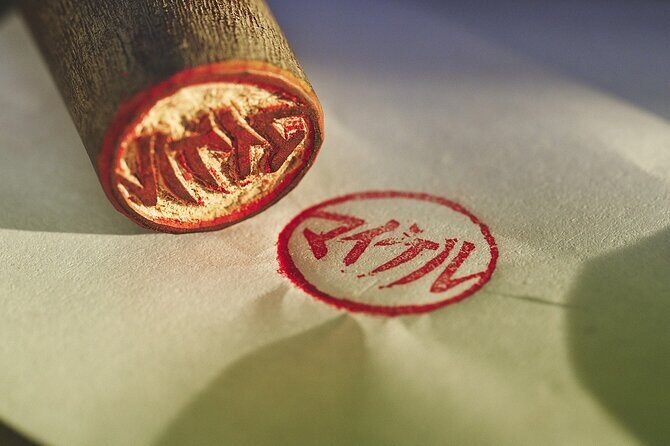
You’ll receive a vermillion inkpad as part of the experience, which is exactly what you want on day one. A seal is only useful if it stamps cleanly, and testing it right away is the best way to confirm your carving choices. It’s also satisfying in a simple way: you’ll see your design appear in ink where you can compare it to what you intended.
The workshop provides tools and materials. You won’t be hunting down supplies or worrying about whether you have the right carving gear. And you’ll take home the hanko you created during the experience, so you’re not leaving with vague “process photos” and no lasting result.
Also, don’t expect the craft to be rushed into a vague souvenir. The point here is to create a usable seal that reflects your design and the artisan’s guidance. That’s why it works as a gift too—especially for people who enjoy Japanese culture and practical artistry.






Price and Value at $93.33: When This Workshop Makes Sense
At $93.33 per person, this isn’t a bargain craft class. It’s priced more like a personalized workshop with an English interpreter and a private setup. So the value depends on what you want out of your time in Tokyo.
If you care about doing the activity yourself and leaving with a real crafted object, the price can feel reasonable. You’re paying for instruction, tools, natural wood materials (including the specific twig options like sakura/sansho), the inkpad, and a finished hanko you’ll keep. That adds up more than a typical mass-market souvenir because the product is labor-heavy and personal.
If you’re mainly looking for a long cultural lecture, you may be disappointed. One concern that can come up is the gap between an advertised time window and how quickly a session can finish. If your design clicks and you carve efficiently, you might finish sooner than you expected, and then the cost can feel high relative to time spent.
My advice: treat it like a high-quality craft workshop, not a museum-style experience. If you’ll enjoy the carving work itself, it’s easier to feel like you got your money’s worth.
What You Learn Beyond the Carving (and What to Expect Instead)

You’ll get insight into the culture and tradition of hanko through the process and guidance. That tends to happen naturally as your artisan explains technique and how to think about carving a stamp that works.
However, this is still primarily a hands-on session. If what you want most is a deep, extended history lesson before you touch the tools, plan to lean into the practical side instead. You’ll likely learn cultural context in smaller, relevant pieces while you carve—enough to understand the craft’s meaning, but not so much that you feel like you sat through a formal lecture.
The craft lesson here is the valuable part: how the stamp form affects ink transfer, how carving choices impact legibility, and how to refine your design with help when you need it.
Who This Private Hanko Workshop Is For
This suits you if you want a personal, made-by-you souvenir. It also fits well if you enjoy crafts and you don’t mind doing something with your hands—carving is the point, not a backdrop.
It’s also a good option if you like small, focused experiences. It’s a private tour/activity, meaning only your group participates, so you’re not squeezed into the pace of strangers. And because there’s an English interpreter, you’re less likely to get lost in the details of what you’re supposed to do.
A few practical match-ups:
- Good fit for adults and families with older kids
- Kids over 10 years old can participate
- For children under 10, separate confirmation is required
Most people can participate since the activity is designed to be guided and hands-on rather than based on prior carving experience.
Quick Practical Tips Before You Go
Carving is intimate, so small preparation choices help.
- Use the restroom before you start. There’s no toilet at the workshop, but a public restroom is about a 1-minute walk away.
- Wear casual clothes, and consider bringing an apron if you’re sensitive to debris.
- Choose a design you can realistically carve in time. If you’re unsure, keep it simpler at first and let the artisan guide you toward something stampable.
Also, take advantage of the guidance early. The best carvings tend to come from adjusting small choices along the way, not trying to fix everything at the end.
Should You Book This Hanko Carving Workshop?
Book it if you want a Tokyo souvenir with real meaning—one you make yourself. You’ll get the combination of private instruction, English support, and a finished hanko you can ink and test. It’s especially worth it if you enjoy crafts and want the story behind your item to come from the maker, not a label.
Skip it (or rethink the timing) if you’re mainly after a long history presentation, or if the price feels too hard to justify unless the session lasts the full two hours. Since carving results can vary by design complexity and your personal pace, you might finish closer to the shorter end.
If you like hands-on work, this is one of the few experiences in Tokyo where you leave with something you can actually use—and that alone makes it memorable.
FAQ
What is included in the workshop fee?
The fee covers the experience itself, the tools for carving, natural wood materials, the finished hanko you make, an English interpreter, and a vermilion inkpad.
How long does the experience take?
It’s listed at about 90 to 120 minutes. The exact time can vary depending on your pace.
Do I need to know how to carve beforehand?
No prior carving experience is required, but some skill is needed because you’ll be carving by hand. The artisan provides thorough guidance as you work.
What wood will I carve?
You’ll work with small twigs of natural wood, such as sakura or sansho.
Can I make my own name stamp or a custom pattern?
Yes. You can create your own design with guidance from the artisan, including your name or a custom pattern.
Are complex designs possible?
More complex patterns may be harder and may not be feasible within the allotted time, so simpler designs can be a safer choice.
Is there an inkpad to test the stamp?
Yes. A vermilion inkpad is included.
Where is the meeting point?
The start point is 伊藤印房1-chōme-19-4 Senzoku, Taito City, Tokyo 111-0031, Japan. The activity ends back at the meeting point.
Is there a restroom nearby?
There is no toilet at the location, but there is a public restroom about a 1-minute walk away. It’s recommended you use it beforehand.
What is the minimum age to participate?
Participants must be over 10 years old. For children under 10, separate confirmation is required.