REVIEW · HIROSHIMA
Hiroshima: Kimono, Koto, and Simple Tea Ceremony Experience
Book on GetYourGuide →Operated by Kazuko Mensing · Bookable on GetYourGuide
One visit to this private cultural session can feel like meeting a friend. You get kimono dressing, hands-on koto time, a simple tea ceremony, and a few photo moments in a calm Japanese home. What makes it special is the host: Kazuko Mensing, a second-generation bomb survivor who grew up in Hiroshima, studied koto for 40 years, and speaks English.
I like the mix of skills and atmosphere. You’re not just watching a performance; you’re trying koto, learning why tea matters, and sampling traditional board games like igo or shougi. The only real catch is practical: it’s disability-friendly, but you’ll need to handle stairs, and it isn’t suitable for wheelchair users.
In This Review
- Why This Hiroshima Session Works in 90 Minutes
- Quick Snapshot: What You Do and What You’ll Actually Get
- Meeting Point and First Impression Near Toukaichi Station
- Step 1: Kimono Dressing That Changes Your Whole Posture
- Step 2: Koto Playing With Kazuko Mensing’s 40 Years of Practice
- Step 3: A Simple Tea Ceremony and Why It Matters in Japan
- Step 4: Try Igo or Shougi (And Learn Through Play)
- Step 5: Katana or Umbrella Photo Props in Kimono
- Step 6: Relaxing in a Japanese-Style Home Filled With Cultural Objects
- Why the Host’s Story Changes the Tone (In a Good Way)
- Price and Value: Is $76 for 90 Minutes Worth It?
- Who This Experience Suits Best
- Practical Tips Before You Go
- Should You Book This Hiroshima Kimono, Koto, and Tea Ceremony?
- FAQ
- Where is the meeting point?
- How long is the experience?
- What activities are included?
- What languages are available?
- Is it suitable for wheelchair users?
- What’s the cancellation policy?
Why This Hiroshima Session Works in 90 Minutes
This isn’t a checklist tour. The structure is tight and doable, which matters in Hiroshima. At the start, you change from normal travel clothes into a kimono that instantly changes how you move and stand. Then you rotate through activities that teach you something real: sound (koto), ritual (tea), and play (igo or shougi). By the end, you also get time to relax in a room filled with cultural masks and statues, so the experience doesn’t feel rushed or staged.
Most importantly, you get to do it in the kind of setting that doesn’t exist in a big crowd. The home environment helps you slow down and pay attention, especially with tea and koto—both demand patience.
Quick Snapshot: What You Do and What You’ll Actually Get
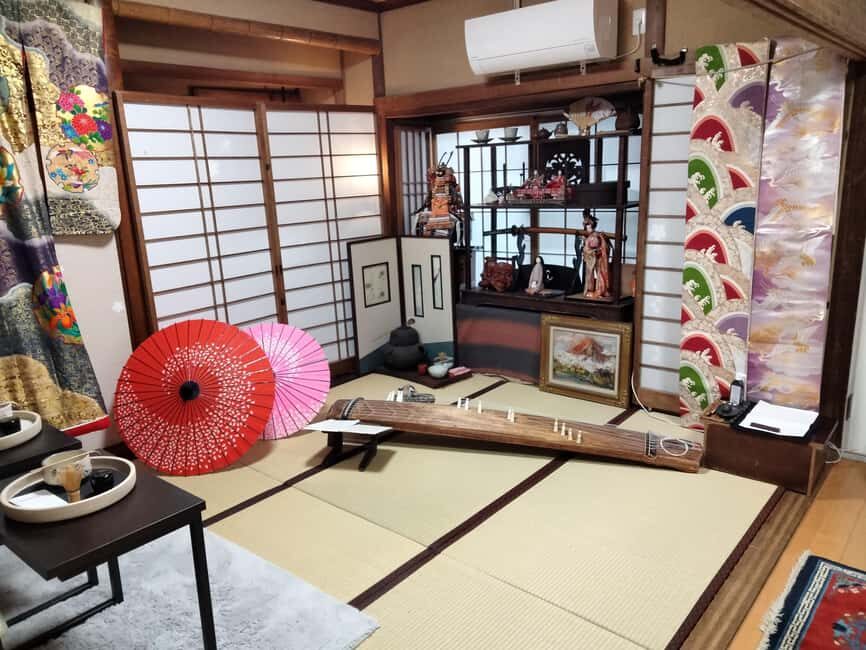
Here’s the “what happens” without the fluff.
- Kimono dressing for both men and women: You’ll be outfitted in a kimono and taken through the basics of wearing it.
- Koto playing with a real koto teacher: Kazuko Mensing has studied koto for 40 years and uses English, so you’re not stuck guessing what to do.
- A simple tea ceremony and meaning: You’ll learn what tea practice represents, not just how to perform a step.
- Play traditional Japanese board games: You can try igo or shougi, classic games that feel surprisingly approachable.
- Photo moments with katana or umbrella: You can hold props for photos while wearing the kimono.
- Relax in a Japanese-style home: Cultural masks and statues add atmosphere, and the pace lets you breathe.
You can also read our reviews of more tours and experiences in Hiroshima.

Meeting Point and First Impression Near Toukaichi Station
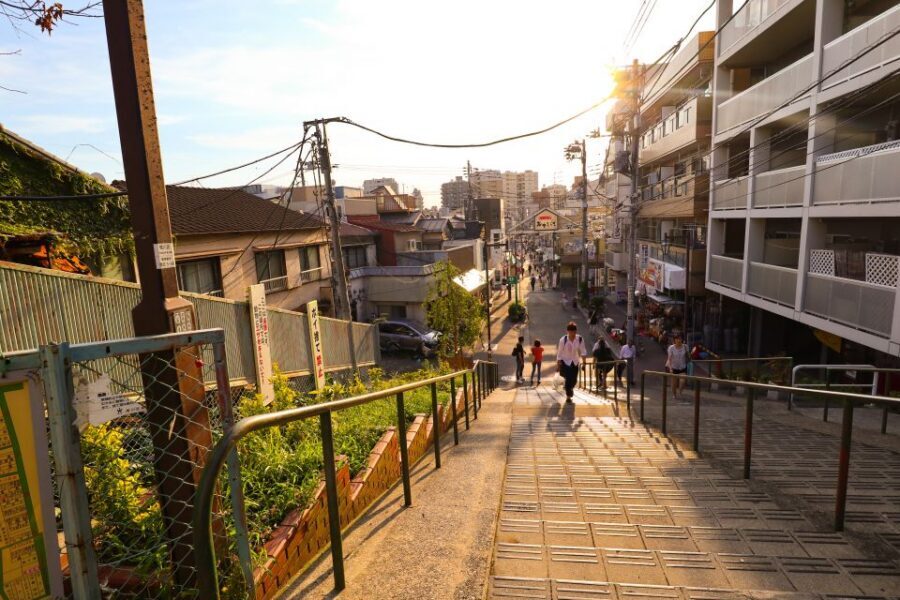
You’ll meet outside a Familymart right by Toukaichi Station. Your guide is easy to spot because Kazuko Mensing will be wearing a short black kimono jacket.
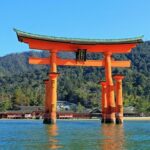
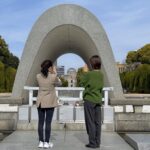
That small detail matters more than you might think. When you arrive dressed for travel and not for an organized session, it’s comforting to know you won’t be hunting for a group. Also, the location is only about a 15-minute walk from the Atomic Bomb Dome, so it fits neatly with Hiroshima sightseeing day plans.
If you’re visiting the Dome and Peace Memorial area, this is a nice pairing. You’ll get a quieter, more personal angle on Japanese culture afterward.
Step 1: Kimono Dressing That Changes Your Whole Posture
The kimono part is the gateway drug—because once you’re wearing it, everything feels more intentional. You’ll get help dressing and adjusting, and you’ll feel how the garment guides your movement. Even if you’ve never worn one before, you won’t be left to figure it out alone.
I also like that it’s inclusive for both men and women. That means the session doesn’t feel designed for one standard body shape or one idea of what a kimono experience should look like. You’re getting a cultural practice, not a costume photo scam.
Practical tip: plan to wear shoes that are easy to take off and put on. You’ll be handling clothing changes, and being comfortable speeds everything up.
Step 2: Koto Playing With Kazuko Mensing’s 40 Years of Practice
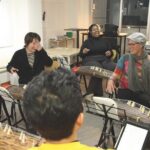
Then comes koto. This is the heart of the class for many people, and you can see why: the koto turns a room into an instrument. It’s also a great teacher for visitors because you can hear progress quickly, even with basic instruction.
Kazuko Mensing studied koto for 40 years and is fluent in English, which is a major value point. You don’t have to translate gestures into meaning. You’ll likely learn not only what to do with your hands, but also what listening for the sound feels like.
In some sessions, people end up playing together or trying simple techniques that build confidence. The common takeaway is that you leave with a sense of how the instrument is meant to be handled, not just a quick demo moment.
If you like hands-on classes—music, calligraphy, crafts—this is the part that will feel most satisfying.
Step 3: A Simple Tea Ceremony and Why It Matters in Japan
Tea in Japan isn’t just caffeine. In a ceremony, it becomes a way to slow down, focus, and show respect. In this session, you’ll do a simple tea ceremony and learn about its significance.
I like how “simple” is practical here. You won’t get stuck in a complicated script you can’t remember. Instead, you get the cultural meaning—why the steps exist, why the mood matters, and how the host frames the moment.
If you’re short on time in Hiroshima, tea is also a good reset. After koto and kimono, tea gives you a calmer rhythm. It turns the experience from “activities” into “a lived moment.”
Watch for how the room changes when tea starts. The Japanese home setting helps a lot, especially with the quiet visuals around you.

Step 4: Try Igo or Shougi (And Learn Through Play)
Next, you can try igo or shougi, traditional Japanese board games. This is one of those parts that sounds simple until you play and realize it’s a real brain workout.
The value here isn’t winning. It’s the cultural angle. These games are a window into patience, strategy, and the way Japanese leisure can be thoughtful rather than loud.
Also, games are a great way to talk. If your Japanese is limited—and most visitors’ is—board game rules give you something concrete to discuss. It’s natural conversation with a shared activity.
Step 5: Katana or Umbrella Photo Props in Kimono
Now for the fun, visual part. You can hold a katana or umbrella for photos while wearing the kimono.
I’m a fan of this section because it’s not just about snapping pictures. It gives you an authentic sense of how people use space and props during cultural moments. It also helps you remember the session later—when you’re home and looking through photos, you’ll still recall the tea and koto, not only the outfit.
If you care about good photos, take a minute to adjust how you hold the umbrella or where your feet are. A tiny posture change matters a lot with kimono.
Step 6: Relaxing in a Japanese-Style Home Filled With Cultural Objects
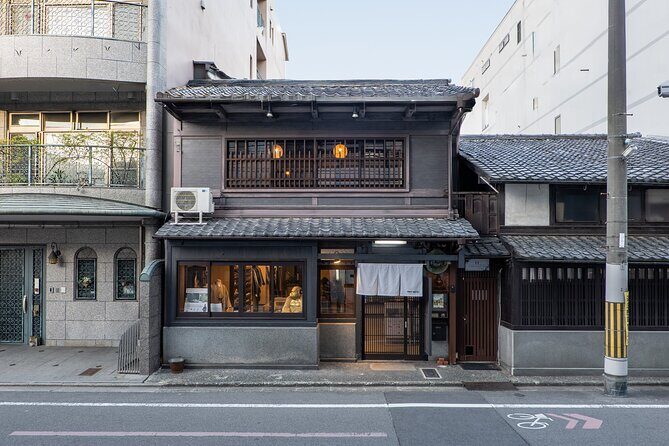
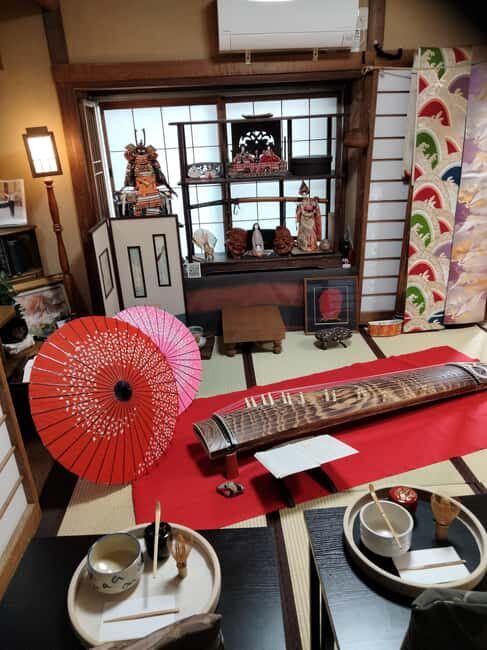
Between activities, you’ll get time to relax in a Japanese-style home decorated with cultural masks and statues. This is where the experience stops feeling like a class and becomes a visit.
The setting matters. In a living room-like space, you can ask questions without the pressure of a performance schedule. You can also enjoy the contrast: modern Hiroshima outside, slower traditional details inside.
The objects in the room add context to what you’re learning. Even when you don’t know every symbol, the atmosphere supports the themes of respect and quiet attention.
Why the Host’s Story Changes the Tone (In a Good Way)
Kazuko Mensing isn’t just a teacher. She’s a second-generation bomb survivor from Hiroshima who has lived in Hiroshima her whole life. That fact gives the session a different emotional weight than a generic cultural workshop.
It also makes the conversation feel honest. You’re likely to talk about culture and daily life, not only techniques. In one account, the session even continued with her husband helping with a longer city tour when a schedule changed—showing that this isn’t a “run the clock” operation.
Important note: you’re not there for tragedy. You’re there for culture and craft, guided by someone who carries Hiroshima’s history personally. That balance is what makes the tone feel grounded rather than theatrical.
Price and Value: Is $76 for 90 Minutes Worth It?
At $76 per person for 90 minutes, the price can look high if you compare it to a quick craft stop. But the math changes when you account for what you’re getting:
- Private group format: You’re not competing with strangers for attention.
- Real instruction with Kazuko Mensing, a longtime koto student and English-speaking teacher.
- Multiple hands-on elements (kimono, koto, tea ceremony, board games, photo props).
- A personal-home setting near key Hiroshima sights.
For me, the value is strongest if you want more than a photos-only experience. If you enjoy learning through doing—especially music and rituals—this session justifies the cost. If you only want a quick kimono photo, you could find cheaper options. But you’d lose the instruction and the meaning.
Who This Experience Suits Best
This is a great match if you:
- Want a compact cultural activity that fits smoothly into a Hiroshima day
- Like hands-on learning (music, tea ritual basics, strategy games)
- Enjoy calmer, home-based experiences rather than crowded tours
- Appreciate a guide who can explain in English clearly
It’s also a good option for families. One parent shared that their 9-year-old had a great time, and Kazuko Mensing adjusted to a child’s energy. So if you’re traveling with kids who are curious and willing to follow simple instructions, it can work well.
It’s less suitable if:
- You use a wheelchair
- You can’t handle stairs, even though the host is disability-friendly in general
Practical Tips Before You Go
A few small choices can make the session feel easier.
- Wear layers you can remove easily. Dressing time is part of the experience.
- Bring a small bag for personal items, since kimono sessions often involve managing clothing.
- Plan your Hiroshima day with a calm window before or after. Tea and koto work best when you’re not sprinting between train stops.
Also, since the Atomic Bomb Dome is nearby, you might be tempted to schedule too much back-to-back. I’d keep your peace-time and culture-time at different speeds.
Should You Book This Hiroshima Kimono, Koto, and Tea Ceremony?
I’d book it if you want a thoughtful, hands-on culture experience that’s close to the Peace Memorial area and led by someone who knows Hiroshima from the inside. The combination of kimono dressing, koto practice, and tea ceremony meaning makes it feel complete, not random. Add the board games and photo props, and you get both learning and fun.
Skip it if stairs are a problem for you or if your goal is only a quick kimono photo. In that case, you’ll likely feel you paid for learning you can’t fully access.
If you’re looking for an authentic, human-scale experience in Hiroshima—one that turns the city’s culture into something you do with your hands—this is a strong choice.
FAQ
Where is the meeting point?
You meet outside a Familymart right by Toukaichi Station. Your guide will be wearing a short black kimono jacket.
How long is the experience?
It lasts 90 minutes.
What activities are included?
Kimono dressing, koto playing, a simple tea ceremony, holding a katana and holding an umbrella, plus relaxation in a Japanese environment.
What languages are available?
The instructor speaks English and Japanese.
Is it suitable for wheelchair users?
No. It is disability-friendly, but participants will need to be able to go up stairs, so it’s not suitable for wheelchair users.
What’s the cancellation policy?
You can cancel up to 24 hours in advance for a full refund.