REVIEW · KYOTO
Kyoto Private Tour Full Day with Local Guide&Nara Option(PerGroup
Book on Viator →Operated by Riku · Bookable on Viator
Kyoto can feel spread out and steep. This private day tour fixes that with a car, a guide, and a route that keeps you moving the right way. I like that it mixes top sights with real time on foot where it counts.
Two standouts for me: pickup-and-dropoff convenience and time-smart stops led by Riku (the named guide for this experience). One thing to plan for: temple entry fees and lunch aren’t fully included, so you’ll want a bit of cash/card for on-site payments.
In This Review
- Key things I’d watch before booking
- Why a private car day matters in Kyoto
- Price and value: $480 per group up to 4
- Stop 1: Kinkakuji Temple (Golden Pavilion) without scrambling
- Stop 2: Arashiyama and the Bamboo area—time well spent
- Stop 3: Gion in an hour—culture, streets, and smart viewing
- Stop 4: Fushimi Inari Taisha—thousand torii energy
- How the guide shapes your day (Riku, routing, and flexibility)
- The Nara option: Todaiji and Nara Park in one day
- What you should budget for on-site
- Pickup, comfort, and your time on the clock
- Who this tour suits best
- Should you book it?
- FAQ
- How long is the Kyoto private tour?
- What does the tour cost and what’s the group size?
- Is hotel pickup and drop-off included?
- Is this tour private or shared?
- Which places are included in a standard Kyoto day?
- What does the Nara option add?
- Is lunch included?
- Are entrance tickets included?
- Do I get a mobile ticket?
- What’s the cancellation timeframe?
Key things I’d watch before booking
- Private car comfort: helps with walking distances, hills, and getting from one district to the next.
- Riku’s routing: the day is structured so you spend less time hunting and more time seeing.
- Built-in highlights: Kinkakuji, Arashiyama, Gion, and Fushimi Inari are all on the plan.
- Nara option: if you add it, you’ll trade Kyoto time for Todaiji and Nara Park.
- On-site fees: Kinkakuji and Tenryuji/Arashiyama-area entry are paid directly on the day.
Why a private car day matters in Kyoto
Kyoto’s famous places are beautiful, but they’re not clustered like a single museum district. They’re scattered across neighborhoods, and the city has plenty of stairs and hills. When you’re on your own, you can burn energy just figuring out transit timing, entrances, and where to start.
This tour uses air-conditioned transportation with hotel pickup and dropoff. That sounds simple, but it changes the whole feel of the day. You’re not waiting for buses, wrestling taxis with luggage, or losing time to detours.
You also get the kind of pacing that makes sense for an 8-hour day. The car gets you between spots fast, and then the guide helps you focus on what to actually look for when you step out.
You can also read our reviews of more guided tours in Kyoto

Price and value: $480 per group up to 4
The price is $480 per group for up to 4 people. If you fill all seats, that’s about $120 per person for the full day (before food and any on-site fees). That’s not cheap, but it’s often fair when you compare it to the cost of multiple taxis plus the value of having one English-speaking guide steering the day.
What you’re paying for here is:
- English-speaking guidance
- Hotel pickup and dropoff
- Transport in an air-conditioned vehicle
- Parking, gas, and expressway fees covered
- A mobile ticket
That package matters most if you’re a family, a small group, or anyone who hates wasting time in transit. If it’s just you and you’re comfortable hopping trains all day, an independent plan may be cheaper. But if you want a smooth day with fewer decisions, this is the kind of convenience that adds real value.
Stop 1: Kinkakuji Temple (Golden Pavilion) without scrambling
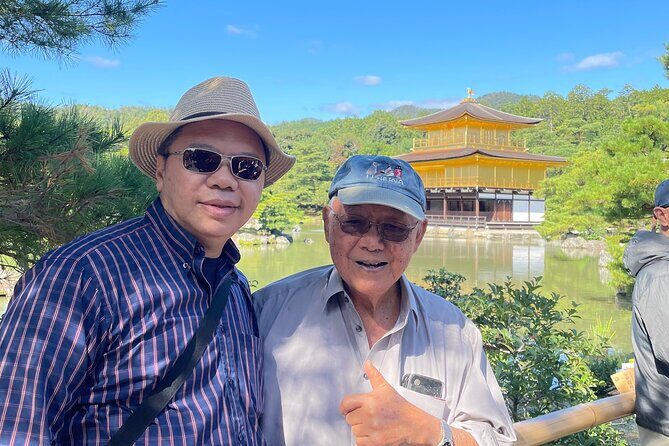
You start with Kinkakuji Temple, one of Kyoto’s most recognizable Zen sites. The top floors are covered in gold leaf, and the pavilion’s look is famously tied to reflections in the surrounding pond. Even if you’ve seen photos, it hits differently when you’re standing in the courtyard area and the light changes.
Plan for a focused visit—this stop is around 1 hour. That’s enough time to see the main views and take it in without turning it into a rushed checklist.
What to know before you go: Kinkakuji admission is not included and is listed as about $5 per person, paid directly on site. So budget for that fee as part of the day’s math.
Stop 2: Arashiyama and the Bamboo area—time well spent
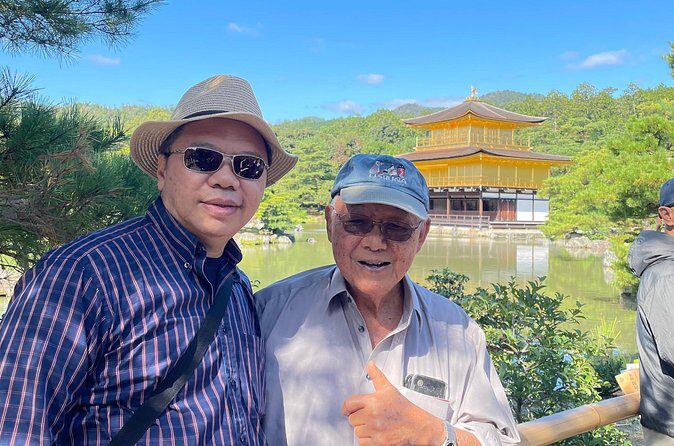
Next is Arashiyama, Kyoto’s western district where nature and tradition blend into one scenic walk. This stop is about 2 hours, which feels about right: long enough for the main sights, not so long that you get museum-tired.
Arashiyama is also where the day’s vibe shifts from temple grandeur to strolling. Think of it as the portion of your tour where you slow down and let the surroundings do the work.
There’s an important fee reality here. The tour notes that Tenryuji is paid directly on site (listed around $10 per person). The experience is set up so you hit the famous area efficiently, but you still need to plan for that entry cost.
If you’re the type who enjoys atmosphere—wood, stone, water, and that slightly misty Kyoto air—this is the segment that tends to feel most satisfying. You’ll likely remember the walk itself, not just the photo moment.
Stop 3: Gion in an hour—culture, streets, and smart viewing

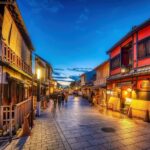
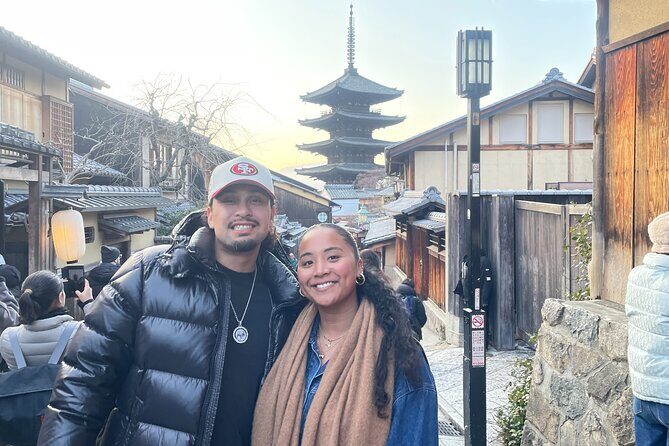
Then comes Gion, Kyoto’s best-known historic district and the center of geisha and maiko culture. This area is special because it’s not just a sightseeing stop—it’s a living neighborhood with streets that feel instantly different from the bigger commercial parts of Kyoto.
Your time here is about 1 hour, and that matters. Gion can be tempting to overdo, but a shorter stop keeps you from turning it into standing around waiting for the perfect scene.
This stop has no admission listed, so the value is all about how you spend the hour. I like using time in places like Gion to notice the details you’d miss if you were rushing: the narrow lanes, the way people move, and the contrast between tourist spots and real everyday street life.
If you’re visiting with kids, this is also a good checkpoint. The area is easy to enjoy because it’s visual and walkable, not heavy on rules and tickets.
You can also read our reviews of more private tours in Kyoto


Stop 4: Fushimi Inari Taisha—thousand torii energy
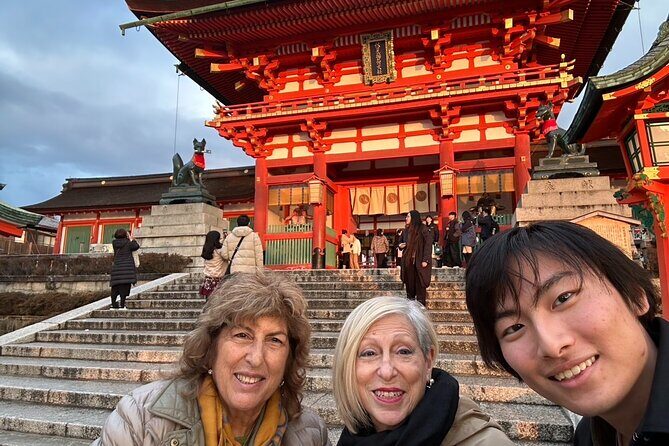
Finally, you go to Fushimi Inari Taisha Shrine, famous for its thousands of torii gates climbing toward the hillside. This is the Kyoto sight that feels most like a movie set—until you’re actually walking under the gates and realizing how long the path can feel.
This stop is about 2 hours, which is the right amount of time to do more than just the first few gates. You can decide how far up you want to go, and you’re not forced into a one-size-fits-all plan.
For cost planning: the tour shows admission ticket included for this stop. In practice, the money part is less important than footwear and pacing. The steps add up, and the slope can feel steeper than you expect.
If you want the best experience with the least stress, wear comfortable shoes and keep water in your bag. The shrine is gorgeous, but your legs will ask for attention on the way up.
How the guide shapes your day (Riku, routing, and flexibility)
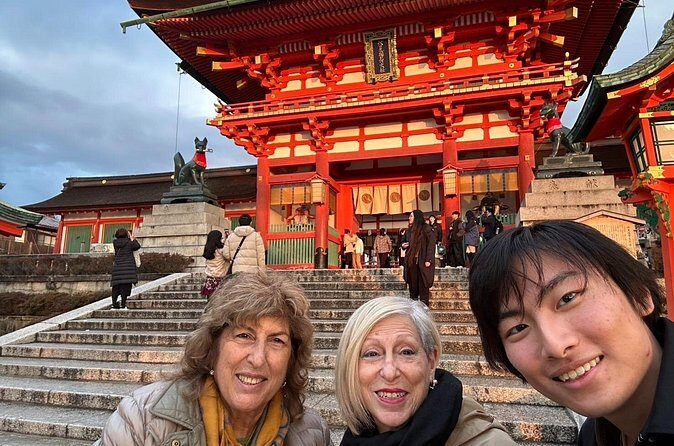
The guide is a big deal on a day like this. You’re hitting four major stops in one outing, which means the day can either feel smooth or chaotic depending on how it’s managed.
The named guide for this experience is Riku, and the overall approach is clearly about building a route that reduces wasted time. One of the most praised qualities from groups is the sense that the itinerary works—seeing major sites while also getting a “local charm” feel instead of feeling like you’re just collecting stamps.
I also like that the tour is described as organized by a young team, with the guide planning a dynamic day. That usually means you get practical suggestions on where to pause, what to look for, and how to adjust pacing as the day unfolds.
A second practical point: the tour has shown it can handle mobility needs with thoughtful pacing. That doesn’t remove the fact that Kyoto has stairs and slopes, but it does mean you should feel comfortable communicating what’s realistic for you. If you have any mobility limitations, tell the guide early so the day can be adjusted.
The Nara option: Todaiji and Nara Park in one day
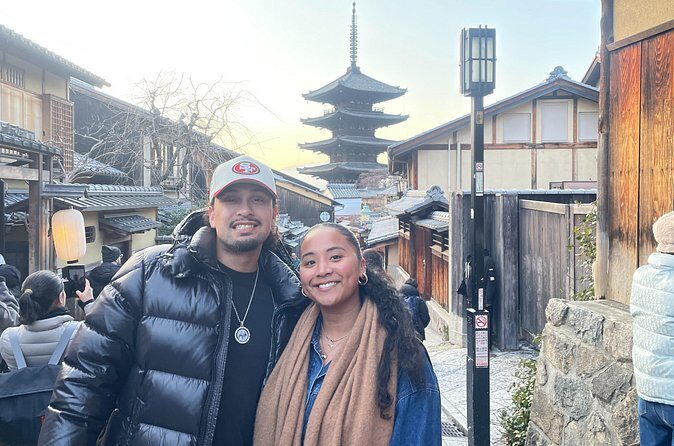
If you choose the Kyoto & Nara option, the day shifts to include Todaiji Temple and Nara Park along with Fushimi Inari Taisha and Arashiyama (Bamboo Grove). That’s a lot of famous ground, but it’s also a strong combo.
Here’s why Nara works well as an add-on:
- Todaiji gives you the big, iconic temple scale you don’t always get in Kyoto’s smaller-feeling streets.
- Nara Park adds an open-space change of pace from Kyoto’s tight lanes.
- Keeping Arashiyama in the mix helps you end with a nature-and-walk mood instead of ending on a purely religious site.
If you’re deciding between the standard Kyoto-only day and the Nara option, think about your travel goal. If you want maximum Kyoto immersion, stick with Kyoto-only. If you’re craving a second major “Japan highlight” day, the Nara add-on makes sense—just expect more variety and a tighter sense of time management.
What you should budget for on-site
Not everything is included. Here’s what the tour data flags as direct payments on the day:
- Kinkakuji Temple admission: listed around $5 per person
- Tenryuji (around the Arashiyama area): listed around $10 per person
Lunch is also not included. Since your stops are spread out, I suggest planning your meal timing with the guide in mind (or bringing a simple snack if you know you get hungry fast).
For budgeting sanity, keep a little extra cash ready. Even if fees are modest, it’s easier when you don’t have to scramble during transitions.
Pickup, comfort, and your time on the clock
This is a private tour, meaning only your group participates. That matters because it lets the guide tailor the pace—especially useful if you have kids, mobility limits, or just a strong preference for a slower climb at Inari.
Hotel pickup and dropoff are included, and transportation is in an air-conditioned vehicle. For Kyoto, that’s a big win in summer heat and on days when the weather shifts quickly.
You’re also given a mobile ticket, which is a nice detail because you’re not hunting for paper confirmations while coordinating a day of multiple stops.
And because it’s a full-day outing (about 8 hours), it’s a good match for visitors who want a structured day without building it themselves.
Who this tour suits best
This tour is a strong fit if you:
- want to see multiple Kyoto highlights in one day without constant navigation
- travel with children (it’s been used successfully for families with young kids)
- have limited mobility and want a guide to help with pacing and practical routing
- prefer English guidance and a plan that doesn’t rely on trial-and-error transit
If you’re the kind of solo traveler who loves figuring out everything on your own, you might save money by DIY. But you’ll likely spend more time on transport decisions and figuring out the best order for the day.
Should you book it?
I’d book this tour if your priority is a smooth, well-timed day that covers the major Kyoto sights with less stress. The private car, the English-speaking guide, and the way the route is set up for an 8-hour schedule are the big reasons it feels worth it.
Skip it or reconsider if:
- you’re trying to keep costs as low as possible and don’t mind public transit
- you want lots of unstructured time in one neighborhood (this day is designed to cover several key areas)
- you’re sensitive to uphill walking, since Inari and shrine approaches involve stairs and slopes
If you want an efficient, guide-led day that still feels personal, this is one of the better ways to experience Kyoto.
FAQ
How long is the Kyoto private tour?
It runs about 8 hours.
What does the tour cost and what’s the group size?
The price is $480 per group, up to 4 people.
Is hotel pickup and drop-off included?
Yes. Hotel pickup and drop-off are included.
Is this tour private or shared?
It’s private, so only your group participates.
Which places are included in a standard Kyoto day?
The Kyoto day plan includes Kinkakuji Temple, Arashiyama, Gion, and Fushimi Inari Taisha Shrine.
What does the Nara option add?
The Kyoto & Nara option typically includes Fushimi Inari Taisha, Todaiji Temple, Nara Park, and Arashiyama (Bamboo Grove).
Is lunch included?
No. Lunch is not included.
Are entrance tickets included?
Arashiyama and Fushimi Inari Taisha Shrine show admission as included, while Kinkakuji admission is not included and is paid directly on site. Tenryuji is also paid directly on site.
Do I get a mobile ticket?
Yes, the tour includes a mobile ticket.
What’s the cancellation timeframe?
Free cancellation is available up to 24 hours in advance for a full refund.
![[2.3km / 1.43mi] Kyoto East Early Morning Walking Tour - Your 2-hour route: a focused walk through Higashiyama streets](https://images.thejapantraveler.com/wp-content/uploads/2-3km-1-43mi-kyoto-east-early-morning-walking-tour.jpg)