REVIEW · KYOTO
Men’s Kimono Lesson and Shopping in Kyoto
Book on Viator →Operated by Let's ask Shogo · Bookable on Viator
Learning kimono beats just renting.
This hands-on Kyoto lesson is led by Shogo from the YouTube channel Let’s Ask Shogo, and it happens inside a real men’s kimono shop, not a costume counter. I love that the session focuses on confidence—how to put on a kimono correctly and how to think about what you’re wearing. I also like the pacing: it’s structured for beginners, with clear, step-by-step guidance and time for questions.
You also get the best kind of context, because it’s taught in a working store by people who deal with kimono every day. The shop’s staff help with fit and styling basics, like choosing the right size and color for a complete set. One possible drawback: it’s not just a quick photo op. If you mainly want a simple rental with zero learning, this is more than you might need for the money.
The good news is that the vibe stays practical. You’ll walk away with skills you can actually use, and if you want to shop, you’ll do it with guidance so you don’t guess wrong.
In This Review
- Key points at a glance
- Kyoto’s Men’s Kimono Shop Lesson With Shogo
- What Actually Happens in the 2-Hour Session
- Juban and Kimono Basics: The Skill Part That’s Worth Your Time
- Fitting, Colors, and a Haori-Ready Mindset
- Shopping Guidance Without the Pressure
- Who This Kimono Lesson Fits Best
- Logistics That Affect Your Day (and the Real-World Comforts)
- Price and Value: Is $65.15 a Good Deal?
- What I’d Do With This Lesson in My Kyoto Plan
- Should You Book This Men’s Kimono Lesson in Kyoto?
- FAQ
- Who teaches the men’s kimono lesson in Kyoto?
- Where does the experience take place?
- How long is the lesson?
- Is there an option for a female partner or friend to join?
- Is it a small group activity?
- Does the experience include help with shopping?
- How do I get the ticket?
- What’s the cancellation policy?
Key points at a glance
- Small group (up to 4 people) for a calmer, more hands-on feel.
- Real men’s kimono store setting with help from the shop team and the lesson host.
- Learn the proper donning routine, including the juban step and how the pieces work together.
- Question-friendly teaching from Shogo, built for beginners and curious culture lovers.
- Shopping guidance is optional, with support if you want to buy a kimono set or add-on piece.
- Mobile ticket and a meeting point near public transportation make it easier to slot into a Kyoto day.
Kyoto’s Men’s Kimono Shop Lesson With Shogo
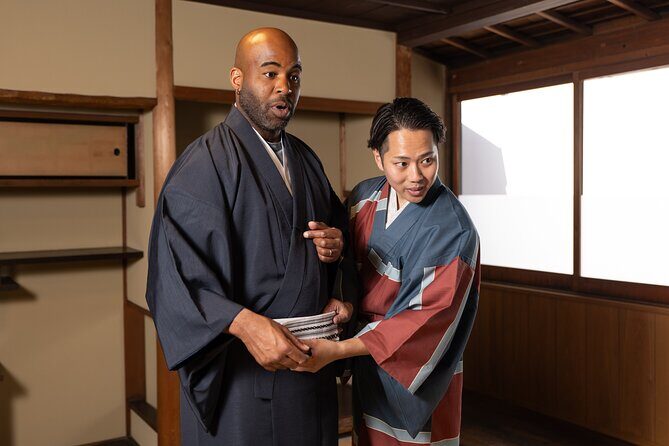
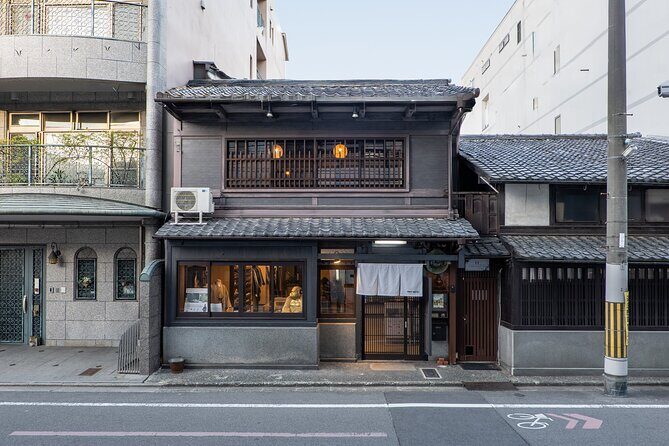
Kyoto is full of places to rent kimono, but this experience is different because you’re not treated like a customer trying on clothes—you’re treated like a student learning a skill. The lesson is taught by Shogo, who has spent nearly 10 years wearing kimono daily, and his teaching style comes off warm and grounded. You’re in a real men’s kimono shop at 432 Iwatoyamachō, Shimogyo Ward, so everything you learn is tied to what the store actually sells and how it’s typically worn.
The biggest value here is that it’s designed for beginners who feel uncertain. Many first-timers worry they’ll do something wrong—like wrapping the layers in the wrong order or not standing correctly. Instead of rushing you through the costume part, the session aims to get you comfortable with the process so you can wear a men’s kimono with better odds of doing it right.
Another strong point is the small group size. With a maximum of 4 travelers, you’re less likely to feel like you’re waiting your turn while someone else takes all the attention. That matters for a hands-on outfit like this, where small mistakes can snowball.
You can also read our reviews of more shopping tours in Kyoto


What Actually Happens in the 2-Hour Session
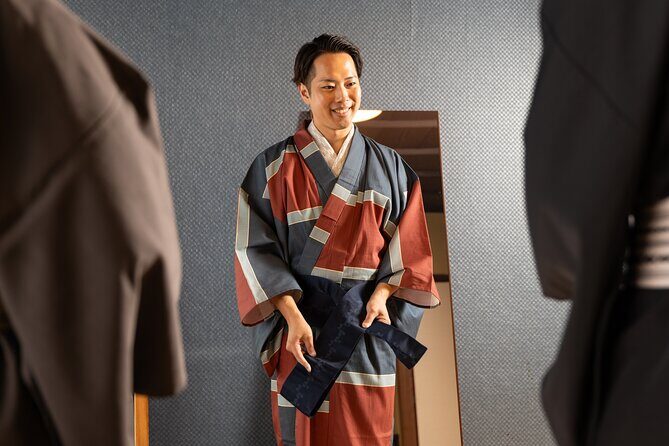
This is an approximate 2-hour experience, and the format stays practical from start to finish. You’ll begin at the shop meeting point and then move through the core learning steps inside. There’s a reason the location choice matters: you learn in the same environment where sizing, colors, and kimono terminology are part of everyday conversation.
Here’s the flow you can expect, in plain terms:
1) You meet Shogo and get introduced to the men’s kimono basics.
2) You learn how to put on the juban (the underlayer) as the foundation.
3) You move to the main kimono wearing steps—how the garment sits, where everything should land, and how to manage the body position so it looks right.
4) You get guidance on handling details you’d normally miss, like what to check before you call it done.
5) You learn how to fold the kimono afterward—one of those skills that turns rental clothes into something you can truly handle.
6) If you’re interested, you get support on buying and pairing items (like choosing an additional piece to match what you have or want).
One more thing: the lesson isn’t only about clothing mechanics. Shogo also shares cultural meaning and context—why this traditional outfit matters, and how people think about it in everyday life. That gives your photos more weight, because you’re not just wearing fabric; you’re following a tradition with rules.
Juban and Kimono Basics: The Skill Part That’s Worth Your Time
The most praised element of this experience is the “learn, don’t just rent” approach. Instead of handing you a uniform of rules, the lesson gives you a method you can repeat.
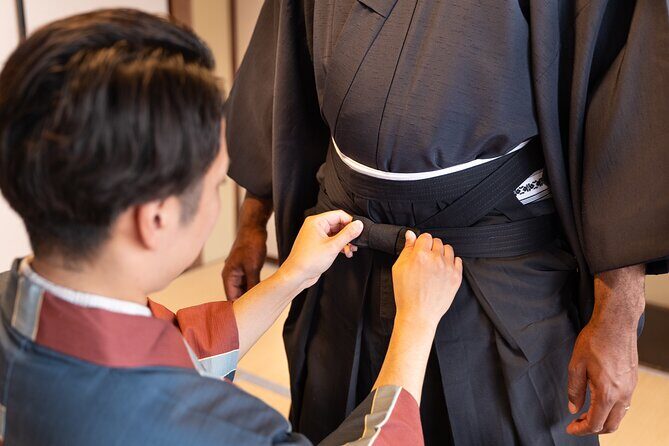
The juban step is a good example of why this is more valuable than a typical rental. If the underlayer is wrong, the kimono can fit poorly or look sloppy even if the top piece is the right one. You’ll practice the procedure so you understand the logic: the juban sets you up for how the kimono should drape and sit.
Then you move on to the kimono itself. The instruction focuses on how to wear it properly and how to adjust it. You’ll also learn how to avoid common first-timer issues, like feeling lost when you’re holding fabric you don’t yet understand.
Even if you never buy a kimono, the “I can do this myself” feeling is real. It’s the kind of practical cultural skill that pays off later—whether you wear your kimono again at home, help a friend understand the basics, or simply walk around Kyoto with better awareness of what you’re seeing.
Fitting, Colors, and a Haori-Ready Mindset
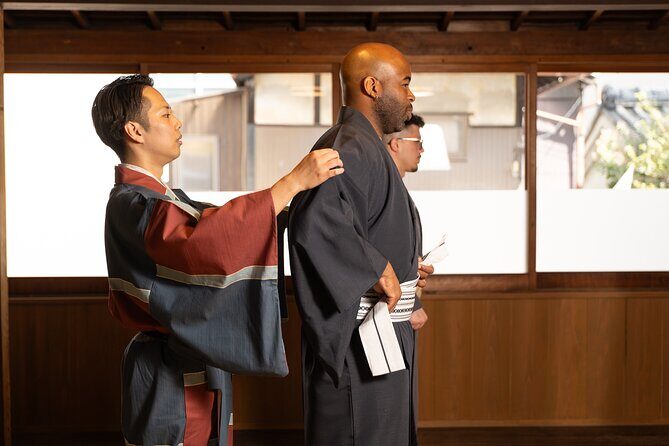
Inside the store, you’re not just learning the “how to wear” part—you’re learning the “how to choose” part, too, at least at a basic level. The shop staff help with things like size and color so you’re not stuck with a random selection.
This matters more than you’d think. In a kimono set, the top layer and coordinating pieces work together. If one element is wrong, the whole look can feel off. The lesson’s pairing support helps you understand how pieces relate, which is especially useful if you already own something.
In fact, one of the nicest practical outcomes people describe is coming away with an additional item—like a haori—to go with a kimono they already had. That tells you the session isn’t only for total beginners starting from zero. If you’re somewhere in the middle, you can still use the expertise to improve your set.
Shopping Guidance Without the Pressure
Kyoto can be intense if you’re trying to buy traditional goods, because sales pressure sometimes creeps in. What’s different here is the tone: guidance is offered, but it’s not described as pushy.
This is where the experience’s setting in a long-running shop becomes a real advantage. You get expert support on buying a kimono you’ll actually be able to wear. And because the lesson comes first, you’re more informed when you look at garments afterward. You can ask targeted questions—what looks right on the body, what combinations make sense, and what you should consider if you’re new to the whole world of kimono.
If you’re the type who wants to learn first and shop later, you’ll likely appreciate that the option is there without forcing it. If you came to Kyoto specifically to understand quality and fit, this makes shopping feel less like guesswork.
A few more Kyoto tours and experiences worth a look






Who This Kimono Lesson Fits Best
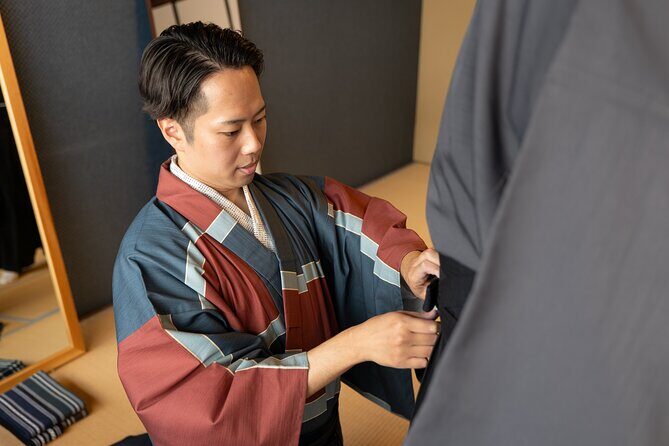
This experience is a strong match if any of these are true:
- You want a deeper cultural experience than renting a costume.
- You’d like to wear a men’s kimono with more confidence, not just for an afternoon.
- You’re curious about how kimono is put together and how it’s maintained.
- You might buy a kimono or accessory but want expert help choosing.
It’s also a good option for people who enjoy direct instruction and don’t want a chaotic group atmosphere. The small group size helps a lot.
One note for couples or friends: the experience is focused on men’s kimono instruction, but there are options if you’re traveling with a female partner or friend. One guest can watch for free per booking. If you’re willing to pay an extra fee, Shogo’s wife Harumi can dress or teach women as well—ask after booking. That gives your group a way to participate together rather than splitting your time into separate plans.
Logistics That Affect Your Day (and the Real-World Comforts)
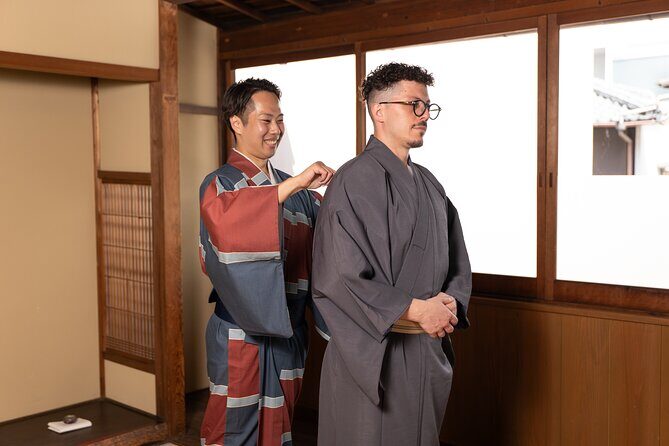
Even if the main appeal is cultural, you still need the practical stuff to line up.
- The meeting point at 432 Iwatoyamachō is near public transportation, which helps on a Kyoto day full of walking.
- You’ll get a mobile ticket, which is convenient when you’re moving between neighborhoods.
- The group is small (up to 4), so the pacing should feel smoother than larger tours.
- The classroom/shop space is described as easy to find and even air conditioned, which I appreciate if you’re visiting in warmer or muggy months.
Duration also matters. At about 2 hours, it’s the kind of activity you can place early to improve the rest of your day. You’ll come out more knowledgeable, and you’ll probably notice kimono details while you walk around Kyoto afterward.
Price and Value: Is $65.15 a Good Deal?
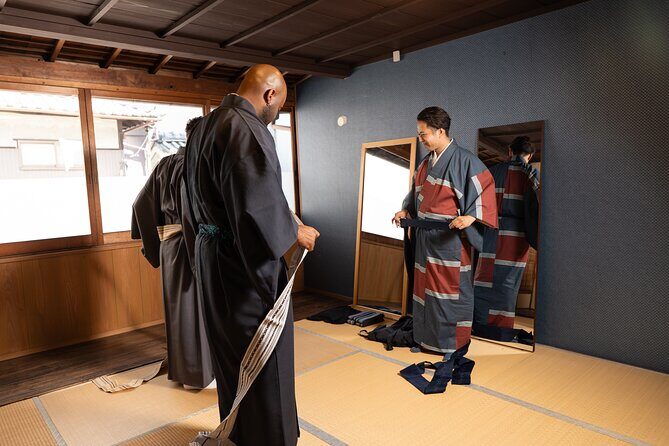
At $65.15 per person, this sits in the “worth it if you’ll use it” category, not the “cheap novelty” category. The cost can look higher than some basic rentals, but the value changes when you compare what you’re buying.
You’re not just paying for fabric and a mirror. You’re paying for:
- guided learning on proper donning (including the juban)
- step-by-step support so you can repeat what you learned
- cultural explanations that turn the outfit into context
- an environment where sizing/color choices can be explained intelligently
- optional help if you want to buy kimono pieces
If you’re the kind of traveler who likes hands-on skills—especially traditional ones—this price makes more sense. If you mainly want photos and don’t care whether you can wear the clothing yourself afterward, you might feel like you paid for lessons you didn’t need.
What I’d Do With This Lesson in My Kyoto Plan
I’d place this experience on a day when you want something indoor, structured, and weather-proof. Kyoto weather can swing, and this kind of activity keeps you from losing half a day to the wrong outfit choice.
If you’re aiming for a kimono look in the streets later, do this lesson in the morning or early afternoon. You’ll spend less time second-guessing how layers should sit. And if you do decide to purchase something, you’ll be shopping with clearer eyes, because you’ve already practiced the basics.
Also, if you like markets and local shopping, this lesson is a more meaningful way to connect with traditional clothing than wandering alone and hoping you’ll understand everything. You’ll know what questions to ask.
Should You Book This Men’s Kimono Lesson in Kyoto?
Book it if you want confidence, skill, and real store guidance, not just a quick rental experience. The small group size, the step-by-step instruction (including the juban and folding), and the chance to get help with fitting and pairing make it a smart choice for beginners who don’t want to feel awkward.
Skip it only if you want the simplest, lowest-effort kimono option and you have no interest in learning. In that case, you may feel like the lessons are extra cost.
If you’re trying to do Kyoto in a way that’s more than checklists, this is one of the better bets because it teaches you how to wear something you’ll actually understand afterward.
FAQ
Who teaches the men’s kimono lesson in Kyoto?
The lesson is taught by Shogo, who is the face behind the YouTube channel Let’s Ask Shogo and has lived in kimono daily for nearly 10 years.
Where does the experience take place?
The class is held inside a real men’s kimono store in Kyoto at 432 Iwatoyamachō, Shimogyo Ward. The activity ends back at the meeting point.
How long is the lesson?
The experience lasts about 2 hours.
Is there an option for a female partner or friend to join?
Yes. One guest can watch for free per booking. For an extra fee, Shogo’s wife Harumi can dress or teach women too—ask after booking.
Is it a small group activity?
Yes. The experience has a maximum of 4 travelers.
Does the experience include help with shopping?
You’ll receive expert guidance if you’d like to purchase your own kimono, and you can get help from the shop team as well.
How do I get the ticket?
You’ll receive a mobile ticket.
What’s the cancellation policy?
You can cancel for a full refund if you cancel up to 24 hours in advance of the experience. If you cancel less than 24 hours before the start time, the amount paid is not refunded.